The best walks and hikes around Halford
4.6
(533)
3,012
hikers
159
hikes
Hiking around the Halford village Warwickshire provides routes through rolling English countryside and along the River Stour. The area is characterized by a network of public footpaths that cross agricultural land and connect small villages. Its location near the Cotswolds Area of Outstanding Natural Beauty offers varied terrain, from gentle riverside walks to more demanding rural hikes.
Best hiking trails around Halford
- The most popular hiking route is Ramblers Rest Café loop from Shipston-on-Stour, a 3.3 mile (5.3 km)…
Last updated: October 8, 2026
16
hikers
5.32km
01:23
40m
40m
Easy hike. Great for any fitness level. Easily-accessible paths. Suitable for all skill levels.
8
hikers
10.3km
02:45
120m
120m
Moderate hike. Good fitness required. Easily-accessible paths. Suitable for all skill levels.

5.0
(2)
9
hikers
18.7km
04:55
150m
150m
Moderate hike. Good fitness required. Easily-accessible paths. Suitable for all skill levels.
4.3
(4)
11
hikers
11.7km
03:06
120m
120m
Moderate hike. Good fitness required. Easily-accessible paths. Suitable for all skill levels.
2
hikers
16.3km
04:18
150m
150m
Moderate hike. Good fitness required. Easily-accessible paths. Suitable for all skill levels.
Get access to more routes and recommendations from other explorers.
Already have an account?
Our route recommendations are based on thousands of hikes, rides, and runs completed by other people on komoot.
Start today with a free account
Your next adventure awaits.
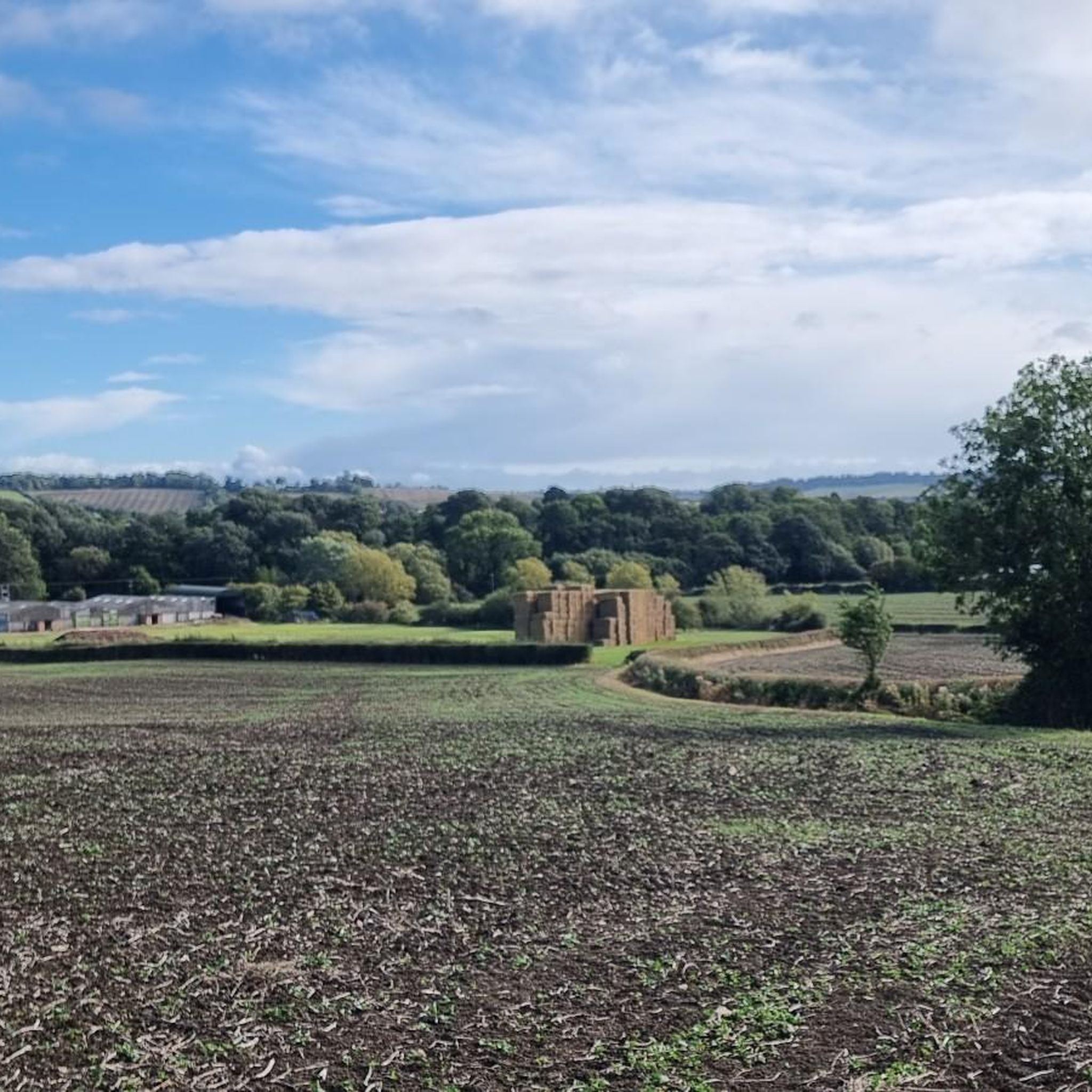
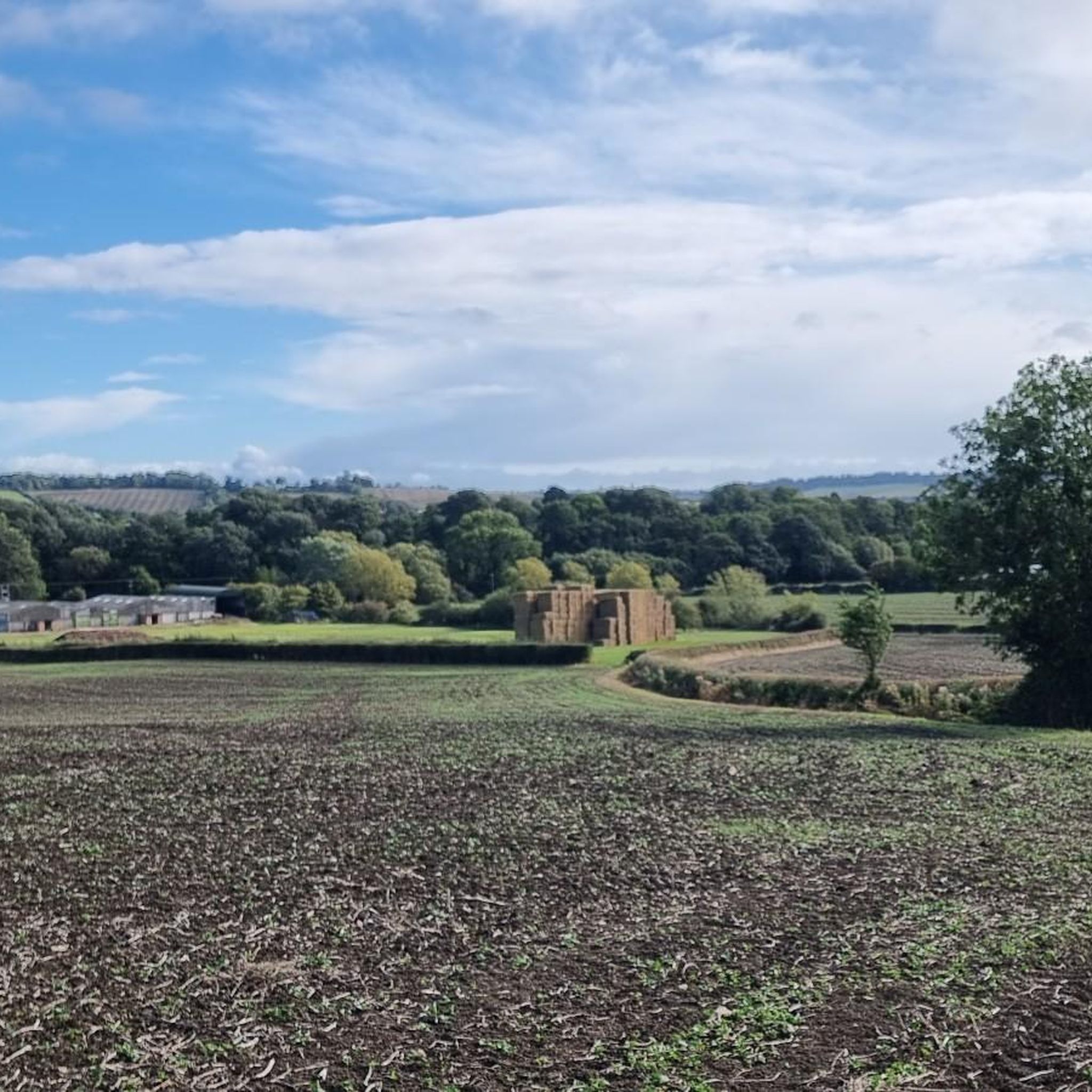
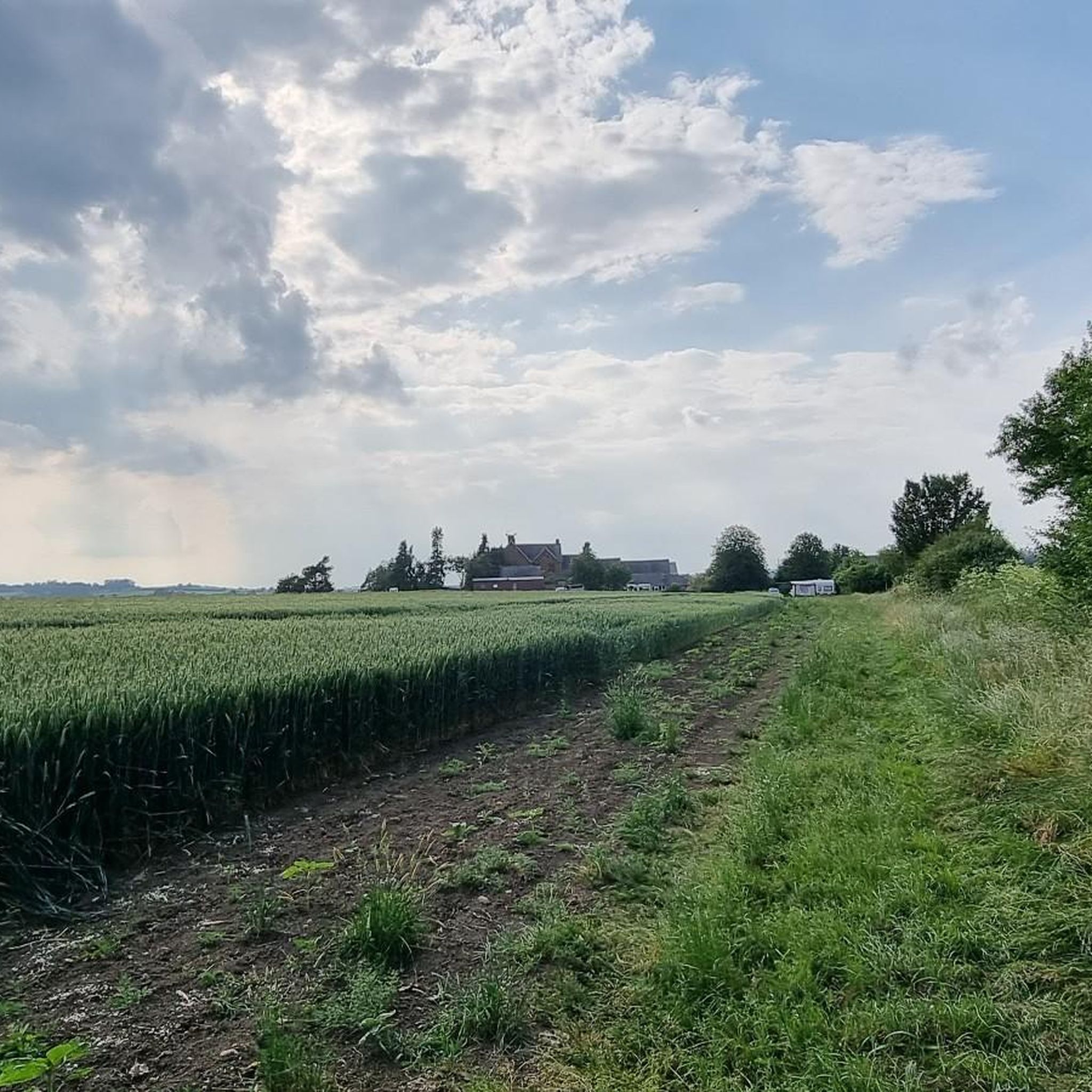

Tips from the Community

Narrow lane between hedgerows, very overgrown, had to dismount. Lane ends in a locked gate with a button to open dawn to rush only.
0
0

Great value for money £3 for coffee and cake. Owner very nice and polite.
0
0

There is a nice climb up to this point on Blue Lane, from either side, where you can get the best views of the surrounding landscape. I would recommend cycling from the Loxley side as it is steep at first, levelling out as you go through the village, then rising gently up Long Hill till you get to the final kick-up at the end.
1
0

Pop up cafe since 2020. Family run business. Reasonable prices. Good for a break in your walk.
0
0
The church of ST. EDMUND, which stands on the east side of the Stratford road, between it and the River Stour, consists of a chancel 27½ ft. by 19 ft., a north chapel 15½ ft. square, a vestry to the north of this 12 ft. by 9½ ft., south chapel 15½ ft. by 12½ ft., nave 71 ft. long and of similar width to the chancel, north aisle 15½ ft. wide, south aisle 17 ft. wide, south porch and a western tower 9½ ft. by 8¾ ft., all these measurements being taken within the walls. The whole of the church, except the 15th-century tower, was rebuilt in 1855 in the style of the 14th century. Beyond the tower there are now no old remains. From notes made by Prattinton in 1812 the former church appears to have been of early date, consisting of a chancel and chapel and a nave separated from a north aisle by a round-arched arcade. The font, however, was of 1707. Habington mentions two raised tombs in the churchyard to John White, who died in 1632, and Thomas White his son, who died in 1631. The present chancel has an east window of five lights with a traceried head and a single light on the south. The sedile in the same wall has a segmental head, while on the north side is a flat pointed arch. On either side of the chancel are arches opening to the chapels, and that opening to the nave is of one order. The nave has arcades on both sides of five bays, and each of the chapels has a western cross arch and is lighted by a four-light traceried east window. Both aisles have four two-light traceried windows in their side walls, with north and south entrances at the west ends. The west window of the north aisle is of two lights and the corresponding window of the south aisle of four lights, both with traceried heads. The tower arch is old and two orders, the outer of which is continuous and the inner interrupted by a moulded capital of late form. The tower is two stages high, and is supported on its west face by diagonal buttresses which rise to about half its height. It has a western window of three lights with modern tracery and arch, but with an old two-centred rear arch. Over the west window, and also on the north side, are small rectangular lights of a single chamfered order. The belfry is lighted on each side by a two-light window with a plain spandrel in the pointed head. The parapet of the tower is embattled, and at each corner is a small square pinnacle rising from the coping only, and surmounted by a crocketed finial. There are also intermediate pinnacles set diagonally and rising from grotesque heads in the parapet string. Grotesques project likewise from the western angles at the same level. The pulpit and the font are modern and both of stone. There are six bells in the tower, all by Matthew Bagley, and of 1754, except the third, which is of 1774. The plate consists of a communion cup inscribed 1824 with the hall mark for 1822, a salver of 1823 and a flagon of the same date.
0
0
The parish church of ALL SAINTS consists of an apsidal chancel, nave with north and south aisles, and a west tower. The structure was rebuilt, except the tower, about 1680 and is reminiscent of the plainer of the Wren churches in the City of London. The tower is an unusual example of a rebuilding in the 15th century on older foundations with the re-use of windows, &c., of the late 13th century. The nave (about 48 ft. by 18½ ft.) has north and south arcades of four bays with round heads of square section with panelled soffits; the white-stone columns are cylindrical, with partly square-moulded capitals enriched with egg and dart and other ornament, and moulded bases on high plinths partly encased in wood. The chancel arch is of similar detail. The semi-circular apse (about 12½ ft. diameter) has a wide round-headed single light in the middle, and there are similar windows at the ends of the aisles, and four each in the north and south walls. Under the westernmost north and south windows are the squareheaded doorways. The walls are of light yellow ashlar with moulded plinths, and have plain parapets with pilasters dividing the long sides into bays corresponding with the arcades, &c., and crowned by carved urns. The coved ceiling of the nave is plastered, the middle part being divided into panels with moulded ribs. The apse has radiating main ribs. The flat aisle-ceilings are plain. The roof over the nave is a high-pitched gable covered with stone tiles and with a stone cross at the apex of the east end. The west tower (about 12 ft. east to west by 11 ft. inside) is of three stages with plain weather stringcourses. The walls are of deep yellow Cotswold stone ashlar and have at the west angles diagonal buttresses to the two lower stages and square buttresses projecting north and south at the east angles. The masonry of these buttresses of the 15th century courses in with the walling, whereas none of that of the earlier windows does so. There is no plinth, but the west wall, only, has a scroll-moulded string-course at plinth level, like that to the south wall of Halford church. The archway in the east wall is of the late 13th century and of three chamfered orders, the head being sharply pointed and of small voussoirs. The outer order on the tower side, which is hollowed, dies on the tower walls. The archway is concealed on the nave side by the large monument described below. In the south wall is a doorway made when this blocking was done. In the west wall is a wide pointed light of the late 13th century with moulded jambs of two orders and a hoodmould with mask-stops. The lower part of the light is blocked. The second stage has west, north, and south windows of one light with pointed heads, with weatherworn remains of foiling indicating that they were originally traceried. The bell-chamber has pointed late-13thcentury windows, the jambstones of which, like those below, all break joint with the wall-masonry. They are all of two lights, but the heads are varied. The eastern has cinquefoiled pointed heads and a quatrefoiled spandrel, the north and south have trefoiled heads and a foiled circle in the main head. The west has trefoil-headed lights with a trefoil over each and a plain spandrel in the main head. All the windows have hood-moulds with mask-stops. The parapets are of the late 17th century or 18th century. They are plain, with moulded copings, and have intermediate and angle pilasters, above which the moulded copings break forward. Above the angles are square pinnacles with ogee hood-moulded gables and topped by panelled heads of obelisk form with foliage finials and arrow-vanes. On the south face of the second stage above the window is the iron gnomon of a former sundial. In the chancel are contemporary communion-rails with twisted and carved balusters, and two high-backed chairs. The quire-stalls have original pierced foliage panels in the upper parts and fielded panels below. There are two high pews of similar type at the west ends of the aisles but most of the other pews have been cut down from their original height; some retain the pierced foliage frieze-panels. The organ is modern but has a re-used similar panel in its casing. The hexagonal pulpit has sides with fielded panels; the angle-posts are carved with pendants of fruit and flowers and have carried brackets to support the bookrest. It was carried on a central post which is now reduced to a capital and base only. The font has a moulded small bowl with reeded and gadrooned underside, a slender stem and a moulded base in which the bowl-ornament is repeated. It is of a fine-grained white Italian stone and probably imported. The pavement in the apse is of Italian marbles, the chancel, in the front of it, of modern tiles, and the nave of hard grey stone slabs. There is a large carved achievement of the Stuart Royal Arms on the west wall of the nave in the tympanum of the roof space. Against the west wall of the nave is a large monument of white-veined marble to Sir Henry Parker, bart., who married Margaret Hyde and died 25 October 1713, and his son Hugh, who married Joan Smyth and died 2 February 1712(3). Their statues stand upon a pedestal engraved with the inscription and with lofty pilasters on either side supporting an architectural setting with a cornice on which are two shields of arms. On the wall to the south is a full achievement of arms. There are 12 other later memorials to members of the Townsend family: the earliest is to Joseph Townsend, 1763, an ugly white marble monument with a large cherub, seated on a pedestal, a skull, books, and foliage, all in a square-headed recess. A floor slab is to the Reverend Richard Bland, Vicar 1718(9). There are six bells, the treble of 1810, the fourth of 1726, and the other four by Matthew Bagley, 1687. The communion plate is silver gilt; it consists of a large cup with paten cover, and a tankard-shaped flagon, with an angel for thumb-piece, made in 1684 and given in 1686 by Sir Hugh Parker, bart., whose arms they bear; also a paten given at the same time by Barbara Hyde, and an alms plate of 1696.
0
0
Frequently Asked Questions
Are there many circular walks starting from Halford?
Yes, the area around Halford is well-suited for circular hikes. Many routes begin and end in the village or nearby, allowing you to explore the Warwickshire countryside without needing to retrace your steps. These loops vary in length and difficulty, from short strolls to more substantial day hikes.
Can I bring my dog on the trails around Halford?
Most public footpaths in the countryside are open to dogs, but they should be kept under close control, especially when crossing fields with livestock. It's always best to keep your dog on a lead in these areas. Be prepared for stiles which may not be dog-friendly.
Are there any easy, family-friendly hikes in the area?
Definitely. The region offers numerous gentle walks suitable for all ages and fitness levels. For a shorter, accessible outing, consider the Ramblers Rest Café loop from Shipston-on-Stour. It's a relatively flat walk that's perfect for a family adventure.
What are the trail conditions like around Halford?
The trails are a mix of public footpaths across rolling fields, quiet country lanes, and riverside paths along the River Stour. After rain, paths, particularly those through fields, can become muddy, so waterproof hiking boots are recommended.
How many hiking trails are there near Halford?
You can explore over 150 hiking routes around Halford. The network includes 77 easy trails perfect for a relaxed day out, 73 moderate routes for a bit more of a challenge, and a few difficult hikes for experienced walkers.
Are there any long-distance hikes for a full day out?
Yes, for those seeking a more challenging trek, the St Martin's Church, Barcheston – The George Inn, Brailes loop from Shipston-on-Stour is a great option. This 12.4-mile (19.9 km) route takes you through the wider Warwickshire countryside and typically requires over 5 hours to complete.
Can I find a good pub walk near Halford?
Many routes pass through charming villages with traditional pubs. The trail to Brailes, for example, features The George Inn, making it a classic choice for a pub walk. It's always a good idea to check the pub's opening times in advance.
What do other hikers say about the trails in Halford?
The trails are highly regarded by the komoot community, with over 2,400 visitors exploring the area. Reviewers often praise the peaceful English countryside scenery, the mix of riverside and field paths, and the quiet, well-marked routes.
Are there any walks that follow the River Stour?
Yes, several trails incorporate sections of the River Stour, offering pleasant, mostly flat walking with lovely waterside views. A good example is the moderate Hiking loop from Shipston-on-Stour, which includes stretches along the river.
Can I see any historical sites while hiking?
The area is rich in history. The Halford Castle – Wooden Bridge loop from Halford CP takes you past local historical features. You'll also find many routes that pass by historic churches, like St Martin's in Barcheston, and traditional stone buildings typical of the Cotswolds fringe.
What is the best time of year to hike around Halford?
You can hike here year-round, but spring and summer offer the most pleasant conditions with lush green landscapes and wildflowers. Autumn provides beautiful colours, while winter walks can be crisp and rewarding, though you should be prepared for muddy paths.
How do I get to the trailheads using public transport or by car?
The nearby town of Shipston-on-Stour is a common starting point and has some public transport links. Many routes, like the Stokeyleys Coppice – Boundary Covert loop from Ettington CP, begin from designated car parks (CP). For smaller villages, parking is often limited to on-street options, so please park considerately.
Most popular routes around Halford
Most popular attractions around Halford

Get inspired with the komoot mobile app


Explore more
Browse the best Hikes in other regions.
