The best road cycling routes around Chardstock
4.4
(40)
1,687
riders
168
rides
Road cycling routes around Chardstock traverse the diverse landscapes of the Blackdown Hills Area of Outstanding Natural Beauty (AONB). The region is characterized by rolling farmland, incised valleys, and a distinctly hilly topography, with elevations reaching up to 243 meters. Rivers like the Kit and Yarty flow through the area, contributing to the varied terrain. This environment provides challenging gradients for road cyclists.
Best road cycling routes around Chardstock
- The most popular road cycling route is Pilsdon Pen – Descent…
Last updated: July 3, 2026
20
riders
30.4km
01:36
440m
440m
Moderate road ride. Good fitness required. Mostly well-paved surfaces and easy to ride.
4
riders
32.0km
01:55
640m
640m
Moderate road ride. Good fitness required. Mostly well-paved surfaces and easy to ride.

Sign up for free
6
riders
33.3km
01:35
430m
430m
Moderate road ride. Good fitness required. Mostly well-paved surfaces and easy to ride.
3
riders
25.8km
01:27
350m
350m
Moderate road ride. Good fitness required. Mostly well-paved surfaces and easy to ride.
6
riders
68.7km
03:24
540m
540m
Moderate road ride. Good fitness required. Mostly well-paved surfaces and easy to ride.
Get access to more routes and recommendations from other explorers.
Sign up for free
Already have an account?
Our route recommendations are based on thousands of hikes, rides, and runs completed by other people on komoot.
Start today with a free account
Your next adventure awaits.
Login or Signup
Tips from the Community

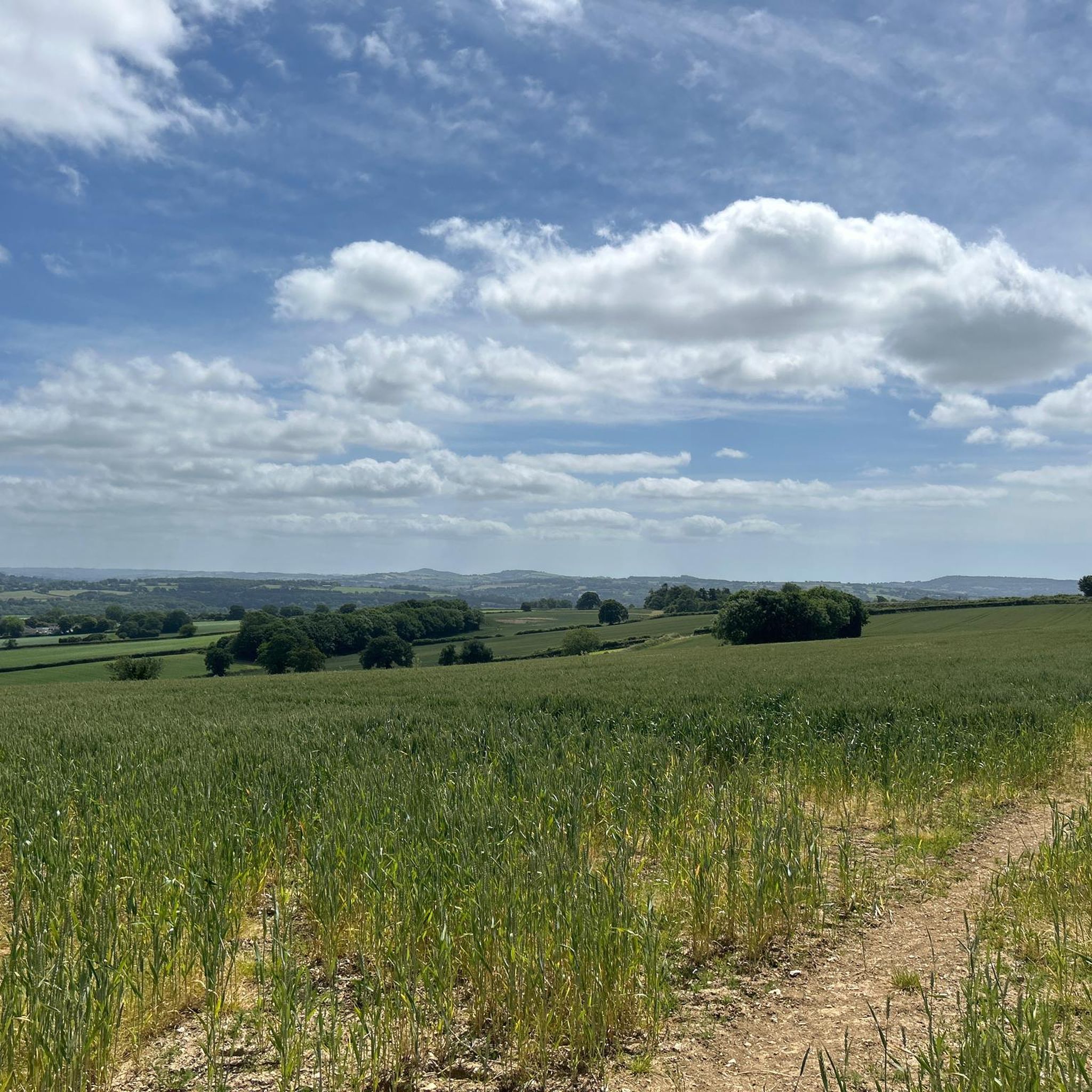
Gazing south from the high ridges of Pilsdon Pen, the lush Dorset countryside rolls out toward Symondsbury in a vibrant patchwork of green hills and deep dales. Punctuating the horizon is the unmistakable, tree-crowned peak of Colmer’s Hill, guiding the eye across spectacular views that reach all the way to the coast.
0
0
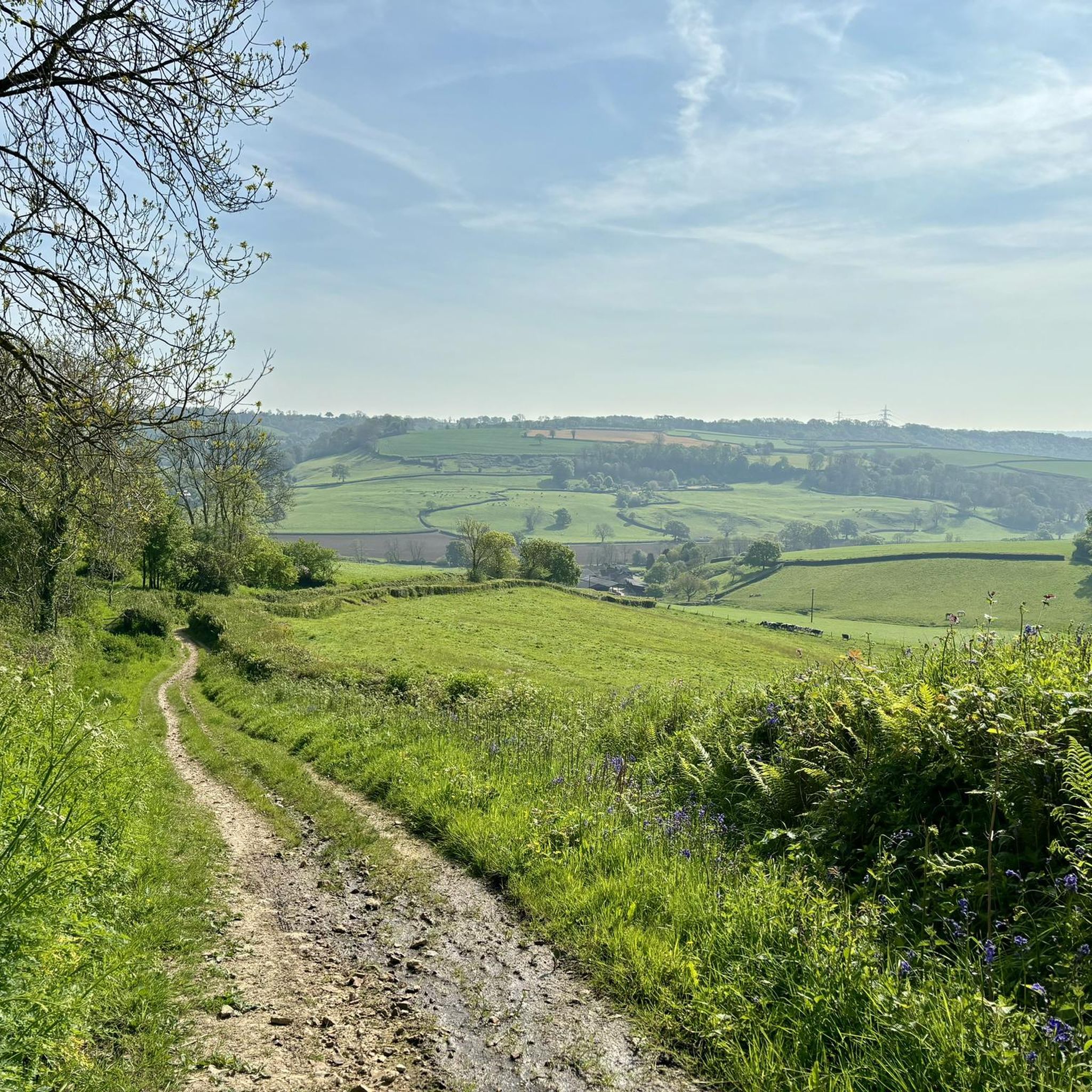
From the Pilsdon Pen car park, you are treated to a stunning, sweeping panorama of West Dorset’s rolling hills. Looking south, the lush Marshwood Vale opens up dramatically, framed by distant coastal ridges near Charmouth. It is an expansive, breathtaking introduction to the landscape before you even begin the hill climb.
0
0
If you’re visiting St Mary's Church in Marshwood, you’re stepping into a Victorian "reboot" of a much older story. While it looks like a classic 19th-century country church, its history is a bit of a survivor's tale, involving ruins, 2,000-person parties, and birds hidden in the stone. Opening Times The church is part of the Golden Cap Team of Churches and is generally open every day for visitors (typically from around 10:00 AM to 4:00 PM). Sunday Best: Services are usually held at 11:00 AM, but check the local noticeboard in the porch—it's the village's "analog social media" and always has the most up-to-date timings. School Days: The church has a very cool partnership with the adjacent primary school. Don't be surprised if you see kids using the building as a classroom or hall! The "New" Old Church The original medieval chapel was closer to Marshwood Castle but became a ruin by the 1600s. The current building was a 19th-century "do-over": The Party of 1840: When they laid the foundation stone for the new tower in 1840, about 2,000 people turned up to watch. That’s a massive crowd for a tiny village—it must have been the Iron Age equivalent of a stadium concert! The "Pecking Birds": Keep a sharp eye on the stone pillars inside. The capitals (the tops of the pillars) are carved with "stiff-leaf" foliage and tiny birds pecking at the leaves. It’s like a Victorian version of Where's Waldo. A Bargain Rebuild: Most of the church was rebuilt in 1884 for just £900. While that sounds cheap now, back then it was a huge community effort led by the local Reverend. Why it’s Worth a Peek Aside from the bird-spotting, the church offers a quiet, contemplative atmosphere with great views over the Marshwood Vale. It’s constructed from local rubble walls with ashlar dressings, giving it a rugged, "honest" look that perfectly matches the surrounding Dorset hills.
0
0
Gemini said If you find yourself in the rolling hills of West Dorset, the Church of St John the Baptist in Broadwindsor is a classic, "slow-paced" country church that packs a surprising amount of history into its quiet stone walls. It’s perched on a high spot right in the heart of the village, looking out over the square like it’s been keeping watch forever (which, to be fair, it mostly has). Here’s why it’s worth a wander: A Royal Fugitive’s Hiding Spot The village’s biggest claim to fame involves a high-stakes game of hide-and-seek. After losing the Battle of Worcester in 1651, King Charles II fled for his life and spent a night right here in Broadwindsor. While the King was hiding in a nearby inn (now private cottages), Parliamentarian soldiers actually arrived in the village to search it. Legend says he only escaped because a local woman went into labor in the same building, causing such a chaotic distraction that the soldiers moved on without finding him. He eventually escaped to France, but the church stands as a silent witness to that tense night. The "Witty" Rector In the 1630s, the church was led by Thomas Fuller, a man described as one of the first English writers to actually make a living from his pen. He was famous for his "pregnant wit" and once said, "Charity begins at home, but should not end there." * Even today, the village is very proud of him—you’ll often find his quotes inscribed in the local community pub, The White Lion, just down the road. What to Look For Inside The "Wonky" Architecture: The church has a mix of styles because it’s been rebuilt and patched up over nearly 900 years. You’ll see heavy, rounded Norman arches on one side of the nave and more pointed "Early English" ones on the other. It gives the interior a slightly mismatched, organic feel. The Ancient Font: There is a square font made of Purbeck Marble that dates back to the early 1200s. It’s been used to baptize village children for eight centuries. The Bells: The tower holds a ring of six bells. Some of them are "pre-Reformation," meaning they’ve been swinging in that tower since before Henry VIII broke away from Rome. The "Compromise" Clock: If you’re there during the day, you’ll hear the clock chime. There was a recent local debate about whether it should chime at night; in a very "British village" move, they compromised—it now stays quiet from 9:00 PM to 6:00 AM so the neighbors can sleep!
0
0

Good place to stop for a nice coffee and a flapjack.
0
0


At the heart of the village, you'll find this lovely church, with its churchyard, of which the oldest parts are known to date back to the 12th century, in a Norman Romanesque style. During the Victorian era, it underwent significant restoration, so you can see signs of this period in its exterior appearance.
0
0

Chard is a charming town located in Somerset, near the county borders of Devon and Dorset. Chard is a very notable town as it is the birthplace of powered flight. In 1848, in the town of Chard, Victorian aeronautical pioneer John Stringfellow first demonstrated that engine-powered flight was possible - and the rest is history!
3
0
Frequently Asked Questions
How many road cycling routes are available around Chardstock?
There are over 170 road cycling routes around Chardstock, offering a wide range of options for different skill levels within the Blackdown Hills Area of Outstanding Natural Beauty.
What is the typical terrain like for road cycling in Chardstock?
Road cycling in Chardstock primarily involves navigating the distinctly hilly terrain of the Blackdown Hills AONB. You can expect a mix of rolling farmland, incised valleys, and significant ascents, providing both scenic beauty and challenging gradients. Elevations can reach up to 243 meters, ensuring rewarding climbs.
Are there routes suitable for advanced road cyclists seeking a challenge?
Yes, Chardstock offers plenty of challenging routes for advanced road cyclists. With 36 routes graded as difficult, you'll find options with considerable ascents and demanding gradients. For example, routes around Chard can feature over 1200 meters of climbing, providing a true test of endurance.
Are there any easy or beginner-friendly road cycling routes in Chardstock?
While the region is known for its hilly terrain, there are 14 routes classified as easy, making them suitable for beginners or those looking for a more relaxed ride. These routes typically feature less intense climbs and offer a gentler introduction to road cycling in the area.
What kind of natural features can I expect to see along the road cycling routes?
The routes often traverse areas with diverse natural features, including rolling farmland, dense woodlands, and river valleys formed by the River Kit and River Yarty. You might also encounter nature reserves like Quants Nature Reserve, showcasing heathy grassland and species-rich meadows.
Are there any notable landmarks or points of interest to explore near the cycling routes?
Yes, several interesting landmarks and points of interest are accessible from the cycling routes. You can visit the historic Pilsdon Pen Summit and Trig Point, or explore the ancient Castle Neroche Iron Age Hill Fort. For a cultural stop, Forde Abbey and Gardens is also nearby.
Are there any circular road cycling routes around Chardstock?
Yes, many of the road cycling routes around Chardstock are designed as loops, allowing you to start and finish in the same location. An example is the Candlelight Inn – The Cotley Inn loop from Tatworth, which offers sustained climbs and scenic views.
What do other road cyclists enjoy most about cycling in Chardstock?
The road cycling routes in Chardstock are highly rated by the komoot community, with an average score of 4.5 stars. Cyclists often praise the challenging yet rewarding hilly terrain, the scenic views of the Blackdown Hills AONB, and the diverse landscapes that make each ride unique.
What is a good route for experiencing the varied farmland and valleys of the region?
For a route that showcases the varied farmland and valleys, consider the Marshwood Vale – Bottle Inn loop from Tatworth. This moderate 33.6 km trail leads you through picturesque agricultural landscapes and undulating terrain, typical of the Blackdown Hills.
Are there any routes that offer particularly good viewpoints?
Many routes in the Blackdown Hills AONB provide excellent viewpoints due to the elevated terrain. While specific viewpoints vary, you can expect stunning vistas of the surrounding countryside, especially from higher elevations like those found on routes such as the View of Chard – The Masons Arms loop from Chardstock.
Is there parking available for cyclists in Chardstock?
While specific designated cyclist parking isn't detailed, Chardstock is a rural area, and parking is generally available in village centers or near popular trailheads. It's advisable to check local signage or community hall areas for suitable parking spots before your ride.
What is the best time of year for road cycling in Chardstock?
The best time for road cycling in Chardstock is typically during the spring, summer, and early autumn months (April to October). During these periods, the weather is generally milder, and the scenic landscapes are at their most vibrant. Always check local weather forecasts before heading out, as conditions can change rapidly in hilly areas.
Most popular attractions around Chardstock

Get inspired with the komoot mobile app


Explore more
Browse the best Road cycling routes in other regions.
