The best walks and hikes around Chickney
4.6
(257)
1,818
hikers
227
hikes
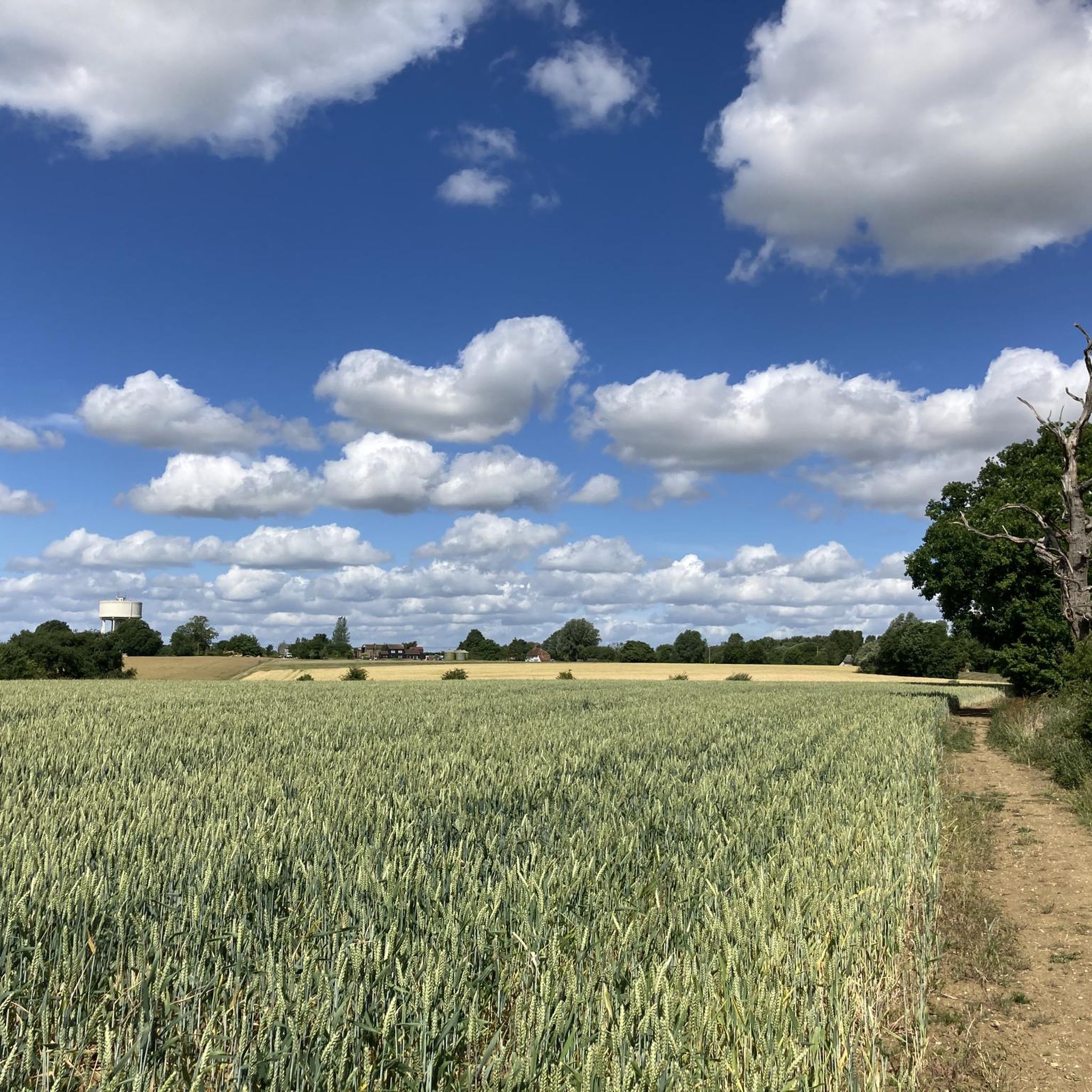
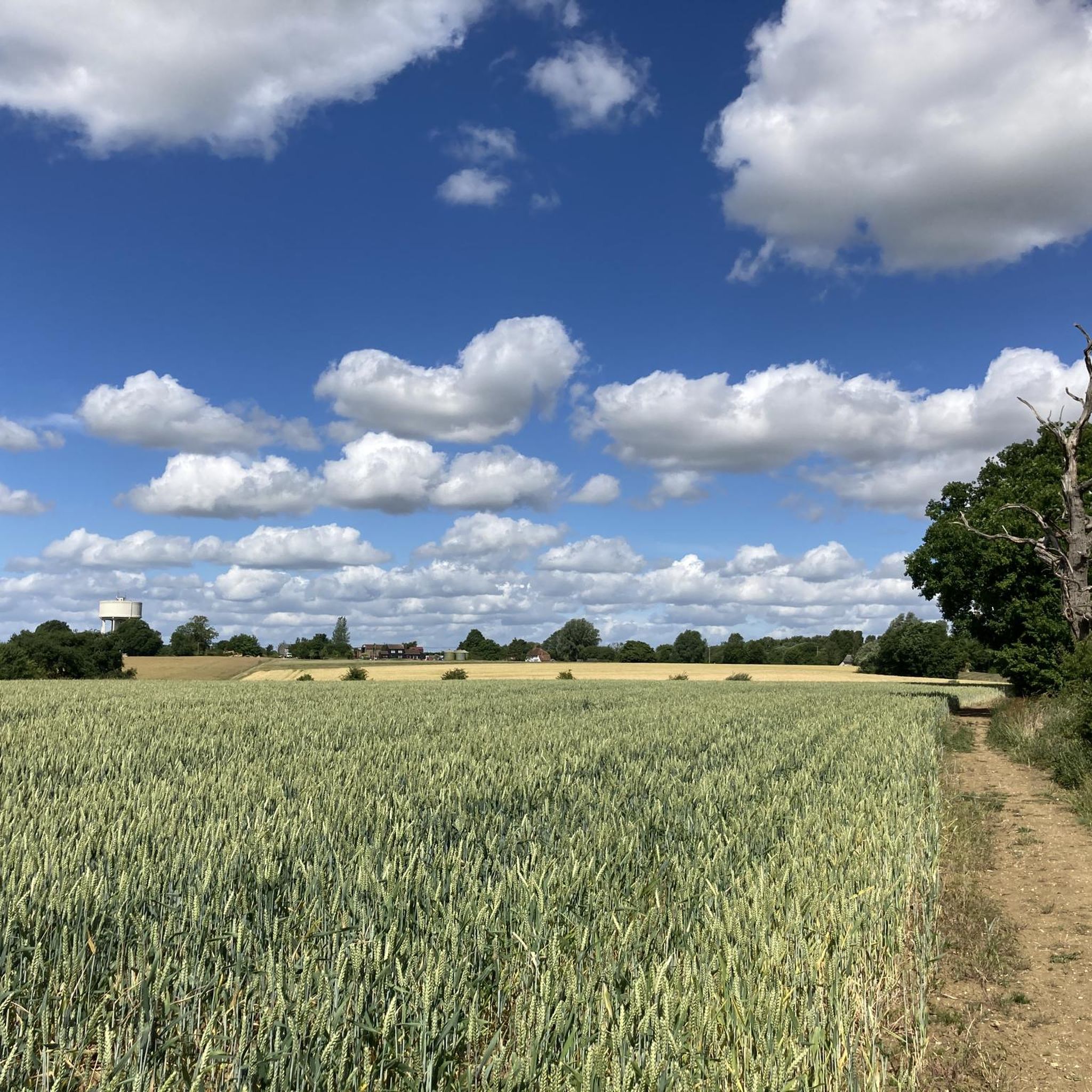
Hikes around Chickney explore the rural landscape of Essex, characterized by gently rolling farmland and patches of woodland. The area features a network of public footpaths that connect historic parishes like Broxted and Thaxted. The terrain is generally flat with minimal elevation, making it accessible for most walkers.
Best hiking trails around Chickney
- The most popular hiking route is Alsa Wood – Aubrey Buxton Nature Reserve loop from Elsenham, a 5.3 mile (8.6 km) trail that takes around 2…
Last updated: May 9, 2026
5.0
(2)
7
hikers
8.81km
02:18
70m
70m
Moderate hike. Good fitness required. Easily-accessible paths. Suitable for all skill levels.
4.0
(1)
5
hikers
7.28km
01:53
50m
50m
Easy hike. Great for any fitness level. Easily-accessible paths. Suitable for all skill levels.

Sign up for free
7
hikers
Easy hike. Great for any fitness level. Easily-accessible paths. Suitable for all skill levels.
3
hikers
18.1km
04:42
110m
110m
Moderate hike. Good fitness required. Easily-accessible paths. Suitable for all skill levels.
3
hikers
4.58km
01:12
30m
30m
Easy hike. Great for any fitness level. Easily-accessible paths. Suitable for all skill levels.
Get access to more routes and recommendations from other explorers.
Sign up for free
Already have an account?
Our route recommendations are based on thousands of hikes, rides, and runs completed by other people on komoot.
Start today with a free account
Your next adventure awaits.
Login or Signup
Tips from the Community

St Mary the Virgin is an unusual church, built in three stages with completely different styles. The 13th-century nave is the oldest section, with a wonderful main window. The porch is 17th century, with the tower added in the 18th century. The brick extension was added in the Victorian period.
0
0


Yeomans cafe has a gate at the back to a small outside area for your bike but you'll probably have to ask to unlock.
0
0

Uppers Coffee by the roundabout at the end of the high street is a good place for a refuel stop.
0
0

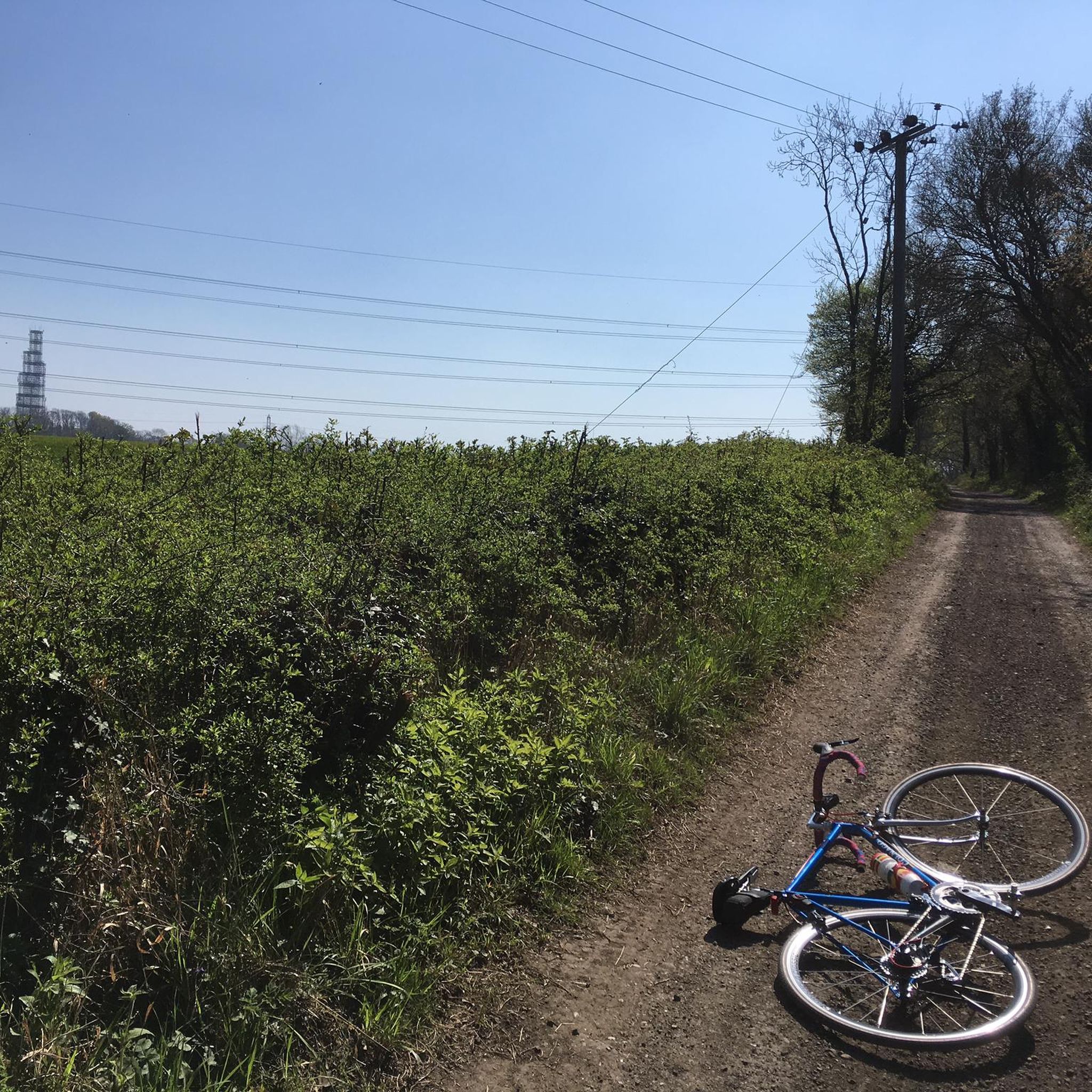
The pillar is located beside the footpath to Ringer’s Farm and visible from quite a ways off. It’s in generally good condition with all it’s metalwork in place. The view is wide open but only cultivated farmland.
0
0
Parish Church of St. Mary the Virgin stands N. of the village. The walls are of flint and pebble rubble with dressings of limestone; the roofs are covered with tiles and slate. The plan of the church is probably that of the early 12th-century building, but the only remaining detail of that date is a window in the N. wall of the Chancel. The Nave was possibly rebuilt in the 15th century, and the North Vestry was added during the same period. The church was completely restored in 1872, when the West Tower was rebuilt and the South Porch added. ¶Architectural Description—The Chancel (25 ft. by 14½ ft.) with the axis inclined slightly to the S., has a late 13th or early 14th-century E. window, partly restored and of three cinquefoiled lights with intersecting tracery in a two-centred head, under a plain external label; the splays and rear arch are hollow-chamfered and have broach-stops. In the N. wall are two windows, both towards the W. end of the wall; the eastern is of early 12th-century date and of a single light with a flattened round head; the western window is of the 15th century, and of two cinquefoiled lights under a segmental head with a moulded external label, which has grotesque beast-stops now defaced, and a foliated finial; the jambs are moulded and the mullion has an attached shaft with moulded capital and base; the moulded rear arch projects and forms a label with a foliated finial not in situ; E. of the eastern window, opening into the vestry, is a 15th-century doorway with chamfered jambs, two-centred arch and a segmental-pointed rear arch facing the vestry. In the S. wall are two windows; the eastern is of the 14th century and much restored, and of two trefoiled ogee lights with tracery under a two-centred head; the splays are of c. 1280 and have attached shafts with moulded bases and carved capitals set between two lines of dog-tooth ornament; the junctions of the bases and splays are carved with small grotesque heads, and the E. capital has foliage and fruit, with a bird eating fruit partly on the adjoining splay; on the splay adjoining the W. capital is a grotesque head with foliage issuing from the mouth; the western window is of the 15th century, and of two trefoiled ogee lights with modern tracery under a segmental-pointed head. The chancel-arch is modern. The North Vestry has a window in the E. wall and a doorway in the W. wall, both modern. The Nave (40½ ft. by 21 ft.) has one window in the N. wall, all modern, except the splays and chamfered, two-centred rear arch, which are of the 15th century. Further W. is a blocked doorway with a two-centred arch and a chamfered segmental-pointed rear arch, probably also of the 15th century. In the S. wall are two windows; both are modern except the 15th-century moulded splays and pointed rear arch of the western window. W. of the windows is the 15th-century S. doorway, partly restored, with moulded jambs, two-centred arch, plain label, and chamfered segmental rear arch. Fittings—Brass: In nave—on N. wall, of a civilian, c. 1460, in loose belted cloak, feet missing. Door: In S. doorway—of oak, in two leaves, each leaf having three V-shaped battens with hollow-chamfered fillets between them, plain strap-hinges, circular scutcheon and trefoiled handle, back of each leaf with fillets in cross-pattern, probably 15th-century. Glass: In chancel—in N.W. window, hanging inside, two shields of old France and England quarterly, 14th-century, and one medallion with a sundial, hour-glass and crown, dated 1664. Niche: In chancel—in E. wall N. of window, shallow, with moulded jambs and the springing of a four-centred arch, rest of head mutilated, but probably canopied, 15th-century. Piscina: In chancel—with chamfered jambs, moulded stops, moulded and trefoiled head flanked by quatrefoiled panels, circular quatrefoiled basin, late 13th-century. Plate: includes cup of 1562, with two bands of ornament round the bowl; cover-paten, probably late 17th-century, with Elizabethan rim; and alms-dish, probably late 17th-century. Source: british-history.ac.uk
0
0
Widdington is a village and a civil parish near Saffron Walden, in the Uttlesford district.
0
0
Frequently Asked Questions
Are there easy, family-friendly walks around Chickney?
Yes, the area's generally flat terrain makes it very suitable for family outings. There are many shorter, easy routes available. For a pleasant walk of about an hour, consider the Prior's Hall Barn – Widdington Village Sign loop from Widdington, which is under 5 km.
Can I bring my dog on hikes in the Chickney area?
Dog walkers will find many suitable paths around Chickney. However, since most trails cross active farmland, you should be prepared to keep your dog on a lead, especially near livestock. Always follow the Countryside Code and respect any local signage.
What is the terrain like on the hiking trails?
The landscape around Chickney is defined by gently rolling countryside with very little elevation change. Hikes typically follow a mix of public footpaths across agricultural fields, quiet country lanes, and through small sections of woodland. The ground can become muddy after rain, so waterproof footwear is recommended.
Are there many circular walks available?
Yes, circular walks are very common in this area, allowing you to start and end in the same place without retracing your steps. Many routes are designed as loops that explore the countryside around villages like Elsenham, Broxted, and Thaxted. For example, the Hiking loop from Elsenham is a straightforward circular route.
How many hiking trails are there around Chickney?
There are over 200 marked trails and walking routes to explore in the region. These range from short, easy strolls to more moderate, longer-distance hikes, offering plenty of options for all fitness levels.
What do other hikers think of the routes around Chickney?
The area is highly regarded by the komoot community, with an average rating of 4.7 out of 5 stars. Hikers often praise the peaceful rural scenery, the quiet country lanes, and the network of accessible footpaths that connect the historic villages.
Are there any long-distance trails that pass through the area?
Yes, the Saffron Trail, a 71-mile (114 km) long-distance path, runs through this part of Essex. It connects the towns of Southend-on-Sea and Saffron Walden, passing through scenic countryside and historic villages along the way. You can hike sections of it as part of a day walk.
What kinds of things can I see on a walk near Chickney?
Walks in this region showcase the classic English countryside. You can expect to see vast arable fields, patches of ancient woodland like Home Wood and Alsa Wood, and charming historic villages. A key point of interest is the Saxon church of St Mary in Chickney, one of the oldest churches in the county.
Are the trails accessible by public transport?
Yes, several routes are accessible via public transport. The village of Elsenham has a train station with services connecting to London and Cambridge, making it a convenient starting point for a number of walks without needing a car.
What are the trail conditions like?
Most trails are well-defined public footpaths, but they can be uneven and narrow in places. After periods of rain, paths, particularly those crossing fields, can become very muddy and slippery. It's always a good idea to wear sturdy, waterproof hiking boots.
Are there any challenging hikes in the area?
The terrain around Chickney is mostly flat, so you won't find steep mountain climbs. The challenge here comes from distance rather than elevation. For a more demanding day out, you could try a longer route like the 18 km Widdington Village Sign – Prior's Hall Barn loop from Thaxted.
Most popular attractions around Chickney

Get inspired with the komoot mobile app


Explore more
Browse the best Hikes in other regions.
