Attractions and Places To See around Caldragh - Top 4
Best attractions and places to see around Caldragh are centered on Boa Island in County Fermanagh, Northern Ireland. This area is known for its ancient historical sites, particularly Caldragh Graveyard with its unique stone figures. The region offers a blend of cultural heritage and natural landscapes, including the scenic Lough Erne and surrounding mountains. Visitors can explore historical estates, enjoy panoramic viewpoints, and experience the tranquil environment of this island setting.
Best attractions and places to see around Caldragh
- The…
Last updated: June 24, 2026
Cuilcagh Mountain Summit Cairn
Highlight • Summit
Translated by Google •
Tip by

Florence Court
Highlight • Forest
Tip by

Sign up now to discover places like this
Get recommendations on the best single tracks, peaks, & plenty of other exciting outdoor places.
Sign up for free
Thatched Summer House, Florence Court Pleasure Gardens
Highlight • Viewpoint
Tip by
Slieve Rushen
Highlight • Summit
Tip by

Ballyconnell–Woodford Canal
Highlight • River
Tip by
Sign up for free to discover even more attractions around Caldragh.
Sign up for free
Already have an account?
Start today with a free account
Your next adventure awaits.
Login or Signup



Tips from the Community

Great walk, very touristy but it's worth the detour! Be careful of the crowds (on weekends and in summer I dare not imagine!). However, BE CAREFUL, the summit is not accessible, you have to pass the protective barriers which allow the wild nature to be preserved from our steps and from this crowd of people. If we, the Komoot community, start to do this all the tourists will allow themselves and the landscape will never be so beautiful again! (Ps: no need to climb to the top to already see enough in the eyes!)
0
0

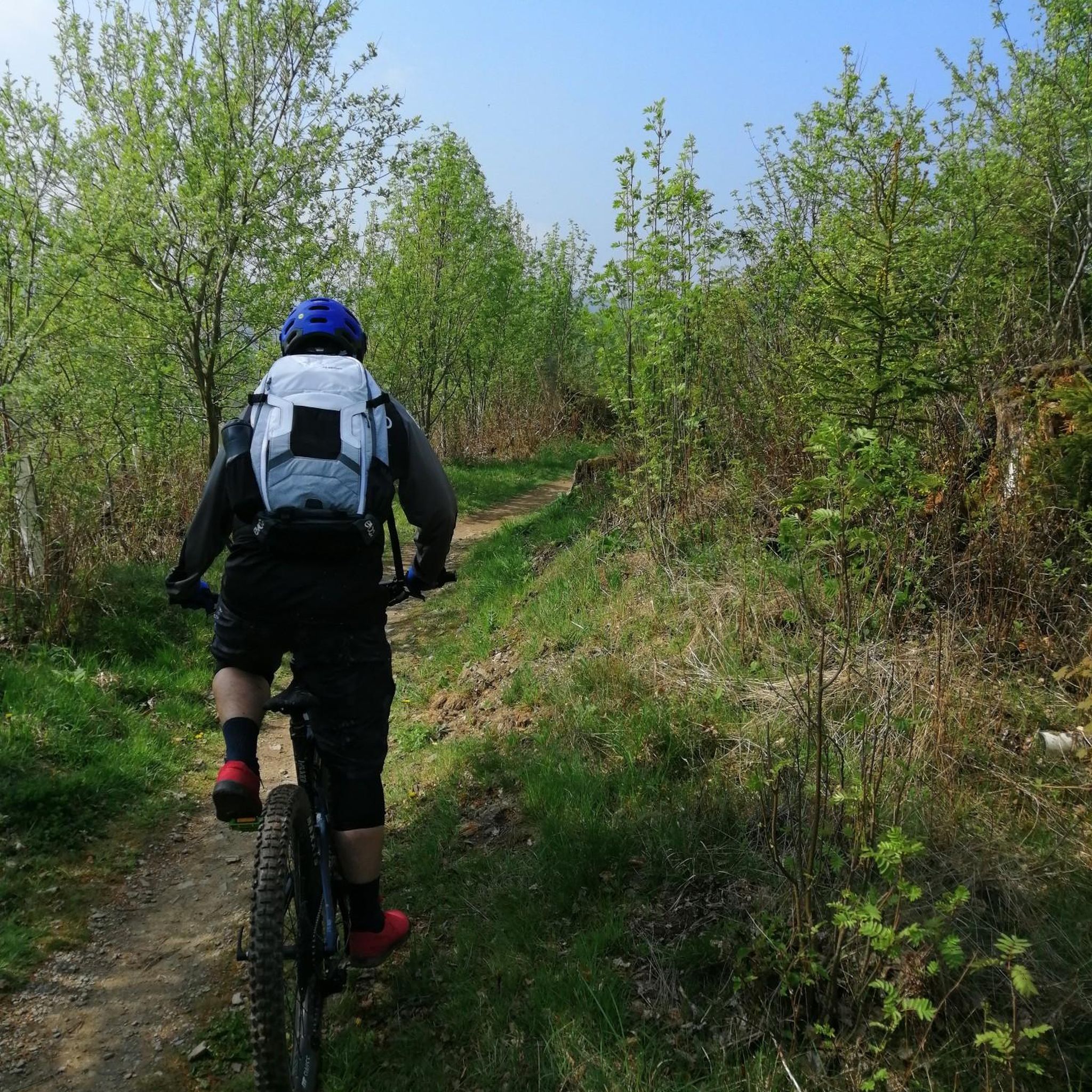
Heading out towards Annagh loop, along the Ballyconnell canal you can enjoy the quite river landscape on mixed towpath and singletrack terrain.
0
0
Wind swept bog mountain trails along the wind turbines dotted along the ridge and border with NI. The Slieve Rushen mountains are a geological park. This unique landscape was created when the icecaps melted.
0
0

Cuilcagh Mountain sits right on the border between Ireland and Northern Ireland. From the top, you can enjoy magnificent views across the rolling hills of Ireland in all directions.
1
0
Beautiful thatched summer house situated in the Pleasure Gardens of Florence Court House.
1
0
Florence Court House is a magnificent 18th-century country estate situated in the foothills of Cuilcagh Mountain. The house is amongst a medley of lush green parkland and thick woodland with sights of the wonderful Benaughlin Mountain in the distance. The house is now owned by the National Trust and is open to explore daily. For more information regarding opening times and ticket prices visit https://www.nationaltrust.org.uk/visit/northern-ireland/florence-court
2
0

Nestled in the foothills of Cuilcagh Mountain, Florence Court is a wonderful Georgian mansion surrounded by picturesque countryside. The first house was built by John Cole at the beginning of the 18th century and named after his wife, Florence. The Cole family lived in the house for over 250 years. Today, the estate is managed by the National Trust. There are over 10 miles (16 km) of hiking and bike trails to explore the grounds. You can visit a water-powered sawmill and blacksmith's forge that reveal the area's industrial heritage. There's also a beautiful Irish yew tree, Florence Court Yew, which is one of two original Irish Yew discovered in 1767. There is a small entrance fee to the gardens and forest.
1
1

The name Cuilcagh comes from the Irish Cuilceach, which has been translated as "chalky". However, the mountain is mainly sandstone and shale, covered with bog and heather. The cliff-edged summit surface of the mountain is formed from the hard-wearing Lackagh Sandstone which itself overlies the Briscloonagh Sandstone. "It is possible that the name refers to the limestone rock on the lower northern flanks, namely the Glencar and Dartry Limestone formations.[6] Here a number of streams disappear below ground at swallow holes named Cats Hole, Pollawaddy, Pollasumera and Polliniska, all forming part of the Marble Arch cave system. If so, the name would mean 'calcareous' rather than 'chalky'".[7] It has also been called Slieve Cuilcagh in English,[8] 'Slieve' being an anglicisation of Sliabh ("mountain"). In the 1609 Plantation of Ulster, Cuilcagh formed part of lands which were granted to John Sandford of Castle Doe by letters patent dated 7 July 1613 (Pat. 11 James I – LXXI – 38, Quilkagh).[9][10] It was later sold by Sandford to his wife's uncle Toby Caulfeild, 1st Baron Caulfeild, Master of the Ordnance and Caulfield had the sale confirmed by letters patent of 12 July 1620 (Pat. 19 James I. XI. 45, Quilkagh). (https://en.wikipedia.org/wiki/Cuilcagh)
4
0
Frequently Asked Questions
What historical sites can I explore around Caldragh?
Caldragh is renowned for its ancient historical sites. The central attraction is Caldragh Graveyard on Boa Island, home to the enigmatic Dreenan Figure (also known as the Boa Island Figure or Janus Figure) and the Lusty Man. Beyond the graveyard, you can visit Florence Court, a magnificent 18th-century country estate nestled in the foothills of Cuilcagh Mountain, offering a glimpse into the region's heritage.
What is the significance of the stone figures at Caldragh Graveyard?
The stone figures at Caldragh Graveyard, particularly the Dreenan Figure (Boa Island Figure / Janus Figure) and the Lusty Man, are highly significant. The Dreenan Figure is a unique two-faced stone carving, believed by some to represent the war goddess Badhbh. While its precise origins are debated, current opinion leans towards an Early Medieval/Early Christian date (500 to 1000 AD). The Lusty Man is a smaller, more weathered figure brought from Lustymore Island, sharing similar features. These figures add a profound sense of mystery and ancient history to the site.
Are there any other ancient cultural sites on Boa Island beyond Caldragh Graveyard?
Yes, Boa Island itself is rich in history. Beyond Caldragh Graveyard, the island features numerous other historic sites, including a cairn at Inishkeeragh Bridge and eleven raths (forts) scattered across the island, such as a counterscarp rath in the townland of Dreenan. These sites offer further insights into the island's long and varied past.
What natural features can I explore on Boa Island and near Caldragh?
Boa Island, situated within Lower Lough Erne, offers beautiful natural scenery. You can enjoy views of the lough and the tranquil island environment. The Caldragh site itself features a sacred Hawthorn tree, believed to be a 'Fairy Tree' in Irish folklore. For more expansive natural beauty, explore the trails around Slieve Rushen, a geological park formed by melting icecaps, or the serene landscape along the Ballyconnell–Woodford Canal.
Where can I find scenic viewpoints near Caldragh?
For breathtaking vistas, head to the View of Cuilcagh Mountain from Gortalughany. This viewpoint offers extensive panoramas across forests, bogland, and valleys, with views extending over Cuilcagh Mountain and towards Benaughlin and Upper Lough Erne. Another excellent spot is Slieve Rushen, where you can experience wind-swept bog mountain trails and enjoy views along the ridge.
Are there hiking trails available near Caldragh attractions?
Absolutely! The area around Caldragh offers several hiking opportunities. You can find trails at Florence Court, including the Florence Court Red Trail. For more hiking options, explore the various routes available in the region. You can find detailed hiking guides and routes around Caldragh at Hiking around Caldragh.
Can I go cycling near Caldragh?
Yes, cycling is a popular activity in the area. The Ballyconnell–Woodford Canal offers quiet river landscapes suitable for cycling on mixed towpath and singletrack terrain. For more dedicated cycling routes, including road cycling options, you can explore guides like Road Cycling Routes around Caldragh.
What is the best time of year to visit Caldragh and its surrounding attractions?
The best time to visit Caldragh and the surrounding attractions generally depends on your preferred activities. Spring and summer (May to September) offer milder weather, ideal for exploring outdoor sites like Caldragh Graveyard, Boa Island, and hiking trails. The lush greenery and longer daylight hours enhance the scenic beauty of Lough Erne and the mountains. Autumn can also be beautiful with changing foliage, though weather can be more unpredictable.
Are there family-friendly attractions around Caldragh?
Yes, there are family-friendly options. Florence Court is an excellent choice, offering a historic estate with parkland and woodland trails suitable for families. Within Florence Court's Pleasure Gardens, you can also find the charming Thatched Summer House, which is also marked as family-friendly.
Are there dog-friendly walking routes near Caldragh?
While specific dog-friendly designations for Caldragh Graveyard itself are not detailed, many outdoor areas and trails in the wider region are suitable for walks with dogs, provided they are kept on a leash and owners clean up after them. The extensive grounds of Florence Court, with its numerous hiking and bike trails, often welcome dogs in designated areas. Always check local signage or official websites for specific rules regarding pets before your visit.
What do visitors enjoy most about the attractions around Caldragh?
Visitors particularly appreciate the blend of ancient history and natural beauty. The enigmatic stone figures at Caldragh Graveyard and the serene, moss-grown atmosphere are often highlighted. The extensive vistas from viewpoints like View of Cuilcagh Mountain from Gortalughany are highly rated for their scenic appeal. The historical charm and beautiful grounds of Florence Court also receive positive feedback, with many enjoying the hiking and bike trails available there.
Are there opportunities for running trails near Caldragh?
Yes, the area provides several running trails. The Florence Court Red Trail is a popular option for runners. You can find various running routes, including loops and moderate trails, in the vicinity. For a comprehensive list of running trails around the area, refer to the guide Running Trails around Caldragh.
Most popular routes around Caldragh

Get inspired with the komoot mobile app


Explore more
Still not found the Highlight you’re looking for? See guides of the top attractions in other regions:
