Attractions and Places To See around Apley - Top 20
Best attractions and places to see around Apley include a network of trails and historical sites, primarily centered around the River Witham in Lincolnshire. This region features flat fenlands, offering expansive views and opportunities for cycling and walking along former railway lines. Cultural points of interest include historical locks and sculptures that reflect the area's heritage and natural environment. The landscape provides a peaceful setting for outdoor exploration.
Best attractions and places to see around Apley
- The most popular attractions…
Last updated: April 25, 2026
Water Rail Way: River Witham Sculptures and Countryside
Highlight (Segment) • Cycleway
Tip by

Bardney Lock
Highlight • Bridge
Tip by

Sign up now to discover places like this
Get recommendations on the best single tracks, peaks, & plenty of other exciting outdoor places.
Sign up for free
Water Rail Way (NCN Route 1)
Highlight (Segment) • Viewpoint
The railway lines runs between the River Witham and South Delph. Dotted …
Tip by

Water Rail Way at Stixwould
Highlight (Segment) • Cycleway
Tip by

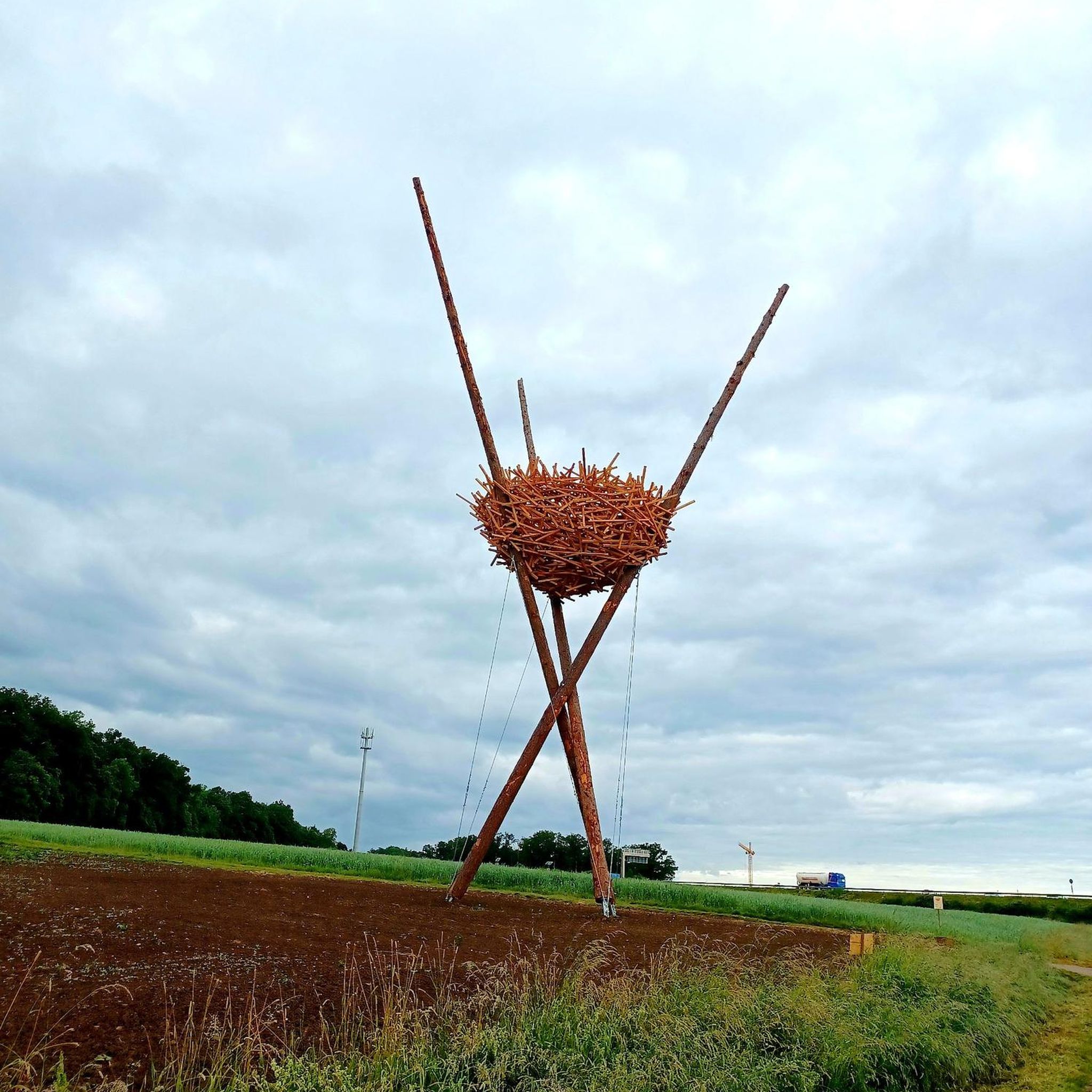
The Lady of Shalott Sculpture
Highlight • Monument
A sculpture designed and produced by Anwick Forge, comprising an elegant 4.5 metre high split arch representing sheaves of barley. The base bears the opening lines …
Tip by

Sign up for free to discover even more attractions around Apley.
Sign up for free
Already have an account?
Start today with a free account
Your next adventure awaits.
Login or Signup



Tips from the Community

Brilliant ride with good tarmac apart from 1 mile at Bardney.Suitable for mountain and road bikes Just have to push through central Lincoln or preferably don't cycle this section. Together with the 11.7 miles of old track heading west out of Lincoln over the Trent, this can make a 60 miles circuit of good off road cycling from Tuxford to Boston
0
0

Bardney lock is located on the River Witham about 11 miles to the East of Lincoln. The River Witham flows through the peaceful Lincolnshire countryside and is has beautiful views with a remote feeling for much of its length. The flat marshy fenlands stretch out on either side of the river allowing spectacular sunsets to be seen.
1
0

almost at bardney travelling from lincoln - treat yourself to a chippy dinner from sunnys plaice, lovely
0
0
Lovely cycle route, can get you lincoln to boston, windy in winter
0
0

The Lady of Shalott A sculpture designed and produced by Anwick Forge, comprising an elegant 4.5 metre high split arch representing sheaves of barley. The base bears the opening lines of the poem by Alfred Lord Tennyson: "On either side the river lie long fields of barley and of rye".
0
0
Good route to stretch out the cycling legs, pleasant for all cyclists with many benches along route for a quick stop
1
0

From 1142 onwards, sluices were constructed to prevent flooding by the sea, and this culminated in the Great Sluice, which was constructed in 1766. It maintained river levels above Boston, and helped to scour the channel below it. The land through which the lower river runs has been the subject of much land drainage, and many drains are connected to the Witham by flood doors, which block them off if river levels rise rapidly. The river is navigable from Brayford Pool in Lincoln to Boston. Its locks are at Lincoln, Bardney and the Grand/Great Sluice. Passage through the latter is restricted typically to 4-hour intervals during daylight when the tidal levels are suitable. The river provides access for boaters to the Witham Navigable Drains, to the north of Boston, and to the South Forty-Foot Drain to the south, which was reopened as part of the Fens Waterways Link, a project to link the river to the Nene flowing through the city of Peterborough. From Brayford Pool the Fossdyke Navigation links to the Trent. The Witham's course, which flows to the north and then to the south-east may be the result of glaciation (and possibly isostatic rebound) redirecting older rivers.[citation needed] The source of the river is on high ground near South Witham, Lincolnshire,[6] at around 340 feet (100 m) above ordnance datum (AOD). After briefly flowing to the east to reach South Witham, it flows generally north, passing through Colsterworth where it is crossed by the A1 road, which largely follows the line of the river to Newark on Trent. At Great Ponton, it is joined by the Cringle Brook on its left bank, and continues through Grantham, where it has already descended to 170 feet (52 m) AOD. After Barkston it turns to the west to pass through Marston. Foston Beck joins on the left bank, and at Long Bennington it resumes its northerly course. Beyond Claypole and near Barnby in the Willows it forms the border between Lincolnshire and Nottinghamshire for about 3 miles (4.8 km), before passing through an Army training area near Beckingham. The River Brant joins on the right bank, before it passes through North Hykeham to reach Lincoln, where it is only 16 feet (4.9 m) AOD.[7][6] The upper waters are important for agricultural water extraction, and for coarse fish such as roach, common bream and pike; small mammals like water voles, and native crayfish.[5] A gap in the limestone scarp (see Lincolnshire Wolds) near Ancaster may represent an earlier course of the River Trent towards Boston, but is now occupied by the River Slea.[8] In Lincoln, the river flows into Brayford Pool and exits along a narrow channel that passes under the medieval High Bridge.[9] The bridge not only restricts navigation due to its small size, but the volume of water that can pass through the gap is limited in times of flood. This is alleviated by the Sincil Dyke, which leaves the main channel at Bargate Weir and runs for 1.5 miles (2.4 km) through the industrial areas to the south of the main city centre. It used to rejoin the main channel at Stamp End, but was re-routed into the South Delph, a drainage ditch constructed by John Rennie in the early 19th century that joins the main channel below Bardney lock. The origins of the Sincil Dyke are unknown, but it is known to have been used as a drainage channel in the mid-13th century and is thought to be pre-medieval or even Roman. Parts of it were culverted in 1847 to allow the construction of Lincoln Central railway station.[10] From Lincoln, the river again turns first east, then south, making a cut through a belt of upland known as the Lincoln Gap. This section has also been suggested as a lower course of the Trent during and before periods of glaciation.[8] From Dogdyke near Coningsby to Boston, the north bank of the river was used by a section of the Great Northern Railway from Lincoln to Boston. A long-distance footpath, the Water Rail Way, follows the course of the river from Lincoln to Boston. The path uses sections of the river towpath and abandoned railway tracks, and has been opened in stages, with the final 2 miles (3.2 km) being completed in September 2008. The path is now part of Route 1 of the National Cycle Network and features a number of sculptures along its length, each commissioned from local artists.[11] They include Lincoln longwool sheep at Stixwould, Lincoln Red cows at Washingborough, and Lincoln curly pigs, which became extinct in 1972, at Southrey.
1
0
Frequently Asked Questions
What kind of attractions can I expect to find around Apley?
Apley, particularly in the Lincolnshire region, is known for its extensive cycle ways, historical landmarks, and natural riverine landscapes. You'll find long-distance trails, unique sculptures, and historical infrastructure, primarily centered around the River Witham and its flat fenlands.
Are there family-friendly activities available?
Yes, many attractions around Apley are suitable for families. The Water Rail Way: River Witham Sculptures and Countryside is a popular cycle path featuring numerous sculptures that children often enjoy. The Lady of Shalott Sculpture and Bardney Lock are also considered family-friendly spots.
What outdoor activities can I do near these attractions?
The area around Apley is ideal for cycling and walking. The Water Rail Way, which is part of National Cycle Network Route 1, offers a 35-mile tarmaced path connecting Woodhall Spa to Lincoln, perfect for a pleasant ride through the countryside. For more specific outdoor routes, you can explore various hiking, road cycling, and mountain biking trails in the area.
Are there any historical sites to visit?
Yes, the region has historical significance, particularly related to its waterways. Bardney Lock on the River Witham is a notable historical lock system. The River Witham itself has a long history of navigation and land drainage, with sluices constructed as early as 1142.
What are the best places for cycling?
The Water Rail Way is highly recommended for cycling. It's a mostly tarmaced, traffic-free path that follows the River Witham and old railway lines, featuring sculptures and scenic views. It's suitable for all cyclists and offers many benches for quick stops.
Are there any accessible attractions for visitors with mobility needs?
The Water Rail Way: River Witham Sculptures and Countryside is noted as wheelchair accessible, making it a great option for visitors with mobility needs to enjoy the scenery and sculptures along the path.
What do visitors enjoy most about the attractions around Apley?
Visitors frequently praise the peaceful and remote feeling of the Lincolnshire countryside, especially along the River Witham. The numerous sculptures along the Water Rail Way are a highlight, as are the spectacular sunsets visible over the flat fenlands, particularly from locations like Bardney Lock.
Can I find places to eat and drink near the attractions?
Yes, along the Water Rail Way, there are several places to eat and drink. For example, near Bardney, visitors have recommended Sunny's Plaice for a chippy dinner.
What is the significance of The Lady of Shalott Sculpture?
The Lady of Shalott Sculpture is a striking 4.5-meter high split arch designed by Anwick Forge. It represents sheaves of barley and features the opening lines of Alfred Lord Tennyson's famous poem, connecting the local landscape to literary heritage.
Are there any trails for walking or hiking?
Yes, the region offers various trails for walking and hiking. The Water Rail Way is excellent for walks, and there are dedicated hiking routes around Apley, ranging from easy to difficult, allowing you to explore the fenlands and riverbanks.
Is the area suitable for dog walking?
The extensive network of footpaths and cycle ways, such as the Water Rail Way, provides ample opportunities for dog walking. The open fenlands and riverbanks offer a peaceful environment for you and your dog to explore.
What is the best time of year to visit Apley?
The flat fenlands and riverine landscapes around Apley can be enjoyed throughout the year. Spring and summer offer pleasant weather for cycling and walking, while autumn provides unique views of the changing landscape. Even in winter, the remote and peaceful scenery can be quite striking, especially with the spectacular sunsets.

Get inspired with the komoot mobile app


Explore more
Still not found the Highlight you’re looking for? See guides of the top attractions in other regions:
