Attractions and Places To See around Little Cawthorpe - Top 20
Best attractions and places to see around Little Cawthorpe include a blend of historical sites, natural landscapes, and traditional village features within the Lincolnshire Wolds. This quaint village offers a peaceful base for exploring the surrounding countryside, characterized by walking and cycling paths. Notable features include a distinctive ford, the source of the Long Eau, and panoramic views across the middle-marsh to the sea. The area provides opportunities to experience both cultural landmarks and natural beauty.
Best attractions and places to see around Little Cawthorpe
- The most popular attractions is Hubbard's Hills, a trail that features a deep, steep-sided valley formed by a meltwater lake. The River Lud now meanders through this glacial channel, making it a significant natural monument.
- Another must-see spot is Red Hill Nature Reserve, a natural monument with a chalk escarpment and acres of plateaued wild landscape. This reserve is known for its wildflower meadows and a disused quarry rich in exposed red chalk and fossils.
- Visitors also love St James' Church, Louth, a religious building notable for having one of the tallest spires in the United Kingdom. This historical site also played a role in the Lincolnshire Rising of 1536.
- Little Cawthorpe is known for its historical sites, natural beauty spots, and extensive walking and cycling routes. Visitors can explore a variety of attractions, from traditional village pubs to nature reserves and significant religious buildings.
- The attractions around Little Cawthorpe are appreciated by the komoot community, with 56 upvotes and 25 photos shared by visitors.
Last updated: August 26, 2026
St James' Church, Louth
Highlight • Religious Site
Translated by Google •
Tip by

Hubbard's Hills
Highlight • Trail
Tip by

Sign up now to discover places like this
Get recommendations on the best single tracks, peaks, & plenty of other exciting outdoor places.
Sign up for free
Belchford Village and Bluebell Inn
Highlight • Religious Site
Tip by

RAF Stenigot Radar Tower
Highlight • Historical Site
WORLD WAR TWO CHAIN HOME STATION
The RAF base at this site had existed since the 1930’s, and was originally part of Britain’s communication network to detect incoming German bombers during World War Two. The base was originally a “Chain Home Station”; providing early warnings to Sheffield, Nottingham and the central Midlands on incoming enemy aircraft. This advanced system was the first early warning radar network in the world. This radar system watched the coastline of Britannia, detecting and tracking incoming aircraft from Germany. By the end of the war there were over forty stations included in the Chain Home Network. The radar station was pivotal during the crucial Battle of Britain.
COLD WAR ACE HIGH COMMUNICATION RELAY STATION
After the Second World War, RAF Stenigot continued to operate and played a part in the Cold War. This time the site was part of the “ACE High” radio communication system. The radar dishes were added at this time. They flanked a relay station which was added inside the base compound. Two dishes faced north, to pass signals towards the next relay station in Northumberland. The southern dishes sent information to Kent, the nearest southern relay in the network.
Tip by

Red Hill Nature Reserve
Highlight • Natural Monument
Tip by
Sign up for free to discover even more attractions around Little Cawthorpe.
Sign up for free
Already have an account?
Start today with a free account
Your next adventure awaits.
Login or Signup
Tips from the Community

This church in Louth, a place of prayer for many centuries and dedicated to St. James as its patron saint, is closely intertwined with a very specific moment in English history that took place almost five centuries ago. In British history, this moment in October 1536 is known as the "Lincolnshire Rising." This uprising was a protest against King Henry VIII, particularly his actions following his separation from his wife, which led to the English Church splitting from the Roman Catholic Church.
0
0

hubbards hill louth lincolnshire small walk some steps up to the top of the hill
1
0

Well marked out paths along public walkways. Quiet little walk 😊
0
1


Bring some money for the pub at the end of walk as plenty of choice
1
0
James the Elder (the Latin 'Major' is not translated as 'great' in English), to whom this church in Louth was dedicated, belongs together with his brother to the inner circle of Jesus' disciples. In his version of the "Good News" (this is the meaning of the word "gospel"), the Evangelist Mark lists the apostles: "James, the son of Zebedee, and John, the brother of James - to whom he gave the surname Boanerges, that is, sons of thunder" (Mark 3:17). They are said to have been very temperamental, but were loyal followers of Jesus Christ, in whom they recognized the promised Messiah. According to the Acts of the Apostles, James was executed for his faith. His grave in Santiago de Compostela in Galicia (Spain) is one of the most famous and important pilgrimage destinations in the world.
2
0

Spoils scenery I think but it's obviously needed in the atea
0
0

Red Hill Nature Reserve is a designated Site of Special Scientific Interest located in the Lincolnshire Wolds near Goulceby. The landscape is made up of chalk grasslands featuring wildflower meadows and a disused quarry famous for its exposed red chalk rich in fossils.
1
0
Frequently Asked Questions
What historical landmarks can I visit in Little Cawthorpe and its surroundings?
Little Cawthorpe itself features
St Helen's Church, a Grade II listed red-brick church rebuilt around 1860, and The Manor House, a 1673 country house known for its distinctive Dutch gables and diamond-shaped chimney stacks. Nearby, you can visit St James' Church, Louth, which is notable for having one of the tallest spires in the United Kingdom and played a role in the Lincolnshire Rising of 1536. The village of Belchford also has a Grade II-listed 18th-century church.
What natural beauty spots are there to explore near Little Cawthorpe?
You can explore Hubbard's Hills, a deep, steep-sided valley formed by a meltwater lake with the River Lud meandering through it. Another significant natural site is Red Hill Nature Reserve, a chalk escarpment known for its wildflower meadows and a disused quarry rich in fossil-bearing red chalk. Within Little Cawthorpe, the source of the Long Eau has been transformed into a well-maintained pond, attracting local wildlife.
Are there unique local features within Little Cawthorpe village?
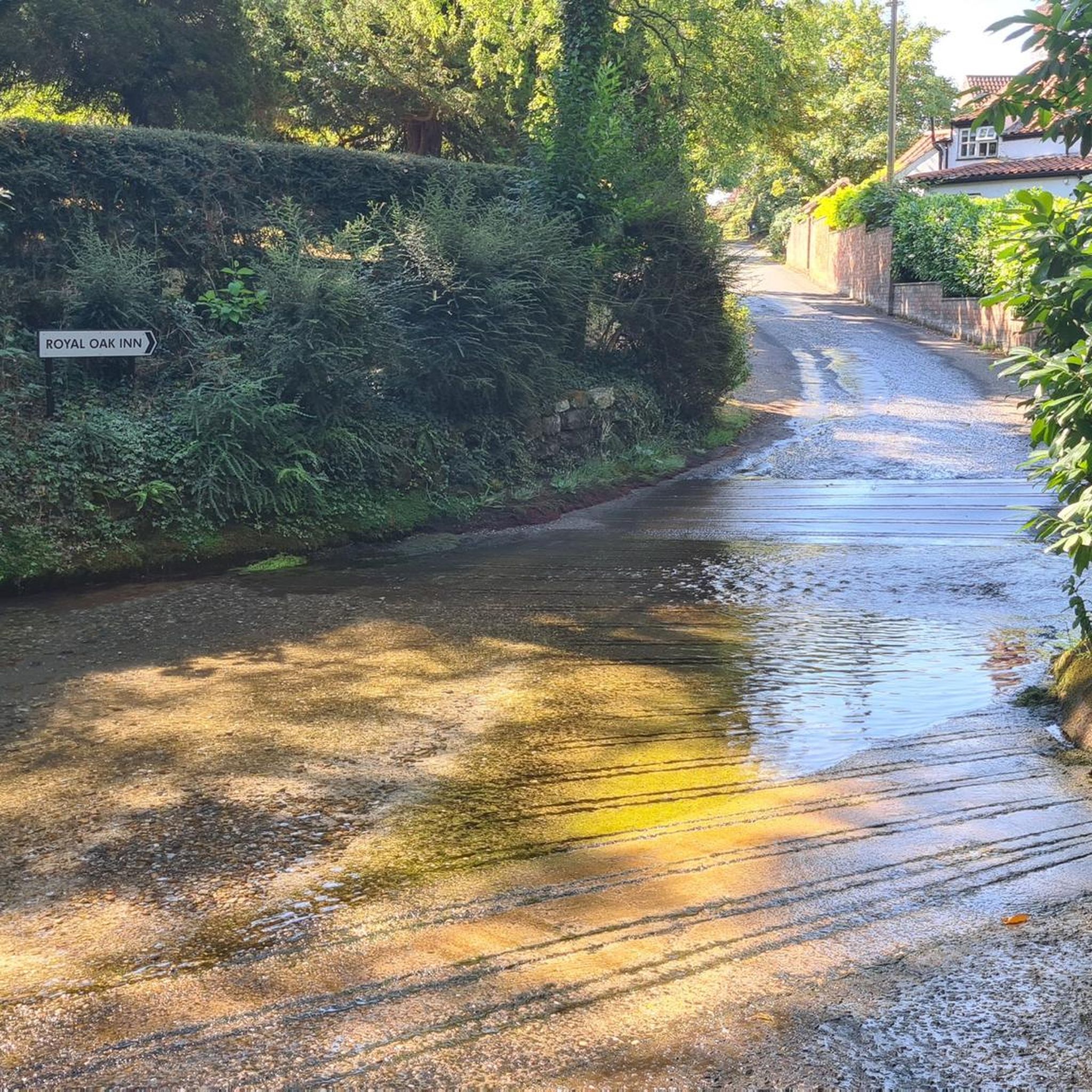
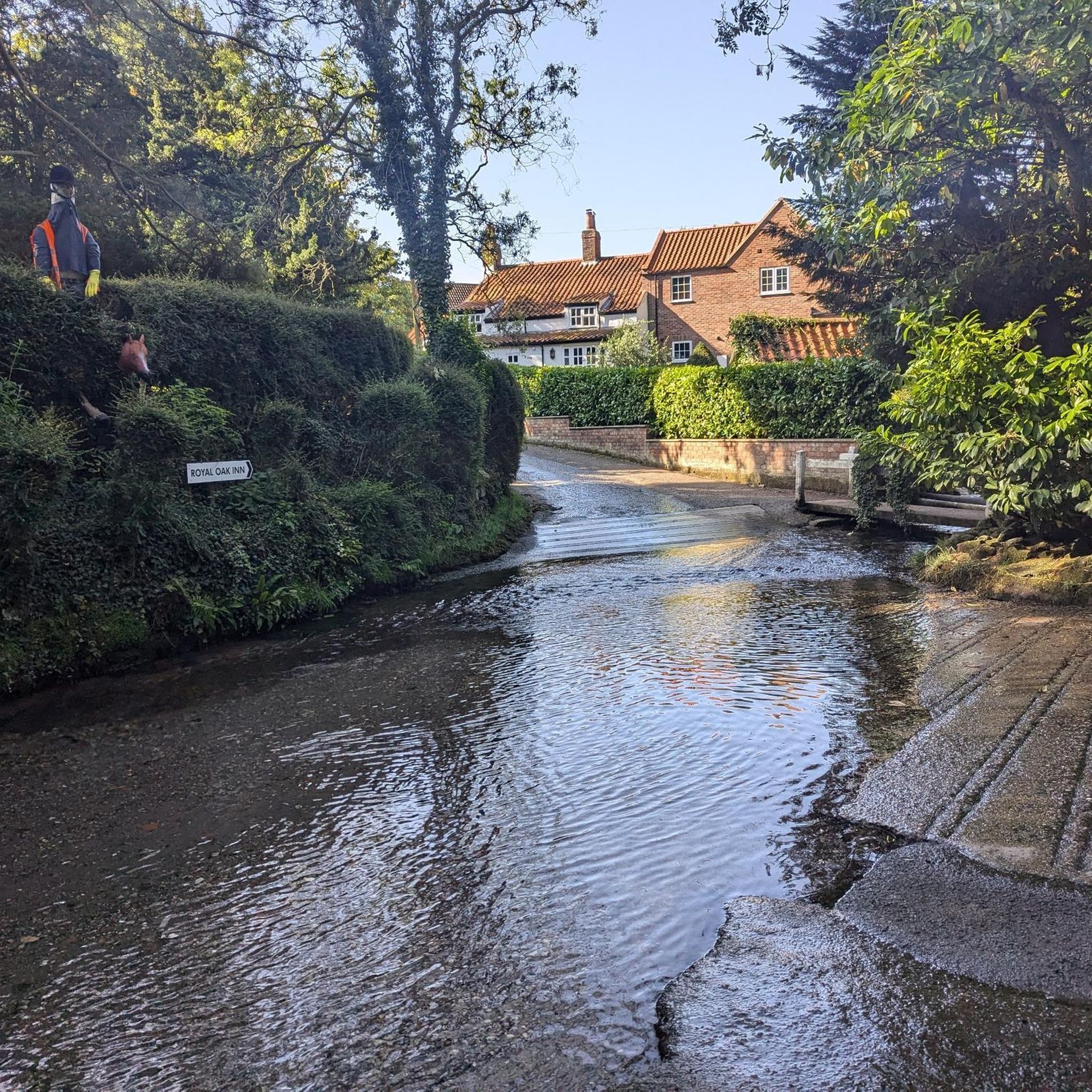
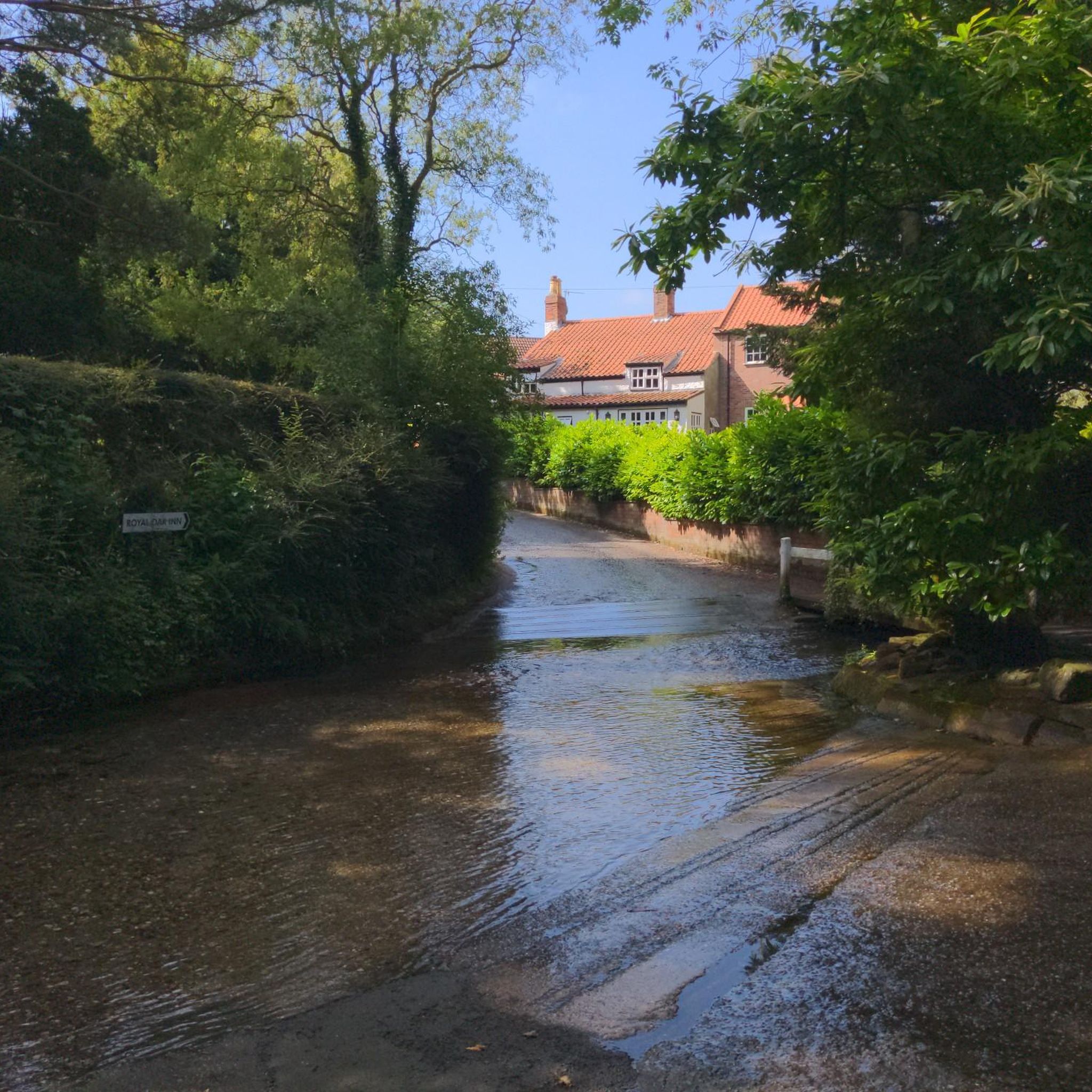
Yes, Little Cawthorpe is known for 'The Splash', a 200-meter-long ford situated next to The Royal Oak Inn. The village also features the source of the Long Eau, which has been developed into an attractive pond, and the historic Manor House with its distinctive architecture.
What outdoor activities, like hiking or cycling, are available around Little Cawthorpe?
Little Cawthorpe is an excellent base for outdoor activities. You can find numerous walking and cycling paths exploring the Lincolnshire Wolds and marshland. For hiking, consider routes like the 'Louth to Hubbard Hills and Flint Hill loop' or the 'Hubbard's Hills – St James' Church, Louth loop'. Cyclists can enjoy longer routes such as the 'Red Hill Nature Reserve loop' or the 'Louth to Alford loop'. For more details on routes, visit the Hiking around Little Cawthorpe or Cycling around Little Cawthorpe guides.
Are there family-friendly attractions or activities near Little Cawthorpe?
Many attractions around Little Cawthorpe are suitable for families. Hubbard's Hills offers a beautiful natural setting for walks and picnics. The nearby market town of Louth has the Meridian Leisure Centre, and St James' Church is an impressive historical site. The well-maintained pond at the source of the Long Eau in Little Cawthorpe is also a pleasant spot for families to observe local wildlife.
Where can I find a traditional pub near Little Cawthorpe?
The 17th-century Royal Oak Inn, locally known as 'The Splash' due to its adjacent ford, is a popular traditional pub right in Little Cawthorpe. Further afield, in the nearby village of Belchford, you'll find the traditional Bluebell Inn, which is known for serving good food and drink and is hiker and dog-friendly.
What kind of wildlife can I spot in the Little Cawthorpe area?
The area around Little Cawthorpe is rich in wildlife. At the Long Eau Source Pond within the village, you can often spot mallards and moorhens. Walks along the Louth Canal are known for sightings of kingfishers and moorhens. Red Hill Nature Reserve is home to diverse flora and fauna, particularly in its wildflower meadows.
Are there any good viewpoints or panoramic views to enjoy?
Yes, from roads leading out of Little Cawthorpe, especially towards Muckton, you can enjoy spectacular panoramic views across the middle-marsh to the sea. Red Hill Nature Reserve also offers elevated views of the surrounding landscape.
What are some recommended walking routes around Little Cawthorpe?
The area offers various walking routes, including a 14-mile 'Round Louth Walk' and shorter circular options. The 'Beck-side' footpath by the stream provides a pleasant walk and a shortcut to Legbourne. You can also enjoy open countryside views from routes like Wood Lane. For specific routes, check out the Hiking around Little Cawthorpe guide, which includes routes like the 'Fir Plantation loop from Little Cawthorpe'.
What makes Hubbard's Hills a significant natural monument?
Hubbard's Hills is a glacial channel formed at the end of the last ice age. It features a 125-foot-deep, steep-sided valley gouged out by a meltwater lake that was trapped between an ice sheet and the Lincolnshire Wolds. The River Lud now flows through this impressive geological formation.
What is special about Red Hill Nature Reserve?
Red Hill Nature Reserve is a designated Site of Special Scientific Interest. It's a chalk escarpment with acres of plateaued wild landscape and beautiful wildflower meadows. The reserve is particularly famous for its disused quarry, which exposes red chalk rich in fossils, offering a glimpse into the area's geological past.
Can I find circular walking routes near Little Cawthorpe?
Yes, the area around Little Cawthorpe offers several circular walking routes. Options include shorter circular paths exploring the Lincolnshire Wolds and marshland. You can find specific examples like the 'Louth to Hubbard Hills and Flint Hill loop' or the 'Fir Plantation loop from Little Cawthorpe' in the Hiking around Little Cawthorpe guide.
What is the significance of St James' Church in Louth?
St James' Church, Louth is a historically significant religious building, notable for having the third tallest spire in the entire United Kingdom, reaching 293 feet 1 inch (89.33 m). It also holds historical importance as the location where the Lincolnshire Rising of 1536 began, a protest against King Henry VIII's religious reforms.
Most popular routes around Little Cawthorpe

Get inspired with the komoot mobile app


Explore more
Still not found the Highlight you’re looking for? See guides of the top attractions in other regions:
