The best cycling routes around Le Rœulx
4.6
(97)
578
riders
53
rides
Touring cycling around Le Rœulx features diverse landscapes, including vast countryside, wooded areas, and tranquil canal paths. The region is characterized by its extensive network of waterways, notably the historic Canal du Centre, which offers flat and accessible terrain. While generally flat, some areas present gentle variations in relief, providing a mix of experiences for cyclists.
Best touring cycling routes around Le Rœulx
- The most popular touring cycling route is Strépy-Thieu Boat Lift – The Strépy-Thieu boat lift loop from…
Last updated: July 3, 2026
4.4
(7)
14
riders
51.7km
03:04
290m
290m
Moderate bike ride. Good fitness required. Mostly paved surfaces. Suitable for all skill levels.
5.0
(7)
55
riders
12.3km
00:44
80m
80m
Easy bike ride. Great for any fitness level. Mostly paved surfaces. Suitable for all skill levels.

Sign up for free
4.5
(2)
21
riders
17.8km
01:02
50m
50m
Easy bike ride. Great for any fitness level. Mostly paved surfaces. Suitable for all skill levels.
4.0
(2)
14
riders
25.6km
01:37
150m
150m
Easy bike ride. Great for any fitness level. Mostly paved surfaces. Suitable for all skill levels.
8
riders
47.9km
02:49
200m
200m
Moderate bike ride. Good fitness required. Mostly paved surfaces. Suitable for all skill levels.
Get access to more routes and recommendations from other explorers.
Sign up for free
Already have an account?
Our route recommendations are based on thousands of hikes, rides, and runs completed by other people on komoot.
Start today with a free account
Your next adventure awaits.
Login or Signup

Tips from the Community

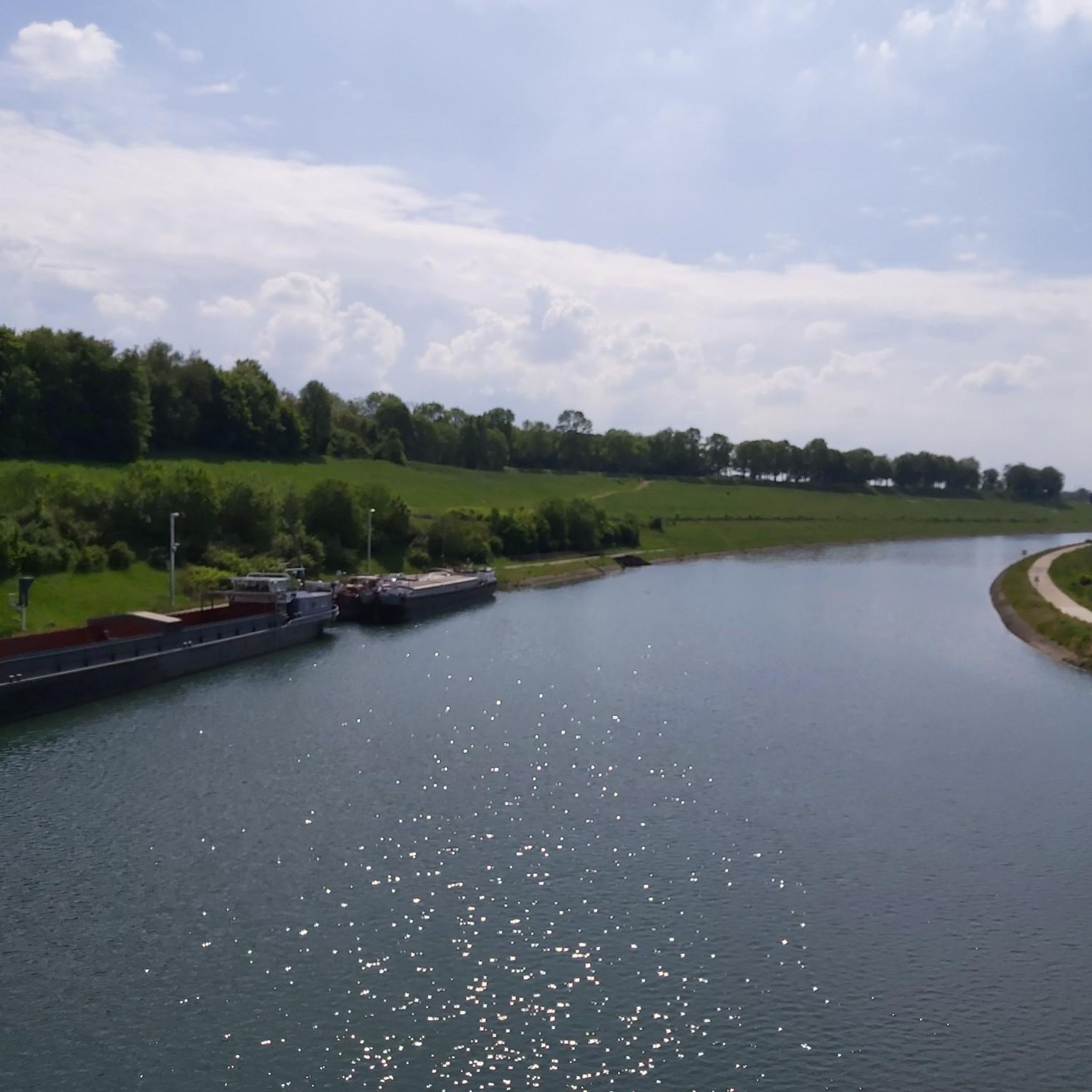
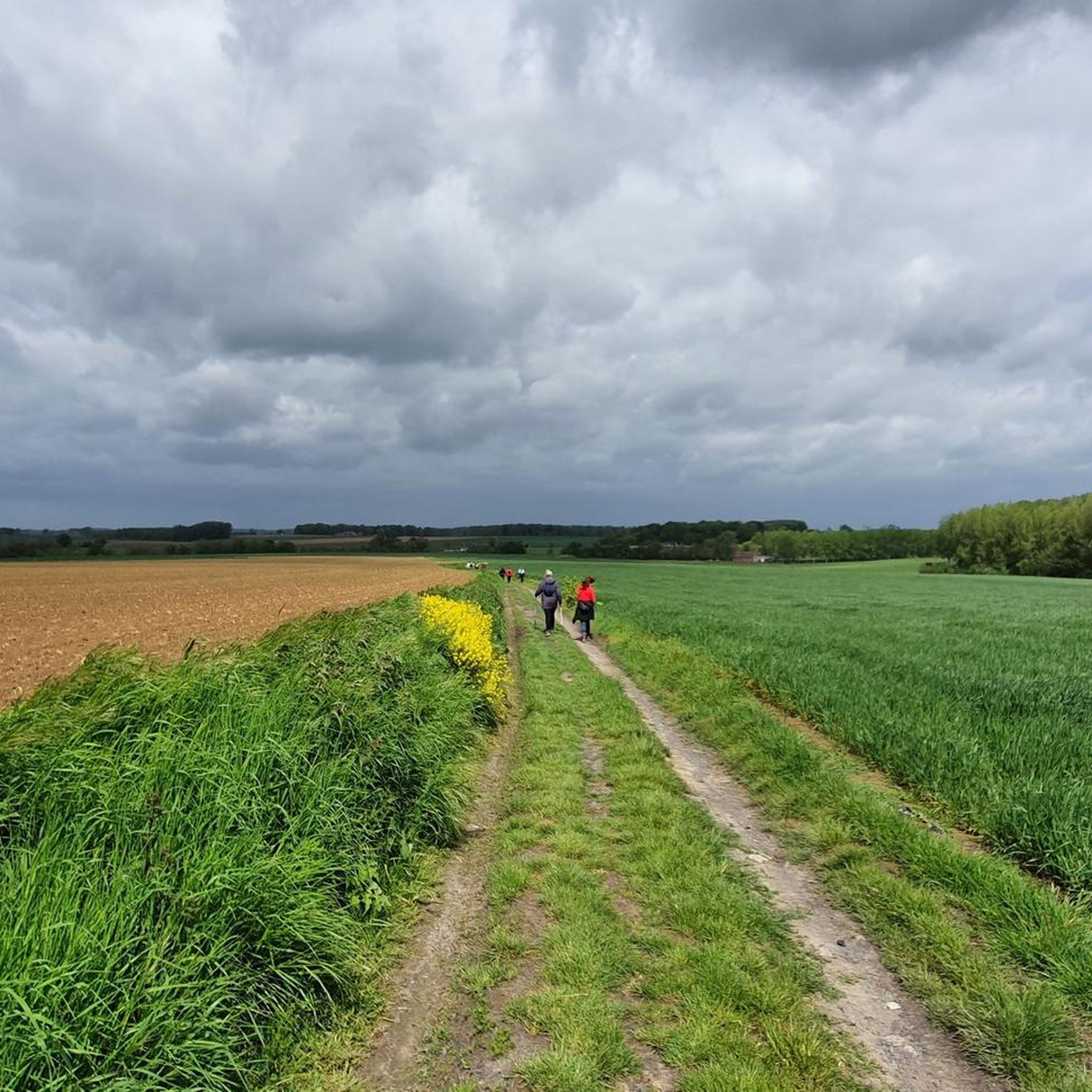
The path is once again passable along its entire length from Ronquières to Ecaussinnes with a beautiful tarmac strip.
0
0

The old boat lifts of the Canal du Centre are impressive metal structures that transport ships to the uppermost section of the canal in four lifts. While one of the lifts is raised hydraulically, the other descends to the lower section of the canal. Built between 1882 and 1917, they are now a UNESCO World Heritage Site. Since 2002, cargo ships have been passing through the new Strépy-Thieu lift.
0
0

The Ronquières inclined plane is a unique boat lift. Built in 1968, it allows barges to overcome a drop of nearly 70 meters thanks to a system of sliding trays. The structure can be observed from the cycle path along the canal.
0
0

Here we find ourselves at a modern technical structure of almost unimaginable dimensions. This enormous facility – like probably every project of this magnitude – has two aspects: Some may be in awe of the engineering that made it possible to plan and build this gigantic structure at the end of the 20th century. Others may be more concerned with the enormous intervention in nature that was necessary to realize the project and may doubt its usefulness. However, such a conflict of interest is by no means only a sign of the times, for the monumental – some might prefer the term monstrous – structure is the modern descendant of a series of significantly smaller ship lifts that were built in earlier times – and have now even been recognized as a UNESCO World Heritage Site as an industrial monument. Both the old facility and its modern successor are presented in a 15-minute feature (in German) in the series "Treasures of the World - Heritage of Humanity." If you are interested, see =>> https://www.ardmediathek.de/video/schaetze-der-welt/canal-du-centre-die-vier-schiffshebewerke-des-canal-du-centre-belgien-folge-375/3sat/Y3JpZDovL3N3ci5kZS82NjEwNTUy
0
0

The Ronquières inclined plane is an exceptional work of art
0
0

Ronquières, elevator to see
0
0

The Ronquières inclined plane is a ship lift near the Belgian village of Ronquières. It is an inclined plane on the Charleroi-Brussels Canal. It bridges the height difference with the Hainaut Plateau. The inclined plane was completed on 1 April 1968 after a construction period of six years. The plane is 1400 metres long and bridges a drop of 68 metres, with a gradient of almost 5%. There are two ship barges, each 85.50 metres long and 11.60 metres wide. The barges run like wagons on rails and are moved by cables. Each barge has its own counterweight, which runs on rails under the barge. The barges can thus operate independently of each other, which is important for maintenance and in the event of any malfunctions. In such cases, the plane continues to operate, but with limited capacity. The total cost of the work was approximately 3.1 billion Belgian francs (approximately €77 million), about twice as much as was thought at the start of construction. The plane is self-sufficient in energy. Next to the slope is a pipe through which water flows that drives a turbine, which provides the electrical energy for the work of art.
1
0
Some other impressive testimonies to the artistic work of Jaume PLENSA (born 1955) can be found in the following places and are also documented here in the komoot system as hiking highlights: => “Laurelle” in Bonn (North Rhine-Westphalia, Germany) see https://www.komoot.com/de-de/highlight/6685486 => “Seele?” in Erkrath (Mettmann district, North Rhine-Westphalia, Germany) see https://www.komoot.com/de-de/highlight/4183261 => “Love” in Leeuwarden (Friesland, Netherlands) see https://www.komoot.com/de-de/highlight/3906357 => “Lou” in Caen (Normandy, France) see https://www.komoot.com/de-de/highlight/5933145 => “Sanna” in Bordeaux (New Aquitaine, France) see https://www.komoot.com/de-de/highlight/5784432 => “Julia” in Madrid (Spain) see https://www.komoot.com/de-de/highlight/6131314 The following two groups of figures by the artist offer a different perspective: => “Air-Earth” in Bamberg (Bavaria, Germany) see https://www.komoot.com/de-de/highlight/2559580 => “Seven Poets” in Andorra la Vella (Andorra) see https://www.komoot.com/de-de/highlight/4741064
0
0
Frequently Asked Questions
How many touring cycling routes are available around Le Rœulx?
Le Rœulx offers a wide selection of touring cycling routes, with over 50 options available. These routes cater to various skill levels, including 28 easy, 21 moderate, and 5 difficult trails, ensuring there's something for every cyclist.
What kind of terrain can I expect on touring cycling routes in Le Rœulx?
The terrain around Le Rœulx is diverse, featuring vast countryside, tranquil wooded areas, and numerous paths along historic canals. While generally flat, especially along the Canal du Centre, some areas, particularly bordering Casteau, offer gentle variations in relief, providing a varied cycling experience.
Are there family-friendly touring cycling routes in Le Rœulx?
Yes, Le Rœulx is well-suited for family cycling, especially along the flat and traffic-free paths of the RAVeL network and the historic Canal du Centre. Many of the 28 easy routes are ideal for families, offering safe and enjoyable rides through scenic landscapes.
What historical landmarks or natural features can I see while cycling in Le Rœulx?
Cycling in Le Rœulx offers a rich blend of historical and natural sights. You can explore the UNESCO World Heritage site of the historic Canal du Centre with its unique hydraulic boat lifts. Other notable attractions include the modern Strépy-Thieu funicular lift, and natural spots like the Thieu Nature Reserve. For specific points of interest, consider routes that pass by highlights such as the Ronquières Houseboat Village or the Canal du Centre Boat Lift No. 4.
Are there any circular touring cycling routes in the Le Rœulx area?
Yes, many touring cycling routes around Le Rœulx are designed as loops, allowing you to start and finish at the same point. For example, the Strépy-Thieu Boat Lift – The Strépy-Thieu boat lift loop from Thieu is a popular circular route that showcases the impressive modern boat lift.
Can I bring my dog on the touring cycling routes in Le Rœulx?
Many of the outdoor paths and trails in Le Rœulx, especially along the canal towpaths and RAVeL network, are generally dog-friendly. However, it's always recommended to keep your dog on a leash and ensure they are comfortable with cycling alongside you. Always check local signage for any specific restrictions.
What is the best time of year to go touring cycling in Le Rœulx?
The spring and autumn months generally offer the most pleasant conditions for touring cycling in Le Rœulx, with milder temperatures and beautiful scenery. Summer can also be enjoyable, especially along shaded canal paths, but be prepared for potentially warmer weather. Winter cycling is possible, but some services might be limited.
Are there places to eat or drink along the cycling routes?
Yes, the region around Le Rœulx, particularly near the Canal du Centre and in towns, offers various cafes, pubs, and restaurants where cyclists can stop for refreshments. The integration of cycling routes with local villages and attractions means you'll often find convenient spots to refuel.
How long do touring cycling routes typically take in Le Rœulx?
The duration of routes varies significantly based on their length and your cycling pace. For instance, an easy route like Old Lift No. 1 – Strépy-Thieu Boat Lift loop from Thieu, which is 17.9 km, typically takes around 1 hour 8 minutes. Longer, moderate routes such as Havré Castle – Grand Large Lake, Mons loop from Thieu (46.1 km) can take closer to 2 hours 46 minutes.
What do other touring cyclists enjoy most about cycling in Le Rœulx?
The touring cycling experience in Le Rœulx is highly rated by the komoot community, with an average score of 4.3 stars from over 90 reviews. Cyclists often praise the unique historical canal infrastructure, the diverse landscapes ranging from open countryside to wooded sections, and the well-maintained paths that make for enjoyable rides.
Are there any routes that feature waterfalls or significant viewpoints?
While Le Rœulx is generally known for its canals, you can find routes that lead to natural features. For example, the difficult route Hyon Waterfall and Ponds – Mons Grand Place loop from Havré includes the Hyon Waterfall and Ponds. For scenic viewpoints, consider exploring areas like the View from the Terril de l'Héribus.
Is public transport available to access the cycling trails, especially with a bike?
Le Rœulx is part of a well-connected region. While specific public transport options for bikes can vary, the extensive cycling networks, including the RAVeL paths, often connect to towns and train stations. It's advisable to check local public transport provider websites for their bike carriage policies and schedules to plan your access to trailheads.
Most popular attractions around Le Rœulx

Get inspired with the komoot mobile app


Explore more
Browse the best Cycling routes in other regions.
