The best road cycling routes around Lincent
4.3
(141)
8,332
riders
706
rides
Road cycling routes around Lincent traverse a varied landscape, characterized by gentle hills and open agricultural fields. The region features a network of dedicated cycle paths, including sections of the RAVeL network, offering smooth surfaces for road bikes. Elevation changes are present, with some routes incorporating climbs that provide views over the surrounding countryside. This area provides a mix of rural scenery and historical points of interest for road cyclists.
Best road cycling routes around Lincent
- The most popular road…
Last updated: May 24, 2026
4.0
(4)
22
riders
49.0km
02:07
280m
280m
Moderate road ride. Good fitness required. Mostly well-paved surfaces and easy to ride.
8
riders
36.4km
01:37
180m
180m
Moderate road ride. Great for any fitness level. Some segments of this route may be unpaved and difficult to ride.

Sign up for free
8
riders
25.1km
01:04
140m
140m
Easy road ride. Great for any fitness level. Mostly well-paved surfaces and easy to ride.
3.7
(3)
8
riders
27.1km
01:09
150m
150m
Easy road ride. Great for any fitness level. Mostly well-paved surfaces and easy to ride.
7
riders
25.4km
01:05
130m
130m
Easy road ride. Great for any fitness level. Mostly well-paved surfaces and easy to ride.
Get access to more routes and recommendations from other explorers.
Sign up for free
Already have an account?
Our route recommendations are based on thousands of hikes, rides, and runs completed by other people on komoot.
Start today with a free account
Your next adventure awaits.
Login or Signup

Tips from the Community


Orp station, with telegraphic code ORP, was a railway station in Orp-le-Grand from 15 October 1865 to 4 October 1959 for passengers and until 20 October 1981 for goods, since 1977 a sub-municipality of Orp-Jauche in Walloon Brabant on railway line 147 (Landen - Tamines). https://nl.wikipedia.org/wiki/Station_Orp Be sure to also take a look at the area around the station where the railway facilitated an industrial activity that is now a thing of the past. At the front there is a car park and on the other side of the road you can see a small "castle", the castle of Tongerlo. The back is more interesting with a pleasant park on the RAVeL cycle path and at the intersection with the main road (at the chip shop) various buildings from a recent industrial past. An information board also tells what they are/were: you can see the remains of a sugar factory, workers' buildings, remains of the cement industry and so on.
3
0
The Château Rose was built by order of Albert-Pierre Stier (1745-1816). In 1776, he bought the seigniory of Orp, as it had been known since the end of the 17th century, when the land of Orp-le-Grand was merged with that of Orp-le-Petit. The pillory of Orp-le-Petit at the front is one of about fifty in Belgium that are listed by the Royal Institute for Cultural Heritage. When our country was invaded by France in 1794, the French revolutionaries rushed to abolish the symbols of the Ancien Régime and the pillory was demolished. A few years later, around 1826, Baron Jean-François de Vinck de deux Orp (1774-1827), nephew of the builder of the castle, had the restored elements of the pillory rebuilt on his estate, more specifically in the central part of the meadow below the castle. Source: https://www.orp-jauche.be/wp-content/uploads/Brochure_PetitPatrimoinePopulaire_ORP.pdf
7
0
Heritage information about the station (description): This is a good example of a rural station that was built by the State Railways in 1908. Characteristic brick architecture in a particularly elaborate decorative design with bricks using bush-hammered natural stone blocks. A so-called 'logis des piocheurs' has also been preserved here. The Landen-Tamines line was abolished in 1959. Building built on an elongated floor plan consisting of: a main volume (home, waiting rooms 1st and 2nd class) of four bays and two storeys under a saddle roof (now with artificial slates, previously with natural slates), a low wing of seven bays (waiting room 3rd class, office, storage area) also under a saddle roof and on the other side an outbuilding (laundry, coal storage area and lampisterie) under a hipped roof. Architecture characterized by natural stone bush-hammered plinth, facades in red smooth brick with horizontal bands (yellow and gray brick) and wooden cornices with profiled cornice blocks. Natural stone blocks with the name of the station are incorporated in the facades. The interior was changed. Separate annex: the so-called 'logement des piocheurs' in half-timbered construction (wood and brick). In the garden of the station master there are two approximately one hundred year old yew trees. Inventory of Immovable Heritage: Station Racour, https://id.erfgoed.net/erfgoedobjecten/200086
7
0
Never just call the former station of Racour-Landen "former station". First of all, there is the protected station itself. Secondly, thirdly, fourthly and so on, there is much more. For example, you have an orchard where you can rest and picnic and pick now and then. There is an information board about the station and one about nature and one about Racour and one about all sorts of other things for the inquisitive among us. And then there are remnants from that station past. There is even the entire area around the station, protected as a village view. That is because of its industrial-archaeological value. But it is also simply beautiful there. Quote: "Because of its industrial-archaeological value, the area around Racour station is also protected as a village view. In addition to the protected station building and the 'logis des piocheurs', the station master's garden with two yew trees of approximately 100 years old and the former railway bed are also part of it." Source: https://www.landen.be/beschermde%20dorpsgezichten And you are close to the Waasmontse Tom. See https://www.komoot.com/nl-nl/highlight/7164887 Or if you want to see a somewhat older train, just walk on that path past the old station that you can admire from there. Or the miniature of the station. Or beautiful views. Or, well, there is quite a lot and something for everyone I think. Just enjoy this spot and what you see and find on a relatively small surface, for some undoubtedly a spot with multiple highlights.
7
0

Racour station was a railway station on line 147 (Landen-Tamines), active from 1893 to 1959. The station building is now a protected monument and partly furnished as a holiday home. A cycle and walking path runs over the former railway line, while at the station some sections of track and old wagons have been preserved.
0
0

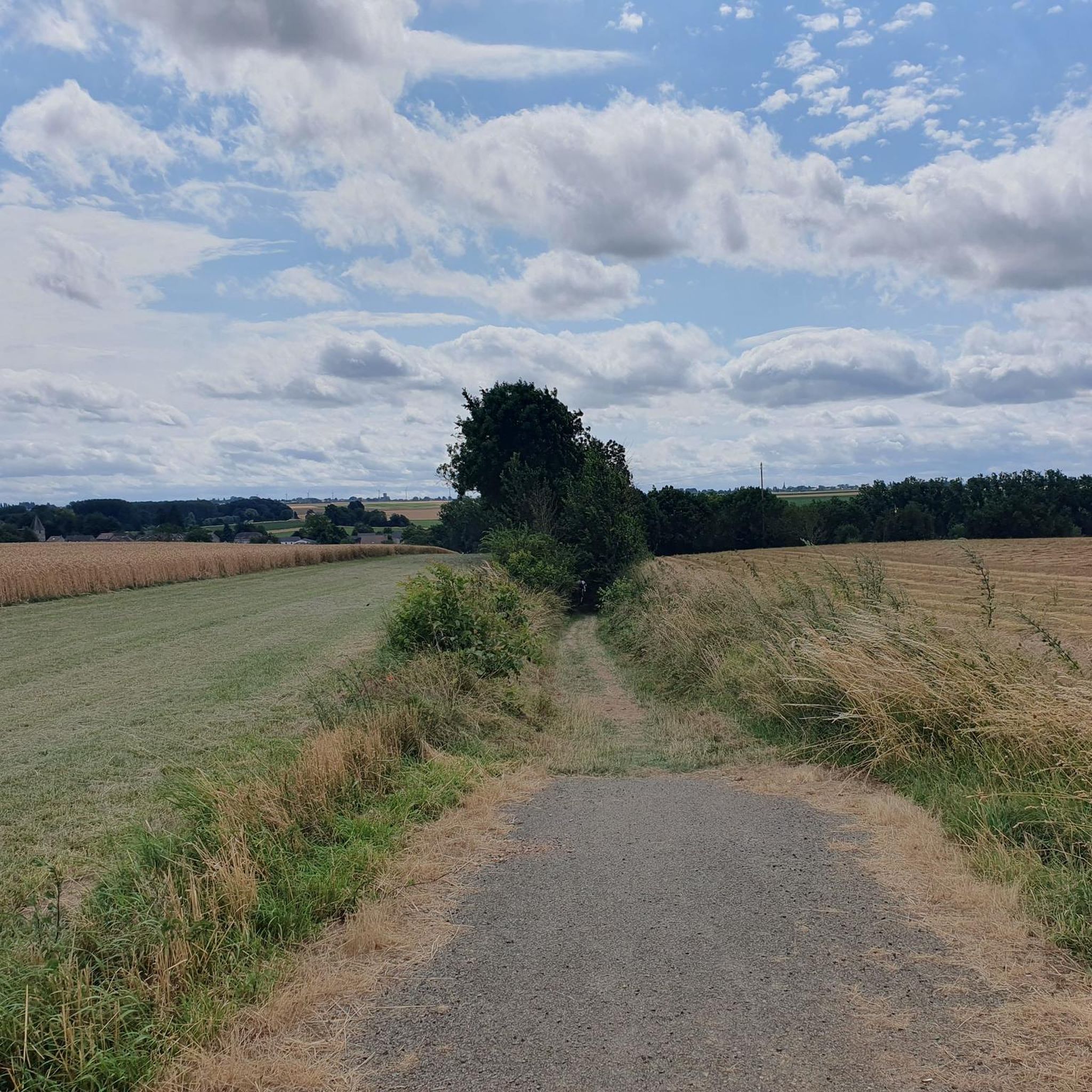
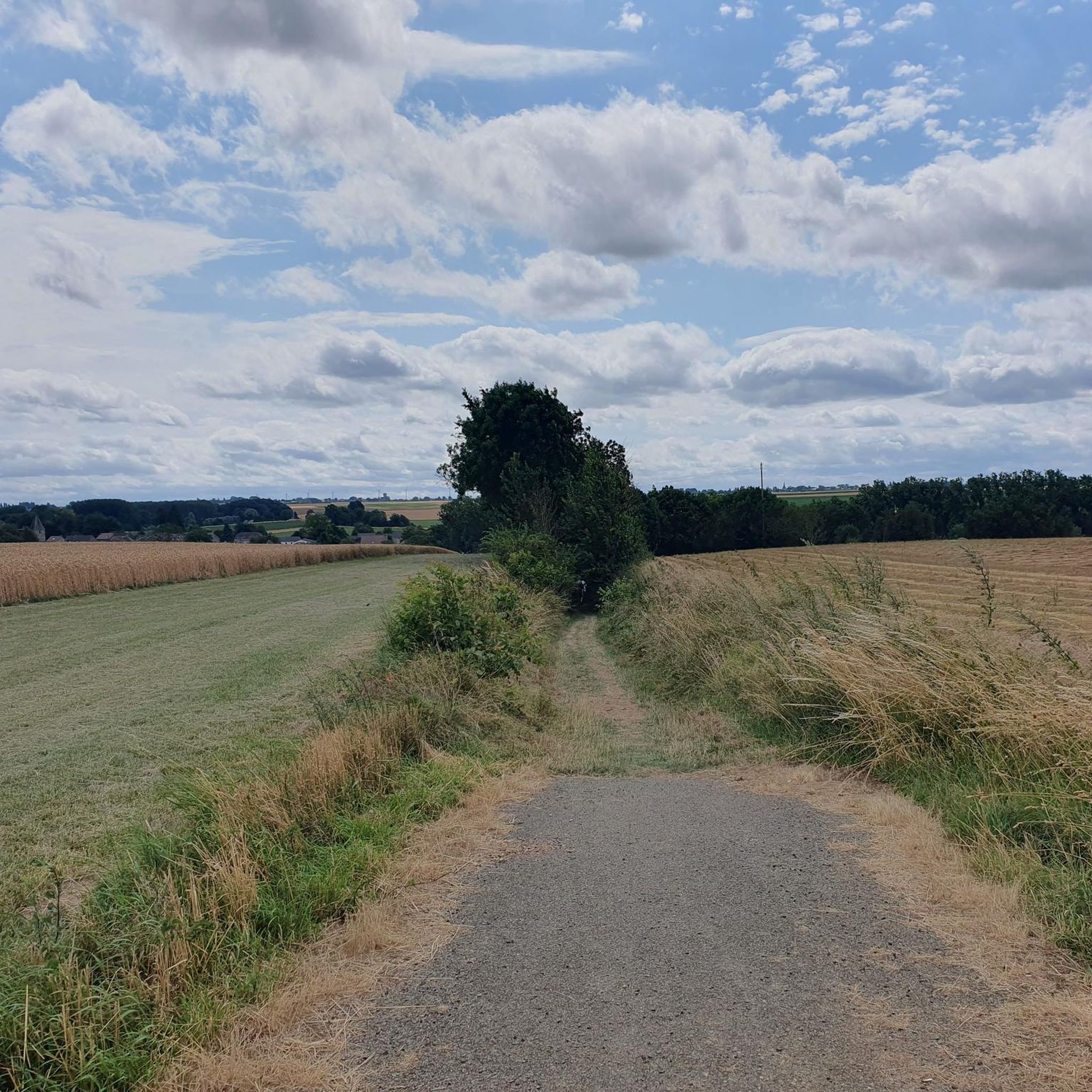
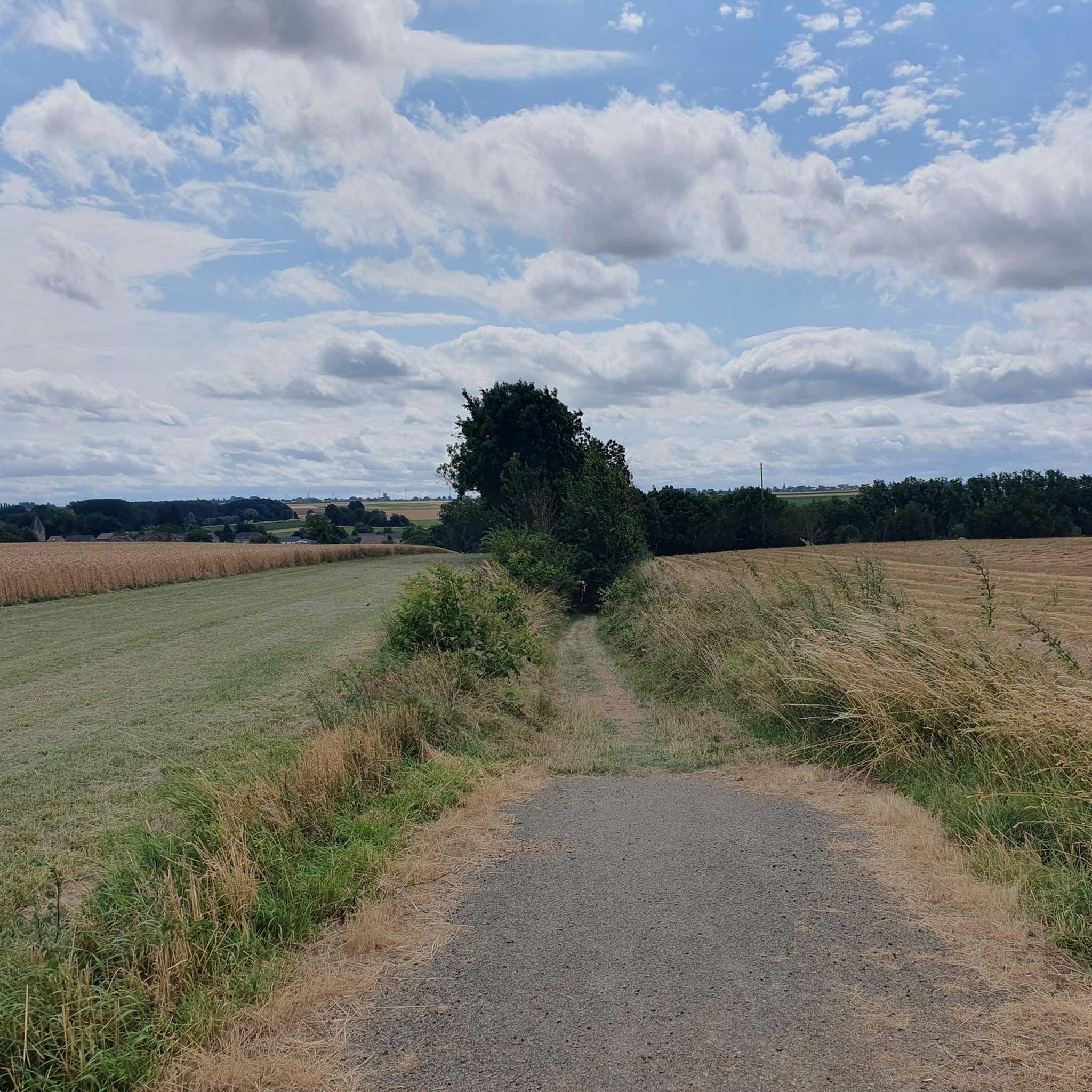
very beautiful village viewed from the Ravel
0
0
Frequently Asked Questions
How many road cycling routes can I find around Lincent?
There are over 690 road cycling routes available around Lincent, catering to various skill levels from easy to difficult.
What kind of terrain can I expect on road cycling routes in Lincent?
The region features a varied landscape with gentle hills and open agricultural fields. You'll find a network of dedicated cycle paths, including sections of the RAVeL network, offering smooth surfaces. Some routes incorporate climbs that provide views over the surrounding countryside.
Are there challenging road cycling routes in Lincent?
Yes, Lincent offers challenging routes. For instance, the RAVeL Namur–Vedrin – Citadel of Namur loop from Neerwinden is a difficult 75-mile (120.7 km) trail with significant elevation gain, often completed in about 5 hours 24 minutes. Another challenging option is the Floating Chapel of Helshoven – Climb to Vechmaal loop from Neerwinden, spanning over 64 miles (103 km).
What are the typical distances for road cycling routes in Lincent?
Route distances vary significantly. You can find moderate paths like the RAVeL Hoegaarden–Namur – IJzerenweg Cycle Path loop from Neerwinden, which is about 35 miles (56.8 km), up to longer, more challenging rides such as the Chapel with a View – Moulin de Velupont loop from Neerwinden, which covers 70 miles (112.6 km).
Are there any easy or beginner-friendly road cycling routes?
Yes, there are 115 easy routes available. While specific beginner routes aren't highlighted here, the presence of dedicated cycle paths and varied terrain means you can find less strenuous options. Look for routes with minimal elevation gain and shorter distances.
What do other road cyclists say about the routes in Lincent?
The road cycling routes in Lincent are highly rated by the komoot community, with an average score of 4.35 stars from over 130 reviews. More than 8,000 road cyclists have used komoot to explore the area, often praising the varied terrain and scenic views.
Are there scenic viewpoints or landmarks along the road cycling routes?
Many routes offer scenic viewpoints and pass by historical landmarks. For example, the View of the Grote Gete – Chapel with a View loop from Neerwinden provides views of the Grote Gete river and includes a scenic chapel viewpoint. You might also encounter historical sites like the Twee Tommen Gallo-Roman Burial Mounds or the Tumulus of Bortombe.
Can I find parking near the road cycling routes in Lincent?
Yes, parking is available in the region. For instance, the Hélécine Estate is a known parking location that can serve as a starting point for your rides.
What historical sites or attractions can I explore near the road cycling routes?
Beyond the cycling, you can explore various historical sites. These include ancient burial mounds like the Three Tommen Gallo-Roman Burial Mounds, the Racour Station, or architectural gems such as the Saint Gorgonius Church, Hoegaarden and Château d'Opheylissem.
Are the road cycling routes around Lincent typically circular?
Many of the popular road cycling routes around Lincent are designed as loops, allowing you to start and end your ride at the same point. Examples include the Chapel with a View – Moulin de Velupont loop from Neerwinden and the View of the Grote Gete – Chapel with a View loop from Neerwinden.
When is the best time of year for road cycling in Lincent?
While specific seasonal data isn't provided, the varied landscape and open fields suggest that spring and autumn offer pleasant temperatures and beautiful scenery. Summer can also be enjoyable, though it might be warmer. Winter cycling is possible but may require more preparation for colder conditions.
Most popular attractions around Lincent

Get inspired with the komoot mobile app


Explore more
Browse the best Road cycling routes in other regions.
