Top 20 Castles around Grez-Doiceau
Best castles around Grez-Doiceau are found within this municipality in Wallonia, Belgium. The area is characterized by historical estates and picturesque surroundings, offering a blend of architectural heritage and natural landscapes. Several castles, while often private, contribute to the region's cultural significance, with some sites featuring parks and historical remnants accessible to the public. The landscape includes green plains and areas bordered by rivers.
Best castles around Grez-Doiceau
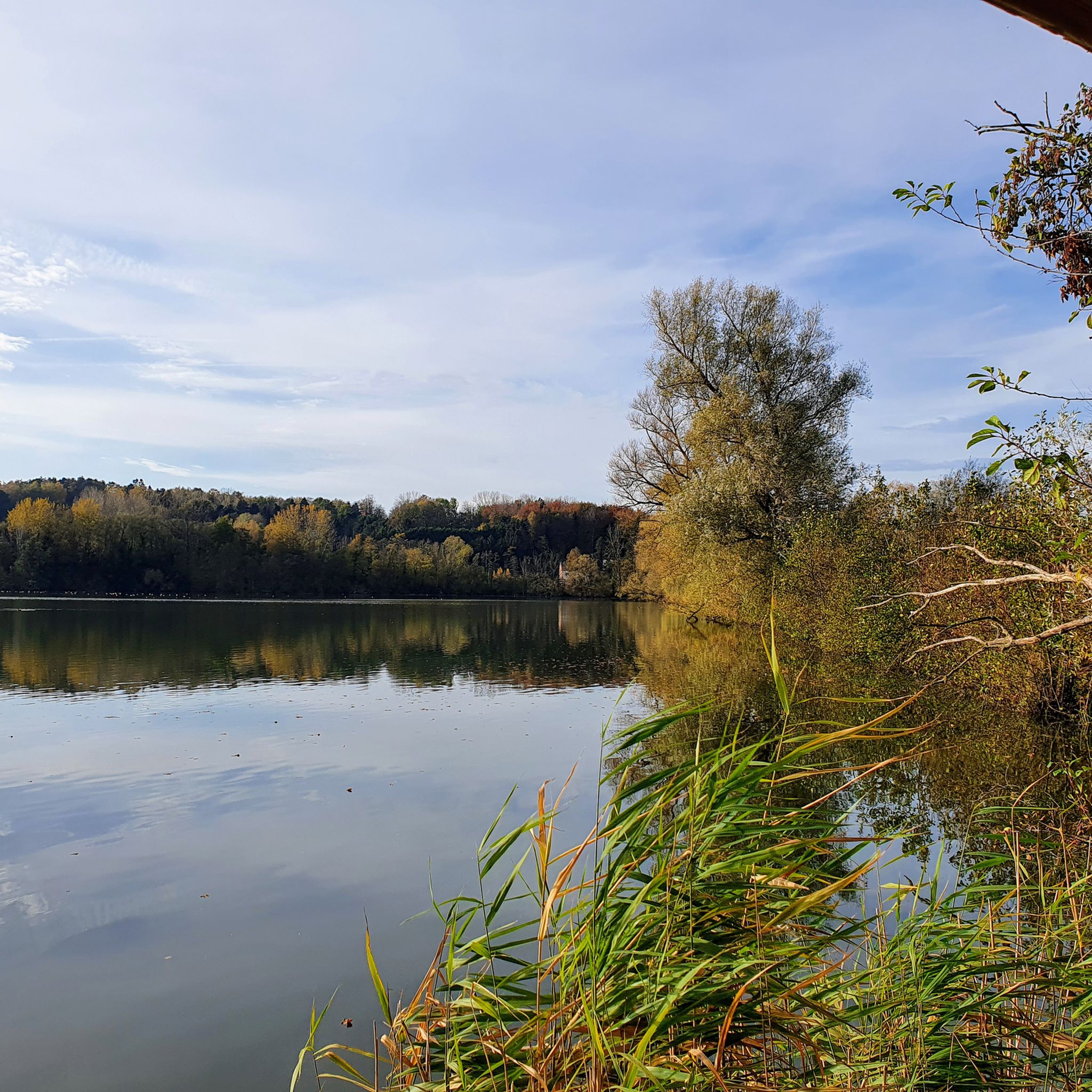
- The most popular castles is Castle Pond, Tervuren Park, a lake that marks the site of the former Tervuren castle, demolished in 1782. It is part of a historical park with connections to the Duke of Brabant and Leopold II.
- Another must-see spot is Kwabeek Castle and Park, a castle with a core dating back to 1718, surrounded by a 16.5-hectare park. The estate includes fish ponds and old trees, offering a place for rest during walks.
- Visitors also love Sint-Hubertus Chapel, a baroque castle chapel built in 1617. Located in the Park of Tervuren, it is associated with Saint Hubertus and hosts an annual open-air mass.
- Grez-Doiceau is known for fortified castles, classical ensembles, and sites where castles were built on former abbey grounds. The region offers a variety of historical structures to see and explore, from private estates to protected heritage sites.
- The castles around Grez-Doiceau are appreciated by the komoot community, with 2 highlights receiving 262 upvotes and featuring 55 photos.
Last updated: July 1, 2026
The Little Mermaid of the Lake
Highlight • Monument
Last Sunday June 30 (2019), it was the inauguration of the Little Mermaid of Lake Genval. A Little Mermaid, like the one in Copenhagen, but smaller. The small bronze statue sits on a rock in the waters of Lac de Genval, in front of the Château du Lac. It is the work of Michal, whose real name is Michel Alexandre Neuwels, sculptor from Plancenoit (Lasne).
facebook.com/MagazineBW/posts/2586373058053274
Translated by Google •
Tip by

Mirror Pond with a view of the AfricaMuseum
Highlight • Lake
The Palais de l'Afrique quickly became too small, so Leopold II commissioned Charles Girault, architect of the Petit Palais in Paris, to build a new museum and redevelop the entire site. Leopold II died before the project was completed, and the museum was inaugurated in 1910 by King Albert I.
The museum was closed for five years, from 2013 to 2018, for major restoration and renovation work.
Translated by Google •
Tip by

Sign up now to discover places like this
Get recommendations on the best single tracks, peaks, & plenty of other exciting outdoor places.
Sign up for free
Saint Hubert Chapel
Highlight • Religious Site
The chapel served as a place of worship for Tervuren Castle, one of the most important castles of the Dukes of Brabant.
Translated by Google •
Tip by

Arenberg Castle
Highlight • Castle
This green area on the outskirts of Leuven now belongs to KU Leuven and is the campus for Science and Technology.
Translated by Google •
Tip by

Kwabeek Castle and Park
Highlight • Castle
Translated by Google •
Tip by

Sign up for free to discover even more castles around Grez-Doiceau.
Sign up for free
Already have an account?
Start today with a free account
Your next adventure awaits.
Login or Signup

Tips from the Community

After the gruesome murder of the last owner, Baroness Thérèse Ernst de Bunswyck, the municipality purchased part of the estate, including the castle, which now serves as Boutersem's town hall. Other lots went to different owners, so the heritage's unity is somewhat lost, with several buildings besides the castle itself. However, there's much more than meets the eye.
6
0
The castle's core dates back to 1718, modified several times during the 19th century, and eclectically renovated after 1922; the castle and its outbuildings are surrounded by a 16.5-hectare park, originally a high courtyard with a watermill and mill pond; a classic 18th-century valley floor site, redeveloped in an early landscape style around 1830-1835; redeveloped around 1900 in a late landscape style; municipally owned since 1980; ice and vegetable cellars, numerous old trees. Inventory of Immovable Heritage: Kwabeek Castle Estate, https://id.erfgoed.net/erfgoedobjecten/41588
7
0

A beautiful place for rest and walking: you can stroll along it, enjoy the greenery and water, and it is part of the historical and natural charm of Tervuren.
6
0

The veneration of Saint Hubert in Tervuren, the presumed place of death of the patron saint of hunters, dates back to at least the 16th century and is probably even older. Every year on the last Sunday in October, an open-air mass is celebrated there in honor of Saint Hubert, and horses and dogs are blessed to protect them from running amok.
4
0

Excellent quality hotel and restaurant
0
0
The watermill at Arenberg Castle was probably rebuilt around 1636 on a watermill site known before 1286, which was then equipped with two waterwheels. Major repairs were carried out on the locks around 1722-23 and 1733-35, and images of the mill also indicate modifications to the mill building in the 18th century. Around 1875, the watermill underwent a facade restoration and extension according to the then prevailing views, under the direction of architect Claes. At the same time (1870-80), the mill was equipped with a new bluestone lock and two wooden waterwheels. The waterwheels were replaced by metal wheels at the end of the 19th century, and the locks were also modified in the early 20th century. In 1940, the mill was demolished and the mill was converted into a drawing room; externally the mill was preserved, as well as the lock and the two water wheels. Source and more information: https://inventaris.onroerenderfgoed.be/erfgoedobjecten/42570
7
0
The first mention of a castle dates from 1371 when it was a heavy keep built by Rasse de Grez, also known as Raes van Graven, a knight who lived from 1368 to 1450 and was lord of Heverlee, Vaalbeek, Bertem, Blanden, Malève and Terbruggen, among other things. The castle was demolished and the domain was ceded to the Croys (family of Croÿ) in 1446. During the first half of the sixteenth century, the reconstruction of the castle was restarted under Guillaume II de Croÿ (Willem II van Croÿ). His successor and nephew, Philip II van Croÿ, had it completed and finished, including a moat. He also had the park laid out and the avenue to Leuven extended. After the death of Charles III of Croÿ in 1612, the castle went via his sister, Anna, to the Dukes of Arenberg who lived there until the First World War. In 1920 the university acquired the domain. Sources and more info: - https://inventaris.onroerenderfgoed.be/erfgoedobjecten/42570 - https://www.kuleuven.be/erfgoed/gebouwen-en-monumenten/arenbergkasteel
7
0
Le Château du Lac is best known today as a 5-star hotel. Events are also often organised there and that is why I know it from a professional long-gone past. But the building, whether you call it a castle or rather a glorified villa, it does have a fairly intense past. In the past, the mineral water of Genval was collected and bottled here. Together with the source of Bonne Fontaine, the Château du Lac was the true symbol of Genval-les-Eaux. The Etablissement des Eaux, as it was originally called, was built between 1905 and 1907 by the architect Julien Wendrickx, the future production director of the Compagnie Internationale des Eaux Minérales, to house the collection of sources and the bottling of the mineral water of Genval. After the First World War and the receivership of the companies that managed the Genval site, the castle became the property of an English company before being taken over by the Princes of Merode, who leased the facilities to Schweppes Belgium. The Belgian branch was then managed by John Martin, an English brewer based in Antwerp, who had been importing beers from Great Britain and Ireland to the continent since 1909, including the famous Guinness. He obtained the exclusive production rights for the Schweppes range, which he transferred to Genval in 1952 following the deterioration in the quality of Antwerp's drinking water, which was now pumped into the Albert Canal. Since the divestment of Schweppes in 1988, the John Martin group has further diversified its range, with speciality beers (Timmermans, Gordon, etc.), soft drinks (Orangina) and fruit juices (Looza). After the Schweppes factory moved to Rue du Cerf, the château, now owned by the Martin family, was converted into the five-star Château du Lac Source: https://www.parismatch.be/lifestyle/voyages/2020/08/23/le-lac-de-genval-et-ses-villas-2D3Q25DBTVANBFBV5WXJG3R2NI/
8
0
Frequently Asked Questions
Which castles around Grez-Doiceau offer public access?
Many castles in the Grez-Doiceau area are private residences. However, you can admire the exterior of Château d'Archennes from the road. The grounds of Château de Laurensart are occasionally open to the public, particularly during Heritage Days. The site of Florival, where a castle was built on former abbey grounds, is a protected heritage site with a hiking trail passing through its park, allowing visitors to explore historical remnants.
Are there any family-friendly castle sites in Grez-Doiceau?
Yes, several sites offer family-friendly experiences. The area around Castle Pond, Tervuren Park, is suitable for families, offering space to stroll and enjoy nature. Kwabeek Castle and Park also welcomes families, providing a pleasant setting for walks. The historical site of Florival, with its park and ruins of a former abbey, can be an engaging place for families to explore history and nature together.
What natural features can I find near the castles in Grez-Doiceau?
The region is rich in natural beauty. Castle Pond, Tervuren Park, is a significant natural feature, offering serene waters and green spaces. The Château d'Archennes is set within a vast English-style landscaped park with expansive lawns and scattered trees. Florival is surrounded by a beautiful park that reveals the ruins of a monastic enclosure, and the area is bordered by the River Thy, contributing to a verdant landscape.
What historical sites are there besides castles in Grez-Doiceau?
Beyond the castles, the region offers other significant historical sites. The Sint-Hubertus Chapel, a baroque castle chapel built in 1617, is located in the Park of Tervuren and is associated with Saint Hubertus. The Florival site, where a castle was built on the grounds of a former Cistercian abbey, still features vestiges of the Cistercian occupation, including an 18th-century carriage house and a grand gate.
Are there hiking opportunities near the castles in Grez-Doiceau?
Yes, the area around Grez-Doiceau offers various hiking opportunities. A hiking trail passes through the park at Florival, allowing you to explore its historical remnants and verdant landscapes. For more extensive options, you can find numerous running trails around Grez-Doiceau, including routes like 'The Long Path, Meerdaalwoud' or 'Scenic Singletrack Path', which are detailed in the Running Trails around Grez-Doiceau guide.
Can I go cycling near the castles in Grez-Doiceau?
Absolutely. The region provides several road cycling routes. You can explore routes such as 'The Torenvalk Observation Tower – Parnassusbergdreef Gravel Road loop from Florival' or 'Chêneau Chapel loop from Archennes'. These and other routes are available in the Road Cycling Routes around Grez-Doiceau guide.
What is the best time to visit the castles and surrounding areas in Grez-Doiceau?
The region's parks and natural settings, such as those surrounding Château de Laurensart and Florival, are particularly pleasant during milder weather, allowing for comfortable exploration of the grounds and hiking trails. Heritage Days often provide unique opportunities for public access to private estates like Château de Laurensart, so checking local event calendars for these specific dates can enhance your visit.
Are there any castles with accessible features in Grez-Doiceau?
While specific accessibility details for all castles are limited due to their private nature, Arenberg Castle, though not directly in Grez-Doiceau but nearby, is noted as wheelchair accessible. For castles within Grez-Doiceau, admiring exteriors from public roads or exploring parks with trails, like Florival, might offer more accessible options.
What do visitors enjoy most about the castles and historical sites in Grez-Doiceau?
Visitors appreciate the blend of architectural beauty, rich history, and picturesque surroundings. The serene ambiance of parks like the one at Château de Laurensart, the historical significance of sites like Florival with its abbey ruins, and the opportunity for leisurely walks around places like Castle Pond, Tervuren Park, are frequently highlighted.
Can I bring my dog to the castle grounds or nearby trails in Grez-Doiceau?
While specific dog policies for private castle grounds are not generally available, many public parks and hiking trails in the Grez-Doiceau area are dog-friendly. For instance, the parks surrounding Florival and the various hiking and running trails mentioned in the Running Trails around Grez-Doiceau guide are generally suitable for walks with dogs, provided they are kept on a leash.
Where can I find parking when visiting castles in Grez-Doiceau?
Parking availability varies by location. For sites like Castle Pond, Tervuren Park, and Kwabeek Castle and Park, parking is indicated as available. For private castles like Château de Laurensart and Château d'Archennes, parking might be limited to roadside viewing or specific event parking if the grounds are open.
Are there any unique or lesser-known castle sites to explore in the Grez-Doiceau region?
Beyond the more prominent estates, the Château de Guertechain (also known as 'Château de la Fresnaye' or 'Guertechin') offers a glimpse into the region's fortified past. While likely a private residence, its historical appellation suggests a deep-rooted history, and its domain includes a courtyard of honor and former farm buildings, hinting at its historical significance.
Most popular routes around Grez-Doiceau
Most popular attractions around Grez-Doiceau

Get inspired with the komoot mobile app


Explore more
Looking for the best castles somewhere else? Discover other guides around Grez-Doiceau:
