Top 20 Castles around Bierbeek
Best castles around Bierbeek are found in this charming green municipality in Flemish Brabant, Belgium. The region is characterized by its rural charm, historical richness, and green spaces, offering a blend of historical architecture and natural landscapes. Bierbeek and its surroundings feature various historical estates, from moated castles to residential towers, often accompanied by parks or extensive gardens. This area provides opportunities for those interested in historical heritage and outdoor exploration.
Best castles around Bierbeek
- The most popular castles is Horst Castle, a castle that is an idyllic moated castle from the 13th century. It is surrounded by an impressive moat and features a carriage house with a visitor center.
- Another must-see spot is Ter Heyden Keep, a residential tower from the mid-fourteenth century. Visitors can expect to see a historical tower situated in the middle of an artificial lake, inviting observation.
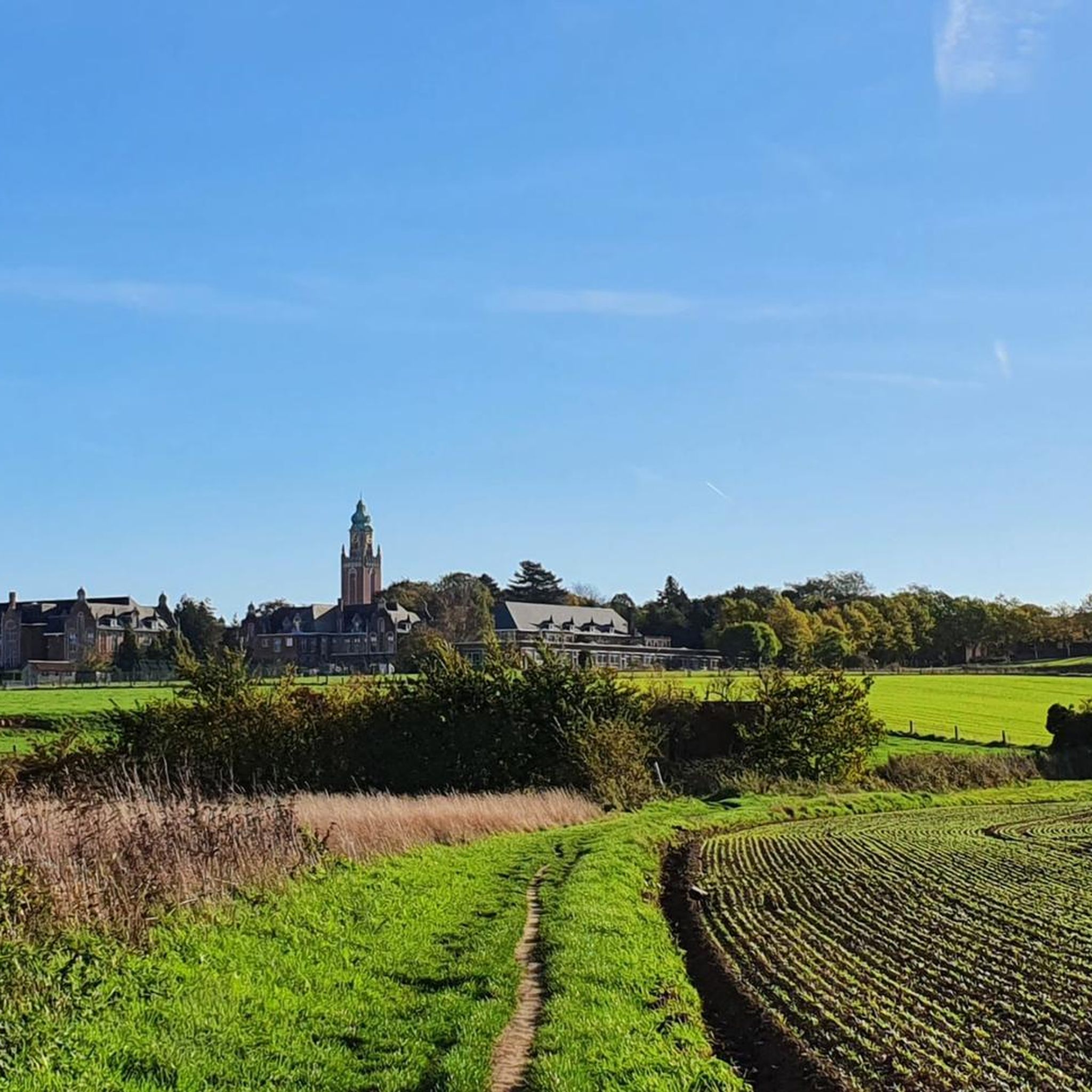
- Visitors also love Kwabeek Castle and Park, a castle and its outbuildings surrounded by a 16.5-hectare park. This location offers views of the castle domain and fish ponds, providing a place to rest during a walk or cycle.
- Bierbeek is known for moated castles, residential towers, and country houses. The area offers a variety of historical structures to see and explore, each with its own unique history and architectural style.
- The castles around Bierbeek are appreciated by the komoot community, with more than 1200 upvotes and over 400 photos shared by visitors.
Last updated: May 20, 2026
Horst Castle
Highlight • Castle
Translated by Google •
Tip by

Ter Heyden Keep
Highlight • Castle
Tip by

Sign up now to discover places like this
Get recommendations on the best single tracks, peaks, & plenty of other exciting outdoor places.
Sign up for free
Ter Heiden Tower
Highlight • Castle
In 1619, the noble family from Eynatten acquired ownership of this site. She rebuilt the tower according to the original plans, with the exception of the wall walkway, which was replaced by a roof with a pear turret. In 1631, de Eynatten built the beautiful country house in Flemish Renaissance style.
In 1870 the complex was expanded to brew beer. Brewing has been carried out since 1870 by the Smedts family, who acquired ownership of this site in 1909. They stopped their activities in Rotselaar in 1938 and continued brewing in Kampenhout until 1993. The beautiful brick chimney is a silent witness to this.
The complex has been protected as a monument since 1942 with a thorough restoration of the tower in 1948. Today the entire property is in the hands of a private owner.
(donjonterheyden.be)
Translated by Google •
Tip by

Arenberg Castle
Highlight • Castle
This green area on the outskirts of Leuven now belongs to KU Leuven and is the campus for Science and Technology.
Translated by Google •
Tip by

Kwabeek Castle and Park
Highlight • Castle
Translated by Google •
Tip by

Sign up for free to discover even more castles around Bierbeek.
Sign up for free
Already have an account?
Start today with a free account
Your next adventure awaits.
Login or Signup
Tips from the Community


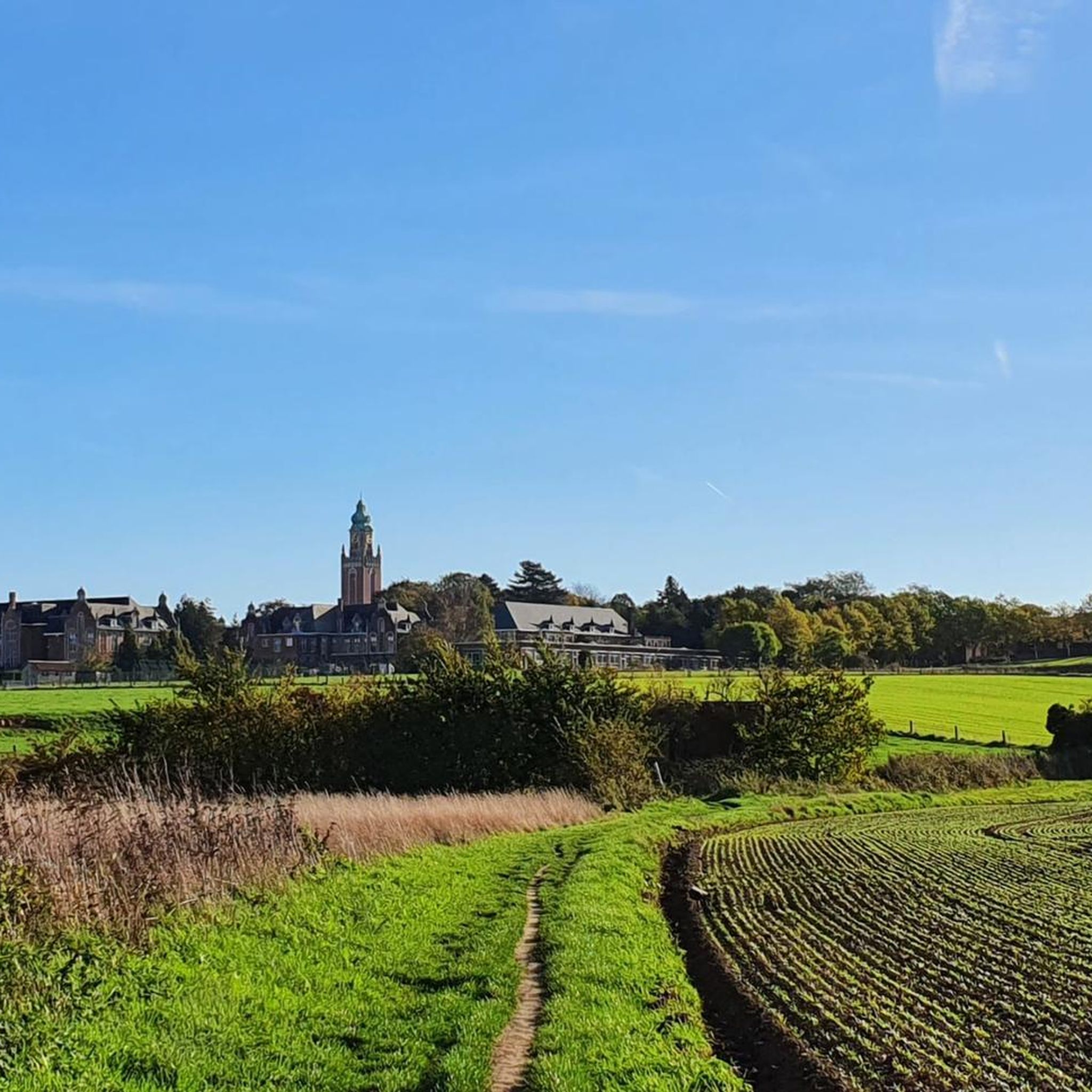
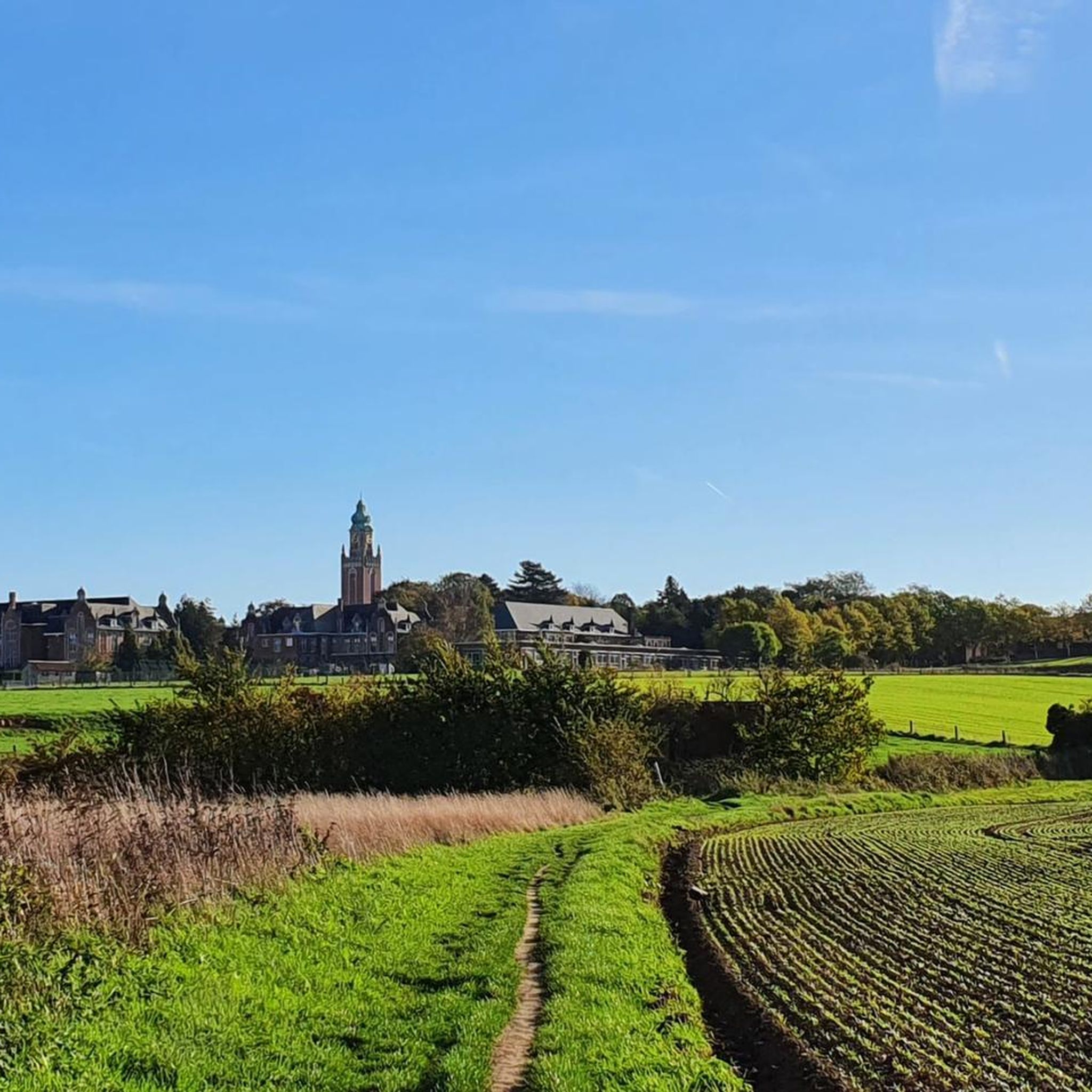
After the gruesome murder of the last owner, Baroness Thérèse Ernst de Bunswyck, the municipality purchased part of the estate, including the castle, which now serves as Boutersem's town hall. Other lots went to different owners, so the heritage's unity is somewhat lost, with several buildings besides the castle itself. However, there's much more than meets the eye.
6
0
The castle's core dates back to 1718, modified several times during the 19th century, and eclectically renovated after 1922; the castle and its outbuildings are surrounded by a 16.5-hectare park, originally a high courtyard with a watermill and mill pond; a classic 18th-century valley floor site, redeveloped in an early landscape style around 1830-1835; redeveloped around 1900 in a late landscape style; municipally owned since 1980; ice and vegetable cellars, numerous old trees. Inventory of Immovable Heritage: Kwabeek Castle Estate, https://id.erfgoed.net/erfgoedobjecten/41588
7
0
The core of Horst Castle probably dates back to the 13th century and is characterised by a square keep. The keep probably belonged to the oldest core that was further expanded into a fortified castle in the 15th century. During the troubles under Maximilian of Austria in 1489, the castle of Horst was taken by the people of Leuven and set on fire. According to literary sources, only the keep, part of the entrance gate and a defensive wall remained standing. The residential and east wing were renovated and expanded in the 16th century. The round tower also dates from this period. The outer wall was provided with a rectangular bay window. The castle lost its military character and became more of a pleasant residential area with a view of the moat, the ponds and the inner courtyard. Brick construction with sandstone layers characterise these buildings. In 1587, however, the castle was set on fire again during the raids of the Geuzen. It was not until the beginning of the 17th century that restoration work began. It is difficult to deduce from the available sources to what extent this involved restoration or an embellishing conversion of the castle complex. Presumably nothing changed in the internal structure, but only after the structurally necessary repairs were the interiors completely refinished. Maria-Anna Van den Tympel had a new chapel built against the keep in the 17th century. At the beginning of the 19th century, the complex must have been damaged by plundering and neglect, and it is possible that it also suffered from plundering during the Brabant Revolution of 1830. Around 1850, the castle must have been habitable again, but the castle buildings only served as a farm. In the land registry, the site around the castle is called "De Notelaren Boomgaerd". Around that time, the most dilapidated part must have been demolished, namely the southern part and the superstructure of the gate. The rest of the complex was probably restored with reused demolition material and in traditional style. The castle was divided in 1880, with one part being registered as a school house. In 1897, a further division followed, with two plots being designated as houses. Several restoration campaigns followed in the 20th century. Inventory of Immovable Heritage: Horst Castle, https://id.erfgoed.net/erfgoedobjecten/43619
6
0
Since December, there has been a spire on the castle again after the unstable spire was removed more than four years ago and could be viewed on a wooden platform in the pond. Now it is back. And the other works are also progressing quickly. More about the replaced spire on https://www.vrt.be/vrtnws/nl/2024/12/10/torenspits-staat-weer-op-kasteel-van-horst-holsbeek/
6
0

The Donjon Ter Heyden, also known as the tower of Ter Heyden, is a residential tower in the Belgian town of Rotselaar (province of Flemish Brabant) from the mid-fourteenth century. The donjon was built between 1350 and 1363 by order of Gerard van der Heyden, the then bailiff of the Duchy of Brabant, when he acquired the status and funds through a marriage with a noblewoman to erect a building of such calibre.
3
0
The watermill at Arenberg Castle was probably rebuilt around 1636 on a watermill site known before 1286, which was then equipped with two waterwheels. Major repairs were carried out on the locks around 1722-23 and 1733-35, and images of the mill also indicate modifications to the mill building in the 18th century. Around 1875, the watermill underwent a facade restoration and extension according to the then prevailing views, under the direction of architect Claes. At the same time (1870-80), the mill was equipped with a new bluestone lock and two wooden waterwheels. The waterwheels were replaced by metal wheels at the end of the 19th century, and the locks were also modified in the early 20th century. In 1940, the mill was demolished and the mill was converted into a drawing room; externally the mill was preserved, as well as the lock and the two water wheels. Source and more information: https://inventaris.onroerenderfgoed.be/erfgoedobjecten/42570
7
0
Frequently Asked Questions
What types of historical structures can I expect to find around Bierbeek?
Bierbeek and its surroundings feature a variety of historical structures, including idyllic moated castles like Horst Castle, residential towers such as Ter Heyden Keep, and country houses. Many are accompanied by extensive parks or gardens, showcasing different architectural styles and historical periods.
Are there any family-friendly castles to visit near Bierbeek?
Yes, several castles in the region are considered family-friendly. Horst Castle, Ter Heyden Keep, and Kwabeek Castle and Park are all listed as family-friendly. Kwabeek Castle, in particular, offers a 16.5-hectare park with fish ponds, perfect for a family outing.
Which castles in the Bierbeek area offer good opportunities for walks or cycling?
Kwabeek Castle and Park is an excellent choice, as its extensive park is described as a 'perfect place to rest during a walk or while cycling.' The area around Horst Castle also features a beautiful castle estate, ideal for walks. For longer routes, you can explore various hiking, MTB, and gravel biking trails around Bierbeek.
Can I visit castles with my dog in the Bierbeek region?
Dogs are generally allowed on the castle grounds of Horst Castle, but not inside the castle itself. It's always a good idea to check specific rules for other castle parks or estates before your visit.
Are there any wheelchair-accessible castles around Bierbeek?
Horst Castle is noted as difficult to access for wheelchair users and buggies. However, Arenberg Castle is listed as wheelchair accessible. For other locations, it's best to verify accessibility directly before planning your trip.
What is the best time of year to visit the castles around Bierbeek?
The region's castles and their surrounding parks, with their green spaces and historical landscapes, are enjoyable throughout the warmer months, from spring to early autumn. This allows for pleasant walks and cycling. Winter walks can also be charming, especially around the castle estates.
Where can I find parking when visiting castles in the Bierbeek area?
Parking is available at Horst Castle and Kwabeek Castle and Park. For other castles, especially those privately owned, parking might be limited to nearby public areas.
Are there places to eat or drink near Horst Castle?
Yes, near Horst Castle, you'll find the Brasserie Wagenhuis. It's located in the carriage house and serves as a visitor center with a cozy regional inn, ideal for a stop.
What natural features or parks are associated with the castles in Bierbeek?
Many castles in the Bierbeek area are set within beautiful natural surroundings. Kwabeek Castle is surrounded by a 16.5-hectare park with fish ponds and rich botanical diversity. Horst Castle is an idyllic moated castle situated in the green valley of the Wingebeek, with a large pond and a beautiful castle estate.
Beyond the main highlights, are there other interesting castles or estates in Bierbeek?
Yes, Bierbeek and its surrounding areas are home to several other historical estates. These include Kasteel de Spoelberch (also known as Kasteel van Lovenjoel), Het Wilderhof, Vijverhof, Hof ter Hooylaard, and Kasteel Hottat. While some are privately owned, their exteriors and surrounding landscapes contribute to the region's charm.
What is the historical significance of <a href="https://www.komoot.com/highlight/759473" target="_blank" rel="noopener">Ter Heyden Keep</a>?
Ter Heyden Keep is a residential tower dating back to the mid-fourteenth century (built between 1350 and 1363). Originally, donjons had a military function, but this one was primarily intended as a status symbol and a place to live, built by Gerard van der Heyden, the then bailiff of the Duchy of Brabant.
Is <a href="https://www.komoot.com/highlight/1400340" target="_blank" rel="noopener">Arenberg Castle</a> located directly in Bierbeek?
Arenberg Castle is located in Heverlee (Leuven), which is near Bierbeek. It's a significant historical site that now belongs to KU Leuven and serves as a campus for Science and Technology, featuring a large science campus within its park.
Most popular routes around Bierbeek
Most popular attractions around Bierbeek

Get inspired with the komoot mobile app


Explore more
Looking for the best castles somewhere else? Discover other guides around Bierbeek:
