Top 20 Castles around Dilbeek
Best castles around Dilbeek offer a blend of historical architecture and natural landscapes in Belgium. The region features significant historical sites, including De Viron Castle and Groot-Bijgaarden Castle, each providing insights into different architectural periods. Dilbeek's surroundings are characterized by green spaces and historical estates, making it suitable for exploring both cultural heritage and outdoor areas. These landmarks contribute to the area's appeal for those interested in history and scenic walks.
Best castles around Dilbeek
- The most popular castles is…
Last updated: August 11, 2026
Gaasbeek Castle
Highlight • Castle
Translated by Google •
Tip by

Groenenberg Castle
Highlight • Castle
Translated by Google •
Tip by

Sign up now to discover places like this
Get recommendations on the best single tracks, peaks, & plenty of other exciting outdoor places.
Sign up for free
Meise Botanic Garden
Highlight • Natural
Translated by Google •
Tip by

The Prinsen Castle
Highlight • Castle
Translated by Google •
Tip by

Groenenberg castle and park
Highlight • Castle
Translated by Google •
Tip by
Sign up for free to discover even more castles around Dilbeek.
Sign up for free
Already have an account?
Start today with a free account
Your next adventure awaits.
Login or Signup



Tips from the Community

superb, well-maintained and very varied park
1
0

This castle has been a ruin since the end of WWII. Work is now being done to prevent it from collapsing further.
3
0

The restoration of the castle ruins has started.
5
0

The Groenenberg castle and park grounds, located in Gaasbeek and Vlezenbeek, have been the property of the Flemish Community since 1981, which had it thoroughly restored in 1992. The domain was opened to the public on July 17, 1990. The castle was built around 1890, in an eclectic style. The 45 hectare English landscape park was created by Edmond Galoppin, one of the most famous landscape architects of that time. The park is characterized by winding roads, curved forest edges and extensive lawns, low flower beds, solitary trees and shrubs. Didactic identification plates have been placed on the most remarkable trees. The park is connected to the historic domain and castle of Gaasbeek.
6
0
Gaasbeek Castle is an originally medieval castle, now a national museum, located in Gaasbeek, a sub-municipality of Lennik. Source: Wikipedia
6
0
A beautiful and striking garden pavilion that was built in the years 1620 - 1625 on behalf of the then lord Renaat van Renesse of Warfusée.
6
0
Groenenberg Castle and its park domain, located in Gaasbeek and Vlezenbeek, has been owned by the Flemish Community since 1981, which had it thoroughly restored in 1992. The domain was opened to the public on 17 July 1990. The castle was built around 1890, in an eclectic style. The 45 ha English landscape park was designed by Edmond Galoppin, one of the most famous landscape architects of that time. The park is characterised by winding roads, curved forest edges and extensive lawns, low flower beds, solitary trees and shrubs. Didactic identification plates have been placed on the most remarkable trees. The park is connected to the historic domain and castle of Gaasbeek.
6
0

The pleasure pavilion in Gaasbeek is a Baroque garden pavilion that was built around 1620-1625 on behalf of Renaat van Renesse van Warfusée, the then lord of Gaasbeek. The pavilion is located in the park of Gaasbeek Castle, a historic castle and museum. The pavilion has an oval-round shape, a slate roof and a beautiful stucco ceiling with mosaic and mythological figures. The pavilion is surrounded by a double staircase that leads to the ponds and the park.
6
0
Frequently Asked Questions
What historical castles can I visit in Dilbeek?
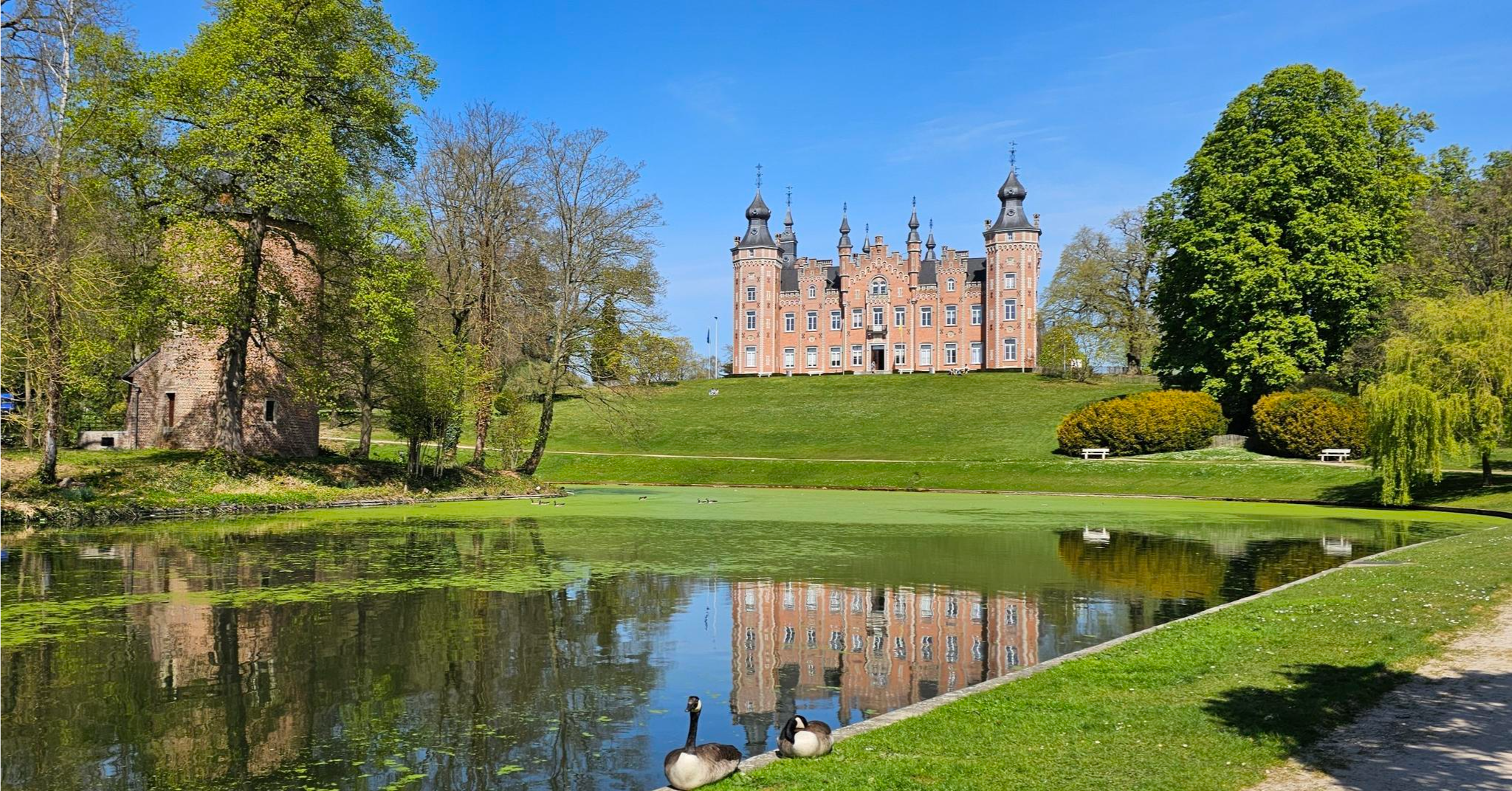
Dilbeek is home to several historical castles. You can explore De Viron Castle, which dates back to 1863 and serves as the town hall, or the 12th-century Groot-Bijgaarden Castle, known for its Flemish Renaissance style. Additionally, Gaasbeek Castle is a popular historical site that underwent extensive restoration, and the ruins of The Prinsen Castle offer a glimpse into the residence of the Lords of Grimbergen.
Are there castles with unique architectural features around Dilbeek?
Yes, De Viron Castle is particularly unique. Built in 1863, its Renaissance Revival style incorporates symbolic references to the Julian Calendar, featuring 12 towers, 52 rooms, 365 windows, and 7 staircases. Groot-Bijgaarden Castle showcases distinctive Flemish Renaissance architecture with its red brick and slate roof, surrounded by a wide moat.
Which castles have extensive parks or gardens?
Groot-Bijgaarden Castle is renowned for its magnificent 14-hectare park, designed by Louis Fuchs, which hosts the international Floralia Brussels flower exhibition every spring. Groenenberg Castle is situated within a 45-hectare English landscape park with diverse plant collections. The Meise Botanic Garden also includes historic buildings and a 12th-century tower within its vast grounds.
What is the best time to visit Groot-Bijgaarden Castle?
The best time to visit Groot-Bijgaarden Castle is during spring. Its 14-hectare park hosts the international Floralia Brussels flower exhibition, transforming the grounds into a vibrant spectacle with over a million bulbs and more than 300 varieties of tulips and other spring flowers.
Are there family-friendly castles around Dilbeek?
Yes, several castles and their surrounding areas are suitable for families. Gaasbeek Castle, Groenenberg Castle, and the Meise Botanic Garden (which includes a castle) are all categorized as family-friendly destinations, offering space for exploration and enjoyment.
What outdoor activities can I do near these castles?
The region around Dilbeek offers various outdoor activities. You can find numerous running trails, including a 'Forest path in Gaasbeek Estate' loop, or explore MTB trails like the 'Short singletrack – Volsembroek Pond loop'. Road cycling routes, such as the 'Molen Ter Zeven Wegen' loop, are also popular. For more details on routes and their difficulty, check the Running Trails around Dilbeek, MTB Trails around Dilbeek, and Road Cycling Routes around Dilbeek guides.
Are there walking or hiking routes near Dilbeek castles?
Yes, there are several walking and hiking opportunities. The parks surrounding castles like Groenenberg Castle and Gaasbeek Castle offer pleasant strolls. For more structured routes, you can find various running trails that are also suitable for walking, such as the 'Forest path in Gaasbeek Estate' loop. Explore the Running Trails around Dilbeek guide for detailed options.
What do visitors enjoy most about the castles around Dilbeek?
Visitors appreciate the blend of historical architecture and natural landscapes. The castles are valued for their unique designs, such as De Viron's calendar symbolism, and the extensive, well-maintained parks like those at Groot-Bijgaarden and Groenenberg. The community has shared over 300 photos and given more than 300 upvotes, highlighting the scenic beauty and historical significance of these sites.
Does any castle in Dilbeek serve a modern purpose?
Yes, De Viron Castle has served as the town hall of Dilbeek since 1923, blending its historical grandeur with modern civic utility.
Can I see medieval remnants at De Viron Castle?
While De Viron Castle itself was built in the 19th century, one of the original medieval towers, the Sint-Alenatoren, named after Saint Alena, can still be observed within the castle's surrounding park. This offers a glimpse into the site's deeper medieval past.
What is the history of The Prinsen Castle?
The Prinsen Castle was the residence of the Lords of Grimbergen from the 14th century. Its ruins are located in the Prinsenbos, south of Grimbergen's center. The castle dates from the early 17th century and was unfortunately destroyed during World War II. Its former moat now serves as a fishing pond, and heavy square pillars still bear the family's coat of arms.
Most popular routes around Dilbeek
Most popular attractions around Dilbeek

Get inspired with the komoot mobile app


Explore more
Looking for the best castles somewhere else? Discover other guides around Dilbeek:
