Top 9 Castles around Court-Saint-Étienne
Best castles around Court-Saint-Étienne offer a glimpse into the region's rich history and architectural heritage. This charming Belgian municipality features several notable castles, ranging from medieval fortifications to classical-style estates. The area is characterized by its historical significance, with structures dating back centuries. Visitors can explore diverse architectural styles and expansive parklands associated with these historical sites.
Best castles around Court-Saint-Étienne
- The most popular castles is Château Le Châtelet, a castle that features a massive three-storey schist keep from the 12th or 13th century. It is one of the rare fortifications from this period, with walls 1.80 m thick.
- Another must-see spot is Hautain-le-Val Castle, a historical castle first mentioned in 1125. The castle has undergone many changes over centuries, with its oldest parts dating from the 15th century, and it can be viewed from various sides.
- Visitors also love The Little Mermaid of the Lake, a man-made monument located in front of the Château du Lac. This small bronze statue sits on a rock in the waters of Lac de Genval, near a castle built in 1904 that now serves as a hotel.
- Court-Saint-Étienne is known for medieval castles, classical-style châteaux, and fortified farm compounds. The area offers a variety of historical structures to explore, each with its own unique story and architectural features.
- The castles around Court-Saint-Étienne are appreciated by the komoot community, with more than 100 upvotes and 50 photos shared.
Last updated: May 20, 2026
The Little Mermaid of the Lake
Highlight • Monument
Last Sunday June 30 (2019), it was the inauguration of the Little Mermaid of Lake Genval. A Little Mermaid, like the one in Copenhagen, but smaller. The small bronze statue sits on a rock in the waters of Lac de Genval, in front of the Château du Lac. It is the work of Michal, whose real name is Michel Alexandre Neuwels, sculptor from Plancenoit (Lasne).
facebook.com/MagazineBW/posts/2586373058053274
Translated by Google •
Tip by

Château Le Châtelet
Highlight • Castle
In the middle rises a massive three-storey schist keep from the 12th or 13th century.
It is one of the rare fortifications from this period.
villers-la-ville.net/nl/2014/06/11/het-poortgebouw
Translated by Google •
Tip by
Sign up now to discover places like this
Get recommendations on the best single tracks, peaks, & plenty of other exciting outdoor places.
Sign up for free
Hougoumont Castle
Highlight • Historical Site
Translated by Google •
Tip by

Hautain-le-Val Castle
Highlight • Castle
Only a few foundations remain of the old castle. The buildings subsequently erected have undergone many changes over the centuries according to the needs, insights and sometimes also the whims of the owners. The last restoration works date from 1904, turning the fortified castle of Houtain-le-Val into a pleasure garden.
In 1944, Nazi troops try to set the castle on fire, but with the help of all the villagers, the fire is quickly subdued.
burchten-kastelen.be/provincies/waals%20brabant/006%20Kasteel%20van%20Houtain%20le%20Val/Kasteel%20van%20Houtain%20le%20Val.html
Translated by Google •
Tip by
Corroy-le-Château Castle
Highlight • Castle
Translated by Google •
Tip by

Sign up for free to discover even more castles around Court-Saint-Étienne.
Sign up for free
Already have an account?
Start today with a free account
Your next adventure awaits.
Login or Signup
Tips from the Community

The castle or farm of Hougoumont played a crucial role during the Battle of Waterloo. Next to the farm, there are still chestnut trees where you can still find bullet holes from the battle. You can visit the farm in combination with the 1815 museum.
0
0

The Old Castle of Marbais is a 13th-century medieval castle. It is located on a rocky spur overlooking the confluence of the Thyle and the Ri des Goutailles valley, in Marbais, within the municipality of Villers-la-Ville. This site was once part of the former seigneury of Marbais.
3
0

Excellent quality hotel and restaurant
0
0

The first castle on this site is said to have been built in 1129 by knight Walter de Holton, the first lord of the lordship, which was given to him as a fief by the then Duke of Brabant. His father, Henri de Loupoigne, already ruled in neighbouring Houtain-le-Mont. Father Henri and son Walter thus obtained absolute power in the area of present-day Houtain-le-Val and Houtain-le-Mont. The castle actually belonged to the Duke of Brabant himself, Jan II the Peaceful. His successor, Jan III, acquired the castle for his eldest daughter, Johanna, who received Houtain from her father in 1345. The castle was passed down from generation to generation by the daughters of the family for many generations. Not much remains of the original castle. It was rebuilt in 1763 in classical style, but has retained a large part of its medieval facade. The oldest parts date from the fifteenth century, with architectural elements from the 12th century. Much has changed since then. For example, two turrets were added during restoration work in 1850. At a certain point, the castle came into the hands of the d'Hanins de Moerkerke family, originally from the Waas region. While most branches of this family made a name for themselves in Flanders, Count Fernand-Auguste-Joseph d'Hanins de Moerkerke married Marie de Waha in the nineteenth century. And so he became heir to the castle. His son Henri d'Hanins de Moerkerke became the next owner and mayor of Houtain-le-Val. And he had three daughters, the last of whom died in 2018. The castle is privately owned but can be viewed from various sides. For those, like me, who visited the village to find and follow the start of the Dijle, that private character is a pity - and also for heritage lovers of course. But at the point where you see a sign with the name of the river on the side of the domain you can see quite a bit, including how the river enters the domain. For those who want more information about the castle itself, visit this website for a virtual tour of the castle with a video report and interview: https://www.tvcom.be/info/focus-sur-genappe-visite-du-chateau-de-houtain-le-val-fonde-en-1126/50810
4
0
Le Château du Lac is best known today as a 5-star hotel. Events are also often organised there and that is why I know it from a professional long-gone past. But the building, whether you call it a castle or rather a glorified villa, it does have a fairly intense past. In the past, the mineral water of Genval was collected and bottled here. Together with the source of Bonne Fontaine, the Château du Lac was the true symbol of Genval-les-Eaux. The Etablissement des Eaux, as it was originally called, was built between 1905 and 1907 by the architect Julien Wendrickx, the future production director of the Compagnie Internationale des Eaux Minérales, to house the collection of sources and the bottling of the mineral water of Genval. After the First World War and the receivership of the companies that managed the Genval site, the castle became the property of an English company before being taken over by the Princes of Merode, who leased the facilities to Schweppes Belgium. The Belgian branch was then managed by John Martin, an English brewer based in Antwerp, who had been importing beers from Great Britain and Ireland to the continent since 1909, including the famous Guinness. He obtained the exclusive production rights for the Schweppes range, which he transferred to Genval in 1952 following the deterioration in the quality of Antwerp's drinking water, which was now pumped into the Albert Canal. Since the divestment of Schweppes in 1988, the John Martin group has further diversified its range, with speciality beers (Timmermans, Gordon, etc.), soft drinks (Orangina) and fruit juices (Looza). After the Schweppes factory moved to Rue du Cerf, the château, now owned by the Martin family, was converted into the five-star Château du Lac Source: https://www.parismatch.be/lifestyle/voyages/2020/08/23/le-lac-de-genval-et-ses-villas-2D3Q25DBTVANBFBV5WXJG3R2NI/
8
0
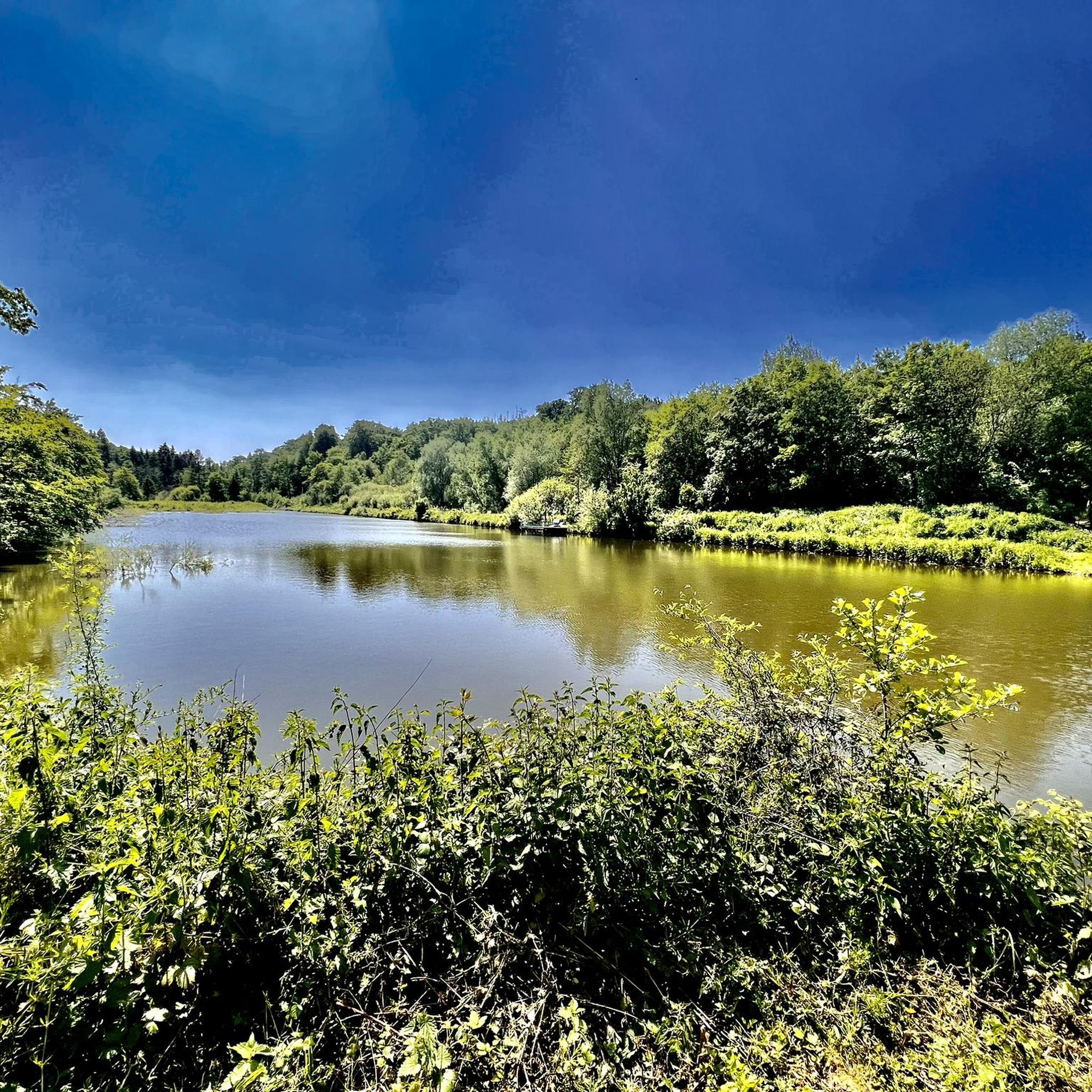
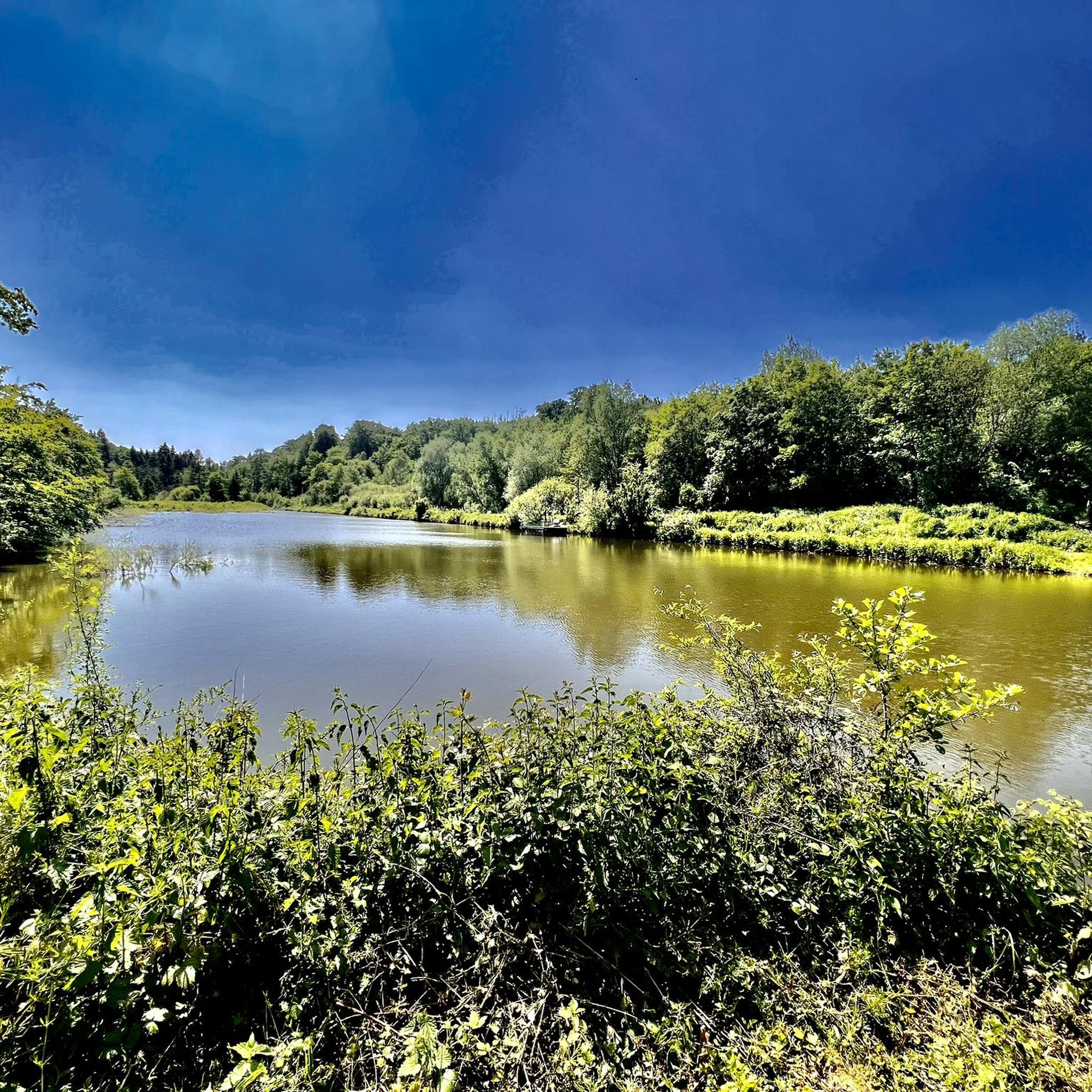
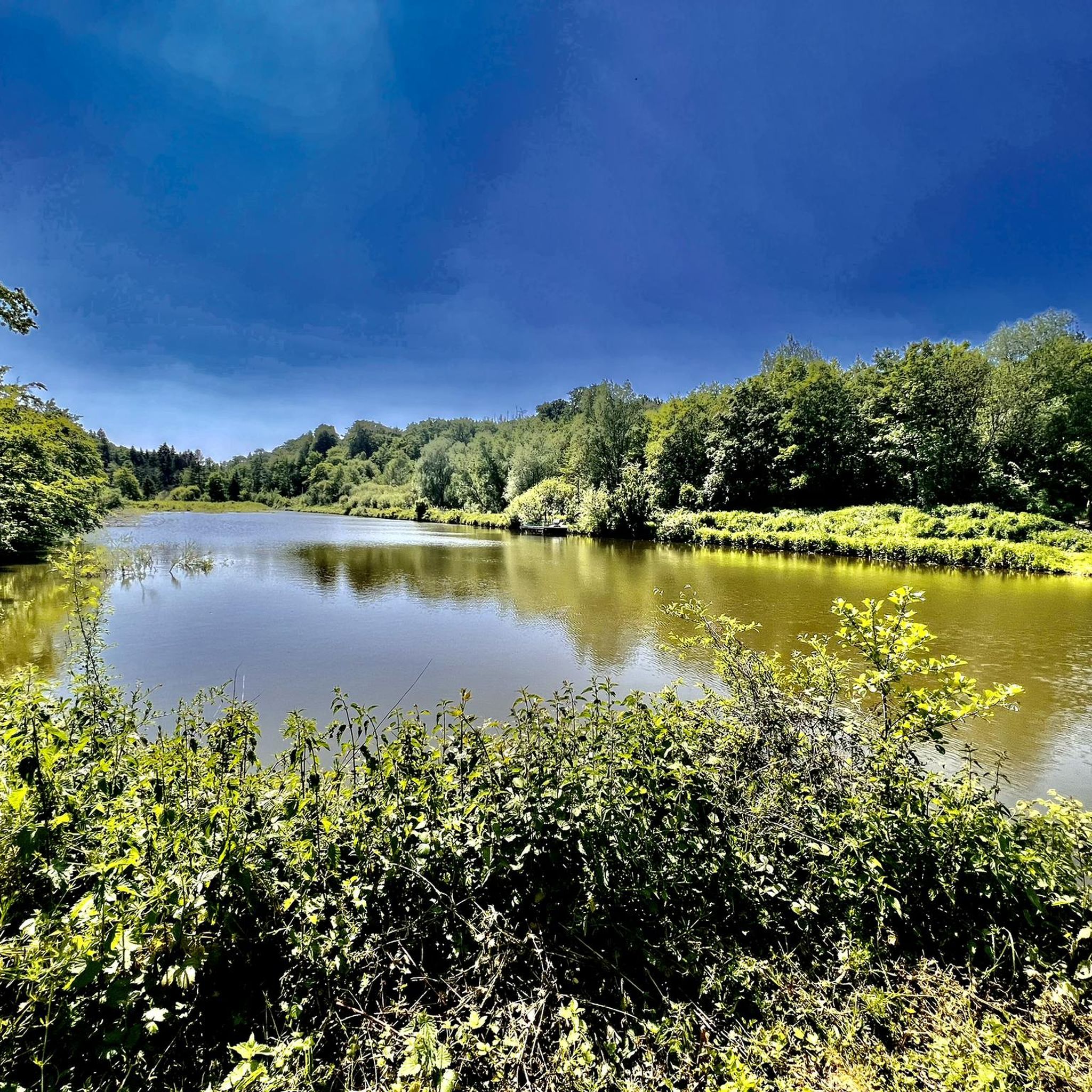
The Genval lake is located in the Zilverbeek valley. The artificial lake is located for the most part on the territory of Overijse and was constructed by order of lawyer and businessman Gustave Smets - Mondez. The 18 ha lake was constructed in 1904 in an area with a series of spring-rich ponds and marshes through which the Zilverbeek or the Argentine flowed. The Zilverbeek still flows along the lake on the Overijse side. The area attracted many tourists from the very beginning. Around 1900, the urban development plans were also drawn up for the construction of the park on the Walloon side. Several impressive villas were built here that were reminiscent of copies of buildings from Versailles and monuments on the Swiss Lake Lucerne. On the Overijse side, there was less interest in the construction, which is why the slopes are less developed than on the Walloon side, where it was promoted as a spa. After the First World War, the lake was sold to John Martin (1886-1966), an English brewer from Antwerp. He would establish the Schweppes factory here (Belgian license) in the "Château du Lac" (until 1981). The lake is still in the hands of his heirs. On the Meerlaan there are still a few cottage-style villas overlooking the lake. These villas are depicted on various old postcards and are still recognizable today but have been heavily modified. Inventory of Immovable Heritage: Maleizen, https://id.erfgoed.net/themas/14294
8
0
"La sirène du lac", as sculptor Michal named his statue, stands in the lake at the height of - of course - "Le Château du Lac", today a hotel. This siren apparently preferred an artificial lake to a river or sea, but people are said to sometimes think of eroticism when they are near water, and ultimately erotic song is the seductive weapon of sirens. We should not spoil the legacy of Hans Christian Andersen's "Lille Havfrue" by making comparisons, because that little mermaid grew up in the sea and has a statue in a harbour instead of a large lake that was created on behalf of a lawyer and businessman. The statue was commissioned by Jean Vanderbecken (RIP), former mayor of Rixensart for the MR, and fits in perfectly with the atmosphere of the "Château" and the "lake" as it has been developed on the French-speaking side.
8
0

And suddenly this castle from the 13th century appears in front of you...
13
0
Frequently Asked Questions
What are some of the most historically significant castles around Court-Saint-Étienne?
The region boasts several castles with deep historical roots. The Château Le Châtelet features a massive 12th or 13th-century schist keep, making it a rare example of fortifications from that period. Another notable site is Hautain-le-Val Castle, first mentioned in 1125, which has undergone many transformations over centuries, with its oldest parts dating from the 15th century. Additionally, the Château de Court-Saint-Étienne (Château Goblet d'Alviella) has origins dating back to the late 12th or early 13th century, with historical caves providing evidence of its 16th-century existence.
Are there any family-friendly castles or sites near Court-Saint-Étienne?
Yes, several sites are suitable for families. The area around The Little Mermaid of the Lake, located in front of the Château du Lac, offers a pleasant setting by Lac de Genval. The Château du Lac itself, now a hotel, is an interesting architectural sight. Hougoumont Castle, a walled farm that was a key site during the Battle of Waterloo, is also family-friendly and offers a historical experience.
What kind of architecture can I expect to see among the castles in the region?
The castles around Court-Saint-Étienne showcase a range of architectural styles. You can find medieval fortifications like the 12th-century keep of Château Le Châtelet. The Château de Court-Saint-Étienne (Château Goblet d'Alviella) is a classical-style building from the 18th century. The Château dit de Wisterzée, built in 1874, exhibits an eclectic style inspired by the Flemish Renaissance, notable for its polychromatic facade of red brick, blue stone, and white stone.
Are there any castles with significant natural surroundings or parks?
Absolutely. The Château de Court-Saint-Étienne (Château Goblet d'Alviella) is complemented by a magnificent 20-hectare English garden, classified in 1976, featuring a variety of beautiful and exotic tree species. The Château dit de Wisterzée is situated within the Parc de Wisterzée, also classified since 1976 and recognized for its remarkable trees, offering a pleasant natural setting.
Can I visit the Château de Court-Saint-Étienne (Château Goblet d'Alviella) or the Château dit de Wisterzée?
The Château de Court-Saint-Étienne (Château Goblet d'Alviella) is privately owned by the Goblet d'Alviella family, who maintain its extensive park. The Château dit de Wisterzée currently houses the Provincial Technical Institute (ITP) and its artistic humanities section. While the parks are significant, direct public access to the interiors of these specific castles may be limited or require special arrangements.
What outdoor activities can I do near these castles?
The region around Court-Saint-Étienne offers various outdoor activities. For cycling enthusiasts, there are numerous routes, including road cycling options like the 'Sombreffe Castle – Corroy-le-Château Castle loop' from Court-Saint-Étienne, which is a moderate 52.8 km ride. You can find more cycling routes in the Road Cycling Routes around Court-Saint-Étienne guide and the Cycling around Court-Saint-Étienne guide. For runners, trails like the 'Céroux-Mousty Station – Forest Descent Path loop' offer moderate challenges. Explore more running trails in the Running Trails around Court-Saint-Étienne guide.
Are there any castles that played a role in significant historical events?
Yes, Hougoumont Castle is a prime example. This walled farm compound was a crucial site during the Battle of Waterloo in 1815, serving as one of the advanced defensible positions for the Anglo-allied army against Napoleon's forces. It has since been restored and opened to the public, offering a direct link to this pivotal historical event.
What do visitors appreciate most about the castles and historical sites in this area?
Visitors often appreciate the tangible link to history that these sites provide, from medieval fortifications to more recent historical battlegrounds. The architectural diversity, the well-preserved parks, and the serene natural environments surrounding many of the castles are also highly valued. The komoot community has shown its appreciation with over 100 upvotes and 50 photos shared across the various castle highlights.
Is <a href="https://www.komoot.com/highlight/1466386" target="_blank" rel="noopener">Corroy-le-Château Castle</a> accessible for visitors?
Corroy-le-Château Castle is a medieval fortress that has retained much of its original architecture. It is open to visitors from May to September, typically on Sundays and public holidays. It's advisable to check their official website for specific opening hours and any potential changes before planning your visit.
Are there any castles that are particularly picturesque or offer good viewpoints?
The area around The Little Mermaid of the Lake at Lac de Genval is considered very picturesque, especially with the Château du Lac in the background. The expansive and meticulously maintained park of the Château de Court-Saint-Étienne (Château Goblet d'Alviella) also offers beautiful vistas and a serene environment for photography and enjoyment.
Can I see the castles from nearby walking or cycling paths?
Many castles, like Hautain-le-Val Castle, can be viewed from various sides, often from public roads or paths. While Corroy-le-Château Castle might not be easily visible from all roads, the surrounding areas often feature cycling and running routes that pass by or near these historical sites, allowing for external views. For example, the 'Sombreffe Castle – Corroy-le-Château Castle loop' is a road cycling route that includes views of castles.
Most popular routes around Court-Saint-Étienne
Most popular attractions around Court-Saint-Étienne

Get inspired with the komoot mobile app


Explore more
Looking for the best castles somewhere else? Discover other guides around Court-Saint-Étienne:
