Attractions and Places To See around Poviglio - Top 20
Best attractions and places to see around Poviglio include a mix of historical, cultural, and archaeological sites situated in the lowlands of the Reggio Emilia province. The area features significant Bronze Age archaeological sites and Romanesque churches. Visitors can explore landmarks within the town and its immediate surroundings, offering insights into the region's past and natural landscape.
Best attractions and places to see around Poviglio
- The most popular attractions is Corte San Giorgio, a historical site with roots tracing back to a donation by Countess Matilde di Canossa in 1099. Roman materials have been found in the area, and a court was built around 1100.
- Another must-see spot is Peppone and Don Camillo Museum, Brescello, a museum dedicated to the novels and films of Don Camillo and Peppone. It showcases memorabilia, film sets, and photographs from the movie series.
- Visitors also love Brescello Square with Statues of Don Camillo and Peppone, a town square featuring statues commemorating the characters from the famous novels and films. The square is also home to the church and town hall.
- Poviglio is known for its historical sites, museums, and religious buildings. The area offers a variety of attractions to see and explore, including cycle paths along the Po River.
- The attractions around Poviglio are appreciated by the komoot community, with 31 upvotes and 8 photos shared by visitors.
Last updated: July 6, 2026
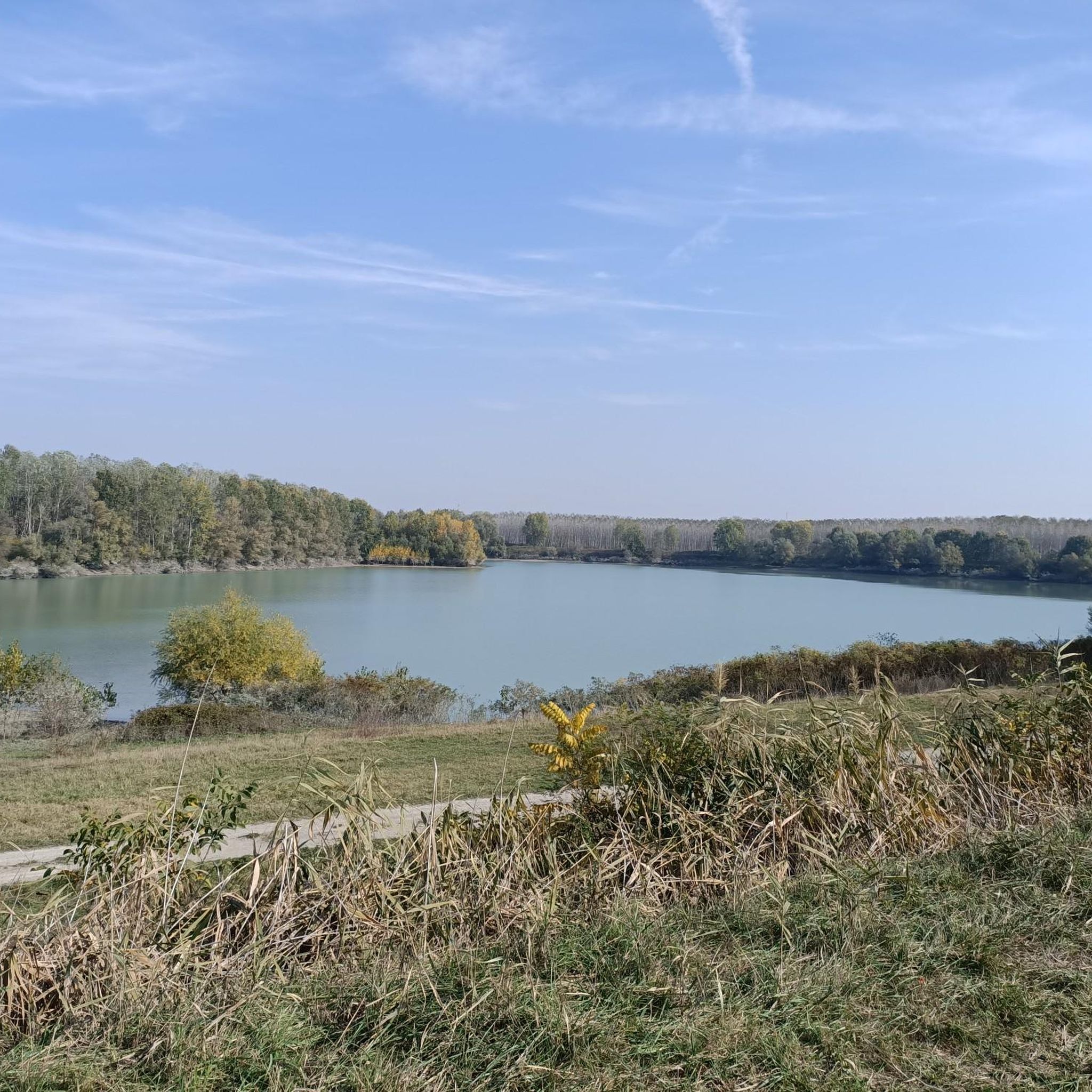
Po River Cycle Path – Guastalla to Luzzara
Highlight • Cycleway
Translated by Google •
Tip by

Statues of Don Camillo and Peppone in Brescello
Highlight • Monument
Translated by Google •
Tip by
Sign up now to discover places like this
Get recommendations on the best single tracks, peaks, & plenty of other exciting outdoor places.
Sign up for free
Corte San Giorgio
Highlight • Historical Site
Various Roman material was found in the locality. In 1099 San Giorgio with the chapel built there in memory of the same saint was donated by Countess Matilde di Canossa to the Benedictine monastery of Brescello. Around 1100 a court was built there and in 1153 a Bull of Anastasio IV reports the existence of the Church of San Giorgio and its court. Of the Church of San Giorgio we still have memory in the "Rotolo" of the Tithes of the Diocese of Parma among the employees of the Monastery of Brescello. In the Parma diocesan appraisal of 1354 it is exempt from Diocesan Jurisdiction. The possession of San Giorgio was entrusted in 1405 as a fief to the Bernieri family. In 1700 it became the property of the Cisalpine Republic which appropriated the ecclesiastical and monastic structures.
In the locality there is currently the Oratory of S. Giorgio erected in 1876 by the then owner Giuseppe Bartolo Soliani to replace the ancient church of the Matildic period with three naves he had demolished. It has a simple gabled façade bordered by pilasters and a frontispiece; the entrance is architraved with an upper lunette window. You can still admire the Romanesque bell tower, built largely with Roman material. Source Pro-Loco Brescello
Translated by Google •
Tip by

Peppone and Don Camillo Museum, Brescello
Highlight • Historical Site
Translated by Google •
Tip by

Guastalla town centre and landmarks
Highlight • Settlement
Translated by Google •
Tip by

Sign up for free to discover even more attractions around Poviglio.
Sign up for free
Already have an account?
Start today with a free account
Your next adventure awaits.
Login or Signup


Tips from the Community

The center of Guastalla, located in the Bassa Reggiana in Emilia-Romagna, is a valuable example of Renaissance urban planning linked to the history of the Gonzaga family. Its urban structure retains the charm of the ancient small capital on the Po River.
0
0
Don Camillo and Peppone are the famous protagonists of a series of stories by the writer Giovannino Guareschi, set in the post-war period in an imaginary small town in the Bassa Padana. They represent the archetype of divided Italy in the 1950s: Don Camillo (the energetic and anti-communist parish priest) and Peppone (Giuseppe Bottazzi, the communist and fiery mayor). Despite their furious ideological disputes, the two characters maintain a deep humanity and always find themselves united for the common good of the community.
0
0

Spectacular and unexpected altar.
1
0

"A few blocks from the main square, at Via De Amicis 2, you'll find the signposted Museo Peppone e Don Camillo, opened in 1989 and named in that order because the mayor at the time was a communist (!). In front of it stands the tank from "The Great Battle of Don Camillo," and the locomotive that was supposed to transport Peppone to his exile in Rome is also still preserved. The lovingly curated exhibition about the making of the films features newspaper articles, photos, and many relics from the filming, such as bicycles and Peppone's fiery red motorcycle. Various souvenirs are also available for purchase." (Source: https://www.michael-mueller-verlag.de/de/wussten_sie_dass_don_camillo_und_peppone/ )
0
0

This is the exit from the Museum of Don Camillo and Peppone. We couldn't find the entrance. Tickets are supposedly available at the tourist information office on the main street near this house.
1
0

Museum with memories of the film Don Camillo e Peppone, which was first shown on the screen in 1952. There are probably 5 films now 🧐😀.
1
0

Statue of the legendary Don Camillo and Peppone
2
0

Inaugurated on 16 April 1989, thanks to the efforts and enthusiasm of a group of passionate volunteers from the town, the “Peppone and Don Camillo” Museum is a space in which you can immerse yourself in the past, letting yourself be guided by the original film posters, photographs in black and white, from the objects of the film sets and from the stories of our young tourist informants. The environments contain numerous memorabilia linked to the filming of the series including: Peppone's motorbike, Don Camillo's cassock, the bicycles of the protagonists used in the final scene of the third film, the sidecar and the projector with which the first film was shown (“Don Camillo”, directed by Julien Duviver, 1952) at the “Cinema Verdi” in Brescello, in the absolute world premiere. Outside the museum it is possible to see the tank that appears in a scene of the third film ("Don Camillo and the Honorable Peppone", directed by Carmine Gallone, 1955) and the train locomotive with which, at the end of the first film, Don Camillo is sent into exile in the mountains by the Bishop following one of his stunts. On the first floor of the Museum you can admire the photographs taken during the making of the films, as well as the reconstructions of some filming environments (such as Peppone's desk). The bookshop then allows the purchase of souvenirs, books, DVDs and typical local products, including the famous Spongata di Brescello.
1
0
Frequently Asked Questions
What historical sites can I visit in and around Poviglio?
Poviglio and its surroundings are rich in history. You can explore Corte San Giorgio, a historical court with roots dating back to 1099, where Roman materials have been found. The Parish Church of Saint Thomas of Canterbury, with its Romanesque origins from the 11th-12th century, also offers a glimpse into the past. Additionally, the Santa Rosa Terramara is one of Europe's largest Bronze Age fortified villages, and you can learn more about it at the Terramara Museum.
Are there any museums or cultural attractions nearby?
Yes, the area offers several cultural attractions. The Peppone and Don Camillo Museum in Brescello is dedicated to the famous novels and films, showcasing memorabilia and film sets. You can also visit the Terramara Museum, which displays artifacts from the Santa Rosa Terramara excavations, including ceramics and tools from the Bronze Age.
What kind of outdoor activities can I do around Poviglio?
You can enjoy various outdoor activities, especially cycling and hiking. The Po River Cycle Path – Guastalla to Luzzara offers scenic routes along the river. For more options, explore the many cycling routes around Poviglio or discover hiking trails that take you through the local landscape.
Are there family-friendly attractions in the Poviglio area?
Absolutely. The Peppone and Don Camillo Museum in Brescello is a fun and engaging visit for families, bringing to life the characters from the beloved stories. The Po River Cycle Path is also a great option for a family outing, offering easy and enjoyable cycling opportunities.
Where can I find statues or monuments related to the Don Camillo and Peppone stories?
You can find statues commemorating the famous characters in Brescello Square with Statues of Don Camillo and Peppone. This central square also features the church and town hall, making it a key location from the novels and films.
What are the significant religious buildings to see?
Poviglio is home to several historic churches. The Parish Church of Saint Thomas of Canterbury is a Romanesque church with origins in the 11th-12th century. Other notable religious sites include the 12th-century Santo Stefano Church, known for its 14th-century bell tower, and the Church of San Giacomo, built around 1100.
Can I visit archaeological sites in Poviglio?
Yes, the Santa Rosa Terramara is a significant archaeological site in the Fodico area of Poviglio, representing one of Europe's largest Bronze Age fortified villages. While the site itself can be visited during summer excavations with free guided tours, the Terramara Museum is open year-round to showcase artifacts found there.
What is the best time of year to visit Poviglio for outdoor activities?
The spring and autumn months generally offer pleasant weather for outdoor activities like cycling and hiking. The Spring Festival, held on the third Sunday of April, also provides a lively atmosphere with local food, art, and ecological products.
Are there any natural areas or parks to explore near Poviglio?
While Poviglio is in the lowlands, you can find natural points of interest such as the "Ex Cave Corazza" Oasis. The Po River itself offers natural beauty, and you can explore the area between the Enza and Po rivers via the Enza - Po Rivers Ringroad.
What kind of local cuisine can I expect in Poviglio?
Poviglio's culinary traditions are rich and flavorful. You can expect to find local specialties such as erbazzone, a savory pie made with spinach, green onions, and Grana cheese. The region is also known for excellent cold pork meats and Lambrusco wine.
Are there any cycling routes suitable for road bikes?
Yes, there are several road cycling routes around Poviglio. For example, you can find easy routes like the "Alfonsina Strada Mural – Boretto Bridge over the Po River loop from Poviglio," or more moderate options such as the "Food Valley Cycle Route – Colorno Palace loop from Lentigione." You can explore more road cycling routes here.
What are some easy walking routes near Poviglio?
For easy walks, consider routes like the "Peppone and Don Camillo Museum – Peppone Statue loop from Brescello," which is just over 3 km. Another easy option is the "Boretto Bridge over the Po River – Boretto River Port loop from Boretto." Find more hiking routes around Poviglio.
Most popular routes around Poviglio

Get inspired with the komoot mobile app


Explore more
Still not found the Highlight you’re looking for? See guides of the top attractions in other regions:
