The best walks and hikes around Stulln
4.5
(1003)
4,720
hikers
16
hikes
Hiking around Stulln, located in the Upper Palatinate region of Germany, offers diverse landscapes for outdoor enthusiasts. The area features varied terrain, including accessible paths around natural water features like lakes in old quarries and streams. Hikers can explore gentle hills and woodlands, providing options for different fitness levels. This region is characterized by its blend of natural elements and historical quarry sites, contributing to unique scenic views.
Best hiking trails around Stulln
- The most popular hiking route is Lake…
Last updated: November 18, 2026
5.0
(1)
13
hikers
Easy hike. Easily walkable paths.
9
hikers
Moderate hike. Good fitness required. Easily walkable paths.

5.0
(2)
4
hikers
Easy hike. Easily walkable paths.
3.0
(1)
4
hikers
Easy hike. Easily walkable paths.
5.0
(1)
5
hikers
7.05km
01:49
30m
30m
Easy hike. Easily walkable paths.
Get access to more routes and recommendations from other explorers.
Already have an account?
Our route recommendations are based on thousands of hikes, rides, and runs completed by other people on komoot.
Start today with a free account
Your next adventure awaits.
Tips from the Community

Expositurkirche St. Stephanus In 1412, Pastor Johann Zenger from Perschen bequeathed eight guilders to the church in Stulln. This provides proof that the village, which was always dependent on Schwarzenfeld, possessed its own house of worship. It was destroyed during the Hussite Wars at the beginning of the 15th century. In the time when Gothic architecture in the south was slowly being replaced by Renaissance forms, the new church was built around 1500. St. Stephanus has the appearance of a small, squat castle. The massive masonry of the bulky, solid tower was likely built much earlier than the attached nave and served as a refuge and defensive tower for the people in uncertain times. A few narrow windows illuminate the simple, flat-ceilinged interior. A chronicler once described the valuable art monuments from the time of their creation with admiration. “Two carved reliefs on the right east wall, depicting Saint George and the Holy Kinship (Anna Selbdritt), point art-historically to the late Middle Ages. The depiction of the Crucified on the south wall is very expressive. The carving of the body and the expression of the Savior's suffering are crafted with a master's hand. The painted-over flesh tones are unfortunately somewhat unsuccessful. Even more regrettable is that there is not the slightest clue about the master who created this impressive work of art. Furthermore, there is a wealth of Gothic figures here with the rich, flowing drapery of the late period: St. Catherine and St. Barbara around 1450, then St. Stephen, St. Martin, and St. Gertrude. The most beautiful is the Mother of God in the left side altar; she carries the curly-haired child lightly in her arms, her hand gently touching the small body.” Its year of creation is assumed to be 1480. The Baroque high altar under the vault of the chancel, with two twisted columns entwined with vine leaves and flanked by sweeping scrollwork, was likely created in the 18th century. The altarpiece, which was renovated only a few years ago, shows the stoning of the church patron, Saint Stephen. Today, the “old church” leads a rather quiet existence. For many years, it served as a house of worship for Protestant Christians. Today, only on a few days a year—at class reunions, golden weddings, on one of the rogation days, and on December 26th, the feast day of the church patron—do the people of Stulln and former residents gather for worship. Source: www.stulln.de
4
0
St. Barbara Parish Church Until the establishment of the expositure on August 1, 1951, the people of Stulln attended Holy Mass in Schwarzenfeld for centuries. Only on high feast days of the church year and for the church consecration did a clergyman come to Stulln. Even then, the Stephanuskirche could hardly accommodate the believers. Expanding the small house of God was rejected by all relevant authorities and the vast majority of local residents due to its location. For the expositure community, which had grown rapidly to nearly a thousand Catholics after the Second World War, a new church was to be built. Thus, the Stephanuskirche, built around 1500 and the only landmark of the village for centuries, was preserved in its original form. In 1953, the foundation stone was laid, and on November 18, 1953, the topping-out ceremony was celebrated. A total of 36 companies were involved in the construction of the church. The result was a church that, in form and style, is associated with the old little church, clear and simple, and blends harmoniously into the landscape. The church has a length of 31.5 m, a width of 16 m, and the ridge height is stated as 19 m. The mighty tower, with a footprint of 8 x 8 m, rises 32.5 m high, excluding the copper cross that stands on a massive sphere. The high altar shows a larger-than-life Savior standing on a symbolic globe, under his outstretched arms to his right is St. Barbara and to his left St. Wendelin. The left side altar is dedicated to the Mother of God and the right side altar to St. George. The tower of the St. Barbara Church has space for five bells. The first three date from 1954 and come from the Georg Hofweber workshop in Regensburg. The largest is dedicated to St. Barbara and weighs 407 kg, the middle one to St. Norbert at 230 kg, and the small one to St. Joseph at 154 kg. In 1986, the 700 kg Peace Bell and a smaller bell dedicated to the Mother of God were added from the Rudolf Perner bell foundry in Passau. Source: Excerpts from www.stulln.de
4
0

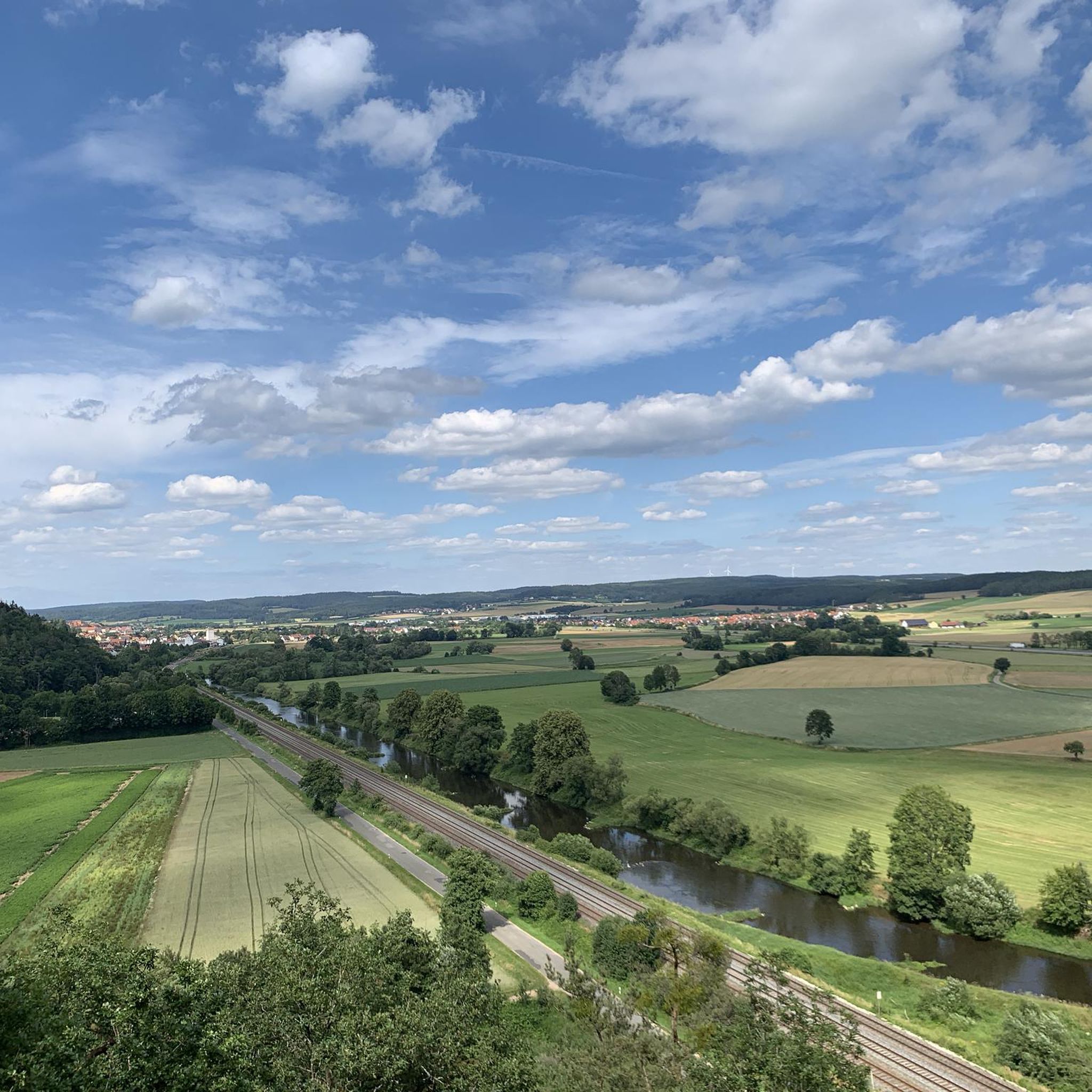
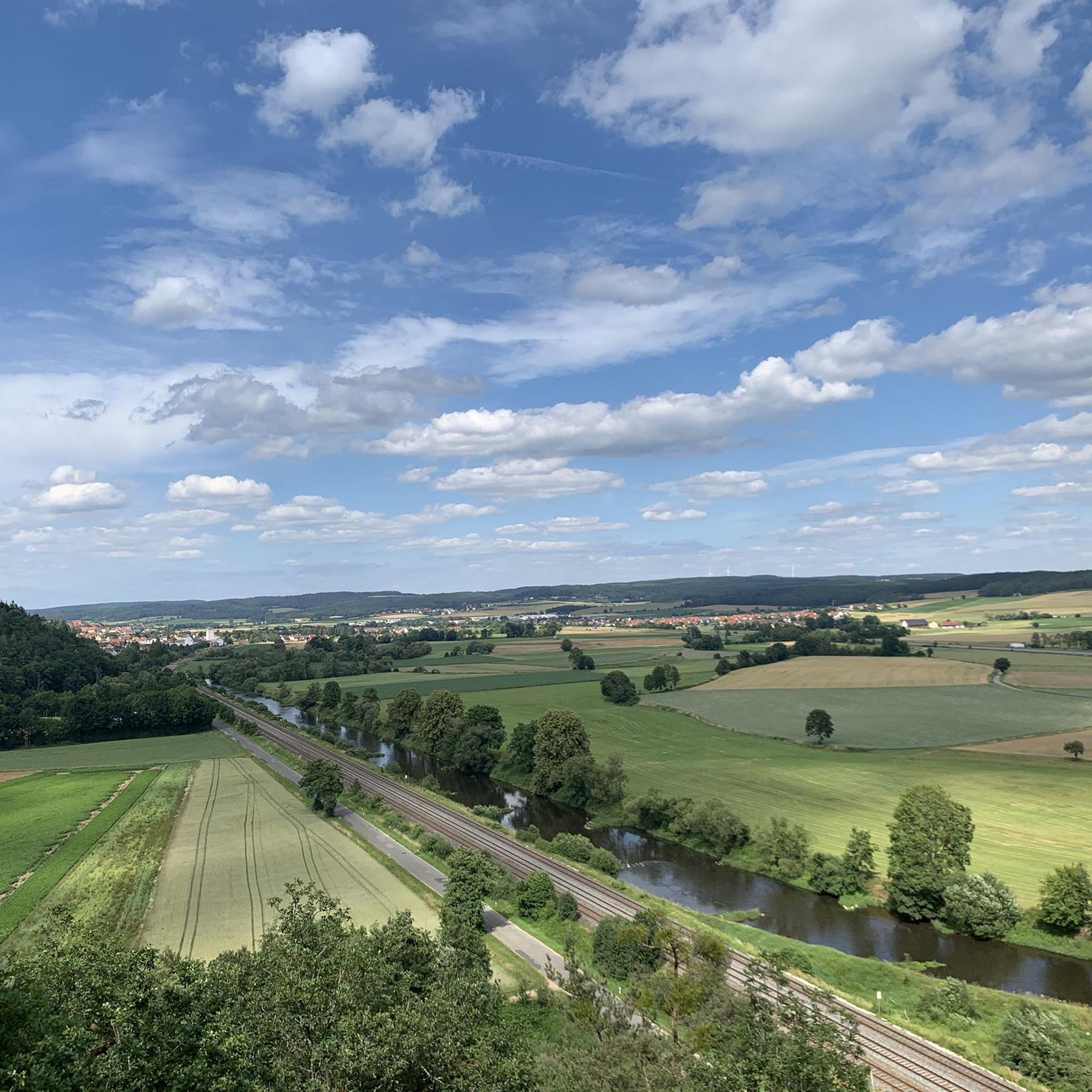
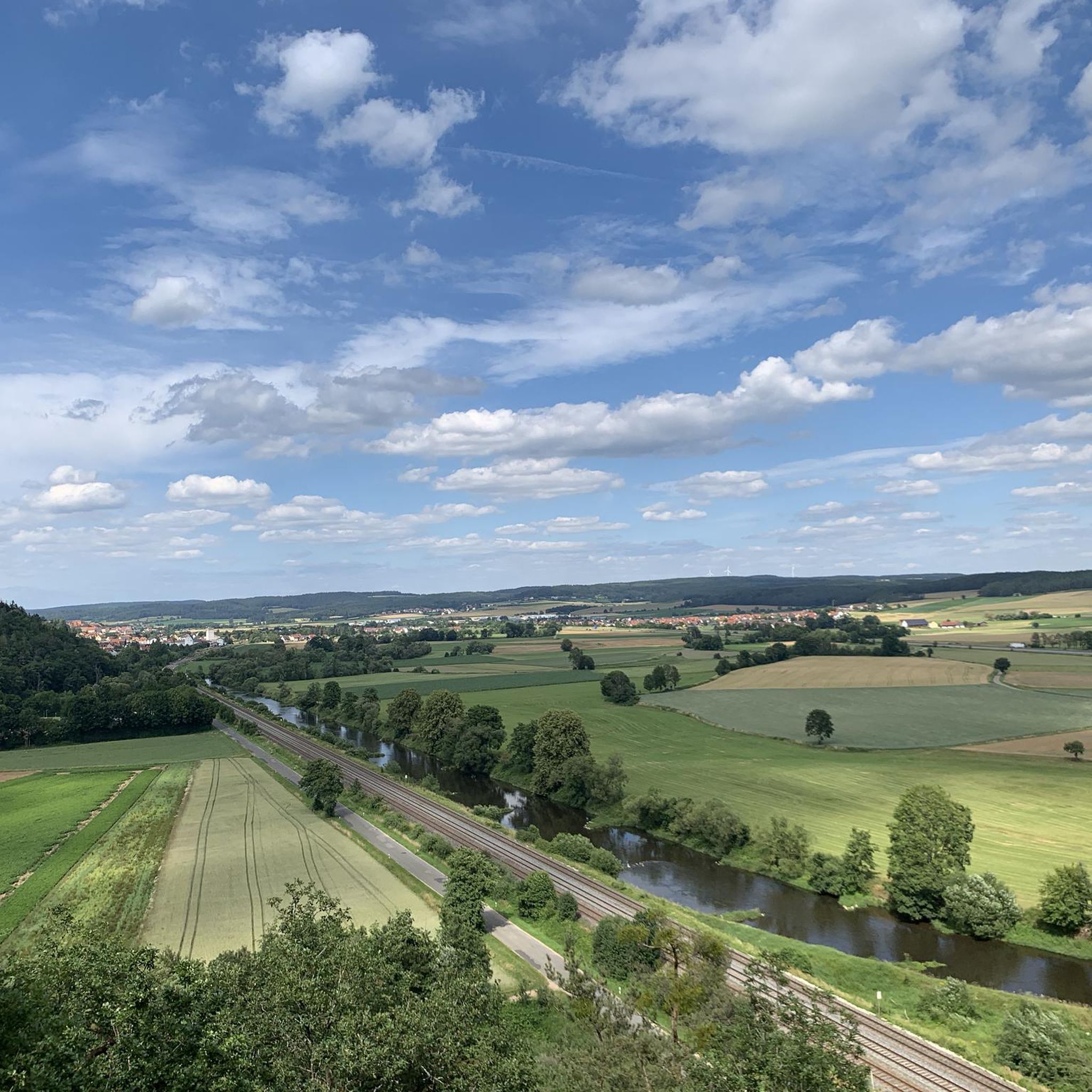
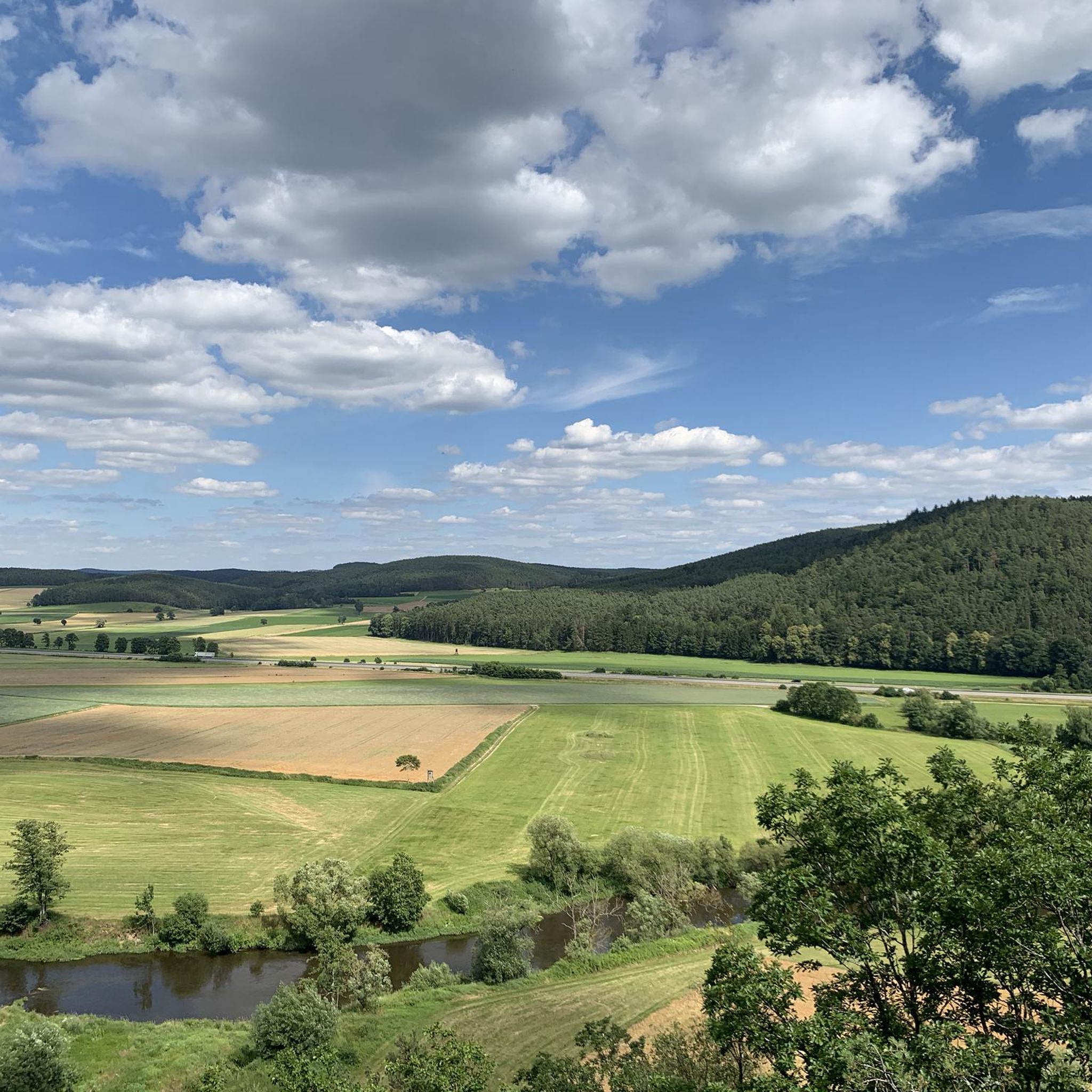
From this spot, you have an excellent view. The Plentl-Kreuz is also clearly visible from the motorway or by train.
0
0

Beautiful bathing area with kiosk, operated by Lux
0
0

Branch church of Schwarzenfeld St. Stephanus in Stulln.
2
0

Nice vantage point that you have to earn beforehand.
4
0
Always a nice highlight to enjoy the excellent view
4
0
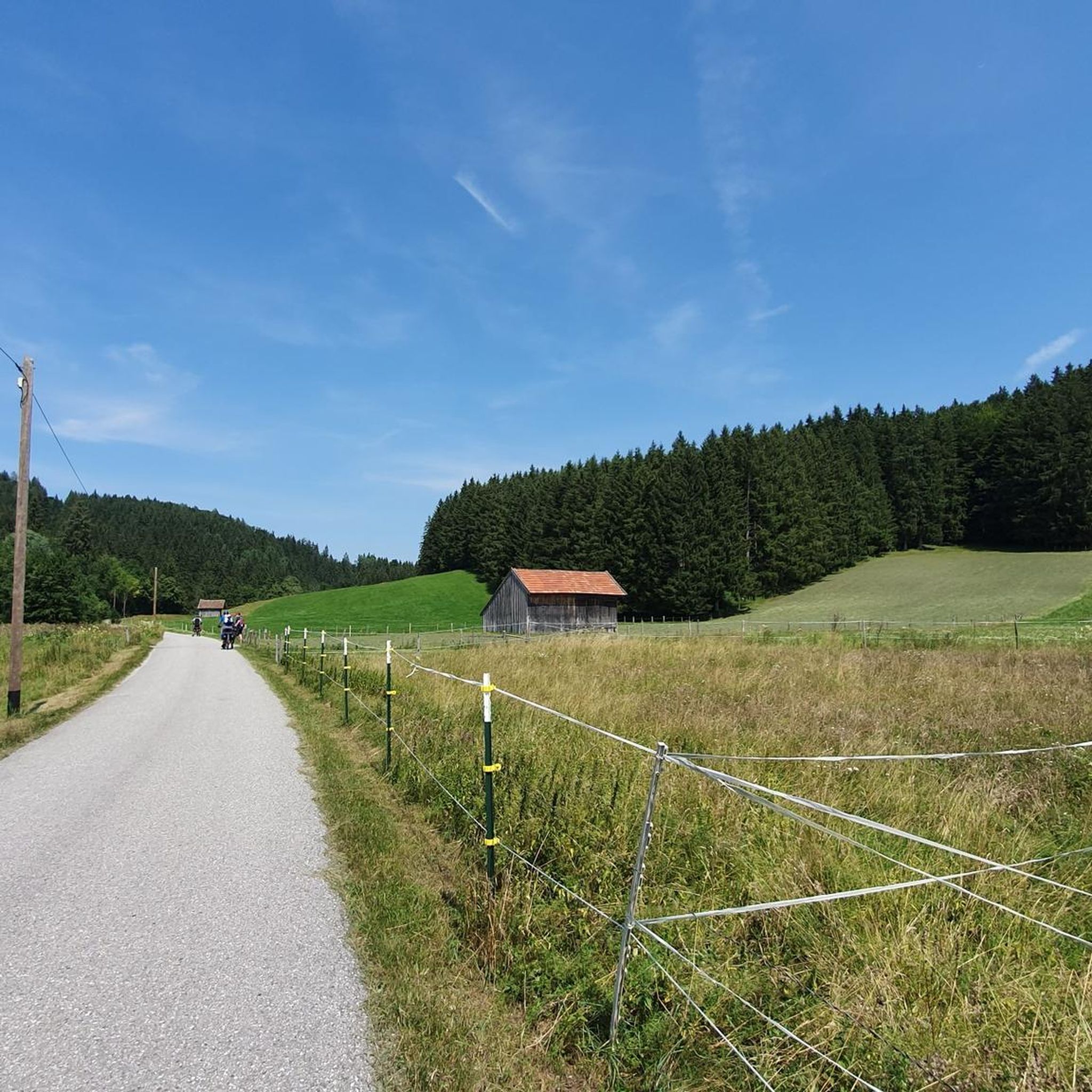
I've ridden this beautiful stretch of road quite often
4
0
Frequently Asked Questions
How many hiking trails are available in Stulln?
Stulln offers a selection of around 16 hiking trails, catering to various preferences and fitness levels. These routes are highly rated by the komoot community, with an average score of 4.6 stars.
What kind of terrain can I expect on Stulln's hiking trails?
The trails around Stulln feature diverse landscapes, including accessible paths, natural water features like lakes in old quarries and streams, and gentle hills and woodlands. You'll find a blend of natural elements and historical quarry sites, contributing to unique scenic views.
Are there any easy hiking trails suitable for beginners or families in Stulln?
Yes, Stulln has several easy trails. For instance, the Plentl Cross loop from Upper Palatinate is a 3.9-mile (6.3 km) route with accessible paths, often completed in about 1 hour 42 minutes. Another great option is the Lake in the Old Quarry loop from Upper Palatinate, which is 4.3 miles (7.0 km) and features a unique lake setting.
What are some natural features or landmarks to look out for on hikes in Stulln?
Stulln's trails are known for their natural water features, such as lakes in old quarries and streams like the Hüttenbach. You can also explore nearby attractions like Lake Murner or the Brückelsee. For panoramic views, consider visiting the Buchberg Summit or the Hirmerberg Summit Memorial Cross.
Are there any circular hiking routes in Stulln?
Yes, many of Stulln's trails are designed as loops. Examples include the Haselberg – Bridge Over the Hüttenbach loop from Upper Palatinate, which is a moderate 5.4-mile (8.8 km) path, and the Bridge Over the Hüttenbach loop from Upper Palatinate, an easy 4.0-mile (6.5 km) route.
What is the best time of year to go hiking in Stulln?
The Upper Palatinate region, including Stulln, is generally pleasant for hiking from spring through autumn. During these seasons, the weather is typically mild, and the natural landscapes are vibrant. While winter hiking is possible, it's advisable to check local weather conditions for snow and ice.
Are the hiking trails in Stulln dog-friendly?
Many trails in the Stulln area are suitable for hiking with dogs, especially the accessible paths through woodlands and along natural water features. However, it's always recommended to keep dogs on a leash and be mindful of local regulations and wildlife.
What do other hikers enjoy the most about hiking in Stulln?
The area is highly rated by the komoot community, with an average score of 4.6 stars from over 800 reviews. Hikers often praise the diverse landscapes, the unique appeal of lakes set within old quarries, and the variety of routes suitable for different fitness levels.
Are there any moderate or challenging hikes for more experienced hikers?
Yes, Stulln offers routes for those seeking a more challenging experience. The Lake in the Old Quarry – Wayside shrine loop from Upper Palatinate is a moderate 5.6-mile (9.1 km) trail with some elevation gain. Another moderate option is the Haselberg – Bridge Over the Hüttenbach loop from Upper Palatinate, which includes varied terrain and the Haselberg hill.
Is parking available at the trailheads in Stulln?
While specific parking details for each trailhead vary, Stulln and the surrounding Upper Palatinate region are generally well-equipped for visitors. It's common to find designated parking areas near popular starting points for hiking routes.
Can I reach hiking trails in Stulln using public transport?
Stulln is part of the Upper Palatinate region, which has public transport connections. While some trailheads might be directly accessible, it's advisable to check local bus or train schedules to plan your journey to the starting points of specific hikes.
Most popular attractions around Stulln

Get inspired with the komoot mobile app


Explore more
Browse the best Hikes in other regions.
