The best road cycling routes around San Stino Di Livenza
4.3
(83)
1,571
riders
74
rides
Road cycling around San Stino Di Livenza, located in the Metropolitan City of Venice, offers diverse landscapes for cyclists. The area is characterized by its position between the Livenza River and the Malgher Canal, providing scenic riverine routes. The terrain is predominantly flat, featuring agricultural lands and green spaces, which are ideal for relaxed rides. This region benefits from the broader Veneto area's network of cycling routes, extending towards coastal areas and historical villages.
Best road cycling routes around San Stino Di Livenza
- The most popular road cycling route is Tezze Bridge over the Livenza River – Vittoria Canal in Cessalto loop from San Stino di Livenza, a 40.7 miles (65.4 km) trail that takes 2 hours 29 minutes to complete. This moderate route explores the local waterways and countryside.
- Another top favourite among local road cyclists is Lungo Argine Road – Road Along the Livenza River loop from San Stino di Livenza, an easy 19.5 miles (31.4 km) path. This route offers continuous views of the Livenza River and its surrounding flatlands.
- Local road cyclists also love the Road Along the Livenza River – Livenzetta Harbor loop from San Stino di Livenza, a 32.0 miles (51.5 km) trail leading through riverine landscapes and agricultural areas, often completed in about 2 hours 6 minutes.
- Road cycling around San Stino Di Livenza is defined by the Livenza River, extensive agricultural lands, and a network of canals. The network offers options for different ability levels, from easy, flat rides to moderate distances.
- The routes in San Stino Di Livenza are highly rated by the komoot community with an average score of 4.2 stars from more than 10 reviews. More than 700 road cyclists have used komoot to explore San Stino Di Livenza's varied terrain.
Last updated: October 8, 2026
4.7
(30)
362
riders
Moderate road ride. Good fitness required. Mostly well-paved surfaces and easy to ride.
4.7
(6)
141
riders
Moderate road ride. Good fitness required. Some segments of this route may be unpaved and difficult to ride.

4.7
(6)
103
riders
Easy road ride. Great for any fitness level. Mostly well-paved surfaces and easy to ride.
4.3
(3)
86
riders
Moderate road ride. Good fitness required. Mostly well-paved surfaces and easy to ride.
5.0
(2)
40
riders
Easy road ride. Great for any fitness level. Mostly well-paved surfaces and easy to ride.
Get access to more routes and recommendations from other explorers.
Already have an account?
Our route recommendations are based on thousands of hikes, rides, and runs completed by other people on komoot.
Start today with a free account
Your next adventure awaits.

Tips from the Community

The Church of Sant’Anna di Boccafossa in Torre di Mosto features the following works inside: Madonna del Latte in Istrian stone (14th century); altar with bas-relief sculptures, Christ, Lamentation of Saint Francis, and a baptismal font with the four evangelists, by the sculptor Servilio Rizzato (20th century).
1
0
The course of the Cavetta Canal which flows into the Piave river.
2
0

The Cortellazzo Bridge, located in the homonymous fishing village in Jesolo, is a characteristic mobile structure that crosses the artificial Cavetta canal, a vital waterway connecting the Sile and Piave rivers. This bridge plays a crucial role for both road traffic in the area and inland navigation, allowing the passage of recreational and commercial vessels. The structure opens exclusively by telephone reservation during dedicated time slots, which differ between the summer and winter seasons, thus ensuring a balance between road and river traffic. Beyond its practical function, the bridge represents a historical symbol of Cortellazzo's identity, linked to the tradition of fishermen and the historical land reclamation works of the Veneto region.
0
0

At La Salute and from the bridge over the Livenza, there are great views of the Livenza.
0
0
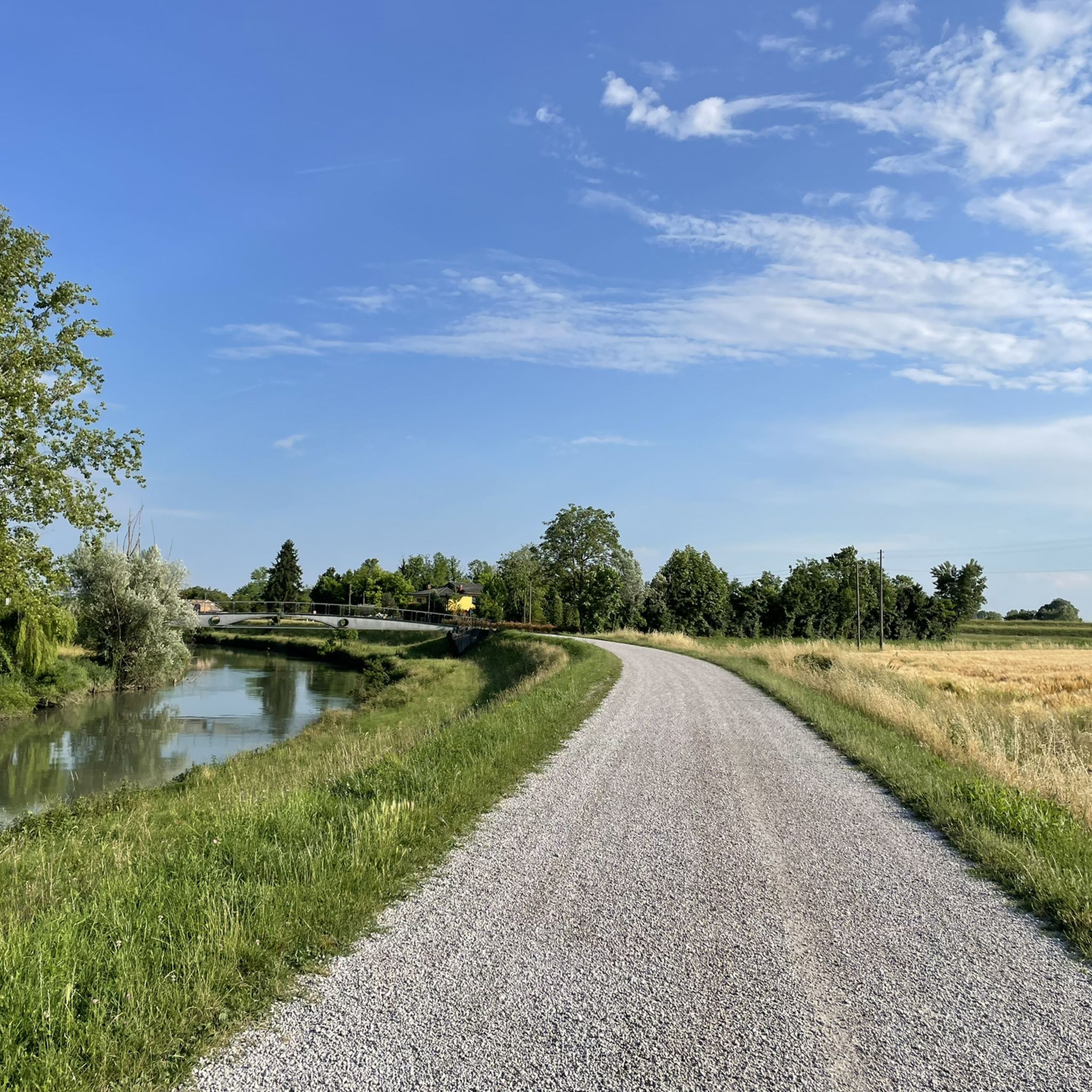
An asphalted side road with very little car traffic. The view of the Livenza is almost permanent and when the Livenza has a calm water flow, there are great opportunities for mirror image photos.
0
0
A church building with an outbuilding, completely unexpected and worth seeing in this area.
0
0
The Ponte di Tezze, which connects the banks of the Livenza river between the provinces of Treviso and Pordenone, represents a fundamental infrastructure for local mobility and history. The current structure, characterized by spans that elegantly reflect on the river's waters, stands at a historically strategic point for trade and movement between the Veneto and Friuli regions. The surrounding area is of considerable landscape value: the banks of the Livenza here offer suggestive natural views, with lush vegetation that changes color with the seasons. The bridge is not just a functional link, but a privileged viewpoint for admiring the slow flow of the river, a symbol of a territory that has managed to integrate modern development with the protection of the river environment.
2
0
The historic center of San Stino di Livenza develops along the banks of the homonymous river, an element that has shaped its identity and economy over the centuries. The heart of the town is dominated by the bulk of the Castello di Passo di Torre, an ancient defensive structure that testifies to the strategic importance of the area as a crossing point between land and water. Strolling through the central streets, you will encounter the Parish Church of Santo Stefano Protomartire, which houses valuable works. The pedestrian area and the squares offer a typical glimpse of the Venetian mainland villages, where civil architecture blends with the riverine nature, creating a serene atmosphere that invites the discovery of local traditions and the history of the eastern Veneto territory.
2
0
Frequently Asked Questions
How many road cycling routes are available around San Stino di Livenza?
There are over 60 road cycling routes available around San Stino di Livenza. These routes cater to various preferences, ranging from easy, flat rides to more moderate distances, allowing cyclists to explore the diverse landscapes of the region.
What kind of terrain can I expect when road cycling in San Stino di Livenza?
The terrain around San Stino di Livenza is predominantly flat, characterized by extensive agricultural lands, green spaces, and scenic riverine paths along the Livenza River and Malgher Canal. This makes it ideal for relaxed rides, though some routes may offer slightly more varied landscapes as they extend towards coastal areas or historical villages.
Are there road cycling routes suitable for beginners or families in San Stino di Livenza?
Yes, San Stino di Livenza offers several easy road cycling routes perfect for beginners or families. An excellent option is the Lungo Argine Road – Road Along the Livenza River loop from San Stino di Livenza, an easy 19.5-mile (31.4 km) path that provides continuous views of the Livenza River and its flat surroundings.
Are there more challenging road cycling routes for experienced riders?
While the region is largely flat, experienced riders can find moderate routes that cover longer distances and explore more varied landscapes. For instance, the Tezze Bridge over the Livenza River – Vittoria Canal in Cessalto loop from San Stino di Livenza is a moderate 40.7-mile (65.4 km) route that explores local waterways and countryside, offering a good challenge.
Can I find circular road cycling routes in the area?
Yes, many of the road cycling routes around San Stino di Livenza are designed as loops, allowing you to start and finish in the same location. Examples include the Lungo Argine Road – Road Along the Livenza River loop from San Stino di Livenza and the Road Along the Livenza River – Livenzetta Harbor loop from San Stino di Livenza, which takes you through riverine landscapes and agricultural areas.
What natural features can I see along road cycling routes in San Stino di Livenza?
Cycling routes often follow the scenic Livenza River and Malgher Canal, offering picturesque riverine views. You can also explore naturalistic areas like the Bandiziol and Prassaccon woods, the Palù del Bandiziol, and restored lowland forests. Highlights include the Laguna del Mort and the Vallevecchia Nature Reserve, which provide diverse natural environments.
Are there any historical landmarks or points of interest to explore while cycling?
Yes, the region is rich in history. While cycling, you might pass by elegant 17th and 18th-century villas scattered throughout San Stino and nearby villages like Corbolone. The 10th-century San Stino Castle, though privately owned, offers a historical landmark viewable from the exterior. The 16th-century Church of San Marco Evangelista in Corbolone is another notable site with distinctive paintings and frescoes.
Where can I find scenic viewpoints on road cycling routes?
Many routes along the Livenza River offer continuous scenic views of the waterways and the lush Veneto countryside. For specific viewpoints, consider routes that pass by the Observation Tower at Brussa Wetlands or the Birdwatching Tower in Valle Vecchia Nature Reserve, which provide elevated perspectives of the natural surroundings.
What do other road cyclists enjoy most about the routes in San Stino di Livenza?
The road cycling routes in San Stino di Livenza are highly rated by the komoot community, with an average score of 4.2 stars from over 10 reviews. Cyclists often praise the quiet, flat terrain, the scenic river views, and the well-maintained paths that make for enjoyable and accessible rides through the agricultural landscapes and charming villages.
Is parking available for cyclists in San Stino di Livenza?
Yes, parking is generally available in and around San Stino di Livenza, particularly in the town center or near popular starting points for routes. It's advisable to check local signage for specific parking regulations and availability, especially during peak seasons.
Are there options for bike rental in San Stino di Livenza?
While specific bike rental shops in San Stino di Livenza are not detailed, the Veneto region is very cycling-friendly. It's common to find rental services in larger towns or tourist hubs nearby. Inquire locally upon arrival or check online for services that might deliver to San Stino di Livenza.
Can I find cafes or pubs along the road cycling routes?
Yes, as you cycle through San Stino di Livenza and its surrounding villages like Corbolone, Biverone, and Sant'Alò, you will find opportunities to stop at local cafes, trattorias, or pubs. These establishments offer a chance to refuel and experience local hospitality, often located conveniently in town centers or along main roads.
Most popular routes around San Stino Di Livenza
Most popular attractions around San Stino Di Livenza

Get inspired with the komoot mobile app


Explore more
Browse the best Road cycling routes in other regions.
