Top 20 Castles around Sarre
Best castles around Sarre are situated in the Aosta Valley, an alpine region known for its mountainous terrain and historical significance. The area features a landscape characterized by valleys, rivers, and elevated positions, often utilized for defensive structures. These sites reflect centuries of regional history and architectural evolution.
Best castles around Sarre
- The most popular castles is Aymavilles Castle, a castle located on a moraine hill surrounded by meadows and vineyards. Its exterior reflects medieval and Baroque periods, resulting…
Last updated: May 20, 2026
Aymavilles Castle
Highlight • Castle
Translated by Google •
Tip by

Quart Castle
Highlight • Castle
Translated by Google •
Tip by

Sign up now to discover places like this
Get recommendations on the best single tracks, peaks, & plenty of other exciting outdoor places.
Sign up for free
Introd Castle
Highlight • Castle
Translated by Google •
Tip by
Torre dei Balivi
Highlight • Historical Site
The tower, also known as Tour Cornière in French, was mentioned as early …
Translated by Google •
Tip by

Écours Castle
Highlight • Castle
Translated by Google •
Tip by
Sign up for free to discover even more castles around Sarre.
Sign up for free
Already have an account?
Start today with a free account
Your next adventure awaits.
Login or Signup

Tips from the Community

Seen only from the outside, very very beautiful!
0
0

Now the castle is no longer owned by the Caracciolo family but has been purchased by the Autonomous Region of Aosta valley.
0
0

Quart Castle is currently (January 2025) undergoing conservation work. The work should be completed by summer 2025.
0
0

The origins of Introd Castle date back to the 12th century. It was built according to a simple structure with a square central keep surrounded by a fence. Pierre Sarriod d'Introd had it enlarged in 1260, followed by subsequent modifications in the 15th century that rounded off the castle. Two fires, the first in the second half of the 19th century and the second in the early 20th century, made restoration work necessary. In the latter case, they were completed by architect Jean Chevalley and commissioned by the then owner, Knight Gonnella. Opposite the castle is a Renaissance-style attic. It is made entirely of wood and has two splendid wrought iron gates. Nearby is the stable called Ôla. Today, the Introd Castle is owned by the Counts Caracciolo of Brienza and is managed by the Grand-Paradis Foundation 1 . The living room is decorated with frescoes. Near the ceiling are scenes each representing a different tree, above which is trompe l'oeil wallpaper.
0
0

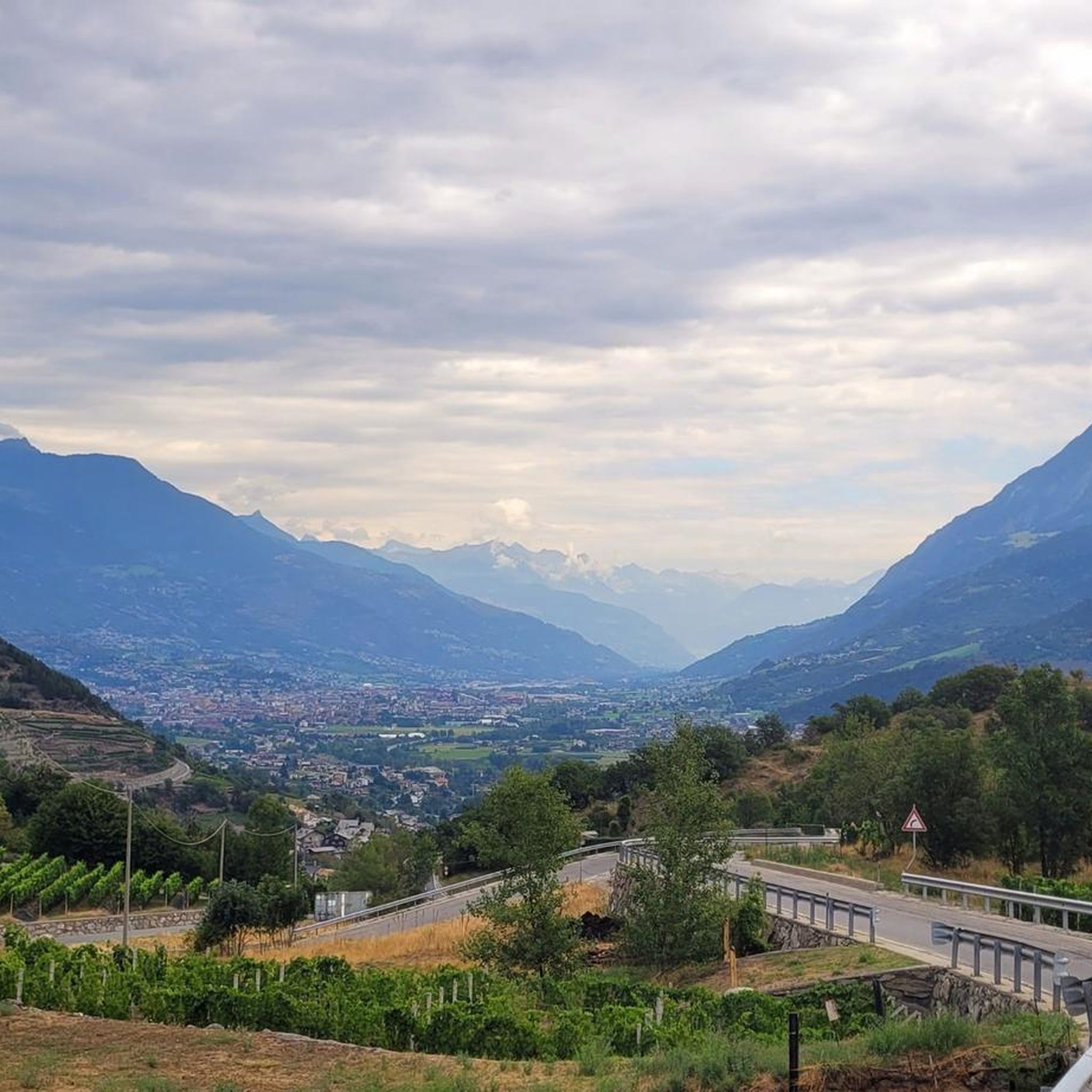
Travelling along the Via Francigena from Aosta to Nus, just before Quart you come across this Castle built on a hill, an enchanting and solitary place.
0
0

Located in the hamlet of Écours in the municipality of La Salle
0
0

The Torre dei Balivi, also known as Tour du bailliage, is one of Aosta's medieval architectural treasures. The tower, also known as Tour Cornière in French, was mentioned as early as 1192. In the 12th century it became the property of the local noble family De Palais (or De Palacio), who used it for their own purposes. Later, in the 13th century, it was transferred to the Count of Savoy and served as the seat of the bailiff (in old French, Bailly). The tower was expanded and remodeled in the 15th and 16th centuries, with new parts added to meet growing needs. In the 17th century it was used as a prison and courthouse. Since 2014, the tower has housed the Istituto Musicale Pareggiato della Valle d'Aosta.
8
0

Positioned north of the capital, along the road that leads to the hilly villages, the massive square tower of Ecours castle is the only remnant of the 13th century construction, together with a short stretch of the ancient surrounding wall. The building, which once belonged to the Lescours (De Curiis) family, among the most eminent of the Valdigne in the Middle Ages, was half enfeoffed to the nobles of Chatelard already in 1430. In 1551, the castle passed into the hands of the Bozel and subsequently, again in the 16th century, it became co-lordship of the Gal and the Malliet. In the following century, the fiefdom was reunited by the Passerins, who were still its owners in 1730.
0
0
Frequently Asked Questions
Which castles around Sarre are particularly popular with visitors?
Visitors frequently enjoy Aymavilles Castle, known for its unique exterior reflecting medieval and Baroque periods, and Quart Castle, which stands majestically on a high rocky cliff offering remarkable landscape views. Introd Castle, with its origins dating back to the 12th century, is also a favorite.
Are there family-friendly castles to visit in the Sarre region?
Yes, several castles in the Sarre region are considered family-friendly. Aymavilles Castle, Quart Castle, and Introd Castle are all categorized as family-friendly, offering engaging experiences for all ages.
What kind of historical insights can I gain from visiting these castles?
The castles in Sarre offer a deep dive into centuries of regional history and architectural evolution. For example, Aymavilles Castle showcases transformations by the noble Challant family from the 14th century onwards, with a museum tour detailing its history and various owners. Introd Castle's origins trace back to the 12th century, with subsequent enlargements and modifications. The Torre dei Balivi in Aosta, a medieval tower, served as a bailiff's seat and later a prison and courthouse, reflecting its varied historical roles.
Are there good viewpoints near the castles in Sarre?
Many castles in the Sarre region offer excellent viewpoints. Quart Castle, situated on a high rocky cliff, provides remarkable landscape views. Aymavilles Castle, located on a moraine hill, offers a spectacular view of the entire valley floor from its park.
What outdoor activities are available near the castles in Sarre?
The Sarre region, being part of the Aosta Valley, offers numerous outdoor activities. You can find various MTB trails, gravel biking routes, and mountain hikes. Some routes, like the 'Castello Sarriod de la Tour – Saint-Pierre Church and Castle loop from Sarre' for MTB, or 'Castello Sarriod de la Tour – Sarriod de La Tour Castle loop from Aosta Istituto' for gravel biking, pass by or near historical sites and castles.
Are there hiking trails that include or pass by castles in Sarre?
Yes, the region offers mountain hikes where you can explore the natural beauty and potentially view castles. While specific castle-to-castle hiking routes are not detailed, you can find various mountain hikes around Sarre that allow you to experience the alpine landscape surrounding these historical sites.
How long does it typically take to visit a castle in Sarre?
The duration of a visit can vary. For a castle like Aymavilles Castle, which offers a guided tour and multimedia installations across four levels, you might spend 1.5 to 2 hours exploring its history and architecture. Smaller sites or exterior views might take less time, while exploring the grounds and nearby areas could extend your visit.
What are some lesser-known or 'hidden gem' castles in the Sarre region?
While not as widely known as the main castles, Écours Castle, with its massive square tower, is a significant 13th-century remnant in the hamlet of La Salle. The Torre dei Balivi in Aosta, a medieval tower with a rich history, also offers a unique glimpse into the region's past.
What is the best time of year to visit the castles around Sarre?
Given the alpine setting of the Aosta Valley, the best time to visit the castles around Sarre is generally from spring to early autumn (May to October). During these months, the weather is milder, making it ideal for exploring the castle grounds and enjoying outdoor activities like hiking and biking in the surrounding areas. Some castles, like Aymavilles Castle, host events and concerts in their green spaces during spring and summer.
Are there any castles in Sarre that are easily accessible or have easy walking routes nearby?
While specific accessibility details for each castle vary, the region generally offers a mix of terrain. Quart Castle is located along the Via Francigena, which includes sections suitable for walking. For easy walking routes, consider exploring the areas around the castles, which often have paths through vineyards and meadows, such as those surrounding Aymavilles Castle.
What unique architectural features can I expect to see in Sarre's castles?
Sarre's castles showcase diverse architectural styles reflecting centuries of evolution. Aymavilles Castle is notable for its original yet elegant structure, featuring 18th-century stuccoes, loggias, and coats of arms, with four corner towers. Introd Castle, originally a square keep, underwent modifications that rounded its structure in the 15th century. These sites often blend medieval defensive elements with later residential and Baroque embellishments.
Most popular routes around Sarre
Most popular attractions around Sarre

Get inspired with the komoot mobile app


Explore more
Looking for the best castles somewhere else? Discover other guides around Sarre:
