The best cycling routes around Gruaro
4.5
(593)
2,715
riders
288
rides
Touring cycling routes around Gruaro, located in Italy's Veneto region, traverse a landscape characterized by flat, well-paved roads and some unpaved sections. The area features serene riverine scenery along the Livenza and Tagliamento rivers, alongside expansive agricultural fields and vineyards. Minimal elevation gain makes the terrain accessible for various fitness levels, offering a relaxed exploration of the countryside and historical sites.
Best touring cycling routes around Gruaro
- The most popular touring cycling route is Portogruaro – Historic Center of Portogruaro…
Last updated: October 11, 2026
4.4
(18)
64
riders
Moderate bike ride. Good fitness required. Mostly paved surfaces. Suitable for all skill levels.
4.6
(5)
16
riders
Moderate bike ride. Good fitness required. Mostly paved surfaces. Suitable for all skill levels.

7
riders
45.3km
02:56
60m
60m
Moderate bike ride. Good fitness required. Mostly paved surfaces. Suitable for all skill levels.
5.0
(1)
10
riders
Moderate bike ride. Good fitness required. Mostly paved surfaces. Suitable for all skill levels.
5.0
(2)
9
riders
Easy bike ride. Great for any fitness level. Mostly paved surfaces. Suitable for all skill levels.
Get access to more routes and recommendations from other explorers.
Already have an account?
Our route recommendations are based on thousands of hikes, rides, and runs completed by other people on komoot.
Start today with a free account
Your next adventure awaits.

Tips from the Community

Via Roma is a characteristic artery because it crosses the beautiful Lemene river from where you can admire the Mills of Sant' Andrea.
4
0


The historic center of Portogruaro, defined as the "little Venice of the mainland", develops elegantly along the banks of the Lemene river. The beating heart is Piazza della Repubblica, where the characteristic pillars of the Gothic brick Town Hall and the unusual leaning bell tower of the Cathedral of Sant'Andrea stand out. Strolling under the long medieval and Renaissance arcades, you can admire frescoed palaces in Venetian style that testify to the city's glorious commercial past. One of the most evocative views is offered by the Mulini di Sant'Andrea, located right in the city center, where the water wheels still turn above waters populated by swans. Here, wrought iron bridges and weeping willows create a romantic atmosphere that harmoniously combines monumental architecture with river vitality.
1
0
Il Guado di San Pietro, located near Bagnarola, is a place where history blends with the nature of the springs. This ancient crossing on the Versiola canal owes its name to the nearby church of San Pietro, a Romanesque jewel mentioned as early as the 12th century. In the past, the ford represented a fundamental transit point for wayfarers and pilgrims heading to the Abbey of Sesto, offering a safe passage in a territory dominated by water. Today, the area retains a suspended and evocative atmosphere, immersed in lush vegetation of alder and willow trees. The small church, with its fifteenth-century frescoes, testifies to the deep rural spirituality of Friuli. It is an essential stop for those who travel along the nature trails connecting the village to the Mulini di Stalis.
0
0

A very interesting settlement from the 17th century. In the 19th century, Count Alvise Mocenigo decided to establish an "ideal city" under his name. Unlike similar projects, Mocenigo designed a settlement with infrastructure intended to make the community self-sufficient. Therefore, in addition to traditional agriculture (which was expanded by introducing innovative techniques, for example in rice and sugar beet cultivation), he attempted to integrate an industrial sector (particularly the textile industry) that could draw on locally produced resources. The landscape was thus reshaped and reclaimed, with dry areas alternating with moist soils, regulated by an efficient canal system that is still in operation today. In terms of urban planning, buildings were erected for residential purposes (the low farmhouses are still visible today) and for industrial purposes (bakery, rice mill, blast furnace, mill). Cultural activities were also added with the founding of a famous printing press, which operated in Alvisopoli until 1814 and was then moved to Venice. Source: Wikipedia
1
0
An intact mill area with a movable paddle wheel. Presumably, the paddle wheel is operated as a tourist attraction.
0
0
The mill conveys an impression of "back to the past" - top!
1
0
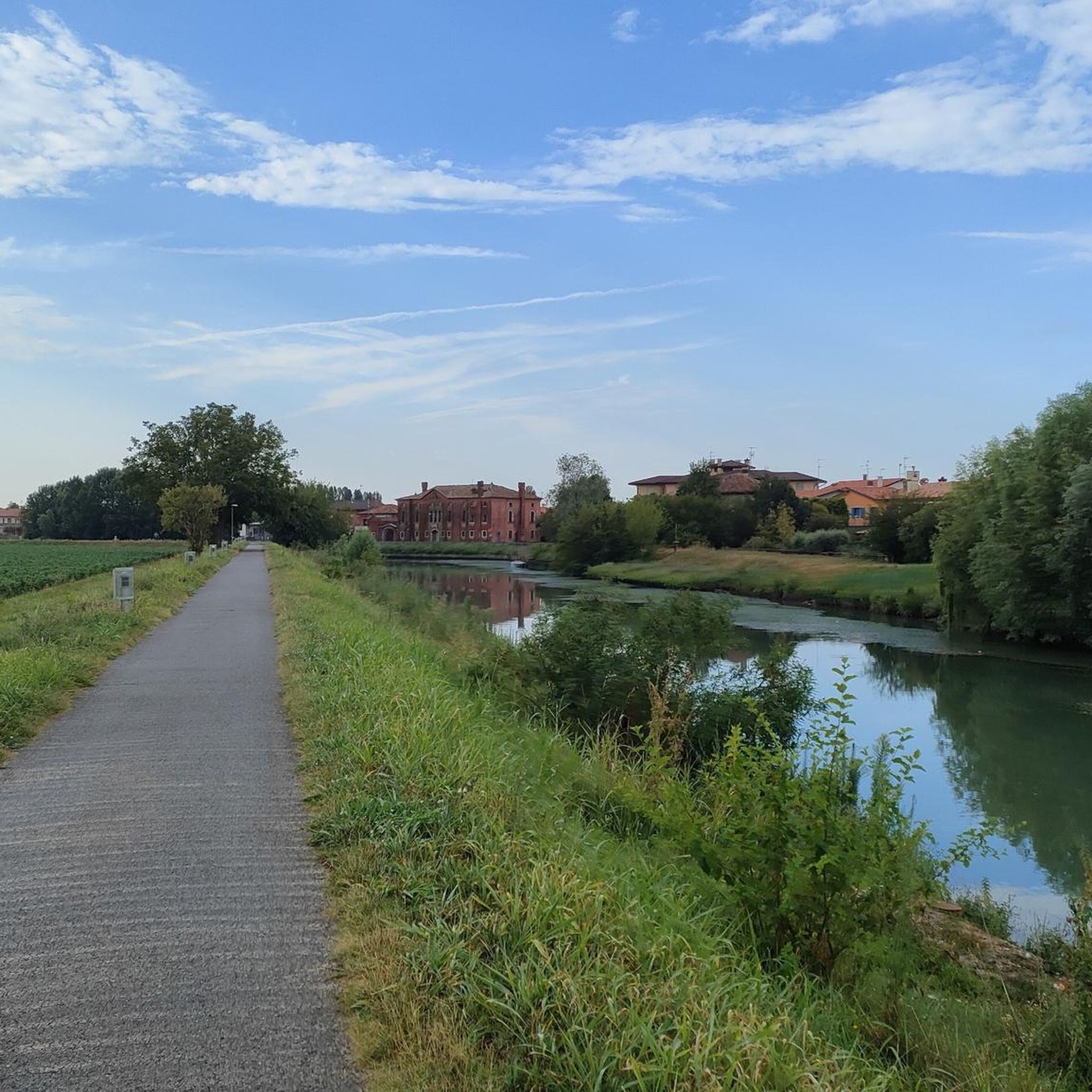
A wonderful route along the Lemene over a wooden footbridge.
1
0
Frequently Asked Questions
How many touring cycling routes are available around Gruaro?
Gruaro offers a wide selection of touring cycling routes, with over 280 options available. These routes cater to various preferences, including easy rides, moderate challenges, and some more difficult paths, ensuring there's something for every cyclist.
What kind of terrain can I expect on touring cycling routes in Gruaro?
The terrain around Gruaro is predominantly flat, featuring a mix of well-paved roads and some unpaved sections. You'll cycle through expansive agricultural fields, vineyards, and serene riverine landscapes along the Livenza and Tagliamento rivers. The minimal elevation gain makes it ideal for relaxed exploration.
Are there any family-friendly touring cycling routes in Gruaro?
Yes, many routes around Gruaro are suitable for families due to their flat terrain and accessible surfaces. For an easy and shorter option, consider the Stalis Mills – Gate of Sesto al Reghena loop from Cordovado / Cordovât, which is just over 10 km long and offers a gentle ride through the countryside.
What historical sites or landmarks can I see along the cycling routes?
Cycling around Gruaro offers a rich historical experience. You can explore charming towns like Portogruaro, known for its Venetian-style buildings, canals, and historic mills. The area also features ancient Roman roads like the Via Annia, and historic mills such as Stalis's Mills. You might also encounter highlights like the Gate of Sesto al Reghena or the Gate of the Castle of Cordovado.
What do other touring cyclists enjoy most about cycling in Gruaro?
The komoot community highly rates the touring cycling experience in Gruaro, with an average score of 4.6 stars from over 450 reviews. Cyclists often praise the tranquil riverine paths, the flat agricultural plains perfect for leisurely rides, and the opportunity to connect with historic towns and cultural sites.
Are there any longer touring cycling routes for more experienced riders?
For those seeking a longer ride, the Alvisopoli – Via Baseleghe Cycle Path loop from Cordovado - Sesto is a moderate 79 km path that offers varied terrain and dedicated cycle paths, providing a more extensive exploration of the region.
Can I find circular touring cycling routes in the area?
Yes, many of the touring cycling routes around Gruaro are designed as loops, allowing you to start and end at the same point. An example is the Alvisopoli loop from Teglio Veneto, which is a 45.3 km trail leading through agricultural landscapes.
What is the best time of year to go touring cycling in Gruaro?
The best time to go touring cycling in Gruaro is generally during the spring and autumn months when the weather is mild and pleasant. Summer can also be enjoyable, though it can get warm. The region's flat terrain makes it accessible for cycling for a good portion of the year.
Are there any routes that follow rivers or offer scenic water views?
Absolutely. The region is characterized by its proximity to the Livenza and Tagliamento rivers. Routes like the Lemene River in Portovecchio – Portogruaro loop from Cordovado - Sesto offer beautiful riverine scenery, providing a tranquil and picturesque cycling experience.
Is it possible to combine cycling with exploring nearby towns like Portogruaro?
Yes, many routes are designed to incorporate or pass through charming towns. The Portogruaro – Historic Center of Portogruaro loop from Sesto al Reghena / Siest is a popular choice that specifically explores the historic canals and Venetian-style architecture of Portogruaro, often referred to as the 'Venice of the hinterland'.
Are there options for parking near the cycling routes in Gruaro?
While specific parking areas for each route are not detailed here, Gruaro and its surrounding towns, being popular for cycling tourism, generally offer public parking facilities. It's advisable to check local parking options in towns like Portogruaro or near specific route starting points.
Can I bring my dog on the touring cycling routes?
Many of the touring cycling routes around Gruaro are on public paths and roads, making them generally dog-friendly, especially if your dog is accustomed to cycling alongside you or in a trailer. Always ensure your dog is on a leash and that you adhere to local regulations regarding pets in public areas.
Most popular attractions around Gruaro

Get inspired with the komoot mobile app


Explore more
Browse the best Cycling routes in other regions.
