The best walks and hikes around Monticiano
4.2
(272)
1,036
hikers
23
hikes
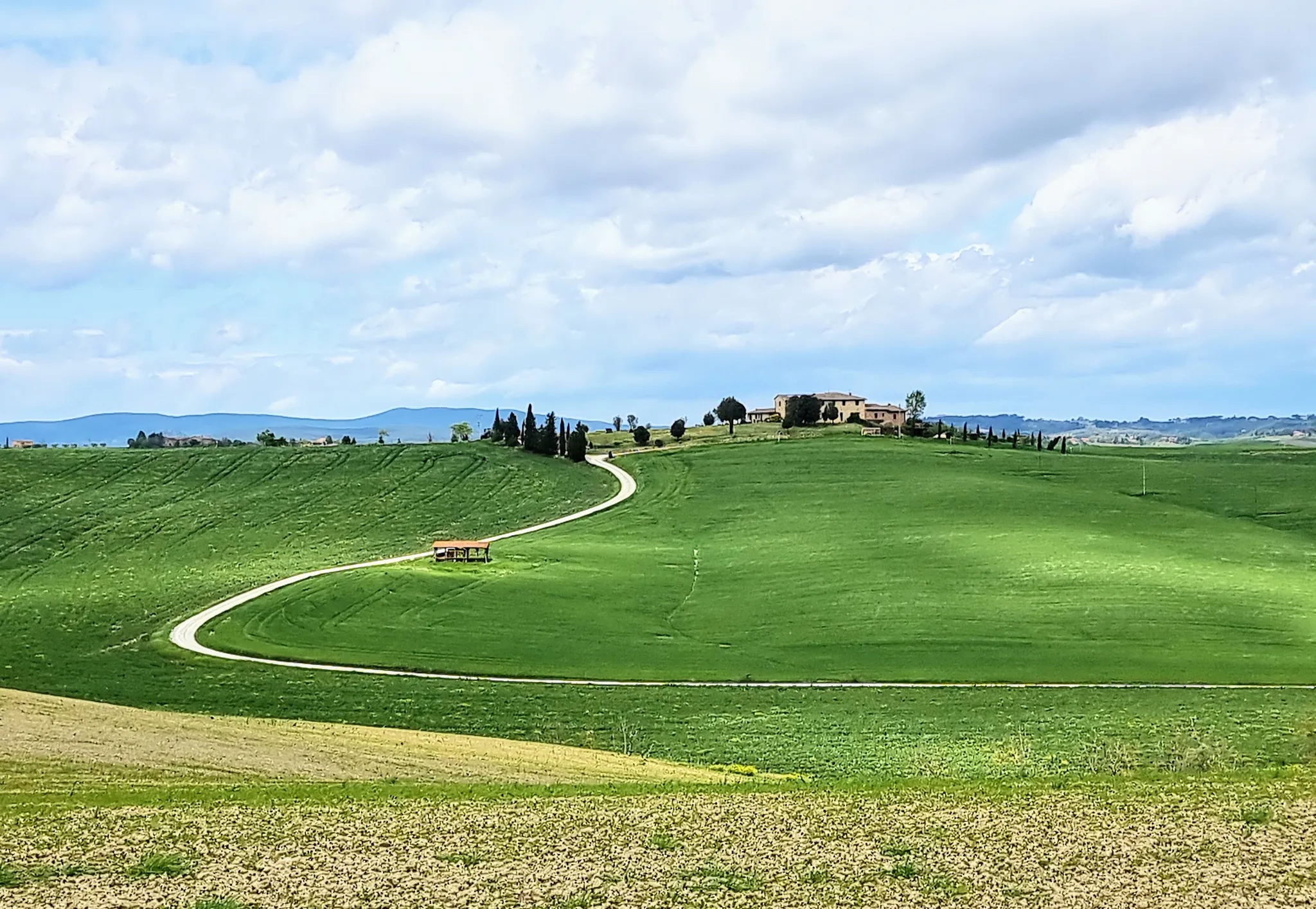
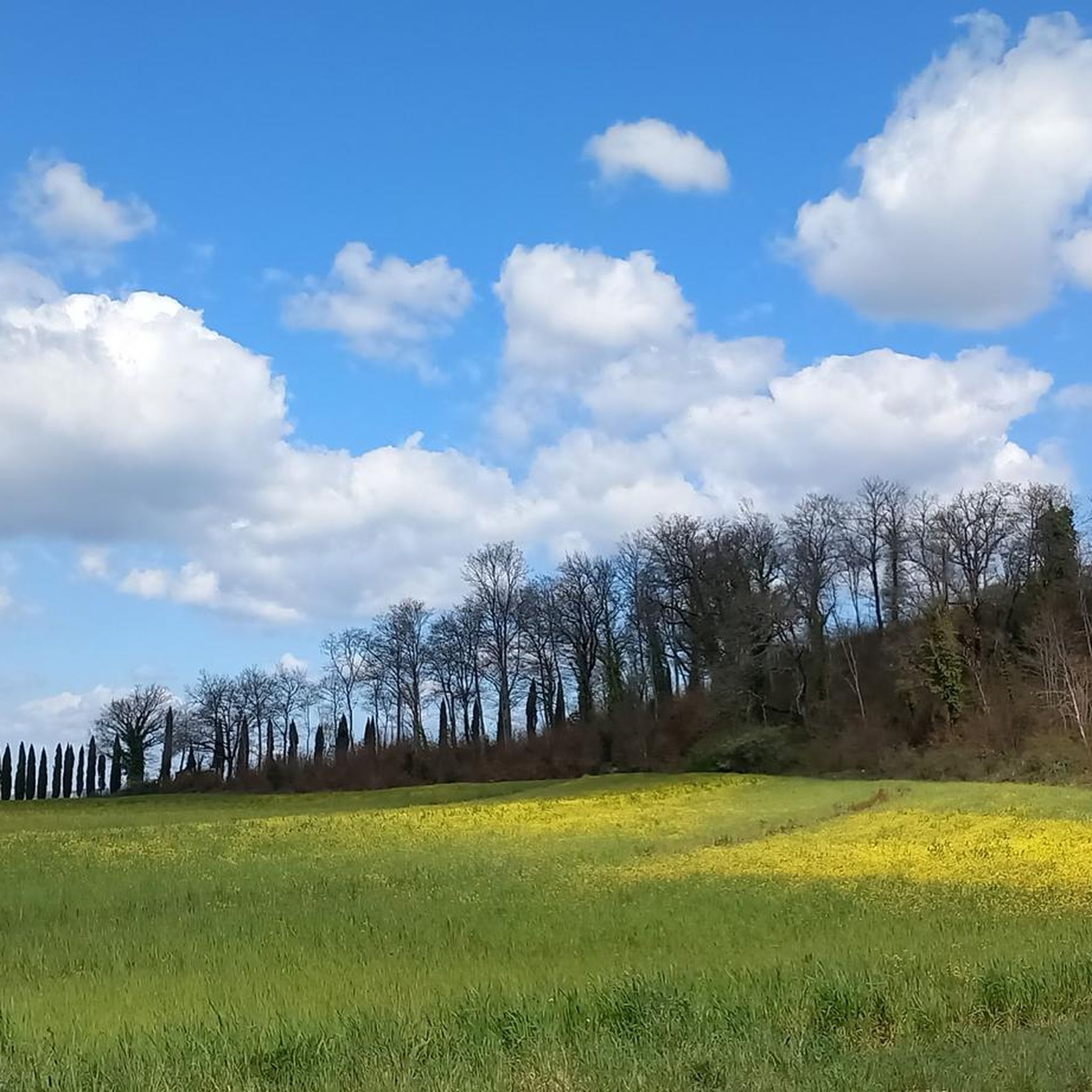
Hiking around Monticiano offers diverse landscapes characterized by rolling Tuscan hills, dense forests, and river valleys. The region is shaped by the Merse and Farma rivers, which flow through nature reserves like Torrente Farma and Upper Merse. Hikers can explore a blend of tranquil countryside, historical sites, and natural features, including thermal springs.
Best hiking trails around Monticiano
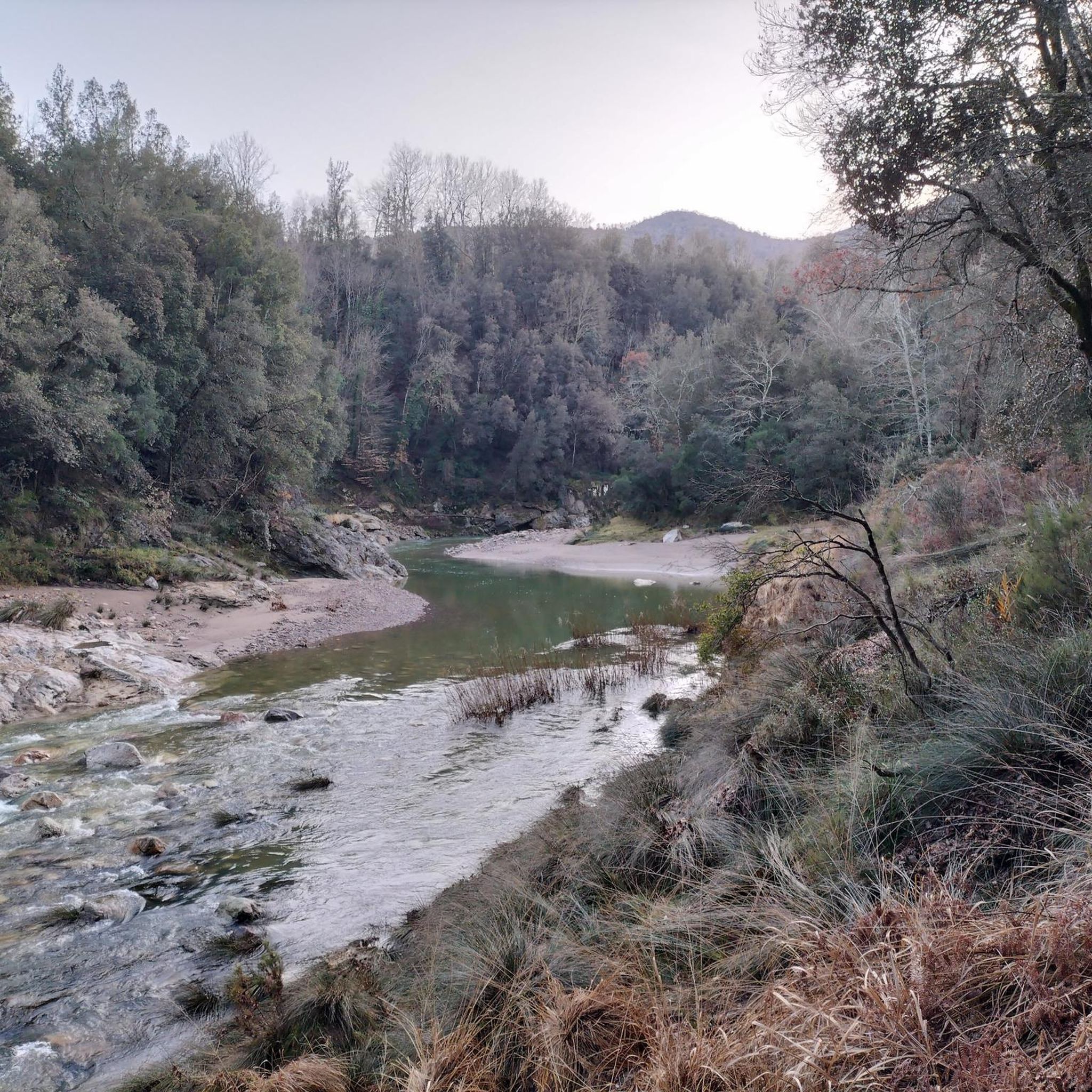
- The most popular hiking route is The Farma stream and the baths of Petriolo, a 6.3 miles (10.2 km) moderate trail that takes 2 hours 50 minutes to complete. This route explores the scenic Farma stream and the historic Petriolo thermal springs.
- Another top favourite among local hikers is Petriolo Thermal Baths – Farma Limestone Spring loop from Iesa, a moderate 9.1 miles (14.7 km) path. This trail offers views of the Farma River and includes the therapeutic Petriolo thermal baths.
- Local hikers also love the Farma Stream – Petriolo Thermal Baths loop from Bagni di Petriolo, an 8.9 miles (14.3 km) trail leading through river valleys and past thermal springs, often completed in about 4 hours 9 minutes.
- Hiking around Monticiano is defined by rolling hills, dense woodlands, and river valleys, including the Farma and Merse rivers. The network offers options for various ability levels, from easy walks to more challenging treks.
- The routes in Monticiano are highly rated by the komoot community with an average score of 4.2 stars from over 230 reviews. More than 900 hikers have used komoot to explore Monticiano's varied terrain.
Last updated: June 25, 2026
4.5
(4)
9
hikers
10.2km
02:50
190m
180m
Embark on a moderate 6.3-mile (10.2 km) hike along the Farma stream and through the Tuscan Maremma, taking approximately 2 hours and 50 minutes to complete. This trail offers a unique blend of natural beauty, leading you directly along the Farma riverbed, where you will navigate wet stones and sometimes ankle to knee-deep water. You will also pass through ancient cork oak forests and spectacular gorges with rocks dating back to the Carboniferous period, gaining about 618 feet (188 metres) in elevation.
While parts of the route are easily accessible, hiking along the riverbed demands good balance and sure-footedness. This moderate trail requires good fitness, and sturdy shoes are essential; high and structured hiking boots along with trekking poles are recommended for your comfort and safety. Be prepared for diverse terrain, including some less-trafficked asphalt roads, as you explore the unspoiled nature reserves of the Val di Merse.
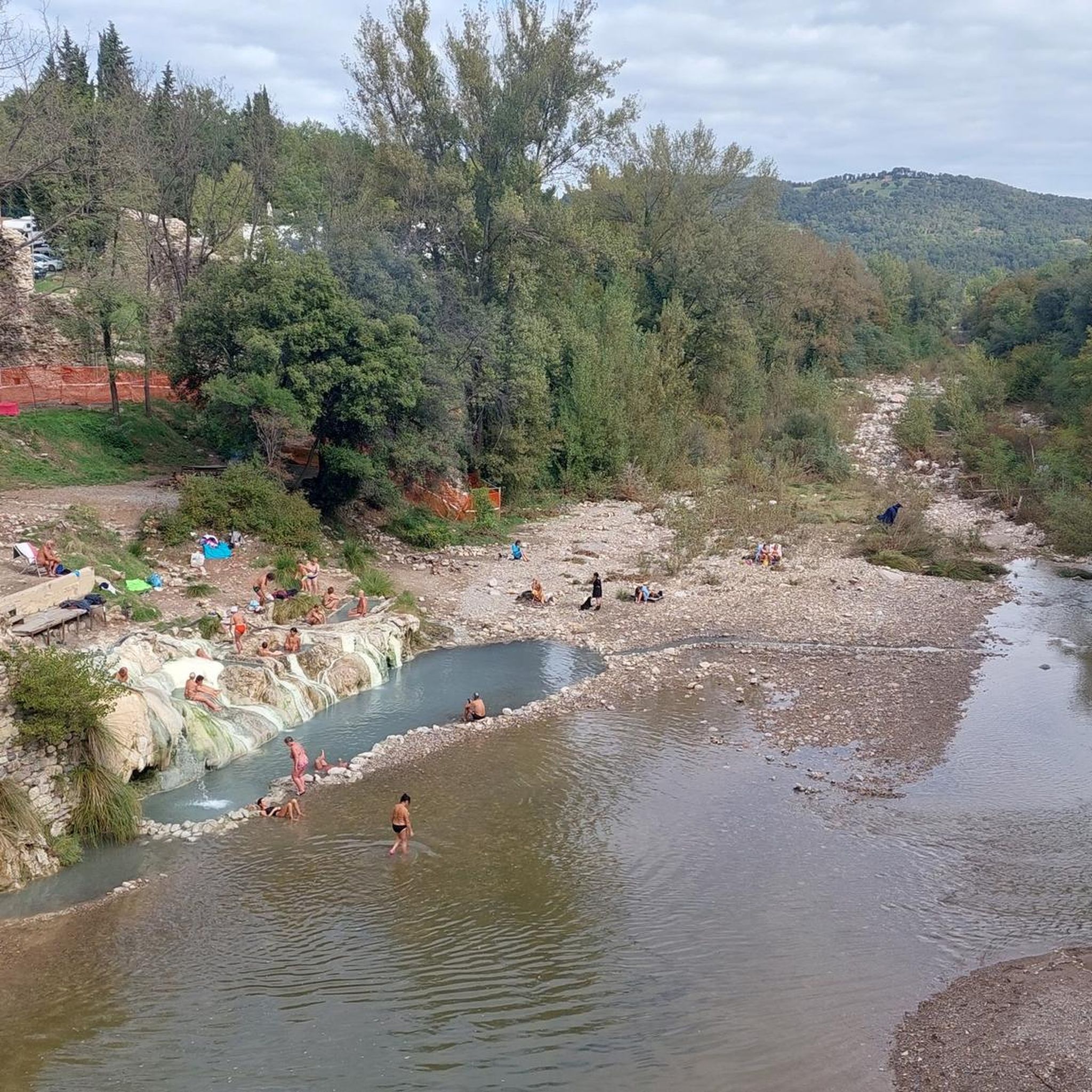
The highlight of this trail is undoubtedly the ancient Petriolo Thermal Baths, known since Roman times, where sulfureous waters gush out at 43°C (109°F). You can experience these therapeutic waters in natural pools like Pozzo dell'Inferno and Vascone, where the warm spring water mixes with the cooler river currents. This unique setting provides a regenerating experience, allowing you to alternate between warm thermal basins and refreshing river waters, offering a rustic escape from mass tourism.
4.4
(35)
133
hikers
9.50km
02:39
190m
190m
Moderate hike. Good fitness required. Easily-accessible paths. Suitable for all skill levels.

Sign up for free
3.8
(18)
49
hikers
14.7km
04:19
400m
400m
Moderate hike. Good fitness required. Easily-accessible paths. Suitable for all skill levels.
3.8
(18)
44
hikers
14.3km
04:09
360m
360m
Moderate hike. Good fitness required. Easily-accessible paths. Suitable for all skill levels.
4.8
(10)
47
hikers
Hard hike. Good fitness required. Sure-footedness, sturdy shoes and alpine experience required.
Get access to more routes and recommendations from other explorers.
Sign up for free
Already have an account?
Our route recommendations are based on thousands of hikes, rides, and runs completed by other people on komoot.
Start today with a free account
Your next adventure awaits.
Login or Signup

Other adventures around Monticiano

Tips from the Community

The thermal water springs from the ground at 40° and creates several pools, forming a real little thermal bath.
0
0

Warning! The path is impassable starting about 1 km after the Abbey of San Galgano, unless you have a machete. Francesco confirms April 2025. In particular, the path is impassable (November 2025) since it is forced between the fence of the "San Galgano" hunting reserve and the narrow strip of dense woodland on the banks of the Merse River. We had to turn back!
0
0

The Great Abbey of San Galgano Construction of the Great Abbey downstream began only in 1220 (or 1218?). Construction work continued until 1268, when it was officially consecrated by the Bishop of Volterra, Alberto Solari. Then came a hundred years of great splendor until 1364, followed by a slow decline due to the unfortunate practice of Commenda.
0
0

Visiting the hermitage of San Galgano, you'll also notice some human bones. According to tradition, these belong to one of the three "envious men" who, in 1181, in San Galgano's absence, attempted to break the sword in the stone. As punishment, his arms were torn to pieces by wolves, friends of the Saint. Radioactive dating has established that the bones date to the 12th century.
0
0
Among the bare naves of the Abbey of San Galgano (12th-13th century), where the sky replaces the vault, Helidon Xhixha raises a seven-meter steel cross. It is the heart of the "Jubilee of Light" project, conceived for the 2025 Jubilee and curated by Carlo Pizzichini: an exhibition that transforms one of the most emblematic places of medieval Italian spirituality into a space for contemporary reflection. The intervention by Xhixha – an Italian-Albanian artist known for his use of polished stainless steel and his ability to activate space through light – appears as an operation of visual and symbolic resonance. "Divine Light," the main work, is not just a monumental cross. It is an optical device that captures and reflects the sun, amplifying its luminous energy in an environment already charged with spirituality. In an architectural context where absence—the missing roof—has for centuries been an invitation to look upward, Xhixha inserts a symbol that reflects and transfigures the world. The choice of site is not accidental: the legend of San Galgano, the knight who plunged his sword into the stone, renouncing war, is ideally linked to this contemporary cross, as a new icon of peace and transcendence. Steel, a shiny, industrial material, replaces the stone of the past, but the gesture remains the same: suspending violence and seeking an interior dimension.
0
0
The Montesiepi Hermitage was built immediately after the saint's death, over the ancient hut where San Galgano lived during his last year (1181). The hermitage was consecrated in 1185 by the bishop of Volterra, Ildebrando Pannocchieschi. The small complex consists of the circular church interrupted only by the small apse, the chapel with frescoes by Lorenzetti, and the entrance porch. In the porch, look down to the left and look for an "original" medieval plaque that reminds the pilgrim... that he must die and that life is short. The original church was circular, then the entrance hall was added in 1200. The bell tower and Lorenzetti's chapel were added in the following century. The rectory dates back to the 18th century. The dome, constructed from alternating rows of white stones, is extremely elegant. Inside the Hermitage, in the center of the Rotonda, there is the famous Sword of San Galgano, stuck in the rock for over 800 years.
0
0
Built in the 13th century in Gothic style and dedicated to the saint from Chiusdino, today it is completely in ruins: only the walls remain standing, with the apse still in evidence, perfectly facing east, while on the upper part of the facade there are two pointed windows. The roof of the Abbey of San Galgano is no longer there today. The "official" version says that it deteriorated and then fell over the centuries, while an alternative version, according to some legend and according to others truth, states that it was originally made of lead, and was sold by Girolamo Vitelli in 1550. Whatever the truth behind the roof of the abbey, after some restoration attempts that went badly, at the end of the 18th century it was deconsecrated and left to the elements until the present day. The ruins of the Abbey of San Galgano, with its profile still intact and immersed in the Tuscan countryside, offer a truly incredible and particular view. In addition to the roof, the floor is also missing, which during the summer turns into a grassy blanket, while you can still see a transept with three naves and 4 chapels with cross vaults. Next to the Abbey of San Galgano there is the cloister, which was rebuilt at the beginning of the last century, using the original materials. Some accessory rooms are also very beautiful, which can also be visited with the entrance ticket to the abbey, including the chapter house, where the monks originally met to deliberate the main rules of the community, and the scriptorium, which was the place where the monks copied the manuscripts.
2
0

Frequently Asked Questions
How many hiking trails are available around Monticiano?
Monticiano offers a diverse network of over 20 hiking trails, ranging from easy strolls to more challenging treks. These routes explore the region's rolling Tuscan hills, dense forests, and river valleys.
What is the best time of year to go hiking in Monticiano?
The spring and autumn months are ideal for hiking in Monticiano. During these seasons, the weather is pleasant, and the landscapes are particularly vibrant, with blooming wildflowers in spring and rich colors in autumn. Summer can be hot, but river-side trails offer opportunities to cool off.
Are there any family-friendly hiking options in Monticiano?
Yes, Monticiano has several gentle trails suitable for families. These routes often pass through woodlands and along rivers, providing an enjoyable experience for all ages. For example, the Farma River Swimming Spot loop from Scalvaia is an easy 4 km hike that could be suitable for families.
Can I bring my dog on the hiking trails in Monticiano?
Many trails in Monticiano are dog-friendly, allowing you to explore the natural beauty with your canine companion. The region's extensive woodlands and river paths provide ample space for dogs to enjoy. Always ensure your dog is under control and check for any specific reserve regulations.
Are there any circular hiking routes in Monticiano?
Yes, Monticiano features several excellent circular routes. These loops allow you to start and end your hike in the same location, often encompassing diverse scenery. A popular option is the Petriolo Thermal Baths – Farma Limestone Spring loop from Iesa, which is a moderate 14.7 km trail.
What natural features or landmarks can I see while hiking in Monticiano?
Hikers can discover a wealth of natural and historical landmarks. The region is known for the Merse and Farma rivers, the Petriolo Thermal Baths, and the Canaloni Waterfall and Natural Pools. You can also visit historical sites like the Abbey of San Galgano, which is reachable by foot through the woods.
Are there any trails that lead to waterfalls or swimming spots?
Absolutely. The Farma River is home to several beautiful spots perfect for cooling off. The Canaloni del Farma features natural pools carved into the rocks, ideal for wading. The Ancient Dam Waterfall – Farma River Swimming Spot loop from Scalvaia is a difficult 9.4 km route that includes a waterfall and swimming area.
What do other hikers say about the trails in Monticiano?
The hiking trails around Monticiano are highly regarded by the komoot community, with an average rating of 4.2 stars from over 230 reviews. Hikers frequently praise the unspoiled natural landscapes, the tranquility of the river valleys, and the unique blend of nature and historical sites like the thermal springs.
How long do hikes around Monticiano typically take?
Hike durations vary depending on the trail's length and difficulty. Easy walks might take an hour or two, while moderate trails like The Farma stream and the baths of Petriolo (10.2 km) typically take around 2 hours 50 minutes. Longer, more challenging routes can extend to 4 hours or more.
Is parking available at the trailheads in Monticiano?
Parking is generally available near popular trailheads and villages in the Monticiano area. Specific parking information can often be found on individual route descriptions or local signage. It's advisable to check the starting point of your chosen trail for the most convenient parking options.
Are there any thermal springs accessible via hiking trails?
Yes, the famous Petriolo Thermal Baths are a significant attraction in the region and are easily accessible via several hiking routes. These natural springs offer therapeutic waters at 43°C, providing a unique reward after a hike. The Farma Stream – Petriolo Thermal Baths loop from Bagni di Petriolo is an excellent option to visit them.
What is the difficulty level of hiking trails in Monticiano?
Monticiano offers a range of trails to suit various fitness levels. You'll find easy walks perfect for beginners or leisurely strolls, moderate paths that provide a good workout, and some more difficult routes for experienced hikers seeking a challenge. Overall, there are 11 easy, 8 moderate, and 5 difficult trails.
Most popular routes around Monticiano
Most popular attractions around Monticiano

Get inspired with the komoot mobile app


Explore more
Browse the best Hikes in other regions.
