Attractions and Places To See around Chitignano - Top 20
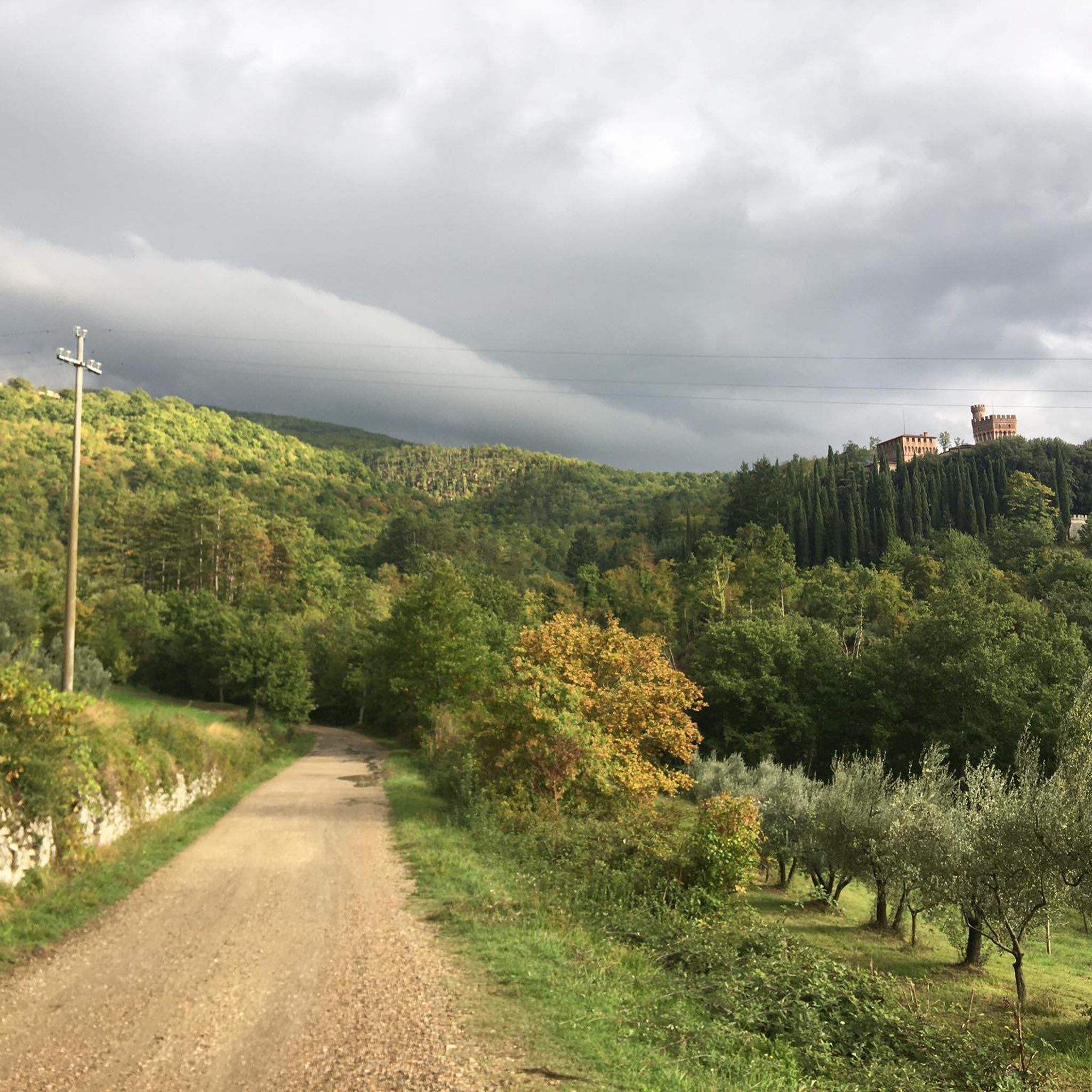
Best attractions and places to see around Chitignano include a blend of historical landmarks, cultural insights, and natural beauty. This mountain village is nestled in the Casentino valley, situated on a spur of the western side of the Catenaia Alp. The area is known for its historical role in contraband, its sulphur-iron thermal waters, and picturesque mountain scenery.
Best attractions and places to see around Chitignano
- The most popular attractions is La Verna Sanctuary, a religious building where Saint…
Last updated: June 23, 2026
La Verna Sanctuary
Highlight • Religious Site
Translated by Google •
Tip by

Fra' Lupo Rock
Highlight • Natural Monument
Translated by Google •
Tip by

Sign up now to discover places like this
Get recommendations on the best single tracks, peaks, & plenty of other exciting outdoor places.
Sign up for free
Monte Calvano Summit
Highlight • Summit
Translated by Google •
Tip by

The Icehouse of Cattiglio
Highlight • Cave
Translated by Google •
Tip by
Stigmata Corridor, Sanctuary of La Verna
Highlight • Religious Site
Translated by Google •
Tip by

Sign up for free to discover even more attractions around Chitignano.
Sign up for free
Already have an account?
Start today with a free account
Your next adventure awaits.
Login or Signup

Tips from the Community

Here you will find a particularly impressive section of the false wall of La Penna.
0
0

a book to walk
0
0

The frescoes retrace the life of St. Francis, very interesting!
0
0

The name of this place is linked to the local tradition of using caves for food preservation. The rocks and the shade of the forest help to isolate the cavities from the outside, maintaining a constant low temperature. It was also common to fill the caves with snow during the winter to increase their cooling power during the warmer months. Even today it is possible to appreciate the difference in temperature between the outside and the inside, especially during the summer.
2
0
The place where the sanctuary is located today was donated to Saint Francis by Count Orlando Cattani of Chiusi in 1213. First a hermitage was founded which became a recurring destination for Francis and his disciples for periods of meditation and prayer. Francis stayed here for the last time in 1224. It was precisely on the occasion of that last visit that the Saint received the stigmata. The complex includes the small church of Santa Maria degli Angeli built by Francis himself, the corridor and the Chapel of the Sacred Stigmata and the Basilica dedicated to Santa Maria Assunta where you can admire the Annunciation by the sculptor Andrea della Robbia. The sanctuary is surrounded by the monumental forest of La Verna, a forest of fir and beech trees cared for over the centuries by the Franciscan friars.
4
0

The Corridor of the Stigmata della Verna was built between the years 1578 and 1582. An architectural structure that served to connect the new large basilica of the Sanctuary with the much older Chapel of the Stigmata built around 1260 by the Counts Guidi of Poppi in homage to San Francis. The corridor had a very specific practical function: to protect from the atmospheric agents, which were often particularly harsh in La Verna, the procession of the friars which at the time was held twice a day, at night and in the afternoon (today it is held only in the afternoon, at 3pm 3.30pm towards the chapel, 3.30pm towards the basilica). A legend tells us that the decision to build the corridor was taken after a strong night storm had made the friars desist from practicing this religious function that night. In the morning, to their great amazement, the friars found a multitude of footprints in the snow along the route of the procession. The animals of the forest had replaced the friars in the practice of the procession. This miraculous fact led to the decision to build a structure that would allow the procession to take place in any weather situation. The corridor, which was called "of the Stigmata", was located under a roof supported on one side by a wall and on the other by columns, the latter open to the outside. Today this part is also closed by a glass window, a work carried out only in 1926. Since its construction, the wall that flanked the Corridor of the Stigmata was decorated by anonymous painters who illustrated the life of Saint Francis, paintings certainly of a popular nature, of no particular artistic value. Only ninety years after its construction (1670/71) the decorations of the corridor were entrusted to the hands of a worthy artist: Emanuele da Como, a minor Franciscan friar. He painted 21 large squares on the wall (about three meters wide), in each of these he depicted various historical and legendary episodes from the life of the Saint, for a total of 73 scenes. As already mentioned, the side of the corridor opposite the decorated wall was open and over the years the atmospheric agents did not spare the paintings which over the years underwent some restoration work, but all quite approximate. In 1840, the painter Luigi Ademolli, aided by his son Giovanni, was entrusted with the task of more substantially restoring the frescoes. It was a rather heavy intervention which significantly transformed Emanuele da Como's paintings. Even these paintings deteriorated rapidly over the course of a few decades because they were always exposed to humidity, ice and temperature changes. In the 1930s, after the wall opposite the decorations had been closed by glass, it was decided to repaint it, not a restoration, but new paints. The task was entrusted to the painter Baccio Maria Bacci who used the usual large panels, which however he did not divide into various scenes, but rather one episode for each panel. Baccio Maria Bacci did not repaint the last three panels which, being in a more sheltered position, had been spared from atmospheric agents. The last one, the "Death of Saint Francis", can still be attributed to Emanuele da Como, as it has only undergone slight restorations over time, the penultimate and the third to last can undoubtedly be attributed to Luigi Ademolli because of the pictorial style of the The artist from Como has practically nothing left. Baccio Maria Bacci also created the 22nd painting using the part of the wall above the access door to the corridor of the Stigmata della Verna. Here he painted a Nativity scene, an invention of Saint Francis. It is from this decoration that the series of images that tell us about the life of the Saint of Assisi begins. taken from https://www.ilbelcasentino.it/san-francesco-seq.php
2
1

Located at 1,254 meters above sea level, the top of Mount Calvano is characterized by an immense meadow between Casentino and Valtiberina. It is not far from the Verna sanctuary and it is not uncommon for you to come across grazing animals.
1
0

Monte Calvano (1254 m above sea level) is a mountain in the Apennines in Italy. There is a path that leads to the summit. Monte Calvano is one of the 307 peaks along the multi-day European long-distance hiking trail E1.
3
0
Frequently Asked Questions
What historical landmarks can I explore in Chitignano?
Chitignano is rich in history. You can visit the ancient Ubertini Castle, dating back to the 10th century, which still features elements like the Guard House and justice room. The Podesteria, established by the Florentines, houses a 1610 fresco. Don't miss the rural Church of St. Vincenzo and Pietro and the elegant Church of St. Lorenzo. For a deeper dive into the region's past, explore the ancient towns of Taena and Rosina.
Are there any unique cultural sites related to Chitignano's history?
Yes, Chitignano has a fascinating past tied to contraband. The Museum of Gunpowder and Contraband, part of the Ecomusei of the Casentino valley, showcases tools and panels related to these historical trades. You can also follow the Path of the Armoury of Hell in the forest, which leads to an open-air gunpowder farm with curious artifacts like the 'pillo' and 'mazzapicchio'.
What natural features and thermal springs can I find in Chitignano?
Chitignano is known for its Sulphur-Iron Thermal Water Springs, valued for their healing properties since the Middle Ages. Waters flow from three springs: Sorgente del Rio, Sorgente Galastri, and Sorgente Buca del Tesoro. The Buca del Tesoro spring offers a serviced green area and is associated with a legend of a hermit discovering its healing properties. The village is also situated on a spur of the western side of the Alpe di Catenaia, offering picturesque mountain scenery.
What are some significant religious sites near Chitignano?
A must-visit religious site is the La Verna Sanctuary, where Saint Francis received the stigmata. The complex includes the small Church of Santa Maria degli Angeli, the Corridor and Chapel of the Sacred Stigmata, and the Basilica dedicated to Santa Maria Assunta, featuring Andrea della Robbia's Annunciation. The sanctuary is surrounded by a monumental forest of fir and beech trees.
Are there opportunities for hiking and outdoor activities around Chitignano?
Absolutely! Chitignano is an excellent base for outdoor enthusiasts. You can hike to the Monte Calvano Summit, located at 1,254 meters, which offers an immense meadow and views between Casentino and Valtiberina. Another notable spot is Fra' Lupo Rock, a huge boulder on the path from La Verna monastery to Monte Penna, tied to a legend of Saint Francis. For more hiking options, explore the various routes available in the area, including moderate and easy trails. You can find detailed hiking routes around Chitignano on komoot's hiking guide.
What kind of cycling routes are available near Chitignano?
The region around Chitignano offers diverse cycling experiences. For mountain biking, you can find routes like the 'Church of San Giorgio – Birrificio La Campana d'Oro loop' or the 'Pratomagno Cross – Croce del Pratomagno loop'. If you prefer gravel biking, options include the 'Arno River Cycle Path – Camaldoli Monastery loop'. Discover more routes on komoot's MTB trails guide and komoot's gravel biking guide.
Are there any family-friendly attractions in the area?
Many attractions around Chitignano can be enjoyed by families. The Stigmata Corridor at La Verna Sanctuary, with its frescoes depicting the life of Saint Francis, is considered family-friendly. The natural thermal springs at Buca del Tesoro also offer a serviced green area suitable for relaxation. Gentle walking paths and the historical sites like Ubertini Castle can also be engaging for families.
What is the best time to visit Chitignano for outdoor activities?
Given its location in the Casentino valley and on the Alpe di Catenaia, spring and autumn generally offer the most pleasant weather for hiking and exploring the natural features. Temperatures are milder, and the scenery is vibrant. Summer can also be suitable, especially in the higher elevations, but be prepared for warmer temperatures in the valley. Winter offers a different charm, though some trails might be more challenging due to snow.
What do visitors enjoy most about the attractions around Chitignano?
Visitors frequently praise the unique blend of nature and spirituality, particularly at La Verna Sanctuary, noting its uncommon spiritual and emotional charge. The immense meadow and views from Monte Calvano Summit are also highly appreciated. The historical and religious significance of sites like Fra' Lupo Rock, combined with the serene natural surroundings, create a perfect place for reflection and slow treks.
Are there any hidden gems or unique natural spots to discover?
Beyond the well-known sites, you might enjoy discovering The Icehouse of Cattiglio. This natural cave was historically used for food preservation due to its constant low temperature, offering a noticeable temperature difference even on hot days. It's a fascinating example of ancient ingenuity and a cool spot to explore within the forest.
Can I find information about the history of Chitignano's thermal waters?
Chitignano's sulfur-iron thermal waters have a long history, particularly valued in the Middle Ages by pilgrims for their healing properties. A legend associated with the Sorgente Buca del Tesoro tells of a hermit discovering its therapeutic benefits. While the springs are still active, their historical significance as a natural remedy is a key part of the region's heritage.
Most popular routes around Chitignano
Most popular attractions around Chitignano

Get inspired with the komoot mobile app


Explore more
Still not found the Highlight you’re looking for? See guides of the top attractions in other regions:
