Attractions and Places To See around Loro Piceno - Top 20
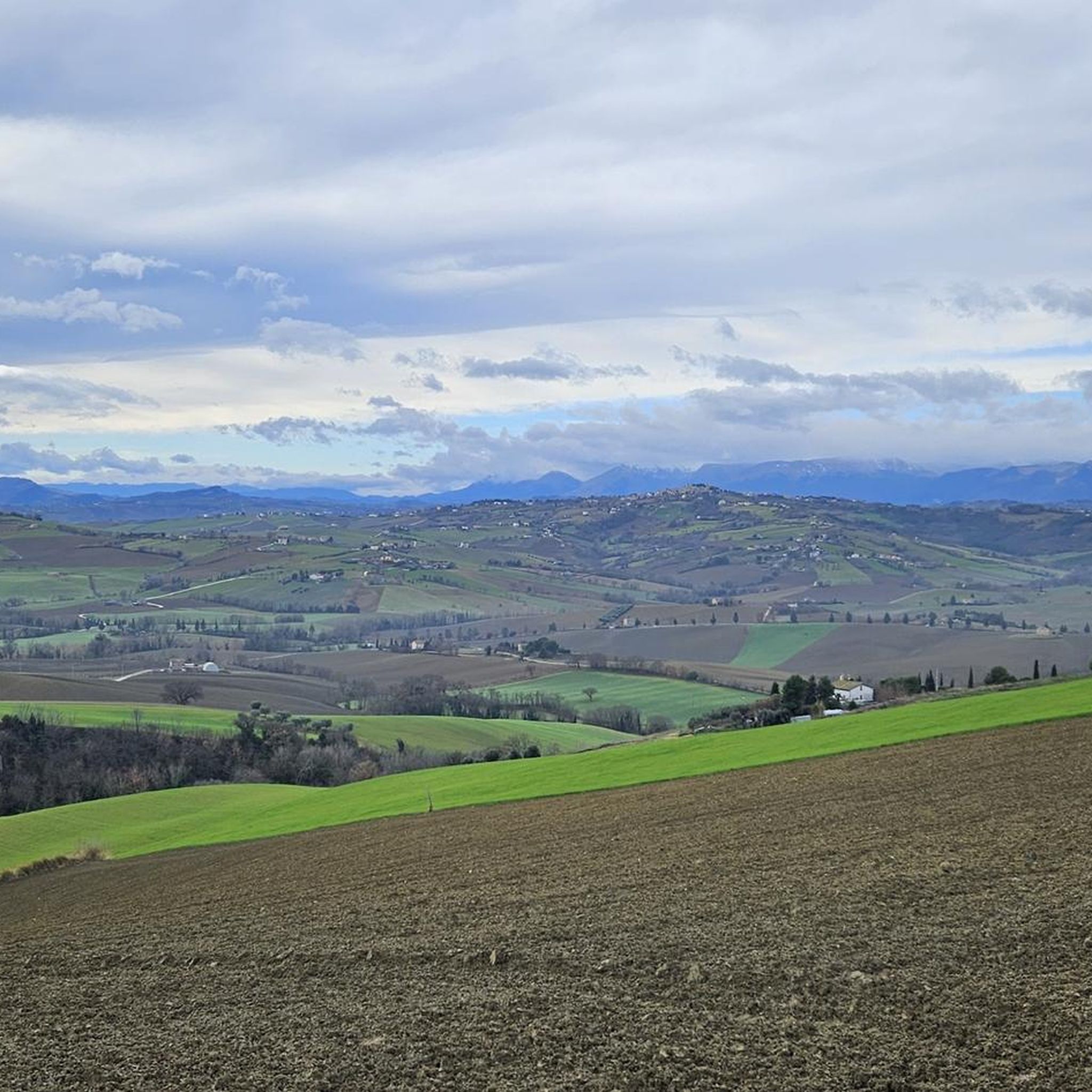
Best attractions and places to see around Loro Piceno include a rich blend of historical, cultural, and scenic sites in Italy's Marche region. This charming hill town, perched on a gentle slope, offers panoramic views stretching from the Sibillini mountains to the Adriatic Sea. Situated near the Fiastra stream, Loro Piceno provides a diverse landscape for exploration. The area is known for its well-preserved medieval urban layout and historical landmarks.
Best attractions and places to see around Loro Piceno
- The…
Last updated: July 1, 2026
Abbadia di Fiastra Abbey and Nature Reserve
Highlight • Historical Site
Translated by Google •
Tip by

La Rancia Castle
Highlight • Castle
Translated by Google •
Tip by

Sign up now to discover places like this
Get recommendations on the best single tracks, peaks, & plenty of other exciting outdoor places.
Sign up for free
Devil's Bridge (Tolentino)
Highlight • Bridge
Showing Translation
Tip by

Basilica and Monastery of San Nicola da Tolentino
Highlight • Religious Site
Translated by Google •
Tip by

Abbey of Fiastra
Highlight • Religious Site
Translated by Google •
Tip by

Sign up for free to discover even more attractions around Loro Piceno.
Sign up for free
Already have an account?
Start today with a free account
Your next adventure awaits.
Login or Signup

Tips from the Community

picturesque 1200s bridge over the Chienti river
2
0

There is a very large car park, and a cycle/pedestrian path starts here.
0
0

The "Abbadia di Fiastra" Nature Reserve offers visitors, in addition to large and welcoming green spaces, numerous facilities: the Information Office where it is also possible to book guided tours of the Reserve and the Abbey, the Visitor Center, the Museum of Rural Civilization, the Archaeological Museum and the Wine Museum. There is also a picnic area, a camper service, nature trails, horse and bike trails, a sensory trail for the disabled, large parking lots, toilets, bars, pizzerias, restaurants, points of sale of local products and various accommodation facilities. More information on the dedicated website
0
0
The term “ Rancia ” is probably a corruption of the word grancia , or granary , from the French grange, borrowed from the Latin granica. Built as a fortified farm in the mid-11th century, in the Rancia district, on the plain located to the left of the Chienti river, the Castello della Rancia was initially a sort of tower house with autonomous structures for the defense of agricultural products. Important dates to remember are May 2 and 3, 1815, days of the furious battle called “ della Rancia ” or “ Tolentino ” when the entire area became a battlefield between the French army of Gioacchino Murat, king of Naples and brother-in-law of Napoleon, and the Austrian troops of General Federico Bianchi. The importance of this event in the history of Italy is said to be considered the beginning of the Italian Risorgimento. It is currently owned by the Municipality of Tolentino and houses the Civic Archaeological Museum “Aristide Gentiloni Silverj”.
0
0

Legend has it that the bridge was built in just one night thanks to the help of the devil who in exchange wanted the soul of the first person to cross it.
0
0
refreshment area with fountain and bar, but transit by bike must be very slow or get off and push
0
0

An ancient legend surrounds the construction of this bridge. It is said that, in a single night, the devil allied himself with a daring builder. But there was a secret plan. Saint Nicholas intervened in disguise, transforming himself into a dog and a cheese, challenging the devil in a game of wits.
1
0

It is the seat of the homonymous theater company
0
0
Frequently Asked Questions
What historical sites can I explore in and around Loro Piceno?
Loro Piceno is rich in history. You can visit the ancient Abbadia di Fiastra Abbey and Nature Reserve, one of Italy's best-preserved Cistercian abbeys, which also houses several museums. Don't miss the La Rancia Castle, a former fortified farm with a significant history, now home to the Civic Archaeological Museum. Within Loro Piceno itself, explore the medieval urban layout, including the Castello dei Brunforte, the 15th-century Torre Civica, and the Roman-era Nymphaeum delle Bàgnere.
Are there any family-friendly attractions near Loro Piceno?
Yes, several attractions are suitable for families. The Abbadia di Fiastra Abbey and Nature Reserve offers large green spaces, nature trails, and a sensory trail for the disabled, along with museums that can engage various ages. La Rancia Castle and the Devil's Bridge (Tolentino), with its intriguing legend, are also great options for a family outing.
What outdoor activities can I do around Loro Piceno?
The area around Loro Piceno is perfect for outdoor enthusiasts. You can enjoy hiking, gravel biking, and mountain biking. The Abbadia di Fiastra Nature Reserve offers numerous trails for walking and cycling. For more specific routes, explore the hiking trails around Loro Piceno, gravel biking routes, or MTB trails in the region.
Where can I find hiking trails near Loro Piceno?
Many hiking trails are available, especially within the Abbadia di Fiastra Nature Reserve. Here, you'll find easy routes like the 4.7 km 'Fiastra River – Abbey of Fiastra loop' or the 4.1 km 'Abbey of Fiastra loop'. For a moderate challenge, consider the 9.6 km 'Farma della Vita – Abbey of Fiastra loop'. You can find more options and details on the hiking guide for Loro Piceno.
What are some cultural attractions or museums in Loro Piceno?
Loro Piceno offers several cultural insights. The Museo Civico di Palazzo Cento displays Roman artifacts and ceramics. The Museo Parrocchiale, located in the Church of Santa Maria di Piazza, showcases religious works. For military history enthusiasts, the Museo delle Armi e delle Uniformi in the former Church of San Biagio collects war objects and uniforms.
What is the best time to visit Loro Piceno attractions?
The best time to visit Loro Piceno is generally during the spring (April-June) and autumn (September-October) months. The weather is pleasant for exploring historical sites and enjoying outdoor activities. August is notable for the annual 'Sagra del vino Cotto' (Vino Cotto Festival), which attracts many visitors interested in the local wine tradition.
Are there any religious buildings worth visiting in the area?
Absolutely. The Abbadia di Fiastra Abbey is a significant Cistercian abbey founded in 1142. Nearby, the Basilica and Monastery of San Nicola da Tolentino is a major pilgrimage site housing the bones of Saint Nicholas. In Loro Piceno itself, you can visit the medieval Chiesa di S. Maria di Piazza, the Gothic Chiesa di San Francesco, and the Baroque Chiesa di Santa Maria delle Grazie.
What natural features can I see around Loro Piceno?
Loro Piceno is situated on a hill near the Fiastra stream, offering scenic views. From the Torre Civica or Torre della Vittoria, you can enjoy panoramic vistas stretching from the Sibillini Mountains to the Adriatic Sea. The Abbadia di Fiastra Nature Reserve provides extensive natural landscapes, including forests and trails, ideal for experiencing the local flora and fauna.
What is 'vino cotto' and where can I learn more about it in Loro Piceno?
Vino Cotto, or 'cooked wine,' is a traditional local specialty deeply embedded in Loro Piceno's culture. The town is renowned for it, and you can even see its influence in the architecture of noble palaces designed for grape pressing. To learn more, visit the 'Mostra permanente delle attrezzature e degli utensili per il vino cotto' (Permanent Exhibition of Equipment and Tools for Vino Cotto) adjacent to the cloister of the Chiesa di San Francesco. If you visit in August, you might catch the 'Sagra del vino Cotto' festival.
Are there any viewpoints offering panoramic scenery?
Yes, for breathtaking views, ascend the Torre Civica (Civic Tower) in Loro Piceno. From its terrace, you can see the Sibillini Mountains and the Adriatic Sea. The Torre della Vittoria also provides splendid views, extending from Monte Conero to Maiella, and across the Sibillini mountains to the Adriatic.
What do visitors enjoy most about Loro Piceno?
Visitors particularly appreciate the rich blend of historical, cultural, and scenic attractions. The well-preserved medieval urban layout, with its narrow alleys and steep climbs, offers a charming atmosphere. The extensive facilities and natural beauty of the Abbadia di Fiastra Abbey and Nature Reserve are highly rated, as are the historical significance of sites like La Rancia Castle and the spiritual importance of the Basilica and Monastery of San Nicola da Tolentino.
Are there any nearby castles or fortresses to visit?
Beyond La Rancia Castle, which is a must-see, you can also explore the Castello dei Brunforte, located at the highest point of Loro Piceno. Additionally, the Castello o Rocca di Urbisaglia, a well-preserved Renaissance-style fortress built for military purposes in the sixteenth century, is situated nearby and open to the public.
Most popular routes around Loro Piceno

Get inspired with the komoot mobile app


Explore more
Still not found the Highlight you’re looking for? See guides of the top attractions in other regions:
