Attractions and Places To See around Cilavegna - Top 20
Attractions and places to see around Cilavegna offer a blend of historical sites and agricultural landscapes within the tranquil Po Valley. This comune in the province of Pavia is characterized by its rich agricultural traditions, including vast rice fields, and serves as a gateway to the broader Lomellina region. Visitors can explore historical landmarks and enjoy the peaceful natural environment shaped by numerous watercourses and canals. The area provides a quiet escape with opportunities to discover local heritage and scenic beauty.
Best attractions and places to see around Cilavegna
- The most popular attractions is Ducal Square, Vigevano, a historical site that is considered one of Italy's first and greatest Renaissance squares. This grand square is known for its charm and harmony, with shops now offering comfort and high-quality shopping under its arcades.
- Another must-see spot is Gravellona Lomellina Artist’s town, a settlement known for its unique artistic decorations. Many buildings feature frescoes, paintings, and works of art, transforming the town into an open-air gallery.
- Visitors also love Church of San Valeriano, Robbio, a religious building with Romanesque architectural style. Documented since the 12th century, this church is located along the historic Via Francigena.
- Cilavegna is known for its historical sites, religious buildings, and charming settlements. The region offers a variety of attractions to see and explore, from ancient churches to artistically adorned towns.
- The attractions around Cilavegna are appreciated by the komoot community, with 261 upvotes and 284 photos shared by visitors.
Last updated: June 22, 2026
Ducal Square, Vigevano
Highlight • Historical Site
Translated by Google •
Tip by

Gravellona Lomellina Artist’s town
Highlight • Settlement
Translated by Google •
Tip by

Sign up now to discover places like this
Get recommendations on the best single tracks, peaks, & plenty of other exciting outdoor places.
Sign up for free
Historic Center of Tornaco
Highlight • Historical Site
Translated by Google •
Tip by

Church of San Valeriano, Robbio
Highlight • Religious Site
A church at the site is documented since 1125-1150. Built with brick, the apse ends in a typical Romanesque hemicycle. Among the frescoes, is a Christ in a mandorla surrounded by the four evangelists. The fresco of the Trinity is dated 1507. The church and Robbio is located along the Via Francigena. The church was restored to its Romanesque decor in 1960. (Wikipedia)
Tip by

Basilica of San Lorenzo, Mortara
Highlight • Religious Site
Architecture: Built in Gothic Lombard style between 1375 and 1380 by Bernardino da Novara. Martino Bassi made some structural changes in 1573.
Exterior: The cotto facade has frescoes in the lunettes of the portals, made by Nando Bialetti. The tondi on the facade are by Boniforte da Mortara. The colorful stained glass windows are the work of Francesco Mossmeyer.
Interior: Rich in works of art, including paintings by Paolo da Brescia and a remarkable wooden nativity scene by Lorenzo da Mortara. In the 20th century the interior was renovated by Giuseppe Piatti.
Translated by Google •
Tip by
Sign up for free to discover even more attractions around Cilavegna.
Sign up for free
Already have an account?
Start today with a free account
Your next adventure awaits.
Login or Signup
Tips from the Community

Tornaco is a small Italian municipality located in Piedmont, in the southeastern part of the province of Novara, almost on the border with the province of Pavia. It has a population of about 900 inhabitants and stands at an altitude of 122 meters above sea level. It is a predominantly agricultural village, strongly linked to the traditional cultivation of rice and cereals, included in the circuit of the Piedmontese Quality Rice Road.
0
0
Gravellona Lomellina is a characteristic Italian municipality of about 2,700 inhabitants located in the province of Pavia, in Lombardy. Located at the gates of Vigevano, it is nationally famous as a "town of art" or "painted village" for the extraordinary presence of frescoes, murals, and artistic installations that decorate the entire urban fabric.
0
0

Church of San Valeriano
0
0

Certainly one of the most beautiful, if not the most beautiful, in Lomellina. The murals depicting ancient crafts and environments, the geranium-adorned street lamps, and the chimney sweeps on the rooftops bring back memories of your grandparents' stories, and it's wonderful to be a child again for a few moments.
1
0

Medieval monument in Robbio (12th century), it has preserved its simple Romanesque decoration. Entirely in terracotta, it stood near the gate of San Pietro, on the road to Mortara, and there was an adjoining hospital, mentioned in the chronicles as early as the 13th century.
0
0

In every corner of Gravellona Lomellina there is something that catches your attention!!! Bears on bikes, old tractors and zebras!!! Top!
1
1

The Basilica di San Lorenzo is Mortara's most prominent historical monument, a Gothic building from the 14th century. Located in the city center, near the Palazzo del Comune, it attracts attention with its terracotta facade. Architecture: Built in Gothic Lombard style between 1375 and 1380 by Bernardino da Novara. Martino Bassi made some structural changes in 1573. Exterior: The cotto facade has frescoes in the lunettes of the portals, made by Nando Bialetti. The tondi on the facade are by Boniforte da Mortara. The colorful stained glass windows are the work of Francesco Mossmeyer. Interior: Rich in works of art, including paintings by Paolo da Brescia and a remarkable wooden nativity scene by Lorenzo da Mortara. In the 20th century the interior was renovated by Giuseppe Piatti.
6
0
San Pietro is a small Romanesque-style Roman Catholic church located at the intersection of Via Mortara and Via Roma in the town center of Robbio, province of Pavia. A church at the site is documented since 1125-1150. Built with brick, the apse ends in a typical Romanesque hemicycle. Among the frescoes, is a Christ in a mandorla surrounded by the four evangelists. The fresco of the Trinity is dated 1507. The church and Robbio is located along the Via Francigena. The church was restored to its Romanesque decor in 1960. (Wikipedia)
6
0
Frequently Asked Questions
What historical sites can I explore in and around Cilavegna?
Cilavegna and its surroundings offer a rich historical tapestry. Within the town, you can find the significant Castle of Cilavegna, the ancient Church of San Martino, the Church of Santa Maria, and the Parish Church of Saints Peter and Paul, which houses precious artworks. Nearby, the Ducal Square in Vigevano is a must-see, considered one of Italy's first and greatest Renaissance squares. You can also visit the Church of San Valeriano in Robbio, a Romanesque church located along the historic Via Francigena.
Are there any natural attractions or outdoor areas to visit near Cilavegna?
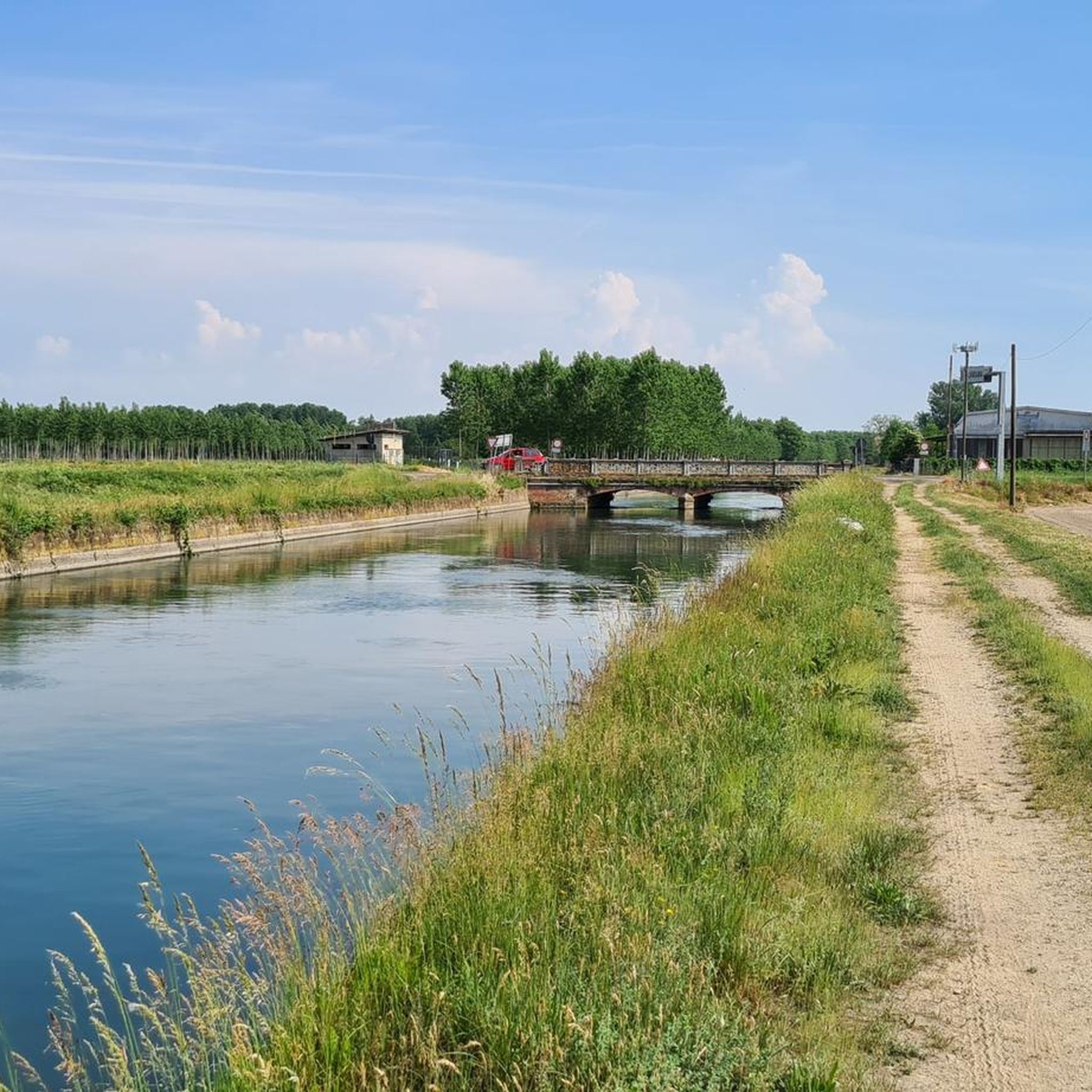
Yes, Cilavegna is situated in the tranquil Po Valley, offering a backdrop of natural beauty. The broader Lomellina region is characterized by numerous watercourses, streams, and canals, which have shaped its agricultural development. You can explore the area around the Naviglio Langosco, a canal fed by the Ticino River, which is very beautiful and can be explored by bike or on foot. The region also features protected areas known as 'garzaie,' where native bird species like herons and egrets can be observed, such as the Garzaia di Sant'Alessandro.
What kind of outdoor activities, like hiking or cycling, are available around Cilavegna?
The area around Cilavegna is excellent for outdoor enthusiasts. For hiking, you can find routes like the 'Sentiero Novara Stage 6: From Vespolate to Terdobbiate' or an '8.8-mile loop in Parco Agricolo Nord Est'. For cycling, there are various options, including the 'Murals in Gravellona loop from Parona Lomellina' for road cycling or the 'Portalupa Heronry – Church of the Castellana loop from Cilavegna' for general cycling. You can find more routes and details on the dedicated guides for hiking, road cycling, and cycling around Cilavegna.
Are there family-friendly attractions in the Cilavegna area?
Many attractions in the Cilavegna area are suitable for families. The Ducal Square in Vigevano offers a charming space with shops and cafes under its arcades, perfect for a leisurely stroll. Gravellona Lomellina Artist’s town is particularly engaging for all ages, with its unique frescoes, paintings, and artistic decorations transforming the town into an open-air gallery. Exploring the agricultural landscapes and bird-watching in the 'garzaie' can also be a fun family activity.
What makes Gravellona Lomellina a unique place to visit?
Gravellona Lomellina is known as an 'Artist's town' due to its unique artistic decorations. Many buildings, electrical substations, and even street lamps feature frescoes, paintings, and works of art, transforming the town into an open-air gallery. Visitors often enjoy the murals depicting ancient crafts and environments, the geranium-adorned street lamps, and the wrought iron figures on rooftops, which evoke a sense of nostalgia and charm.
Can I visit any significant religious buildings in the region?
Yes, Cilavegna and the surrounding Lomellina region are rich in religious heritage. In Cilavegna, you can find the ancient Church of San Martino, the Church of Santa Maria, and the Parish Church of Saints Peter and Paul. The Santuario di Sant'Anna is also unique in Lomellina as the only non-Marian sanctuary, signifying a strong local devotion. Further afield, the Church of San Valeriano in Robbio is a notable Romanesque church along the Via Francigena, and the Basilica of St. Lawrence in Mortara houses a collection of 16th and 17th-century paintings.
What is the significance of the Naviglio Langosco?
The Naviglio Langosco is a historical canal, fed by the Ticino River, constructed in the 17th century to irrigate agricultural fields in the Novarese and Lomellina regions. It flows through picturesque valleys and woods, passing by the Vigevano hydroelectric plant. Today, the area surrounding its path is very scenic and can be explored by bike or on foot, with parts of the Via Francigena running alongside it.
Is there anything unique about Cilavegna's history or local traditions?
Cilavegna has a fascinating history, notably as the birthplace of Pietro Conti da Cilavegna, who invented an early model of the typewriter, the 'tachigrafo' or 'tachitipo,' in 1823. The town also has a strong agricultural legacy; while once known for wine, it is now celebrated for its pink asparagus, and the region is characterized by vast rice fields. This agricultural tradition is deeply woven into the local culture and landscape.
What do visitors particularly enjoy about the attractions near Cilavegna?
Visitors frequently praise the charm and historical significance of places like the Ducal Square in Vigevano, often calling it 'one of the most beautiful squares in Italy.' The artistic flair of Gravellona Lomellina Artist’s town is also highly appreciated, with its murals and decorations bringing back memories and offering a unique open-air gallery experience. The peaceful environment of the Po Valley and the opportunities for outdoor activities like cycling along the Naviglio Langosco are also highlights for many.
Are there any accessible attractions for visitors with mobility needs?
Yes, some attractions in the area are noted for their accessibility. The Ducal Square in Vigevano is listed as wheelchair accessible, offering a grand and harmonious space to enjoy. The settlement of Nicorvo is also categorized as wheelchair accessible, providing options for visitors with mobility needs to explore.
What is the best time of year to visit Cilavegna for outdoor activities?
While specific 'best time' data isn't provided, the Po Valley and Lomellina region are generally pleasant for outdoor activities during spring (April-May) and autumn (September-October). These seasons offer milder temperatures, making hiking and cycling more comfortable. Summer can be warm, but the numerous watercourses and canals provide a refreshing backdrop. Winter activities are not specifically highlighted, suggesting a focus on warmer months for exploring the natural and agricultural landscapes.
Beyond Cilavegna, what other towns in the Lomellina region are worth visiting?
The broader Lomellina region offers several charming towns. Vigevano is a short distance away and boasts a grand fortified complex and the stunning Renaissance Piazza Ducale. Mortara, situated along the Via Francigena, features religious buildings of historical and artistic value. Morimondo Abbey, located within a delightful village of farmhouses in the Ticino Valley, is also an imposing monastery worth a visit. For more information on the region, you can visit Italia.it's guide to the Lomellina region.
Most popular routes around Cilavegna
Most popular attractions around Cilavegna

Get inspired with the komoot mobile app


Explore more
Still not found the Highlight you’re looking for? See guides of the top attractions in other regions:
