Attractions and Places To See around Rosasco - Top 20
Best attractions and places to see around Rosasco include historical landmarks and cultural sites. Rosasco, located in the province of Pavia, Lombardy, is a historic town with origins tracing back to the 10th century. Its central core retains the urban development of a fortified medieval village, offering a glimpse into its past. The region is characterized by its flat agricultural landscape, with a focus on rice cultivation.
Best attractions and places to see around Rosasco
- The most popular attractions is…
Last updated: May 11, 2026
Church of San Valeriano, Robbio
Highlight • Religious Site
A church …
Tip by

Nicorvo
Highlight • Settlement
Translated by Google •
Tip by
Sign up now to discover places like this
Get recommendations on the best single tracks, peaks, & plenty of other exciting outdoor places.
Sign up for free
Pedestrian and Cycle Bridge over the Cavo Crocettone
Highlight • Bridge
The Ponte ciclopedonale sul Cavo Crocettone in Vercelli, Italy, is a bicycle and pedestrian bridge. This bridge provides a safe passage for both cyclists and …
Translated by Google •
Tip by
Olevano di Lomellina
Highlight • Settlement
Translated by Google •
Tip by

Via Francigena Through the Fields Outside Vercelli
Highlight • Trail
Translated by Google •
Tip by
Sign up for free to discover even more attractions around Rosasco.
Sign up for free
Already have an account?
Start today with a free account
Your next adventure awaits.
Login or Signup
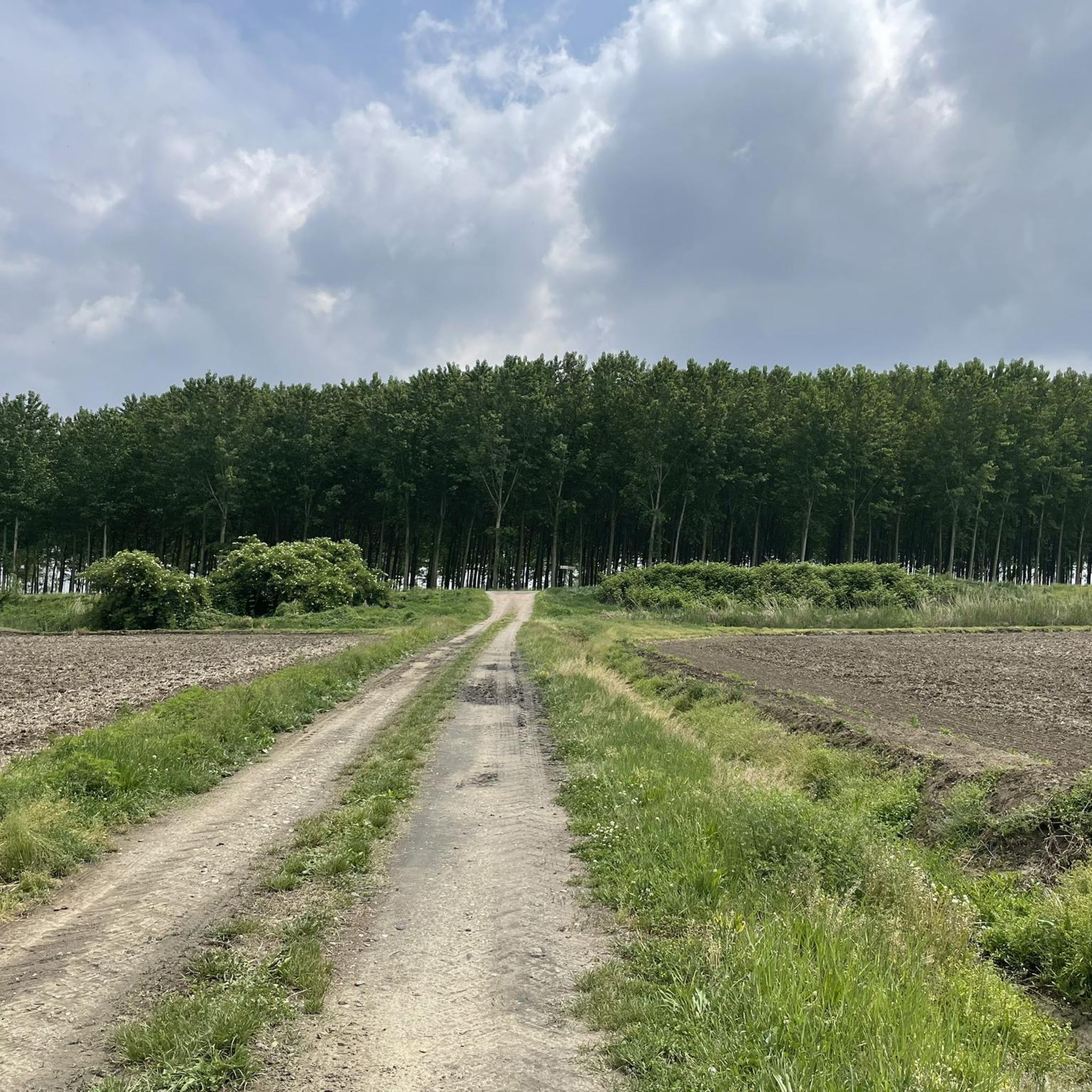


Tips from the Community

Church of San Valeriano
0
0


The work 🚧 is finished, and now the bridge is passable again. The previous stretch is often muddy 💩 after the rains.
0
1
Medieval monument in Robbio (12th century), it has preserved its simple Romanesque decoration. Entirely in terracotta, it stood near the gate of San Pietro, on the road to Mortara, and there was an adjoining hospital, mentioned in the chronicles as early as the 13th century.
0
0

A historically important route is the stretch of the Via Francigena in Lomellina which, coming from Robbio, crosses the entire town and allows you to pass by the eighteenth-century sanctuary of the "Madonnina" and the parish church of S. Terenziano (seventeenth century). The route is marked by volunteers to facilitate the passage of pilgrims. In the village there is a hospice near the parish house run by volunteers. As you pass in front of the "Madonnina", it is possible to notice a majestic and centuries-old magnolia behind it. Wikipedia
3
0
Nicorvo is a charming comune in the Italian province of Pavia, located in the Lombardy region. With a population of 385 inhabitants and an area of 8.2 km², it is located in the northern part of the Lomellina, near the left bank of the Agogna river. The economy of Nicorvo is mainly based on agriculture, with a particular focus on rice cultivation,
3
0
The bridge at Palestro is passable. (update 01 Sep '24)
7
0
San Pietro is a small Romanesque-style Roman Catholic church located at the intersection of Via Mortara and Via Roma in the town center of Robbio, province of Pavia. A church at the site is documented since 1125-1150. Built with brick, the apse ends in a typical Romanesque hemicycle. Among the frescoes, is a Christ in a mandorla surrounded by the four evangelists. The fresco of the Trinity is dated 1507. The church and Robbio is located along the Via Francigena. The church was restored to its Romanesque decor in 1960. (Wikipedia)
6
0
Frequently Asked Questions
What historical sites can I explore within Rosasco itself?
Rosasco boasts a rich history, with its origins dating back to the 10th century. You can explore the remains of the
Medieval Castle, which still features parts of its perimeter walls, including the impressive entrance tower known as "del consegno" and the 25-meter tall "Mastio" (main tower). Within the castle's enclosure, you'll also find the historic
Church of San Valentino, completed in 1496.
Are there other significant historical or religious sites nearby Rosasco?
Yes, the region is rich in history. A notable site is the Church of San Valeriano in Robbio, a Romanesque-style Roman Catholic church documented since the 12th century, featuring frescoes and located along the Via Francigena. The charming settlement of Nicorvo also features the 18th-century sanctuary of the "Madonnina" and the parish church of S. Terenziano.
What is the local culture or economy like in the Rosasco area?
The economy of the Rosasco area, particularly in Lomellina, is primarily agricultural, with a strong focus on rice cultivation. This tradition is celebrated in places like Olevano di Lomellina, which hosts the Museum of art and peasant tradition, dedicated to agricultural history and the cultivation of rice.
Are there opportunities for cycling around Rosasco?
Absolutely! The flat agricultural landscape around Rosasco is ideal for cycling. You can find various road cycling routes, including moderate options like the "Novara Countryside Roads – Monticello Village and Church loop from Rosasco" (52.9 km). For more routes, check out the Road Cycling Routes around Rosasco guide.
Can I find hiking trails near Rosasco?
Yes, there are several hiking opportunities. You can explore trails like the "Robbio Castle loop from Robbio" (6.1 km, easy) or more challenging options such as the "Nicorvo – The Ancient Cedar of Lebanon loop from Nicorvo" (27.1 km, difficult). Discover more trails in the Hiking around Rosasco guide.
What about running trails in the area?
Rosasco offers various running trails for different fitness levels. You can try the "Running loop from Robbio" (6.3 km, moderate) or more demanding routes like the "Bosco Lanino – Castello Visconteo loop from Pezzana" (23.7 km, difficult). Find detailed information in the Running Trails around Rosasco guide.
Are there family-friendly attractions in the area?
Many attractions around Rosasco are considered family-friendly. Historical sites like the Church of San Valeriano, Robbio, and settlements such as Nicorvo and Olevano di Lomellina, offer cultural experiences suitable for families. The Museum of art and peasant tradition in Olevano can also be an engaging visit for all ages.
What is the significance of the Via Francigena in this region?
The Via Francigena, an ancient pilgrimage route to Rome, plays a significant role in the region. Several highlights, including the Church of San Valeriano, Robbio, and the settlement of Nicorvo, are located along its path. You can even walk or cycle parts of it, such as the Via Francigena Through the Fields Outside Vercelli, or cross the Pedestrian and Cycle Bridge over the Cavo Crocettone, which is also part of the route.
What kind of landscape can I expect around Rosasco?
The landscape around Rosasco is characterized by its flat agricultural terrain, dominated by extensive rice cultivation. This offers wide-open views, particularly appealing for cycling and walking, with a sense of tranquility and connection to the land's farming heritage.
Are there any unique local museums or traditions to experience?
Yes, in Olevano di Lomellina, you can visit the Museum of art and peasant tradition. This museum focuses on the agricultural history of the region, particularly rice cultivation, and showcases traditional peasant tools and machinery, offering a deep dive into local heritage.
Where can I find a pleasant spot for a break during an outdoor activity?
The Pedestrian and Cycle Bridge over the Cavo Crocettone is a good option. It's located along the Via Francigena and once featured a rest area with a picnic table and benches, making it a nice halfway point for a break, even if it's now a bit overgrown.
Is Nicorvo wheelchair accessible?
Yes, the settlement of Nicorvo is noted as being wheelchair accessible, making it a welcoming destination for visitors with mobility needs.
Most popular attractions around Rosasco

Get inspired with the komoot mobile app


Explore more
Still not found the Highlight you’re looking for? See guides of the top attractions in other regions:
