Attractions and Places To See around San Salvatore Monferrato - Top 20
Attractions and places to see around San Salvatore Monferrato offer a blend of historical landmarks, cultural sites, and natural beauty in Italy's Piedmont region. The area is characterized by rolling hills, vineyards, and ancient villages. Visitors can explore its rich past through impressive architecture and immerse themselves in the scenic Monferrato landscapes. This region provides diverse opportunities for exploration, from historical sites to unique viewpoints.
Best attractions and places to see around San Salvatore Monferrato
- The most popular attractions is…
Last updated: August 30, 2026
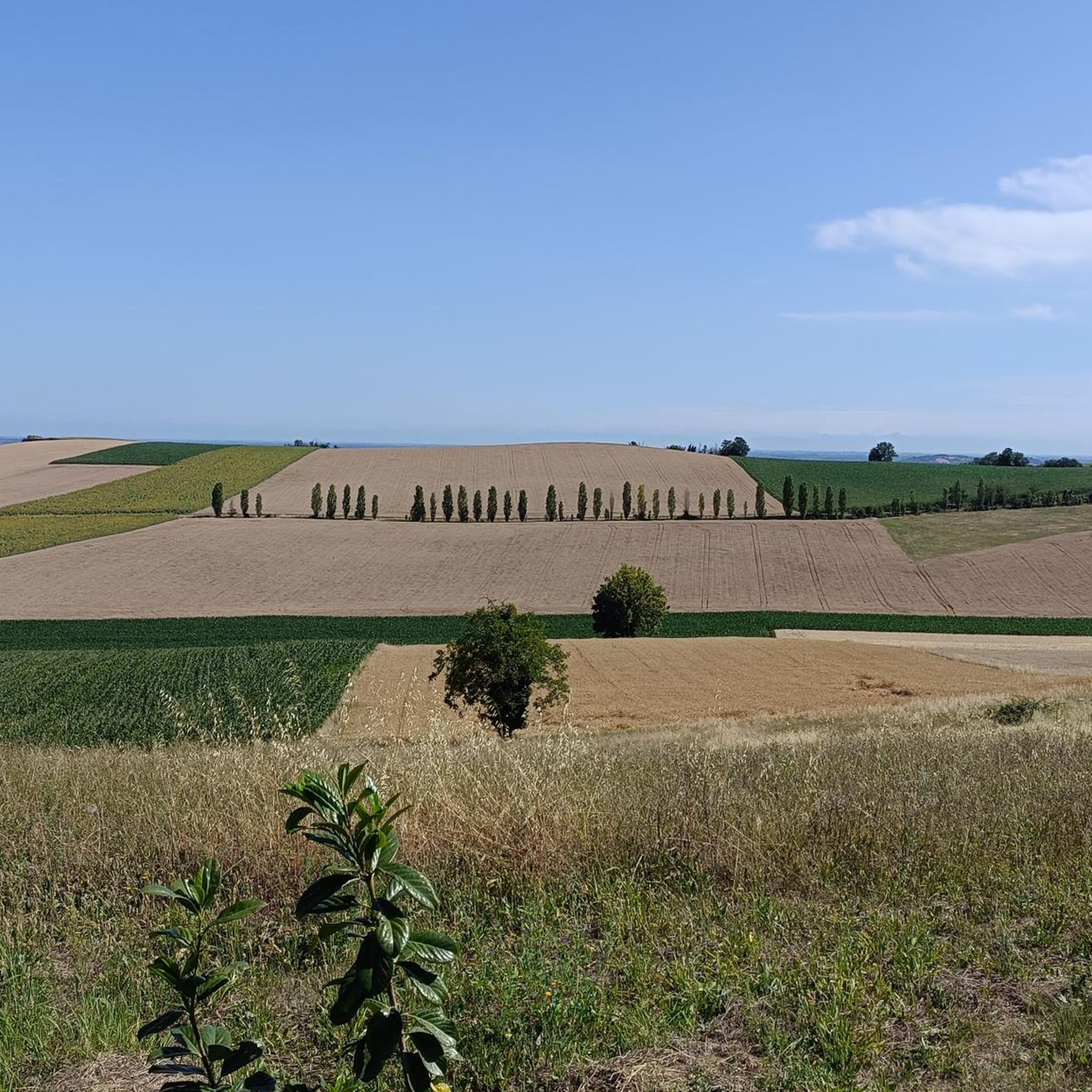
Conzano
Highlight • Settlement
Translated by Google •
Tip by

Big Bench of Cuccaro Monferrato
Highlight • Monument
Translated by Google •
Tip by
Sign up now to discover places like this
Get recommendations on the best single tracks, peaks, & plenty of other exciting outdoor places.
Sign up for free
Castello di Pomaro
Highlight • Castle
Translated by Google •
Tip by
Civic Tower Garden (Lu AL)
Highlight • Monument
Showing Translation
Tip by

Cathedral of Saint Peter, Alessandria
Highlight • Religious Site
Translated by Google •
Tip by

Sign up for free to discover even more attractions around San Salvatore Monferrato.
Sign up for free
Already have an account?
Start today with a free account
Your next adventure awaits.
Login or Signup
Popular around San Salvatore Monferrato
Tips from the Community

Dominating the highest point of the historic center, the Civic Tower stands as a timeless symbol of the community and a visual landmark in the landscape. The area surrounding it offers one of the most evocative experiences for those visiting Monferrato. The Civic Tower is indeed located within a panoramic park from which you can admire a breathtaking 360-degree view.
0
0

here public lighting was born in lu...1913
1
0

The tower is kept in excellent condition.
26
0

Architectural and tourist attraction Via Luigi Onetti, 15, 15040 Lu AL
4
0

The tower stands out at the highest point of the town, within a park. It was built in the 15th century and offers an unparalleled view of Monferrato in terms of its breadth.
0
0
Why is there a Piazza Australia in Conzano? To solve the mystery we must go back in time more than a hundred years, to the end of the 19th century, during the Great Depression. The economic difficulties of the time pushed many people to abandon their homeland to seek fortune elsewhere. In that period, many Conzano residents moved to northern Queensland, Australia, to work cutting sugar cane: in this activity, in fact, the skills acquired in growing vines, typical of these areas of Monferrato, were useful. A strong bond has been maintained over time between the local Conzano community and the expatriate Conzano community: so in 1992 the town chose to pay tribute to its emigrant fellow citizens by changing the name of the square, from Piazza d’Armi to Piazza Australia.
5
0

The Cathedral of Alexandria, located in the city center, stands on the site of a building built in Lombard Gothic style that was demolished in 1803 for military purposes by Napoleon Bonaparte. In 1805 he created the first church of San Marco of Napoleon Himself, which was reconstructed by the architect Cristoforo Valizzone (1807-1810). In addition, there is a story in new style, in contrast to the preserved parts, namely the vault of the central nave and the columns. The questionable style was built in 1874-1879 by the Vercelli architect Edoardo Arborio Mella (1808-1884), which resulted in the architect's residence in Bramante style with talent for works in the two arms of the transept. The current decoration dates from 1926-29 and was entrusted to Luigi Morgari of Turin (1857-1935), while the high altar dates from 1954. The presbytery is decorated with 5 stained glass windows (1954) depicting the Immaculate Virgin, St. Pius V, S. Baudolino, S. Paolo della Croce, the worthy Gregorio Maria Grassi. The organ (1929) completes the ensemble, whose facades adorn the four women's galleries above the presbytery. Behind the high altar you can admire the eighteenth-century choir in inlaid wood, where there is a beautiful painting by Callisto da Lodi (1546) representing St. Peter between St. Paul and St. John the Baptist. Outside, the facade is in neoclassical style with Corinthian order columns. From the paintings that decorate it, there are Saint Peter freed from prison, Saint Peter receiving the keys, Saint Peter going to meet Jesus on the waters of Lake Tiberias, a work by Luigi Vacca of Turin (1771- 1854). In that tympanum, Vacca himself represented the Eternal Father, while in the attic five marble statues represent the Redeemer and the four Evangelists. One wall of the facade is a monument to Gagliaudo, located near the old cathedral, a legendary character who saved the city during Barbarossa's siege of Alessandria (1174). Source: https://www.cittaecattedrali.it/it/bces/34-cattedrale-di-san-pietro
2
0

The steps of the garden around the Civic Tower bear the tangible signs of past eras. In this case, a residue of the twenty years of fascism.
1
0
Frequently Asked Questions
What historical landmarks can I explore in San Salvatore Monferrato?
San Salvatore Monferrato is rich in history. You can visit the impressive Torre Paleologa, a 15th-century watchtower, and admire several 17th and 18th-century noble palaces like Palazzo Cavalli di S. Germano (now the Town Hall). Nearby, the Castello di Pomaro, a 12th-century manor with a stakeout tower and moat, offers a glimpse into the region's medieval past.
Where can I find the best panoramic views of the Monferrato landscape?
For breathtaking views, head to Conzano, an ancient village offering an endless and picturesque panorama from its highest point. Another excellent spot is the Big Bench of Cuccaro Monferrato, which provides enchanting vistas of the Piedmontese landscapes, especially when lavender bushes bloom in early summer.
Are there any unique art installations or monuments to see?
Yes, the region features several colorful "Big Benches" scattered along panoramic roads, offering unique photo opportunities and viewpoints. The Big Bench of Cuccaro Monferrato is a prime example, providing a distinctive way to appreciate the rolling hills.
What kind of outdoor activities are available around San Salvatore Monferrato?
The Monferrato region is ideal for outdoor enthusiasts. You can explore numerous trails for hiking, cycling, and mountain biking. For specific routes, check out the hiking guide, cycling guide, and MTB trails guide for San Salvatore Monferrato.
Can I find family-friendly attractions in San Salvatore Monferrato?
Many attractions in the area are suitable for families. The village of Conzano with its panoramic views, and the Big Bench of Cuccaro Monferrato are great for all ages. Historical sites like Castello di Pomaro also offer engaging experiences for families.
What are some notable religious sites in the region?
San Salvatore Monferrato is home to several beautiful churches, including the parish church of San Martino, known for its valuable frescoes, and the Church of San Siro. The Santuario della Madonna del Pozzo is another significant religious site. Further afield, the Basilica of San Dalmazio is also worth visiting.
What is the best time of year to visit San Salvatore Monferrato for its natural beauty?
The region's natural beauty, characterized by rolling hills and vineyards, is enchanting throughout the warmer months. Early summer is particularly special when lavender bushes bloom, creating scenes reminiscent of French Provence, especially around the Big Benches.
Are there any accessible attractions for visitors with mobility needs?
The Basilica of San Dalmazio is noted as wheelchair accessible. While many natural viewpoints involve some walking, specific accessibility details for other sites may vary. It's advisable to check individual locations for their accessibility features.
What kind of architecture can I expect to see in the town?
San Salvatore Monferrato showcases a rich architectural heritage, particularly with its numerous 17th and 18th-century noble palaces. Examples include Palazzo Cavalli di S. Germano, Palazzo Carmagnola, and Palazzo Oseo di Terno, many featuring distinctive frescoes and designs influenced by the Juvarra style.
Where can I experience the local viticulture and food?
The Monferrato region is renowned for its vineyards and viticulture. As you explore the hiking and cycling trails, you may encounter local farmhouses offering tastings of local food and wine, providing an authentic experience of the area's culinary traditions.
What makes the village of Conzano a must-see attraction?
Conzano is a charming, ancient village perched at 260 meters above sea level, offering an unparalleled panoramic view. It also has a unique historical connection to Australia, celebrated with its 'Piazza Australia,' commemorating the many residents who emigrated there in the late 19th century.
Are there opportunities for cycling around San Salvatore Monferrato?
Absolutely. The Monferrato hills provide excellent terrain for cycling, with routes ranging from easy to difficult. You can find detailed tours and routes in the cycling guide for San Salvatore Monferrato, including options like the 'Greenway of the Two Citadels' and routes through vineyards.
What are some lesser-known spots or 'hidden gems' in the area?
Beyond the main attractions, exploring the smaller villages and panoramic roads often reveals hidden gems. The Big Benches, like the fuchsia one near Cascina Olimpia, offer unique, less crowded viewpoints. The Sentiero della Rocca path also provides spectacular views often missed by casual visitors.
Most popular routes around San Salvatore Monferrato
Most popular attractions around San Salvatore Monferrato

Get inspired with the komoot mobile app


Explore more
Still not found the Highlight you’re looking for? See guides of the top attractions in other regions:
