Attractions and Places To See around Riccia - Top 19
Attractions and places to see around Riccia offer a blend of historical sites, cultural points, and natural features in the Molise region of Italy. The town is characterized by its medieval origins and Renaissance architecture. Surrounding Riccia are extensive green areas and elevated settlements, providing diverse landscapes for exploration. The area presents opportunities to discover local traditions and natural beauty.
Best attractions and places to see around Riccia
- The most popular attractions is Lago di Occhito, a lake that…
Last updated: May 21, 2026
Lago di Occhito
Highlight • Lake
Translated by Google •
Tip by

Campodipietra Village
Highlight • Settlement
Translated by Google •
Tip by

Sign up now to discover places like this
Get recommendations on the best single tracks, peaks, & plenty of other exciting outdoor places.
Sign up for free
Santa Maria Regina della Pace viewpoint
Highlight • Viewpoint
Translated by Google •
Tip by
Cercemaggiore
Highlight • Settlement
Translated by Google •
Tip by

Bosco Mazzocca
Highlight • Forest
Translated by Google •
Tip by
Sign up for free to discover even more attractions around Riccia.
Sign up for free
Already have an account?
Start today with a free account
Your next adventure awaits.
Login or Signup
Other adventures around Riccia

Tips from the Community

Beautiful village near Campobasso
0
0
It is a corner of serenity
0
0

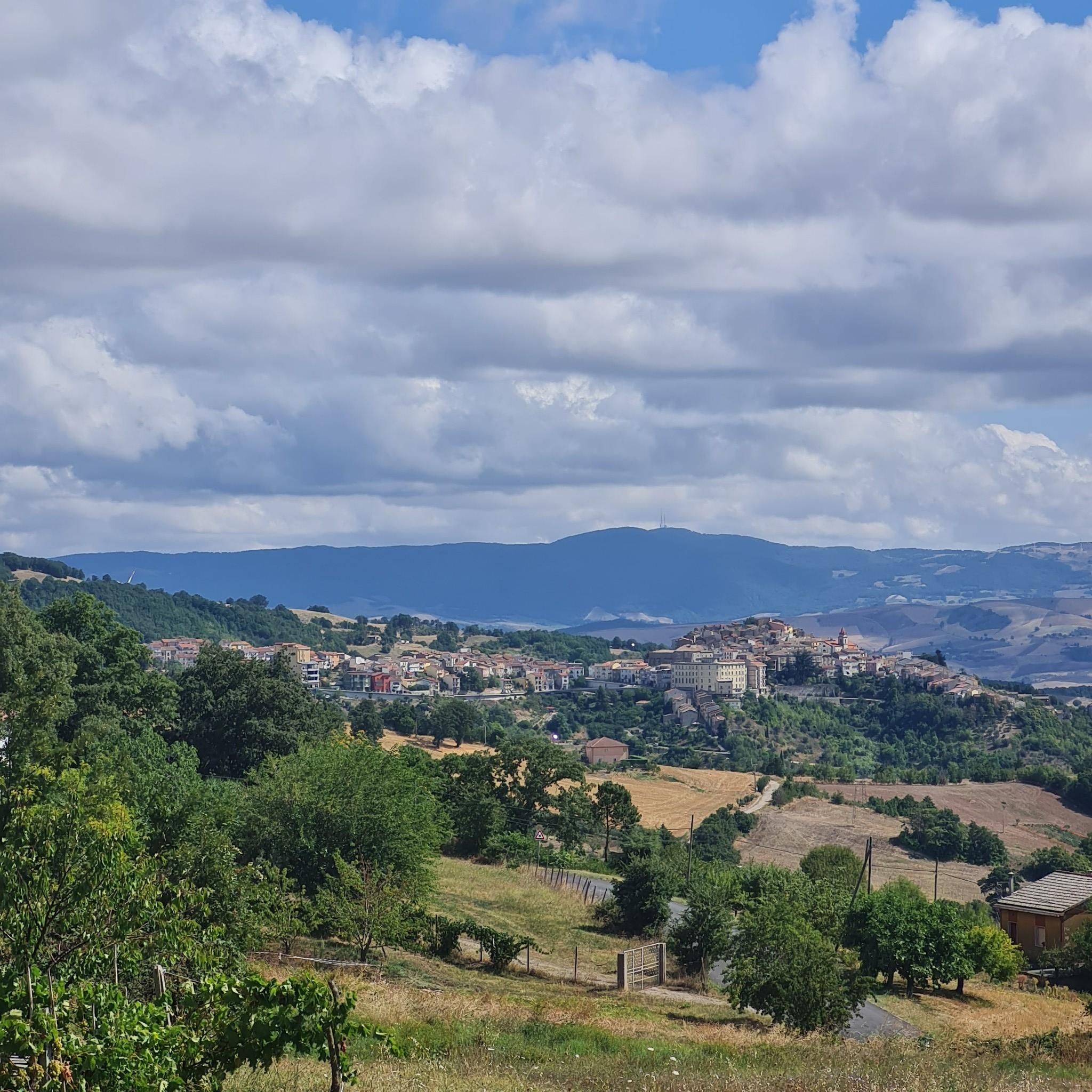
Campodipietra is a convenient point of passage to catch your breath and hydrate at the public fountains as well as in the central activities of the town. Its position is strategic because it is at the center of many possible tours both in terms of distance and difficulty, all surrounded by greenery. In addition to being a village bordering the capital and being very close to the state road to Foggia, from Campodipietra it is possible to move easily on pleasant provincial roads towards hilly towns such as Jelsi and Gildone, from which it is possible to move towards higher altitudes and historical/cultural centers such as Riccia and Cercemaggiore. Furthermore, it is possible to discover characteristic villages such as Toro and San Giovanni in Galdo from which it is possible to easily reach other important centers such as Matrice and Campolieto via provincial roads that offer truly relaxing hilly views because they have little traffic.
0
0

Let me start by saying that I did a complete tour of the lake. The Apulian side is more beautiful than the Molise side. I suggest turning around at the barrier as at a certain point there is no viable route. We took absurd gambles in the middle of bushes full of thorns. Furthermore, according to the operators of the barrier, you have to call the consortium and get a permit to be able to cross.
0
0

Lago di Occhito is a fascinating artificial lake located in the Molise region of Italy. Surrounded by stunning landscapes and a variety of flora and fauna, it offers an ideal location for outdoor activities such as bird watching and fishing. https://www.puglia.com/celenza-valforte-e-lago-di-occhito/
1
0
Small lookout at the gates of Campodipietra to admire Toro and catch your breath
0
0

Located at over 900 meters above sea level, it is the highest municipality in Molise.
1
0
A beautiful green area of about 450 hectares, a forest full of ash trees and wild animals. There are also benches and tables where you can relax. The natural area is located about 45 minutes by car from Campobasso
1
0
Frequently Asked Questions
What natural attractions can I explore around Riccia?
You can visit Lago di Occhito, a fascinating artificial lake that forms a natural border between Puglia and Molise, ideal for bird watching and fishing. Another significant natural area is Bosco Mazzocca, an extensive green space of approximately 400 hectares, perfect for excursions and picnics, especially during summer months. The Parco della Fontana, also known as "The Biscuit" park, offers equipped recreational spaces and the "Bosco delle Favole" (Fairy Tale Woods).
Are there any scenic viewpoints near Riccia?
Yes, the Santa Maria Regina della Pace viewpoint offers serene views of Toro from the edge of Campodipietra. Additionally, the elevated position of Cercemaggiore, the highest municipality in Molise, provides expansive vistas of the surrounding landscape.
What historical landmarks or sites are there in Riccia?
Riccia boasts a rich history. You can explore the remnants of its medieval past, including the imposing cylindrical tower of the Medieval Castle, once a stronghold of the De Capua family. The historic center features narrow streets, steep stone stairways, and magnificent Renaissance buildings. Notable churches include the Church of Santa Maria delle Grazie (Blessed Stephen), the Church of the Annunziata with its beautiful facade, and the Shrine of the Blessed Virgin of Carmine.
Are there any cultural sites or museums in Riccia?
Yes, the Museum of Folk Arts and Traditions, housed in the ancient "Magazeno" (part of the castle), showcases ancient tools and artifacts used by local inhabitants. Riccia is also home to TerradiPasso, a virtual eco-museum that narrates the identity of the entire Fortore territory.
Are there family-friendly activities or places for children in Riccia?
Absolutely. The Parco della Fontana, also known as "The Biscuit" park, provides equipped spaces for recreational activities for both adults and children. It includes the "Bosco delle Favole" (Fairy Tale Woods), a didactic path within the millenary Bosco Mazzocca that shares local legends and traditional games. The Santa Maria Regina della Pace viewpoint and Campodipietra Village are also considered family-friendly spots.
Can I go cycling or mountain biking near Riccia?
Yes, there are several cycling and mountain biking opportunities. For road cycling, you can find routes like the "Gildone Village – View of Gildone loop from Toro." Touring cyclists might enjoy the "Riccia and Sentiero Italia Loop" or the "Santuario sannitico loop from Riccia." Mountain bikers have options such as the "Tufara, Gambatesa, and Lake Occhito Loop" or the "Bosco Mazzoca e Lago di Decorata – giro ad anello." You can find more details on these routes in the Road Cycling Routes around Riccia, Cycling around Riccia, and MTB Trails around Riccia guides.
What is Riccia known for culturally or traditionally?
Riccia is known for its rich and authentic local cuisine. It is particularly recognized for the cult of St. Augustine and the religious procession linked to the table of St. Joseph, celebrated on March 19th, featuring traditional rural products like the "calzone di San Giuseppe."
When is the best time to visit Riccia?
The summer months are ideal for enjoying outdoor activities and relaxation in natural areas like Bosco Mazzocca. If you're interested in local traditions and festivals, visiting around March 19th would allow you to experience the St. Joseph festival. The town's historical sites and churches can be explored year-round.
What makes <a href="https://www.komoot.com/highlight/4449438" target="_blank" rel="noopener">Lago di Occhito</a> a unique attraction?
Lago di Occhito is a unique artificial lake that serves as a natural border between Puglia and Molise. It's surrounded by stunning landscapes and diverse flora and fauna, making it an excellent spot for bird watching and fishing. Visitors have noted that the Apulian side offers particularly beautiful views.
What can I expect from the historic center of Riccia?
The historic center of Riccia offers a journey back in time with its medieval old town. You'll find narrow streets and steep stone stairways, especially around the Piano della Corte area. The architecture also prominently displays the tangible presence of the De Capua family through its magnificent Renaissance buildings.
Are there any notable fountains in Riccia?
Yes, Riccia features a couple of historic fountains. The Paolina Fountain is an ancient drinking trough and wash house located in Contrada Paolina. Additionally, the Sedati Square Fountain, a 17th-century structure, marks the beginning of the historic center near the town hall.
What is <a href="https://www.komoot.com/highlight/5593932" target="_blank" rel="noopener">Cercemaggiore</a> and why is it significant?
Cercemaggiore is a historical settlement located at over 900 meters above sea level, making it the highest municipality in Molise. It is nicknamed the "Sentinel of the Samnites" and is believed to date back to the Lombard era, offering a glimpse into the region's ancient past and panoramic views.
Most popular routes around Riccia
Most popular attractions around Riccia

Get inspired with the komoot mobile app


Explore more
Still not found the Highlight you’re looking for? See guides of the top attractions in other regions:
