Top 6 Castles around Pedemonte
Best castles around Pedemonte are found in two distinct areas: the municipality of Pedemonte in the Vicenza/Verona area and the broader Piedmont region. The Vicenza/Verona area features historical fortifications and medieval castles, often with strategic positions overlooking valleys. The Piedmont region, known for its diverse landscape, offers a wide array of medieval abbeys, dramatic castles, and forts. This region is home to more than 500 castles, ranging from ancient fortresses to royal residences.
Best castles around Pedemonte
- The most popular castles is Forte Dosso delle Somme, a historical site that served as a former Austrian fortification built between 1911 and 1914. It was designed to block access from the Valle Terragnolo and Passo Coe, protecting the former front.
- Another must-see spot is Forte Interrotto, a historical site. This 19th-century military barracks was transformed into a fortress during World War I, featuring a late medieval design with a moat.
- Visitors also love Forte di Tenna, a historical site. This fortification is a remnant of an Austria-Hungary structure built in 1884.
- Pedemonte is known for its medieval castles, 20th-century forts, and royal residences. The region offers a variety of historical sites to explore, from well-preserved structures to significant ruins.
- The castles around Pedemonte are appreciated by the komoot community, with 371 upvotes and 149 photos shared by visitors.
Last updated: June 17, 2026
Forte Dosso delle Somme
Highlight • Historical Site
Translated by Google •
Tip by

Forte di Tenna
Highlight • Historical Site
Translated by Google •
Tip by

Sign up now to discover places like this
Get recommendations on the best single tracks, peaks, & plenty of other exciting outdoor places.
Sign up for free
Forte Interrotto
Highlight • Historical Site
Tip by

Fort Belvedere-Gschwent
Highlight • Historical Site
Translated by Google •
Tip by

Forte Verena
Highlight • Historical Site
more information: it.wikipedia.org/wiki/Forte_Verena
Translated by Google •
Tip by

Sign up for free to discover even more castles around Pedemonte.
Sign up for free
Already have an account?
Start today with a free account
Your next adventure awaits.
Login or Signup


Tips from the Community

The Italian fort that seems to have fired the first cannon shot against the Habsburg army and from there the war on the plateau began. It was immediately bombarded and put out of action by the Habsburg army which bombarded it from the fort of cima Vezzena, Spitz Verle
0
0
The Dosso della Somme fort was the most important technological outpost of the defensive line of the plateaus
0
0

"...The fort was still, austere. A place that spoke of men tested by cold, fear, and anticipation. In that moment I felt small, but also strangely attuned..."
0
0


Remains of Fort Dosso delle Somme
0
0

It is a defensive military barracks built in the second half of the 19th century, entirely in stone, which overlooks the town of Camporovere and dominates the entire central basin of the Plateau. From a historical point of view, the Forte Interrotto represents a completely exceptional case. It was in fact born from a military architecture project that still followed late medieval canons, recognizable in the 6 gigantic central arches and in the imposing lateral bastions with 115 positions for riflemen. In 1916 it was occupied by the Austro-Hungarians and transformed into a stronghold of the imperial line.
1
0

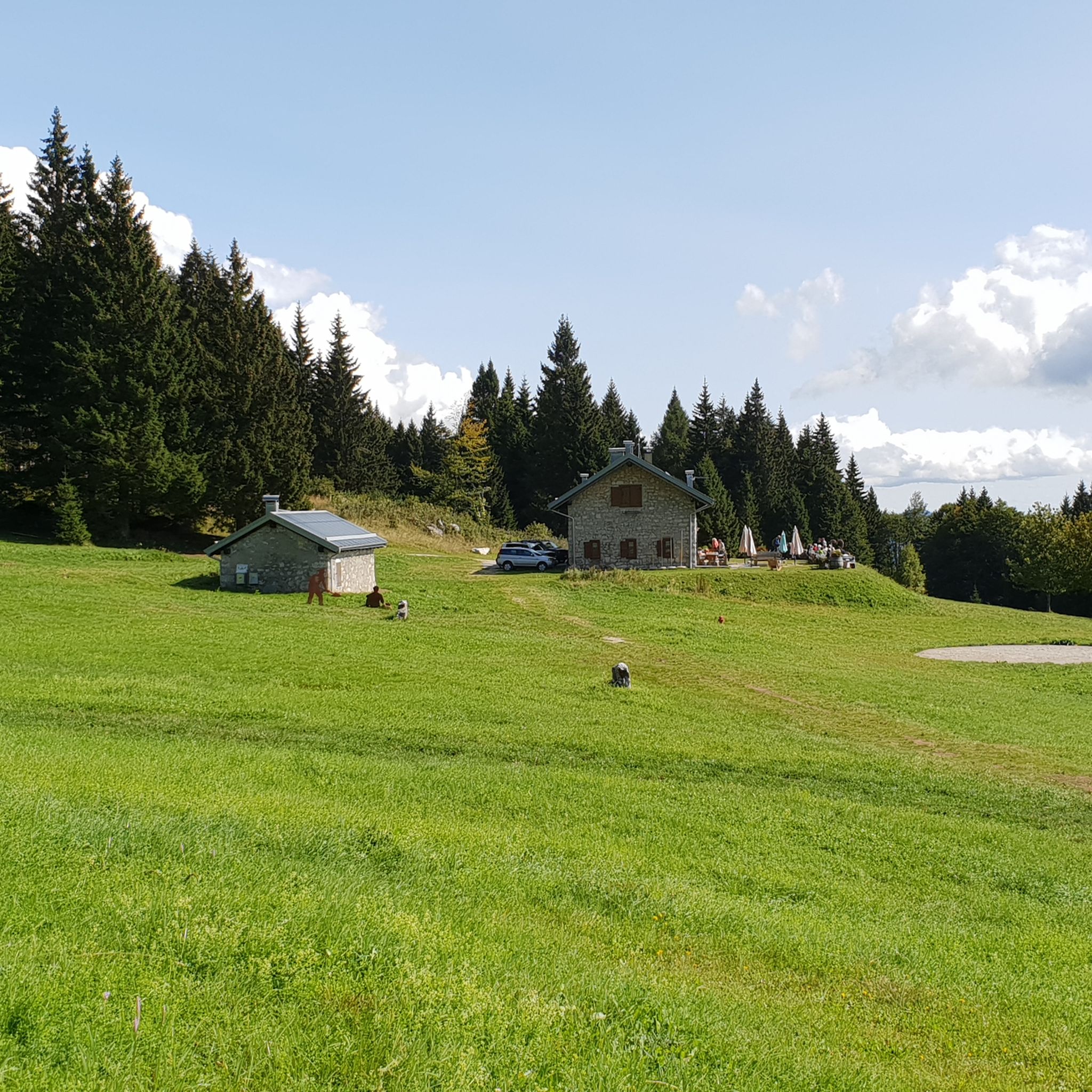
Just below the summit of Mount Verena is the Mount Verena fort, a defensive bastion on the plateau of the 7 municipalities.
0
0

Spectacular testimony to the presence of a massive defensive line, 30 km long, established by the Austro-Hungarian empire before 1914, which consists of seven fortifications.
1
0
Frequently Asked Questions
What types of historical sites can I find around Pedemonte?
The Pedemonte area offers a diverse range of historical sites. In the Vicenza/Verona area, you'll find medieval castles like Castello di Montorio Veronese and Castello di Illasi, alongside 20th-century military forts such as Fort Belvedere-Gschwent. The broader Piedmont region is rich in medieval abbeys, dramatic castles, and royal residences like Castello di Racconigi and Castello di Rivoli.
Are there any well-preserved medieval castles to visit in the region?
Yes, several well-preserved medieval castles are worth exploring. In the Piedmont region, Castello di Fénis stands out as one of Italy's best-preserved medieval castles, known for its unique pentagonal structure and interior frescoes. Near Verona, Castello di Montorio Veronese, though partly in ruins, retains significant medieval structures and a 12th-century keep.
Which castles offer a glimpse into royal history?
For royal history, head to the Piedmont region. The Castello di Racconigi, a UNESCO World Heritage site, was a summer residence for the royal House of Savoy and features opulent interiors and extensive English gardens. Castello di Rivoli also served as a Savoy residence, offering a blend of historical architecture and contemporary art.
What are some of the most popular forts from World War I near Pedemonte?
The area around Pedemonte is home to several significant World War I forts. Highly rated by the komoot community are Forte Dosso delle Somme, an Austrian fortification built between 1911 and 1914, and Forte Interrotto, a 19th-century barracks transformed into a fortress. Also notable is Forte di Tenna, a remnant of an Austria-Hungary structure from 1884.
Can I find castles with panoramic viewpoints?
Absolutely. Many castles and forts in the Pedemonte area are strategically located on hills, offering impressive views. Castello di Montorio Veronese provides a suggestive panoramic view of the plain below. Fort Belvedere-Gschwent, at 1,177 meters, offers breathtaking views of the surrounding landscape. Similarly, Castello di Illasi and Castello di Rivoli are known for their commanding positions and scenic vistas.
Are there hiking or cycling routes near these castles and forts?
Yes, the region around Pedemonte is excellent for outdoor activities. You can find numerous MTB trails, cycling routes, and road cycling routes that often pass by or lead to these historical sites. For example, the area around the WWI forts like Forte Verena offers trails through woods and pastures.
What do visitors particularly enjoy about the castles and forts in this region?
Visitors appreciate the rich history and the strategic importance of these sites. Many enjoy the blend of architectural styles, from medieval to 20th-century military engineering. The panoramic views from elevated forts like Forte Interrotto and Fort Belvedere-Gschwent are frequently highlighted. The komoot community has shared 149 photos and given 371 upvotes, indicating a strong appreciation for the historical and scenic value.
Are there any family-friendly castles or forts to visit?
Yes, some sites are suitable for families. Forte di Tenna is categorized as family-friendly. The ecomuseum at Castello di Montorio Veronese also aims to connect visitors with local history and culture, which can be engaging for families. Exploring the vast gardens of Castello di Racconigi can also be a pleasant family activity.
What is the best time of year to visit the castles and forts around Pedemonte?
The best time to visit is generally during the spring and autumn months when the weather is mild and pleasant for exploring both indoor and outdoor sites. Summer offers longer daylight hours, but can be warmer. Winter visits are possible, especially for forts that are museums like Fort Belvedere-Gschwent, but some outdoor areas or higher-altitude sites might be less accessible due to snow.
Are there any castles with unique architectural features?
Yes, several castles boast unique architectural elements. Castello di Fénis is renowned for its distinctive pentagonal structure and double walls. Castello di Rivoli presents a unique blend of architectural styles due to an unfinished project by Filippo Juvarra. Castello di Montorio Veronese showcases a mix of Roman, medieval, and 19th-century military influences.
Which castles are less crowded for a more tranquil visit?
While popular sites can draw crowds, some offer a more tranquil experience. Castello di Illasi, despite its historical significance, might offer a quieter visit compared to more prominent attractions. Similarly, Castello di Montalto Dora, situated on Monte Crovero, provides a private and fairy-tale-like setting away from the busiest tourist paths.
Can I visit any castles that have been repurposed or house museums?
Certainly. Castello di Rivoli has been home to the Rivoli Museum of Contemporary Art since 1984, offering a fascinating blend of history and modern art. Fort Belvedere-Gschwent operates as a museum, providing insights into World War I defensive strategies. Castello di Montorio Veronese has been transformed into a vibrant ecomuseum.
Most popular routes around Pedemonte
Most popular attractions around Pedemonte

Get inspired with the komoot mobile app


Explore more
Looking for the best castles somewhere else? Discover other guides around Pedemonte:
