The best MTB trails around Gonnos/Gonnosfanadiga
4.5
(101)
667
riders
47
rides
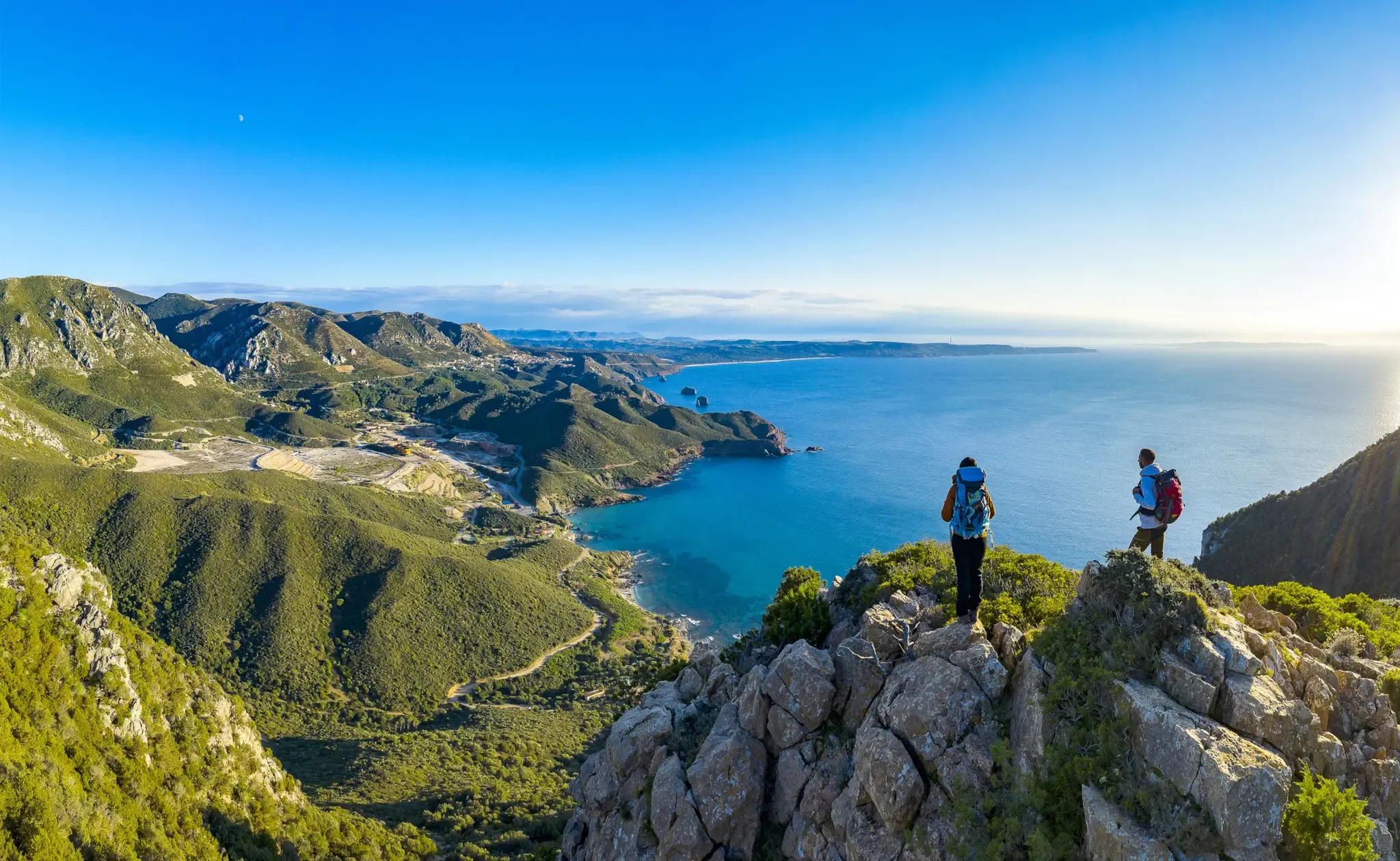
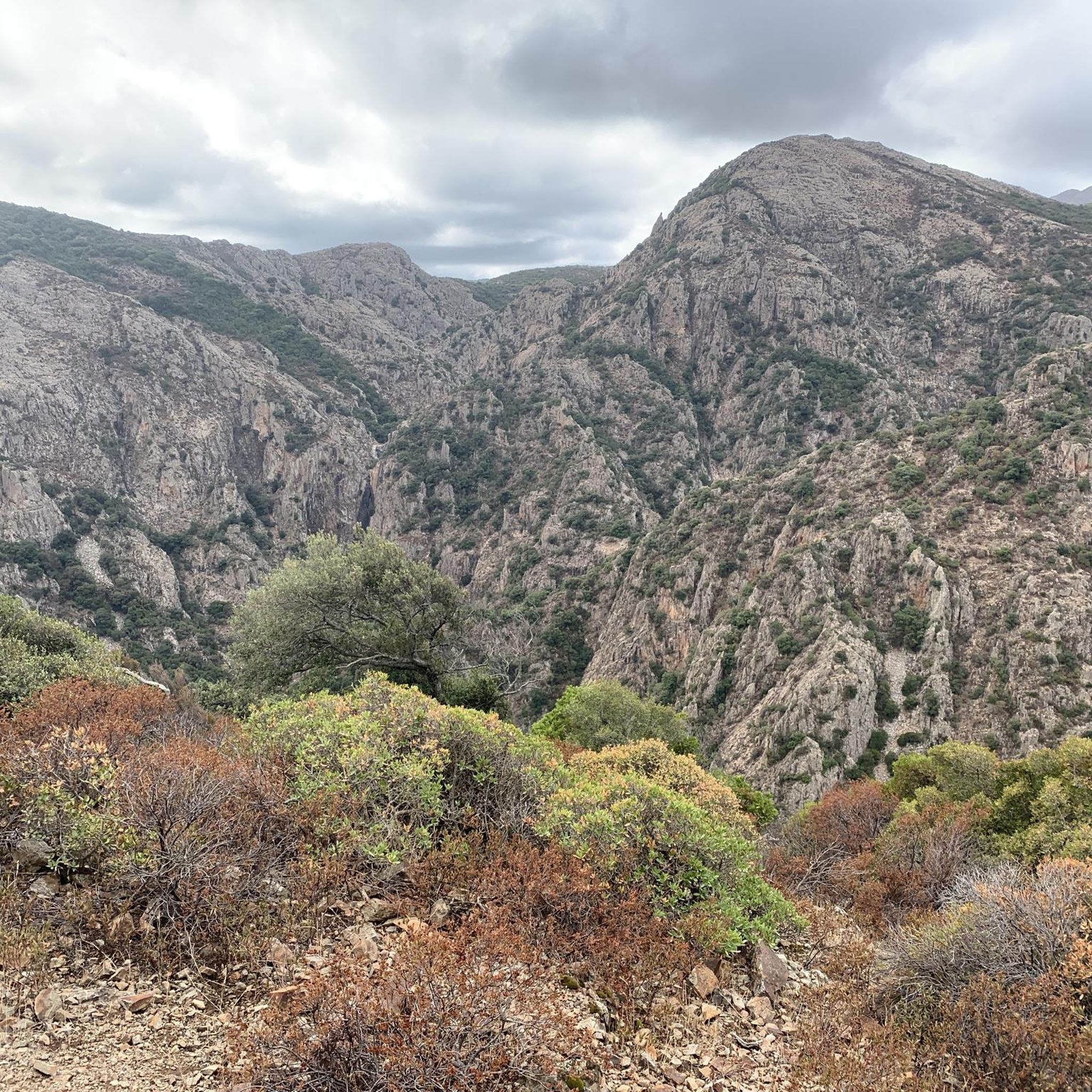
Mountain bike trails around Gonnos/Gonnosfanadiga are set within a diverse natural landscape at the foot of the granitic Mount Linas in Sardinia, Italy. The region features the Monte Linas Massif with wild peaks, deep gorges, and steep rock faces, alongside the limestone massif of Marganai and the Oridda plateau. Extensive networks of paths wind through green holm oak and cork oak forests, Mediterranean scrub, and past numerous torrents and waterfalls. This varied topography offers a wide array of terrains suitable…
Last updated: July 8, 2026
5.0
(3)
25
riders
27.7km
03:23
1,070m
1,080m
Hard mountain bike ride. Very good fitness required. Advanced riding skills necessary. Some portions of the route may require you to push your bike.
4.8
(10)
22
riders
55.1km
03:53
820m
820m
Moderate mountain bike ride. Good fitness required. Suitable for all skill levels.

Sign up for free
4.0
(2)
12
riders
19.4km
02:09
840m
840m
Moderate mountain bike ride. Good fitness required. Suitable for all skill levels.
5.0
(1)
10
riders
113km
10:03
2,390m
2,390m
Hard mountain bike ride. Very good fitness required. Advanced riding skills necessary.
8
riders
32.1km
02:16
510m
510m
Moderate mountain bike ride. Good fitness required. Suitable for all skill levels.
Get access to more routes and recommendations from other explorers.
Sign up for free
Already have an account?
Our route recommendations are based on thousands of hikes, rides, and runs completed by other people on komoot.
Start today with a free account
Your next adventure awaits.
Login or Signup
Popular around Gonnos/Gonnosfanadiga
Other adventures around Gonnos/Gonnosfanadiga

Tips from the Community

Excellent place to rest after the climb from Flumini Maggiore, before going downhill and partially on gravel among the cork trees
0
0

The Church of Santa Severa, dating back to the Byzantine period, is located on a hill a few meters from the town of Gonnosfanadiga.
0
0

Located at the top of the pass of the same name, at 685 meters above sea level, this small, well-maintained wooden shelter offers shelter from the sun and bad weather and can also be used as a bivouac or emergency shelter. Inside, there is a table and benches.
1
0
Perd'e Pibera Park is a vast forested area of over 400 hectares, rich in centuries-old holm oaks, strawberry trees, and yew trees, with reforested areas of conifers and broadleaf trees that encourage the return of native vegetation. It is an ideal place for hiking and outdoor recreation, thanks to marked trails and areas equipped with tables and benches. The park also contains the remains of the Perd'e Pibera mine, once used for molybdenite extraction. Today, the restored mining buildings house facilities for tourism and environmental education. From the park, you can reach the Linas massif and the Murru Mannu waterfall, the highest on the island.
0
0
At the foot of the Monte Linas massif, the town of Gonnosfanadiga lies at the transition between the Medio Campidano plain and the first hills of southwestern Sardinia. The area preserves numerous archaeological remains, including nuraghi and Giants' Tombs, such as that of San Cosimo, among the largest on the island. The town, with a population of approximately 6,000, is closely linked to agriculture and craftsmanship: local knives, honey, wine, and oil are famous. Strolling through the town center, you'll notice the centuries-old wells that once served wayfarers and still serve as meeting points for the community. The town has shops, bars, and restaurants, and throughout the year, festivals dedicated to bread, olives, and oil are held.
1
0
The Montevecchio Mine is one of the most representative sites of Sardinian industrial archaeology and is part of the UNESCO-recognized Geo-mining Historical and Environmental Park of Sardinia. Mining operations, which began in 1848 and ended in 1991, made Montevecchio one of Europe's most important mining centers for lead and zinc production. The complex preserves washeries, shafts, workshops, warehouses, miners' quarters, and the management building with the adjoining church of Santa Barbara. Today, several guided tours are available that illustrate daily life in the mines and the technological evolution of the mining industry. Tours can be booked online at http://www.minieramontevecchio.it/ or at the Geo-mining Park information points.
0
0
Montevecchio, also known as Gennas Serapis, is an ancient mining village now a hamlet of Guspini, nestled in the Geo-Mining Historical and Environmental Park of Sardinia. Founded in the 19th century as the administrative center of the lead and zinc mines, it was established here. The village is home to the Montevecchio Mine information point and the Gennas Food and Wine Confraternity, a trattoria offering excellent food in a friendly, family-friendly atmosphere. They are usually open on weekends, but we recommend contacting them to check opening times, make reservations, and arrange for service. The owner is very helpful and is happy to welcome hungry travelers.
2
0
Portixeddu beach, divided in half by the mouth of the Mannu River, extends for over two kilometers between the rugged cliffs of Sulcis and the Costa Verde, in the Buggerru area. This long stretch of fine, pale sand is surrounded by a pine forest that offers shelter on hot days. The crystal-clear water and transparent seabed invite long, refreshing swims; however, caution is advised, as the currents can be strong. In summer, there are a few kiosks and refreshment stands. From November to May, however, the area once again takes on a secluded and quiet atmosphere, with no services or refreshments available.
1
0
Frequently Asked Questions
How many mountain bike trails are there in Gonnos/Gonnosfanadiga?
There are over 15 mountain bike trails available around Gonnos/Gonnosfanadiga, offering a variety of experiences for different skill levels. The region is particularly known for its challenging routes.
What kind of terrain can I expect on mountain bike trails in Gonnos/Gonnosfanadiga?
The terrain is highly varied, ranging from the granitic peaks and deep gorges of the Monte Linas Massif to the limestone massif of Marganai and the Oridda plateau. You'll encounter extensive networks of paths winding through green holm oak and cork oak forests, Mediterranean scrub, and past numerous torrents and waterfalls. Expect significant climbs and descents, especially on the more difficult routes.
Are there any easy mountain bike trails in Gonnos/Gonnosfanadiga for beginners?
While the region is known for its more challenging routes, there are a few moderate trails suitable for those with some experience. Currently, there are no trails specifically classified as easy. For example, the Gonnosfanadiga – Canale Serci Mine loop is a moderate option that explores varied terrain.
What are the typical distances and elevations for mountain bike routes here?
Routes vary significantly in length and elevation gain. You can find shorter, challenging loops like the Church of Santa Severa – Genna Farraceus Shelter loop, which is about 28 km with over 1000 meters of elevation gain. Longer, more demanding routes, such as the Bidderdi Pass (492 m) – Piscinas Dunes loop, can extend over 112 km with more than 2300 meters of climbing.
Are there any circular mountain bike routes in Gonnos/Gonnosfanadiga?
Yes, many of the mountain bike trails in the area are designed as loops, allowing you to start and finish at the same point. Examples include the View of the Piscinas Dunes – Red River Crossing loop and the Red River Crossing – Piscinas Dunes loop, both offering diverse landscapes.
What natural attractions or landmarks can I see along the mountain bike trails?
The region is rich in natural beauty and historical sites. You can explore deep gorges like the Oridda Gorge and the Valley of "Is animas". The area also features impressive waterfalls, such as the Murru Mannu waterfall (the highest on the island), and natural pools carved by rivers like the Rio Tzairi. Historical sites include abandoned mines, like the Canale Serci Mine, and ancient megalithic structures such as the Tomb of Giants of San Cosimo.
What do other mountain bikers enjoy most about mountain biking in Gonnos/Gonnosfanadiga?
The area is highly rated by the komoot community, with an average score of 4.5 stars from over 60 reviews. Reviewers often praise the stunning panoramic views, the challenging singletrack sections, and the captivating variety of natural landscapes, from dense oak forests to high plateaus and coastal dunes.
Are there any caves or geological formations to explore near the trails?
Yes, the region is home to fascinating geological formations. The Su Mannau Cave is a notable highlight, offering an opportunity to explore underground wonders. The Monte Linas Massif itself is an ancient geological formation with wild peaks and steep rock faces, characterized by pink and grey granite.
What is the best season for mountain biking in Gonnos/Gonnosfanadiga?
The Mediterranean climate of Sardinia generally makes spring and autumn ideal for mountain biking, offering pleasant temperatures and lush landscapes. Summers can be hot, especially in July and August, so early mornings or late afternoons are recommended if riding during these months. Winters are mild but can bring rain.
Are there any historical sites or ancient ruins accessible by mountain bike?
Absolutely. The region has a rich history. You can find routes that pass near historical mine sites, such as those explored on the Gonnosfanadiga – Canale Serci Mine loop. Additionally, the area features Nuragic settlements and the ancient megalithic structure known as the Tomb of Giants of San Cosimo, one of the largest in Sardinia.
Are there any routes that offer views of the coast or dunes?
Yes, some routes extend towards the coast, offering unique landscapes. The View of the Piscinas Dunes – Red River Crossing loop is an excellent example, leading through diverse landscapes including coastal dunes and river crossings, providing stunning scenic viewpoints.
Most popular routes around Gonnos/Gonnosfanadiga
Most popular attractions around Gonnos/Gonnosfanadiga

Get inspired with the komoot mobile app


Explore more
Browse the best MTB trails in other regions.
