Attractions and Places To See around Morciano Di Romagna - Top 20
Best attractions and places to see around Morciano Di Romagna include a blend of historical sites, cultural landmarks, and natural landscapes. This charming town in Emilia-Romagna is situated at the foot of the Montefeltro hills and is influenced by the Conca River valley. The area offers diverse opportunities for exploration, from ancient villages to scenic viewpoints.
Best attractions and places to see around Morciano Di Romagna
- The most popular attractions is View of the Bay of Rimini from Gabicce Monte, a viewpoint offering expansive coastal views. This location is known for its scenic routes and has been a passage point for cycling events.
- Another must-see spot is San Clemente Historic Center, a historical site with well-preserved Malatesta-era walls and bastions. Visitors can explore the village's medieval character and the complex known as Castelleale.
- Visitors also love Saludecio, a settlement known for its medieval structure and monumental access gates. This Malatesta stronghold features a maze of alleys and is recognized for its numerous murals.
- Morciano Di Romagna is known for its historical sites, charming villages, and natural features like the Conca River valley. The region offers a variety of attractions to see and explore, from castles to scenic viewpoints.
- The attractions around Morciano Di Romagna are appreciated by the komoot community, with over 800 upvotes and more than 200 photos shared by visitors.
Last updated: June 24, 2026
View of the Bay of Rimini from Gabicce Monte
Highlight • Viewpoint
Translated by Google •
Tip by

Translated by Google •
Tip by

Sign up now to discover places like this
Get recommendations on the best single tracks, peaks, & plenty of other exciting outdoor places.
Sign up for free
Gradara
Highlight • Castle
The imposing structure is protected by two city walls, the extreme being almost 800 meters long. Particularly striking is the view of the rock and the underlying historic village at night.
The castle is state owned and is one of the most visited attractions in the region. The castle is the scene of a museum and various musical and artistic events.
Translated by Google •
Tip by

Tavoleto Castle
Highlight • Castle
It was subsequently sold to a private individual who transformed it into a restaurant in the more recent 1960s and renovated it according to the standards of those years. The current owners instead purchased it with the intention of bringing it back to its origins. Today it is home to receptions and ceremonies.
Translated by Google •
Tip by

San Clemente Historic Center
Highlight • Historical Site
Translated by Google •
Tip by
Sign up for free to discover even more attractions around Morciano Di Romagna.
Sign up for free
Already have an account?
Start today with a free account
Your next adventure awaits.
Login or Signup

Tips from the Community

The castle preserves original furnishings, 15th-century frescoes, and a chapel with terracotta altarpieces. The structure is famous for its connection to the story of Paolo and Francesca, the two lovers mentioned by Dante in the Divine Comedy. The village is known for its double ring of walls and drawbridge, examples of medieval military architecture. The interior houses the courtyard of honor, the torture chambers, and the room attributed to the betrayal of the two young people.
1
0

Entering the medieval village of Gradara has its own charm...
1
0

Dating back to the Malatesta era and still well preserved today, the village of San Clemente is one of the best destinations in the Romagna hinterland. The walls and bastions are clearly visible, enclosing the center of the village as they once did. Not far away is also Castelleale, commissioned in 1388 by Leale Malatesta, bishop of Rimini.
0
0

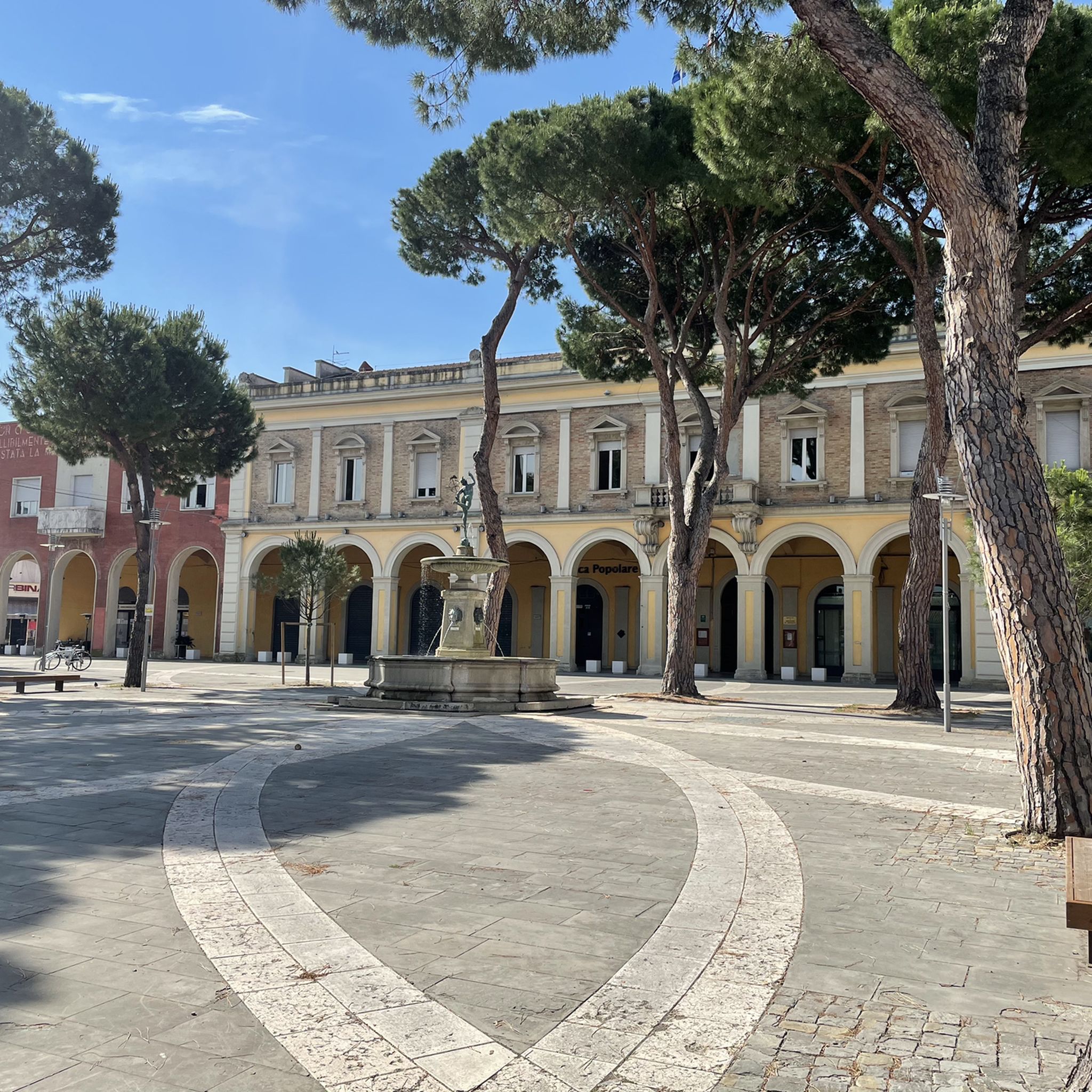
The Rain Forest, a suggestive fountain that dominates Piazzale Roma, a tribute to the rain and the coolness that it brings with it, but also a reference to fishing and the sea, with six large columns of stratified natural glass holding up seven fishing nets from which it drips the rain, producing a musical clicking sound.
0
0

Nice view, good place to stop for a break!
3
0

From here it goes up to the Panoramica
3
0

The village of San Clemente dates back to the Malatesta era and its origins are still clearly visible today. The walls enclose, as in the past, the heart of the historic center and the complex known as Castelleale. It is one of the rare examples remaining in the Rimini area of a building that is both a large farm and a fortified villa, built in 1388 by Leale Malatesta, bishop of Rimini.
0
0
The construction of the castle took place by the family of Sigismondo Malatesta in the early 1300s and was disputed between the Malatesta and Montefeltro families in the battles for the acquisition of the territory. It was thus lost and reconquered five times, until Federico da Montefeltro finally conquered Tavoleto in 1458. Federico ordered the demolition of the castle and then rebuilt it under the work of the architect Francesco di Giorgio Martini who finished it before 1474. In 1631 it became the direct domain of the Papacy, but in 1885 it was donated to the Lawyer Petrangolini at the same time as the assignment of the title of count and the subjugation of the surrounding territories. It was subsequently sold to a private individual who transformed it into a restaurant in the more recent 1960s and renovated it according to the standards of those years. The current owners instead purchased it with the intention of bringing it back to its origins. Today it is home to receptions and ceremonies.
0
0
Frequently Asked Questions
What unique cultural attractions can I find in Morciano di Romagna?
Morciano di Romagna is rich in cultural heritage. You can admire the original “Colpo d'Ala” Sculpture by renowned artist Arnaldo Pomodoro in Piazza Boccioni, a tribute to Futurist painter Umberto Boccioni. The town is also home to the historic San Clemente Historic Center, known for its well-preserved Malatesta-era walls, and Saludecio, famous for its medieval structure and numerous murals.
What natural features and outdoor spaces are there to explore around Morciano di Romagna?
The region offers beautiful natural landscapes. The Conca River Valley provides scenic views and gentle paths, while the expansive Conca River's Wildlife Oasis is a haven for biodiversity. You can also enjoy the picturesque Montefeltro Hills, which offer opportunities for elevated hiking. The Parco Urbano del Conca features a cycling path that connects to the “Ciclabile del Concà”.
Are there any historical sites or ancient structures worth visiting in the area?
Absolutely. Beyond the town center, you can explore the well-preserved San Clemente Historic Center with its Malatesta-era walls and bastions. Another significant historical site is Tavoleto Castle, which has a rich history of disputes between the Malatesta and Montefeltro families. The ancient Abbey of San Gregorio, founded in 1061, also holds historical interest.
What kind of cycling opportunities are available near Morciano di Romagna?
Morciano di Romagna is a great base for cyclists. You'll find a variety of routes, including road cycling, gravel biking, and mountain biking. For example, you can embark on a moderate road cycling route like the “Casteldimezzo Historic Village – Via Panoramica Bike Shop loop” or explore challenging MTB trails such as the “Montefiore Conca – View of Montefiore Conca loop”. More details on routes can be found in the dedicated guides for Road Cycling, Gravel Biking, and MTB Trails around Morciano di Romagna.
Are there family-friendly attractions or activities suitable for children?
Many attractions around Morciano di Romagna are suitable for families. The San Clemente Historic Center and Saludecio offer engaging historical exploration. Natural areas like the Conca River Valley and Parco Urbano del Conca provide gentle paths for walks and cycling, which can be enjoyable for all ages. The View of the Bay of Rimini from Gabicce Monte is also a popular spot for families to enjoy scenic coastal views.
What are some of the most scenic viewpoints in the Morciano di Romagna area?
For breathtaking vistas, head to the View of the Bay of Rimini from Gabicce Monte. This viewpoint offers expansive coastal views and is a popular spot for its scenic routes. The Montefeltro Hills also provide numerous picturesque backdrops and elevated perspectives of the surrounding landscape.
What is the San Gregorio Fair and when does it take place?
The San Gregorio Fair is a significant annual event in Morciano di Romagna, celebrating the arrival of spring. It's one of Romagna's most important trading events, featuring cattle markets, horse fairs, agricultural machinery exhibitions, and numerous stalls selling various goods, along with food and entertainment. It is held annually in March.
Can I find any unique architectural or historical buildings within Morciano di Romagna itself?
Yes, the town center has several notable buildings. The Palazzo Comunale (Town Hall) in Piazza del Popolo, originally a silkworm market pavilion, shows traces of its long history. The Chiesa di San Michele Arcangelo is an important religious site, and the Teatro Ronci is considered one of the most beautiful theaters in the Rimini area. You can also see the Fontana del Mercurio and the Stivanon Well Glass Slab in Piazza del Popolo.
Are there any specific hiking trails or walking paths recommended for visitors?
The region offers over 15 hiking trails exploring diverse landscapes. You can find paths along the Conca River valley, some featuring an artificial waterfall, or venture into the Montefeltro hills for more elevated experiences. While specific trails are not detailed here, the area provides options for various difficulty levels, from gentle riverine paths to more challenging routes in the hills.
What do visitors enjoy most about the attractions around Morciano di Romagna?
Visitors frequently praise the diverse offerings, from the historical charm of villages like San Clemente Historic Center and Saludecio to the stunning coastal views from Gabicce Monte. The well-preserved medieval character of the villages and the scenic routes for cycling and hiking are particularly appreciated. The komoot community has shared over 200 photos and given more than 800 upvotes to these attractions, highlighting their appeal.
Are there any historical mills or industrial heritage sites in the area?
Yes, the area around Morciano di Romagna, historically influenced by the Conca River, is home to several mills of great historical interest. These include the Casarola Mill, the Malatesta Mill, and the Valle Mill, offering a glimpse into the region's past industrial heritage.
Most popular routes around Morciano Di Romagna
Most popular attractions around Morciano Di Romagna

Get inspired with the komoot mobile app


Explore more
Still not found the Highlight you’re looking for? See guides of the top attractions in other regions:
