Attractions and Places To See around Medicina - Top 20
Best attractions and places to see around Medicina, a town in the Metropolitan City of Bologna, Italy, offers a blend of historical landmarks, cultural insights, and natural attractions. The area features unique landscapes, from river trails to nature reserves, alongside significant cultural and scientific sites. Its name, derived from "medicina," hints at a history of healing and a rich past.
Best attractions and places to see around Medicina
- The most popular attractions is Sillaro Stream Singletrack, a trail that…
Last updated: July 6, 2026
Sillaro Stream Singletrack
Highlight (Segment) • Trail
Translated by Google •
Tip by

Fegatella Spring
Highlight • Natural Monument
Translated by Google •
Tip by

Sign up now to discover places like this
Get recommendations on the best single tracks, peaks, & plenty of other exciting outdoor places.
Sign up for free
Cassero and Clock Tower of Castel San Pietro Terme
Highlight • Historical Site
Translated by Google •
Tip by
Piazza XX Settembre
Highlight • Settlement
In the centre, following the earthquake of June 1779, the column …
Translated by Google •
Tip by
Tempio della Celletta
Highlight • Religious Site
In front of the building there are two benches which invite to a short rest.
Translated by Google •
Tip by

Sign up for free to discover even more attractions around Medicina.
Sign up for free
Already have an account?
Start today with a free account
Your next adventure awaits.
Login or Signup

Other adventures around Medicina

Tips from the Community

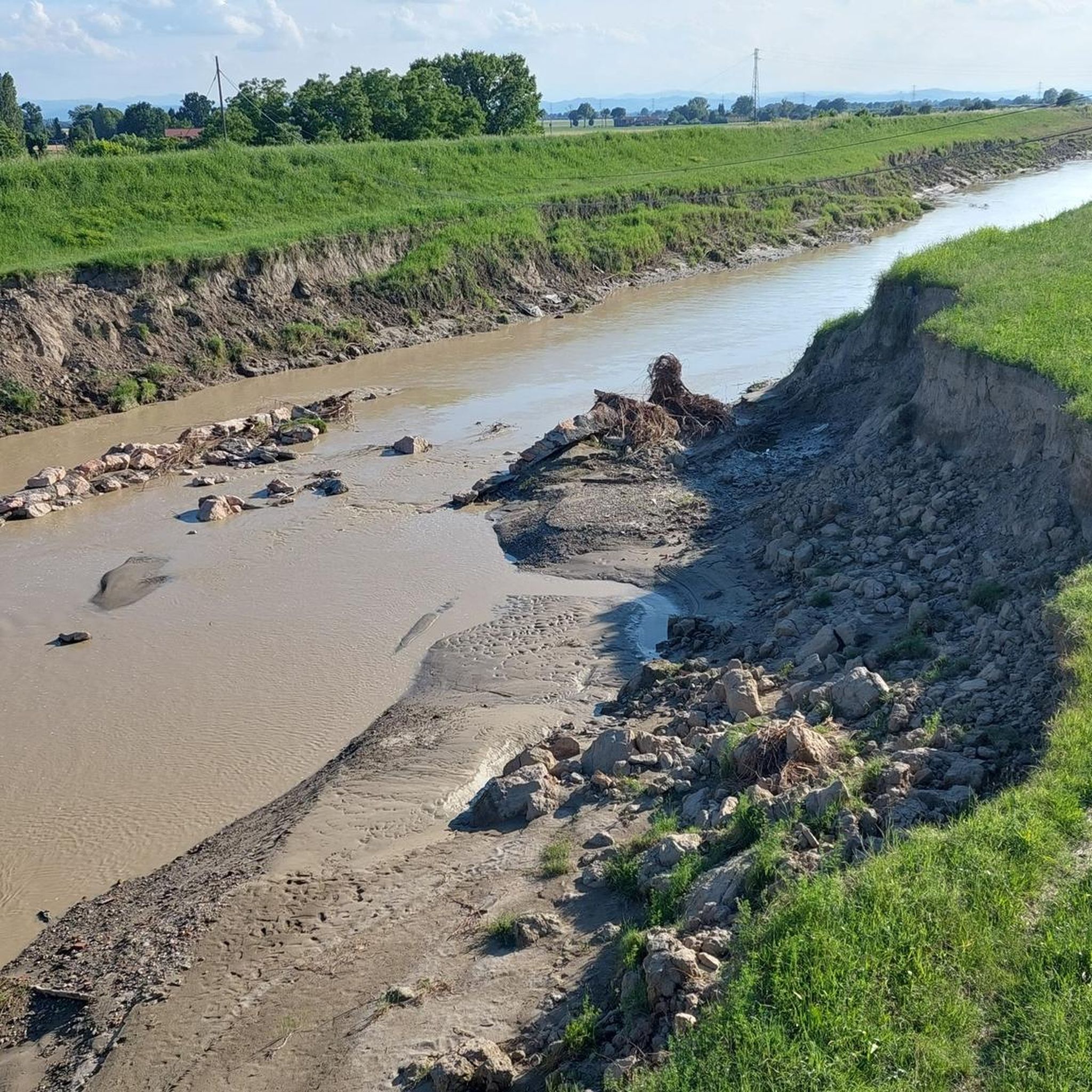
Update June 25. The route is no longer practicable, the trees on the ground, the uneven ground from the bulldozers have made the route practically impossible. I don't know if it is feasible from Castel San Pietro, but not from Castel Guelfo
2
0

Done yesterday, the route from Castel Guelfo to Castel San Pietro is about 8km all up and down with curves, super beautiful and fun!! The passage over the stream is doable as long as you have neoprene shoes to walk with dry feet and then continue. Halfway after passing under the highway bridge, towards Castel San Pietro there is a tree that blocks the path, but you can get around it on foot by passing a bit in the woods. Overall the route is clean and doable even with a bit of mud after a rain
2
0

Pills of history on the Temple of the Celletta can be found on https://www.vallidiargenta.org/lecomuseo/laculturanonsiferma/pillole/tempio-della-celletta/
0
0
Temple of the Celletta or Sanctuary of the Blessed Virgin of the Celletta The Sanctuary of the Celletta, with its unmistakable elliptical shape, was built in the early seventeenth century on the site of a Renaissance cell to accommodate the growing number of faithful who visited the place following an apparition of the Madonna. ... Every year on 7 October the Celletta Festival takes place which evokes the transport of the venerated image to the temple as thanks of the population who escaped the 1624 earthquake. (Source: https://www.ferraraterraeacqua.it/it/argenta/scopri-il-territorio/arte-e-cultura/abbazie-monasteri-santuari/santuario-della-beata-vergine-della-celletta)
0
0

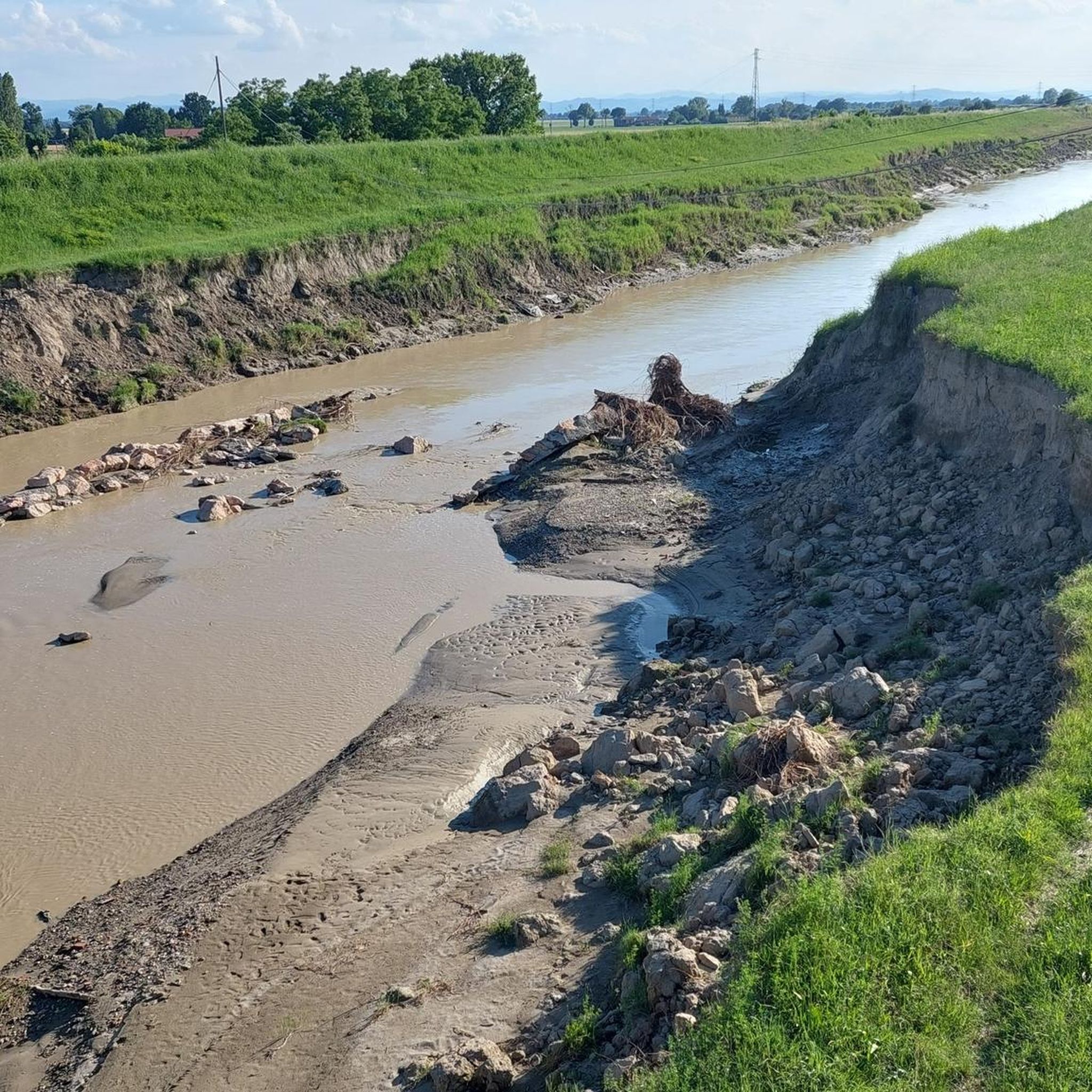
UPDATE JULY 2023 - With the May flood, the route was heavily damaged by the river and is currently partially impassable. On the Castel Guelfo side there are many fallen trees in the middle of the route and in certain points the bottom has become sandy. Furthermore, at the height of the ford, a part of the embankment (which included the route) collapsed completely. It will certainly take time to fix it, at the moment I advise against practicing it. [I'll try to delete this comment when it's fixed].
2
0
The Fonte Fegatella is one of the symbols most loved by the castellans. As the name itself suggests, the source, thanks to its salt-chromium-ionic water (high in bromine and iodine) has healing powers linked to liver health. These powers were discovered way back in 1337, when it is said of a herd of sheep seriously ill with liver disease who, by drinking the water of the Fegatella, returned to health. These properties of the Fegatella water were also studied and listed thanks to tests carried out by university professors present in the city during the seven months of the transfer of the Bolognese university headquarters to Castel San Pietro following the papal interdict on Bologna. ... The main temple monument dates back to the early 1950s, erected by the then independent healthcare company. Subject to interventions and renovations several times, in recent times the source has acquired a second tap towards the Lungo Sillaro park, on the other side of the road. (Source: https://prolococastelsanpietroterme.it/it/monumento/fonte-fegatella-fegatella-source/ )
0
0
Piazza XX Settembre, so named to commemorate the breach of Porta Pia, is the beating heart of the city. In the centre, following the earthquake of June 1779, the column was erected based on a design by Gian Giacomo Dotti, at the top of which was placed the image of the Madonna del Rosario, patron saint of the city. The current appearance of the square is the one created in 2002 with the renovation works and the new paving. The main buildings of the city overlook the square. The Town Hall, the Sanctuary of the Holy Crucifix and the Palace of the former magistrates' court. The Town Hall, built between 1845 and 1859, is decorated in the center with a low ashlar and crowned at the top by a tympanum with the city's coat of arms, a rampant lion holding a flag with the writing "Libertas". On the facade, the building houses plaques in memory of those killed in the war. The Sanctuary of the Santissimo Crocifisso was built in 1741 by the Company of the Santissimo Sacramento to house the image of the S.S. Crucifix, donated to the city and venerated ever since. On the left of the church stands the bell tower, which houses the carillon of 55 bells, a work that has no equal in all of Europe, and which is periodically used to spread its harmonious and unique notes throughout the city. The palace of the former magistrates' court originates together with the first nucleus of the fortified castle of Castel San Pietro Terme, ordered by Bologna in defense of its peace and autonomy. (Source: https://www.cittametropolitana.bo.it/portale/Il_territorio/piazze_di_BolognaMetropolitana/Piazze_di_Castel_San_Pietro_Terme/Piazza_XX_Settembre_Castel_San_Pietro)
0
0
The Tower and the Cassero della Porta are the symbolic monument of the city, which officially sanctions its birth in 1199 as a bulwark for the defense of the territory of Bologna ... The tower was originally lower ... probably at the end of 1200 it was raised to perform the function of lookout and signaling. The Cassero, seat of the surveillance of the door and the mechanisms of the drawbridge, was perhaps first made of wood and then transformed over and over again according to the military needs of the militias who, century after century, conquered it and used it as a main defense outpost against the enemies. In the early sixteenth century, when Bologna and Imola pass under the Papal State, the Cassero definitively loses its military connotation. Around 1748, work was carried out to remake the roof (perhaps by transforming the roof terrace into one with two pitches), a very large and high room is obtained. It was decided to use it as a place for "public entertainment". It is the beginning of its use as a theater, which will be modified and expanded in 1830, structuring it with stages like the theaters of the time. In 1780 ... the current passage under the tower was opened. During the First World War the Cassero was used as a military accommodation. In 1916 it was struck by lightning and again renovated and used as a room for film projections, meetings, conferences. In 1964 the ancient passage, with a Gothic arch, overlooking the ancient drawbridge was reopened. Since 2008, a new renovation has brought it back to its ancient use as a theater. In 1842 the tower was equipped with a new and larger belfry and in 1784 with a clock, which after a few years, in 1797, would have to be changed to switch from "Italian time" to "French time". (Source: https://prolococastelsanpietroterme.it/it/monumento/cassero/)
0
0
Frequently Asked Questions
What historical landmarks can I explore in Medicina?
Medicina offers a rich history with several notable landmarks. You can visit the Palazzo Comunale, originally a Carmelite convent, and the adjacent Clock Tower with its unique 17th-century majolica dial. The town is also home to several significant churches, including the Church of Carmine, San Mamante Church, and Assunta Church. Don't miss the Prandi Palace, a fine example of local architecture, and the Museo Civico di Medicina, which houses art and a luthier workshop. Nearby, you can also explore the Cassero and Clock Tower of Castel San Pietro Terme, a historical site symbolizing the city's defense, and Piazza XX Settembre, the heart of Castel San Pietro Terme with its significant buildings and the Sanctuary of the Santissimo Crocifisso.
Are there any unique natural attractions or features near Medicina?
Yes, Medicina is surrounded by interesting natural features. The Fegatella Spring is a natural monument known for its salt-chromium-ionic water, historically believed to have healing properties. For nature enthusiasts, the Oasi del Quadrone is a significant nature reserve spanning 270 hectares, protecting local flora and fauna across marshes, humid woodlands, and fields. Additionally, the Parco dei Gessi Bolognesi and Calanchi dell'Abbadessa offers unique landscapes formed by chalk outcrops and badlands, with hiking trails and caves to explore.
What scientific attractions can I visit in the Medicina area?
Medicina is a hub for radio astronomy. You can visit the Radiotelescopio Croce del Nord (Northern Cross Radiotelescope), considered one of the largest in the world, capable of detecting even the weakest radio waves. Adjacent to it is the "Marcello Ceccarelli" Radio Telescopes Visitor Center, which provides fascinating insights into radio astronomy, the instruments used to explore the universe, and current national projects. It's an educational experience for all ages.
What kind of outdoor activities can I do around Medicina?
The area around Medicina offers a variety of outdoor activities, especially cycling and mountain biking. You can find numerous routes for different skill levels. For mountain biking, explore trails like the "Pieve di Sant'Andrea – Fegatella Spring loop" or the "Fegatella Spring – Sillaro Riverbed loop." If you prefer touring or road cycling, options include the "Dozza Murals – Sforza Fortress of Dozza loop" or the "Val di Zena – Beaver Lake loop." You can find more details and routes in the MTB Trails around Medicina, Cycling around Medicina, and Road Cycling Routes around Medicina guides.
Are there family-friendly attractions or activities in Medicina?
Yes, Medicina offers several family-friendly options. The Fegatella Spring is a pleasant spot for families, with facilities available. The "Marcello Ceccarelli" Radio Telescopes Visitor Center is designed to be engaging for both individual visitors and educational groups, making it a great learning experience for children. Additionally, the Oasi del Quadrone nature reserve provides an itinerary suitable for families to explore local flora and fauna, especially enjoyable in spring and autumn. The Cassero and Clock Tower of Castel San Pietro Terme and Piazza XX Settembre are also listed as family-friendly historical sites.
What is the best time of year to visit Medicina for outdoor activities?
The Oasi del Quadrone nature reserve is particularly recommended in spring and autumn for exploring its diverse environments. For hiking in the Parco dei Gessi Bolognesi and Calanchi dell'Abbadessa, spring and autumn also offer pleasant temperatures and beautiful scenery. While specific tips for other outdoor activities are not provided, generally, these seasons avoid the intense heat of summer and the colder, potentially wetter conditions of winter, making them ideal for exploring the region's natural beauty.
Are there any easy walking paths or trails suitable for all skill levels near Medicina?
Yes, the Parco dei Gessi Bolognesi and Calanchi dell'Abbadessa offers various itineraries for walking or mountain biking that are generally suitable for all skill levels. These paths allow you to admire unique landscapes formed by chalk outcrops and badlands. While specific easy routes are not detailed, the park's diverse offerings mean you can find a path that suits your comfort level. For a more adventurous walk, the Sillaro Stream Singletrack offers a fun and wild experience, though it includes some jumps and a stream ford.
What do visitors enjoy most about the attractions around Medicina?
Visitors particularly enjoy the blend of natural beauty and historical significance. The Sillaro Stream Singletrack is praised for its fun and wild sections, including stream fords and jumps. The Fegatella Spring is cherished as a symbol of the area, with its unique water properties. Historical sites like the Cassero and Clock Tower of Castel San Pietro Terme are appreciated for their rich history and evolution from military outposts to cultural venues. The overall area is valued for its variety, from ancient buildings to modern scientific instruments and protected natural environments.
Can I access attractions around Medicina using public transport?
While specific public transport details for each attraction are not provided, Medicina itself is a town in the Metropolitan City of Bologna, suggesting some level of regional connectivity. For attractions like the Radiotelescopio Croce del Nord and its visitor center, it's advisable to check local bus schedules or consider driving, as they are often located outside the immediate town center. For the Parco dei Gessi Bolognesi and Calanchi dell'Abbadessa, access points might require a car or a combination of public transport and a short walk.
Are there any hidden gems or less-known spots worth visiting near Medicina?
Beyond the main attractions, the Oasi del Quadrone nature reserve could be considered a hidden gem for those seeking tranquility and wildlife observation away from more crowded spots. Its extensive protected area offers a peaceful retreat. The Tempio della Celletta, a sanctuary with an unmistakable elliptical shape built after a vision of the Virgin Mary, offers a unique historical and spiritual experience that might be less known to general tourists.
Are there any attractions around Medicina that are wheelchair accessible?
Yes, Piazza XX Settembre in Castel San Pietro Terme is listed as wheelchair accessible. This central square, with its significant buildings like the Town Hall and the Sanctuary of the Santissimo Crocifisso, offers an accessible way to experience the town's historical heart. For other attractions, it is recommended to check specific accessibility information beforehand, as historical buildings and natural trails may have varying levels of accessibility.
Most popular routes around Medicina
Most popular attractions around Medicina

Get inspired with the komoot mobile app


Explore more
Still not found the Highlight you’re looking for? See guides of the top attractions in other regions:
