The best road cycling routes around Deruta
4.3
(236)
5,980
riders
43
rides
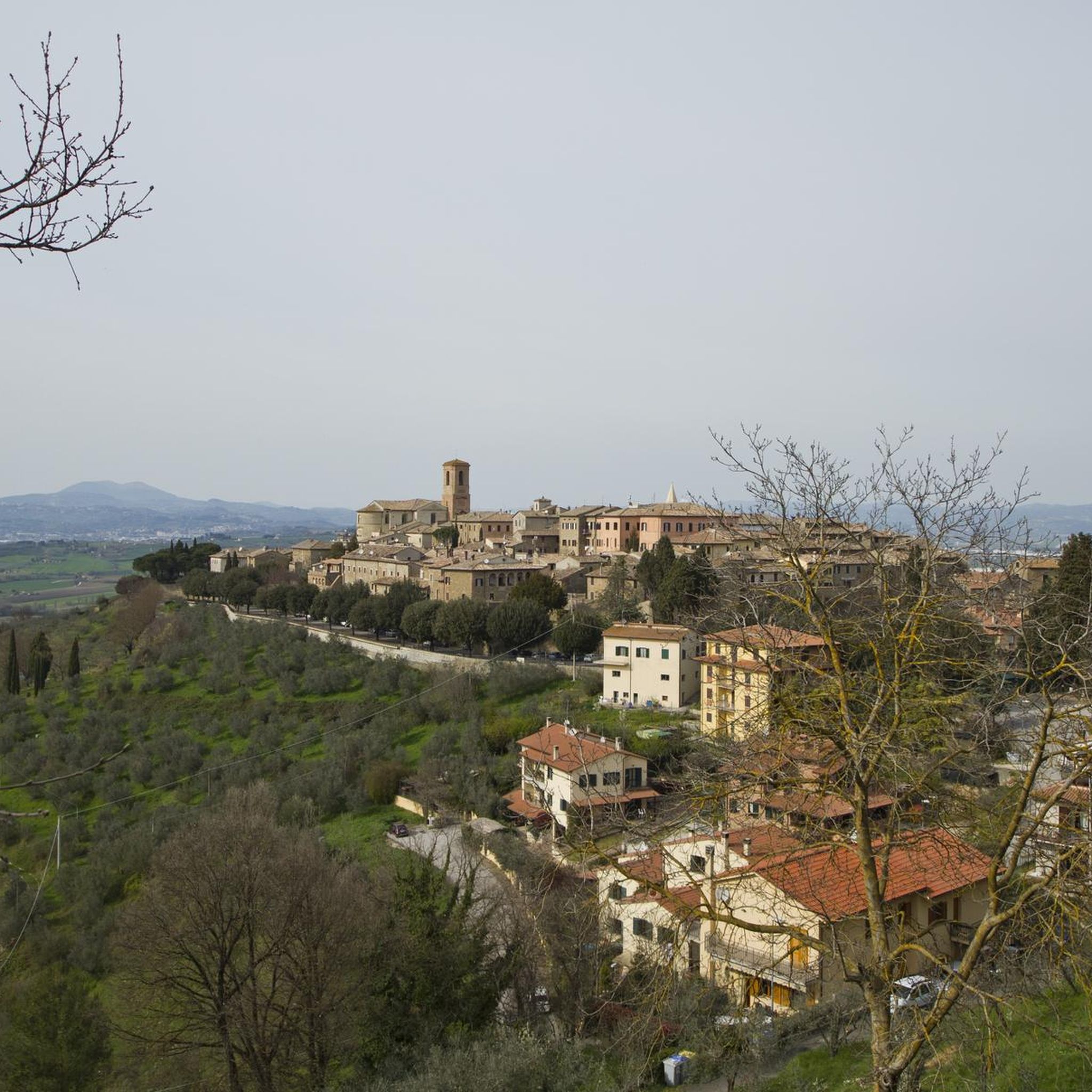
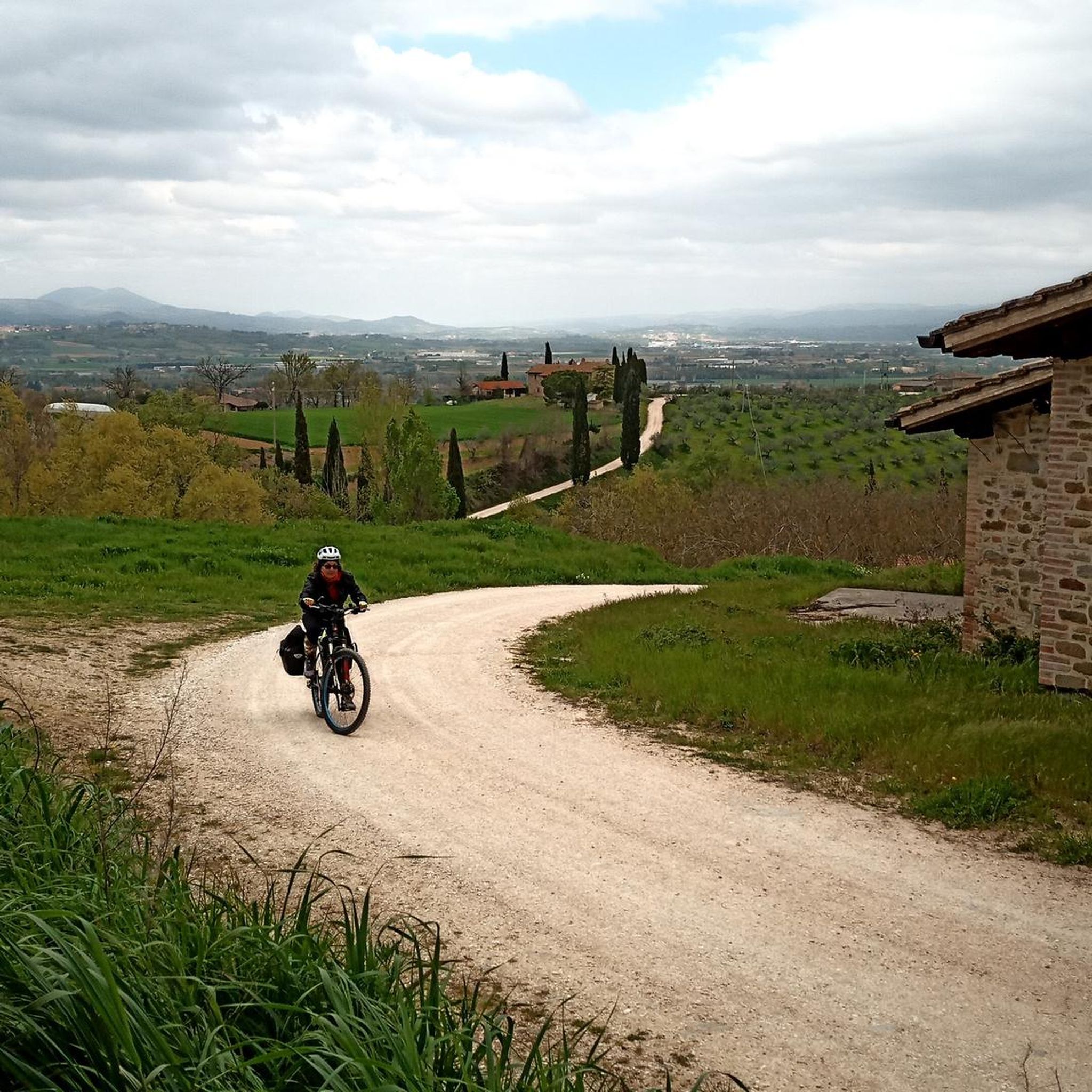
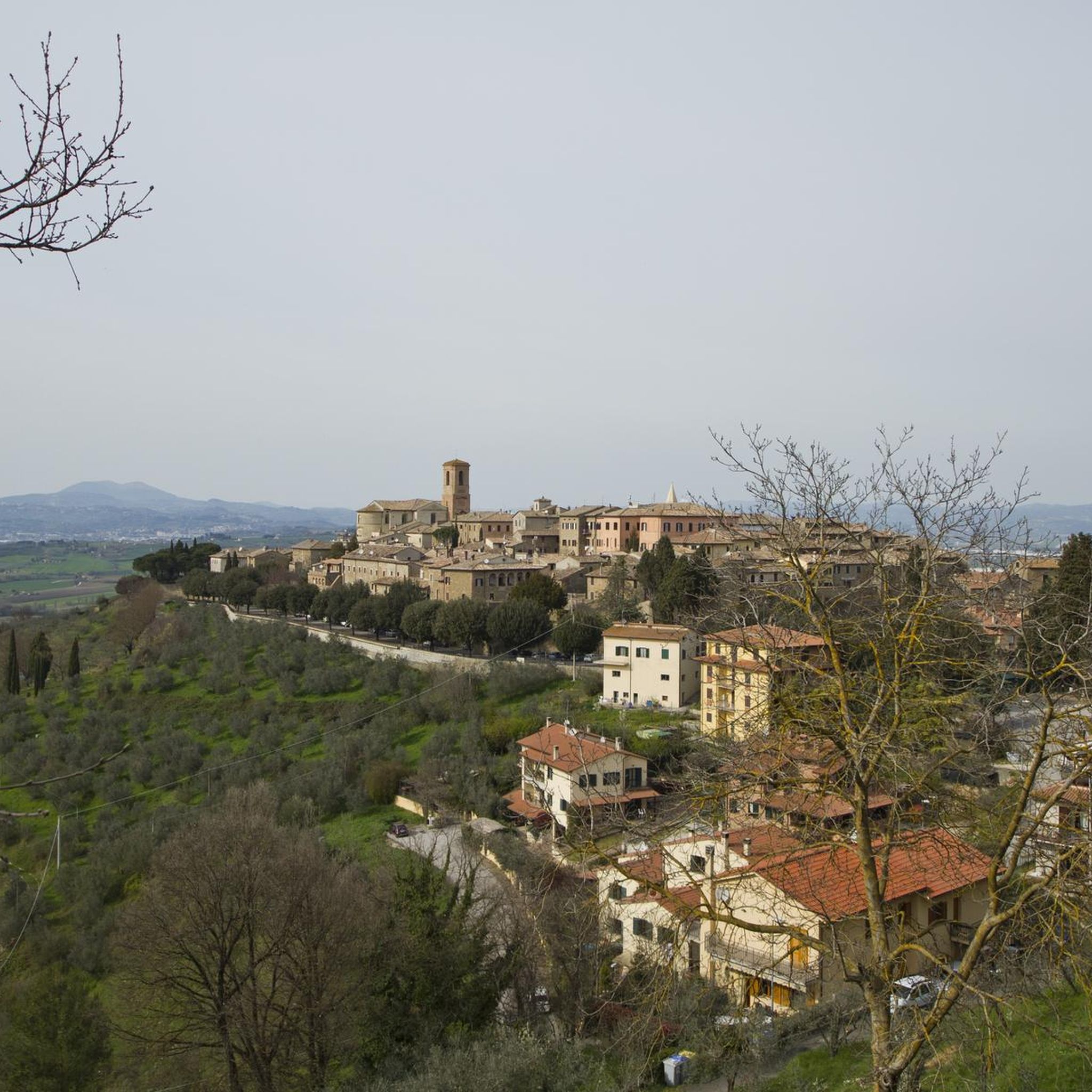
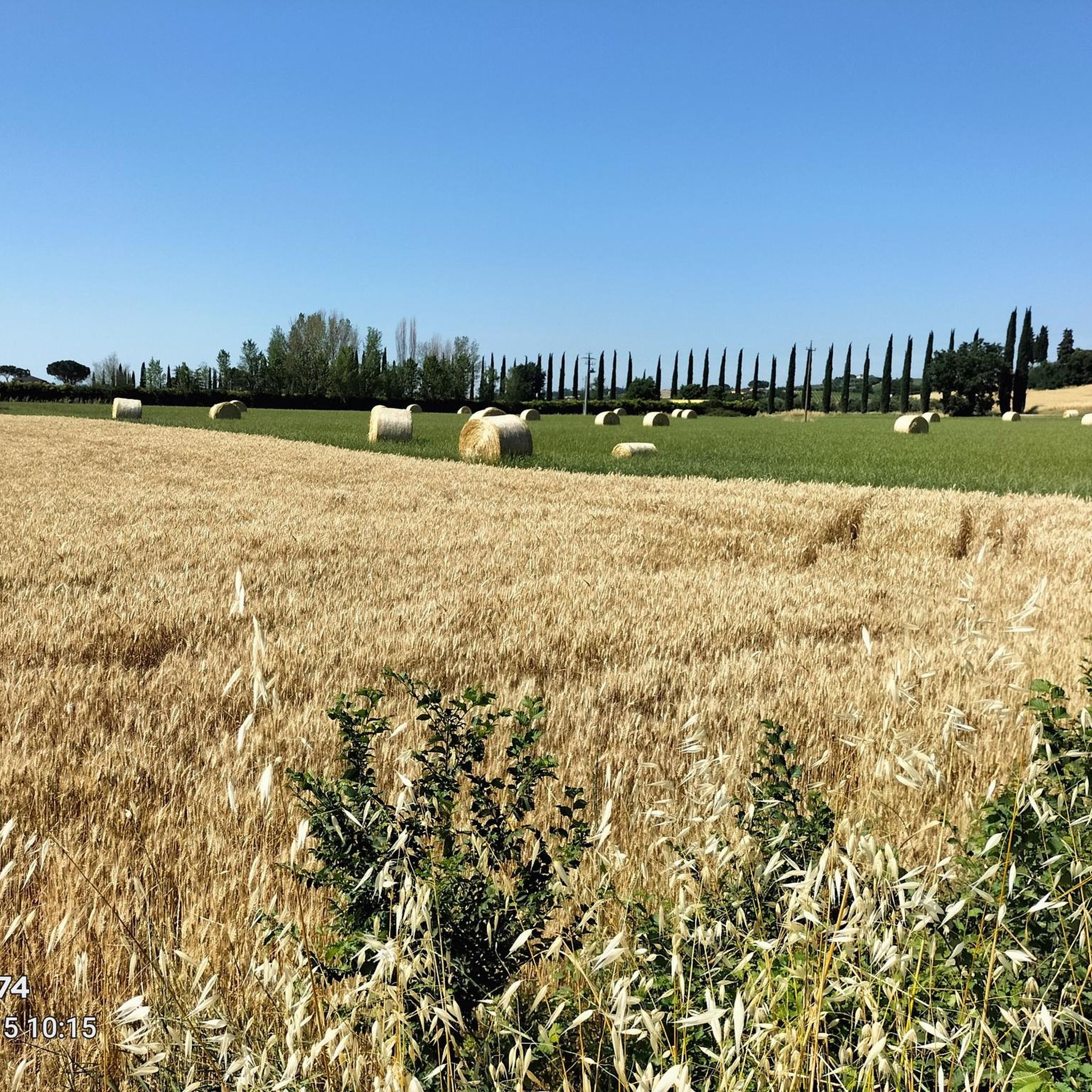
Road cycling around Deruta, a historic hill town in central Italy's Umbria region, offers varied terrain for cyclists. Situated on the left bank of the Tiber River, the area features a mix of elevated hills and flat plains, separating the Tiber Valley from the plain of Foligno. The landscape is characterized by gentle hills, verdant woods, and rural plains, providing diverse cycling opportunities. Views of Mount Subasio and Monte Le Cinque Querce are visible from various points along the routes.
…Last updated: August 17, 2026
3.7
(3)
94
riders
108km
05:15
1,420m
1,430m
Prepare for a difficult road cycling adventure on "The village of Prodo from Deruta – loop tour." This challenging 67.1-mile (108.0 km) route demands very good fitness, featuring significant climbs…
5.0
(2)
34
riders
84.1km
04:00
1,090m
1,090m
Embark on the Todi and Monti Martani Loop, a challenging racebike route that immerses you in Umbria's verdant landscapes. You will cycle through rolling farmland, past expansive olive groves, and…

Sign up for free
5.0
(1)
27
riders
52.0km
02:13
350m
350m
Embark on a moderate road cycling loop from Deruta to the Basilica Santa Maria degli Angeli, covering 32.3 miles (52.0 km) with an elevation gain of 1151 feet (351 metres).…
12
riders
48.6km
02:11
470m
470m
Moderate road ride. Good fitness required. Mostly well-paved surfaces and easy to ride.
9
riders
34.1km
01:32
340m
340m
This 21.2-mile road cycling loop from Deruta to Marsciano is a moderate ride through Umbrian plains, featuring historic towns and rural view
Get access to more routes and recommendations from other explorers.
Sign up for free
Already have an account?
Our route recommendations are based on thousands of hikes, rides, and runs completed by other people on komoot.
Start today with a free account
Your next adventure awaits.
Login or Signup
Tips from the Community

Prodo Castle dominates the small village of the same name, a hamlet of Orvieto (TR). Built in 1222 by the Prodenzani family as a trapezoidal defensive stronghold with tuff walls, square and round towers, arrow slits, and a fortified gate, it was strengthened between the 13th and 15th centuries to control the Umbrian valleys. Garibaldi's refuge in 1849, it is now privately owned. Although the interior cannot be visited, the exterior offers panoramic views of the Fosso Campione, making it ideal for excursions near the Forello Gorges.
0
0

For the first time, Todi has been recognized as a virtuous municipality in terms of environmental sustainability and quality of life, having been awarded the 2020 "Spighe Verdi" (Green Ears of Wheat) flag by the FEE Italia Foundation for Environmental Education and Confagricoltura. Numerous indicators were taken into consideration, including education for sustainable development; sustainability and innovation in agriculture; the quality of tourism; the enhancement of natural areas and landscape; the maintenance of urban furnishings; and accessibility for all.
1
0


Basilica of Santa Maria degli Angeli The small chapel of Santa Maria degli Angeli alla Porziuncola, still completely preserved inside the basilica, was, according to tradition, built by four soldiers returning from the Holy War in the wooded plain below Assisi, known as the Cerretto della Porziuncola. They brought a piece of the Madonna's tombstone with them. There, on certain autumn days, the strong wind that blew every cloud from the sky and through the leaves seemed similar to the song of angels. The chapel was administered by the Benedictine monks of the monastery of Santa Benedetto al Subasio since the 10th century. This place would probably have been completely forgotten if the paths of Francis and Clare had not led there. Thanks to them, we find the Porziuncola intact today, just as it was a good 1,000 years ago. But instead of the noisy thicket, there is now a large basilica, built between the 16th and 17th centuries, which envelops and protects the chapel like a caring mother. This view from within the building makes the chapel seem even smaller, almost impossibly small. The church was given to the poor saint by the aforementioned Benedictine monks to establish the headquarters of the newly founded Franciscan order. When Francis first came here, the church was in disrepair, and according to his saintly legend, he dedicated the third year after his conversion exclusively to the renovation of the small chapel. It was here, while reading the Gospel, that he realized that his mission was not to restore dilapidated religious buildings, but to rebuild and preach the entire Kingdom of God by living in poverty, penance, and simplicity. From here, Francis and his confreres set out to spread his message throughout Italy, and here they returned again and again. One night in 1211, a desperate and frightened Chiara d'Offreduccio, who had fled her home and her aristocratic family, knocked on the doors of Porciuncola. Text / Source: Exploring-Umbria.com https://www.exploring-umbria.com/de/entdecke-assisi/sehenswuerdigkeiten-in-assisi/basilica-santa-maria-degli-angeli-in-porziuncolabasilika-zu-unserer-lieben-frau-von-den-engeln/
13
0

The peak of Monte Peglia is over 800 meters high and is located in the municipality of San Venanzo. The roads to access it are all quite challenging, but all in all rideable, from any side the climb is generally long (even over 15 km). The peak is easily recognizable by the presence of the RAI antenna. The Monte Peglia nature reserve, in addition to the presence of fauna and flora, is also characterized by the presence of prehistoric fossil deposits and by the three volcanoes, now extinct, near the town of San Venanzo. It's cool in the summer
0
0

Deruta, the ceramic village in the green heart of Umbria
0
0

The town of Todi in the province of Perugia in Umbria is known for its beautiful medieval town center. There are numerous historical buildings lined up around the central Piazza del Popolo. Antique and medieval finds prove that the hilltop town was founded in the 8th century BC by the Indo-European-Italian Umbrian tribe.
1
0

The Basilica of San Francesco, which did not exist during the lifetime of Saint Francis of Assisi (1181/82 to 1226), is nevertheless one of the great "original shrines" of the Franciscan religious family, and a "must" for every Assisi resident. Visitors. As the church of the order's founder, it is of course very important spiritually - which is expressed, among other things, by the rare title of "Basilica major" (papal basilica); but then also in terms of art history, especially because of the great frescoes in the lower and upper churches (in the latter in particular the cycle with 28 pictures from the life of Saint Francis by Giotto Bondone). This important place of worship is therefore quite rightly on the UNESCO World Heritage List. Saint Francis (canonized in 1228, just two years after his death) became a role model for many people, they joined him, and the "Order of the Friars Minor" (Ordo Fratrum Minorum) of Francis of Assisi was created. Today there are three male branches in the broad Franciscan religious family: the Franciscans, the Minorites and the Capuchins; as well as two female ones: the Franciscan Sisters and the Poor Clares. In addition, there is the “Third” or “Secular” Order, which can be joined by women and men who do not take the classic religious vows (poverty, chastity and obedience) and continue to live in their family and their profession.
7
0
Frequently Asked Questions
What kind of terrain can I expect on road cycling routes around Deruta?
Road cycling around Deruta offers a diverse landscape. You'll find a mix of elevated hills and flat plains, particularly in the Tiber Valley. The region is characterized by gentle hills, verdant woods, and rural plains, providing varied cycling opportunities. Routes can range from challenging climbs to more moderate, well-paved surfaces.
Are there routes suitable for beginner road cyclists in Deruta?
Yes, while many routes offer challenging climbs, there are options for less experienced riders. For instance, the Deruta and Marsciano Countryside Loop is a moderate 34.1 km ride with gentle pedaling through rural plains, ideal for enjoying relaxing views without extreme difficulty.
What are some challenging road cycling routes for experienced riders?
Experienced cyclists looking for a challenge can consider routes like The village of Prodo from Deruta – loop tour, a 108 km ride with significant elevation gain (1,420m). Another demanding option is the Todi and Monti Martani Loop, an 84.1 km route featuring challenging climbs and scenic Umbrian views.
What historical towns or landmarks can I visit while cycling near Deruta?
Deruta's strategic location allows access to several historic towns and landmarks. You can cycle to Assisi, home to the famous Basilica, via routes like Assisi and Santa Maria degli Angeli from Deruta. Other nearby towns include Todi, Marsciano, Torgiano, and Bettona. You can also explore historical sites such as the Castle of St. Apollinaris, offering panoramic views.
Are there any circular road cycling routes starting from Deruta?
Yes, many routes around Deruta are designed as loops, bringing you back to your starting point. Examples include The village of Prodo from Deruta – loop tour, Todi and Monti Martani Loop, and From Deruta to the Basilica Santa Maria degli Angeli – loop tour, all offering convenient circular journeys.
What is the best time of year for road cycling in Deruta?
The Umbria region, including Deruta, is generally pleasant for cycling in spring (April-May) and autumn (September-October). During these seasons, temperatures are milder, and the landscapes are particularly beautiful, avoiding the extreme heat of summer and the colder, potentially wetter conditions of winter.
What do other road cyclists enjoy most about cycling in Deruta?
The road cycling routes around Deruta are highly rated by the komoot community, with an average score of 4.4 stars from over 30 reviews. Cyclists often praise the varied terrain, from gentle hills to challenging climbs, and the scenic Umbrian views that characterize the region's routes.
Are there any family-friendly road cycling routes in the Deruta area?
For families or those seeking a more relaxed ride, the Deruta and Marsciano Countryside Loop offers a moderate, 34.1 km ride through rural plains. This route provides gentle pedaling and breathtaking landscapes, making it suitable for a leisurely family outing.
Can I access the Deruta ceramics museum by road bike?
Yes, the historic center of Deruta, where the oldest ceramics museum in Italy is located, is accessible by road bike. Integrating a cultural visit to the museum and artisan workshops with your ride is a great way to experience the town's famous maiolica tradition.
Are there any viewpoints or panoramic spots along the cycling routes?
Many routes offer stunning panoramic views of the Umbrian landscape. From Deruta itself, you can enjoy views of the surrounding area. Routes often pass through areas with views of Mount Subasio to the east and Monte Le Cinque Querce to the west. The Castle of St. Apollinaris also provides excellent vistas over the Fersenone Valley.
What is the typical duration for road cycling routes around Deruta?
The duration of routes varies significantly based on distance and difficulty. For example, a moderate route like From Deruta to the Basilica Santa Maria degli Angeli – loop tour (52 km) typically takes around 2 hours and 12 minutes, while a difficult 108 km route such as The village of Prodo from Deruta – loop tour can take over 5 hours.
Most popular attractions around Deruta

Get inspired with the komoot mobile app


Explore more
Browse the best Road cycling routes in other regions.
