The best cycling routes around Pizzoli
4.5
(246)
3,270
riders
18
rides
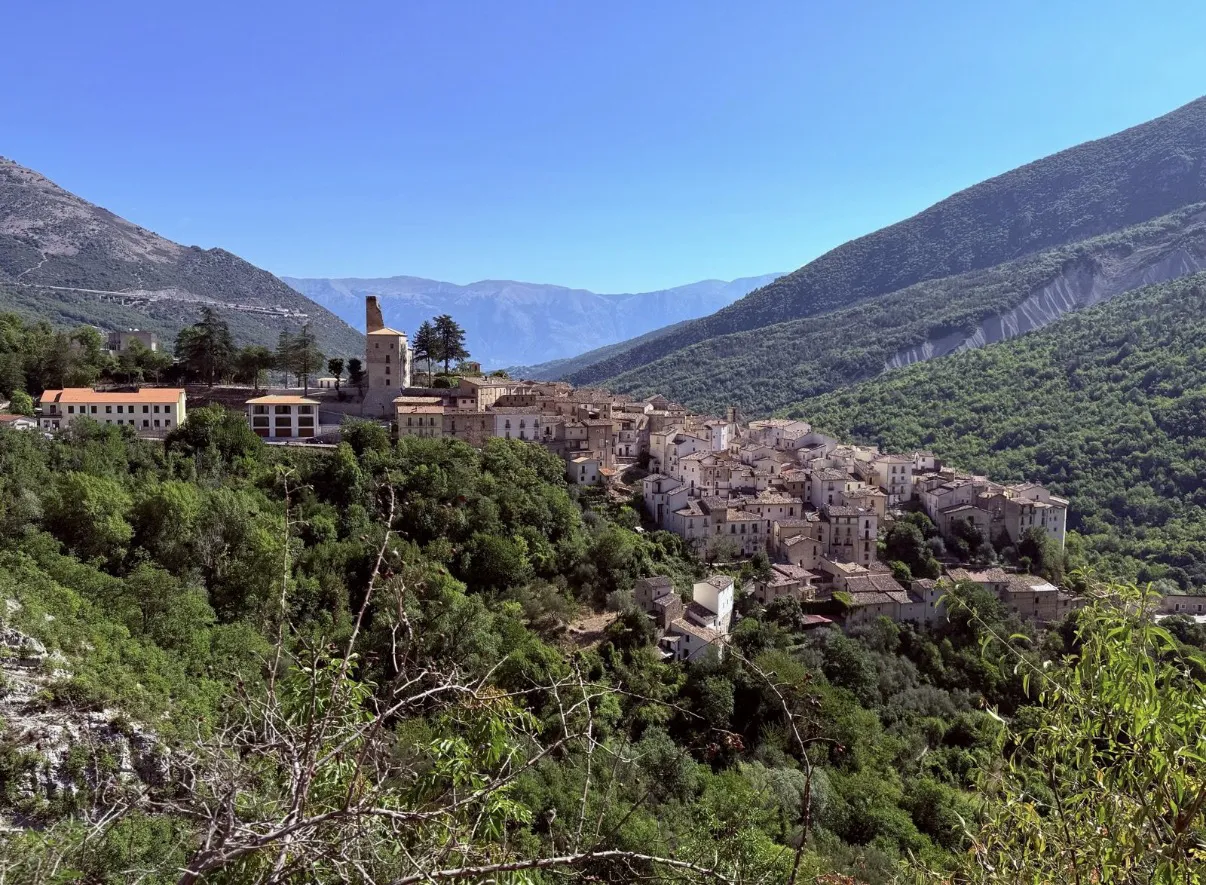
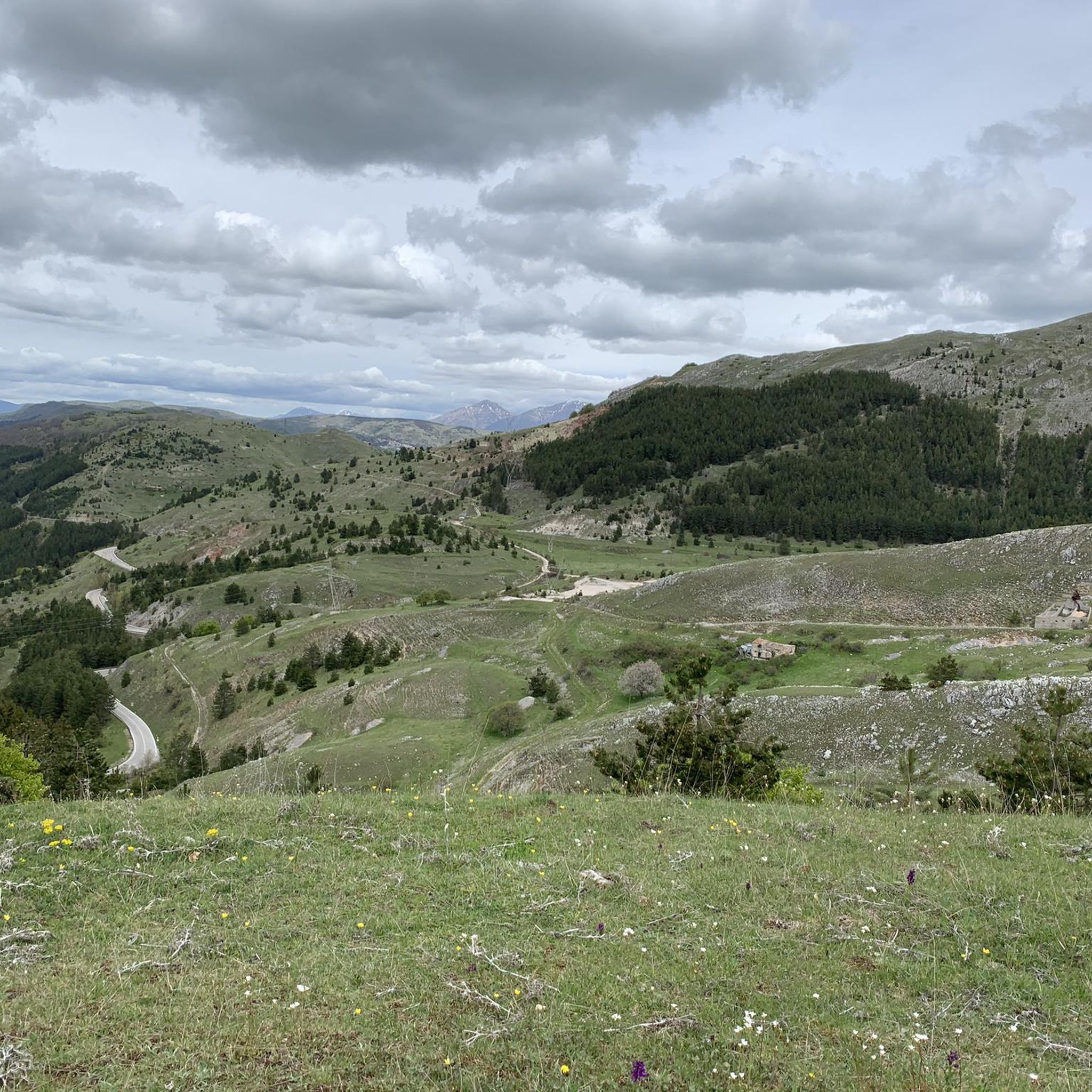
Touring cycling around Pizzoli offers diverse routes within Italy's Abruzzo region, characterized by its location in the Gran Sasso e Monti della Laga National Park. The terrain features mountain landscapes with oak and beech forests, extensive reforestations of black pine, and varied elevations rising from the Aterno Valley. This geographical setting provides a mix of climbs and descents, with the Aterno River flowing nearby.
Best touring cycling routes around Pizzoli
- The most popular touring cycling route is Gravel loop tour…
Last updated: October 23, 2026
43.6km
04:00
1,010m
1,010m
Hard bike ride. Very good fitness required. Mostly paved surfaces.
12
riders
95.3km
06:56
1,990m
1,990m
Hard bike ride. Very good fitness required. Mostly paved surfaces.

5.0
(2)
16
riders
34.9km
02:50
560m
560m
Hard bike ride. Very good fitness required. Mostly paved surfaces.
5.0
(1)
18
riders
24.8km
02:25
860m
860m
Hard bike ride. Very good fitness required. Mostly paved surfaces.
15
riders
49.3km
03:10
590m
590m
Hard bike ride. Very good fitness required. Mostly paved surfaces.
Get access to more routes and recommendations from other explorers.
Already have an account?
Our route recommendations are based on thousands of hikes, rides, and runs completed by other people on komoot.
Start today with a free account
Your next adventure awaits.
Other adventures around Pizzoli

Tips from the Community

Cabbia and then Cesaproba di Montereale. Beautiful and scenic route
0
0

Refuge closed, not accessible (July 8, 2026).
0
0

Explanation for the difference in the number of gargoyles! One of the most striking facts about the Fontana delle 99 Cannelle is that the fountain has 99 water jets, but only 93 sculpted mask heads. According to legend, L'Aquila was founded by 99 villages, but historical research indicates that there were actually 93. Therefore, in 1272, architect Tancredi da Pentima equipped the fountain with 93 stone masks. To later complete the famous legend of the 99, six additional gargoyles without mask faces were added. According to tradition, these six simple spouts refer to the six wounds of Christ. Thus, the fountain is not only a magnificent monument, but also a unique blend of history, symbolism, and legend. Moreover, for many visitors, it remains a fun challenge to count all 99 water jets themselves.
5
0
In L'Aquila, a rich medieval past effortlessly merges with admirable modern resilience. The proud capital of Abruzzo rises in full glory and is best discovered on foot. Wandering through the atmospheric streets, you'll encounter one architectural treasure after another. For example, start at the iconic Fontana delle 99 Cannelle, where 99 mystical stone masks continuously spout water. Climbing further up, you'll reach the massive 16th-century Forte Spagnolo. From this impressive fortress, you can enjoy a sweeping view of the rugged, often snow-capped peaks of the Gran Sasso massif. The city's rich history is also palpable in the many beautifully restored palazzi and churches. For instance, the Basilica di San Bernardino overwhelms every visitor with a breathtaking baroque ceiling adorned with gold leaf. After all the cultural immersion, lively squares like Piazza del Duomo invite you for a well-deserved break. It's the perfect place to enjoy the local cuisine and a good glass of Abruzzese wine at an outdoor cafe. As a grand finale, the Basilica di Santa Maria di Collemaggio should not be missed. This striking, pink-and-white checkered church houses a true world first: the very first Holy Door in the world. Thanks to the central, free parking facilities just outside the city walls, this compact art city is the ideal destination for a carefree and inspiring cultural walking holiday.
4
0
The Forte Spagnolo (also known as Castello Cinquecentesco) is one of the most impressive 16th-century military strongholds of Central and Southern Italy. Although it is a defensive work, its true historical significance lies in the fact that it was never built to protect the city, but rather to suppress it. After the Spanish threat diminished over time, the complex successively served as the residence of the Spanish governor, barracks for French troops in the 19th century, and headquarters for the German occupier during World War II. In 1902, it was officially declared a national monument. Shortly after World War II, it became the home of the National Museum of Abruzzo (MuNDA). Since the devastating earthquake of 2009, the fort has been undergoing a lengthy and complex restoration, but it remains one of the most impressive symbols of the city when viewed from the outside.
4
0
The monumental Scalinata di San Bernardino in L'Aquila is one of the most characteristic and photogenic urban elements of the city. This wide, stately staircase connects the lower Via Fortebraccio with the higher Piazza di San Bernardino. Origin and architecture (16th century) Simultaneous construction: the staircase was built in the 16th century, at the same time as the Renaissance facade of the Basilica di San Bernardino (designed by architect Cola dell'Amatrice between 1525 and 1542). It served as the perfect extension of the religious complex. Urban planning purpose: the staircase had two functions. Practically, it was intended to connect the lower districts around the city walls with the centre. Aesthetically, it created a theatrical and baroque visual axis; pilgrims coming from below saw the monumental church facade slowly tower above them. Imposing dimensions: The staircase is no less than 30 metres wide and 68 metres long. The steps were deliberately designed to be very low and deep, so that large groups of worshippers and processions could comfortably ascend the slope. Striking features and details. The watchtowers: at the beginning (bottom) and end (top) of the staircase are a total of four small, robust turrets (torrette) that flank the staircase and give it a slightly military or monumental character. The edicolae: along the sides of the staircase are three stone niches or chapels (edicole) per side. These historically served during religious festivals and processions.
5
0
Fontana Luminosa – the icon of L'Aquila The Fontana Luminosa is one of L'Aquila's most famous sights and a beloved photo stop. This monumental fountain, designed in 1934 by local sculptor Nicola D'Antino, stands in Piazza Battaglione Alpini. The artwork depicts two imposing bronze female figures who together carry a traditional Abruzzese water basin (conca), from which the water flows. Especially when the fountain is atmospherically illuminated in the evening, it truly lives up to its name – Luminous Fountain. A beautiful place to pause and admire one of L'Aquila's iconic symbols up close.
5
0
Did you know that the Fontana delle 99 Cannelle legend says it has 99 gargoyles, in tribute to the 99 villages that founded L'Aquila? Those who look closely will see stone masks above the gargoyles, which according to tradition represent castle lords or protective spirits. It is striking that there are only 93 mask heads. Historians believe that the remaining six gargoyles were added later to complete the symbolic number 99. The fountain dates back to 1272, and its five water basins were formerly used as a wash place. Numerous legends also circulate around the fountain: for example, the architect is said to have taken the secret of the water source to his grave, and knights would have ritually cleansed themselves here before entering the Basilica di Collemaggio.
5
0
Frequently Asked Questions
How many touring cycling routes are available around Pizzoli?
There are over 130 touring cycling routes available around Pizzoli, offering a wide range of options for different skill levels. You'll find routes varying from easy to difficult, with the majority falling into the moderate and difficult categories.
What kind of terrain and difficulty can I expect on touring cycling routes in Pizzoli?
Pizzoli's touring cycling routes are primarily characterized by mountain landscapes within the Gran Sasso e Monti della Laga National Park. You can expect varied elevations, including both climbs and descents, often passing through oak, beech, and black pine forests. While there are some easier options, most routes are rated as moderate to difficult, providing a good challenge for experienced cyclists.
Are there any circular touring cycling routes starting from Pizzoli?
Yes, many touring cycling routes around Pizzoli are designed as loops. For instance, the History and nature loop from Pizzoli offers a blend of historical sites and natural scenery directly from the town. Another option is the Pizzoli – Valico delle Capannelle loop from Pizzoli, which includes a significant climb.
What natural features and landmarks can I see along the touring cycling routes?
The routes often traverse the stunning Gran Sasso e Monti della Laga National Park, offering views of majestic mountains and dense forests. You might encounter the Aterno River and its valley, or pass by significant natural attractions like Lake Campotosto. Historical sites such as the Dragonetti De Torres Castle and the Church of S. Stefano a Monte also add cultural interest to your ride. For panoramic views, consider highlights like The Little Cross of Mount Castelvecchio.
When is the best time of year to go touring cycling in Pizzoli?
The best time for touring cycling in Pizzoli is generally from spring through autumn. During these seasons, the weather is more favorable for outdoor activities, and the natural landscapes are at their most vibrant. The region's mountainous terrain means that winter can bring snow, making some routes inaccessible, especially at higher elevations like the Capannelle Pass.
Are there family-friendly touring cycling routes near Pizzoli?
While many routes around Pizzoli are rated moderate to difficult due to the mountainous terrain, there are some easier options available. It's advisable to check the specific route details for elevation gain and distance to ensure it's suitable for all family members. The region's valleys and less steep sections might offer more gentle rides.
Can I bring my dog on the touring cycling trails around Pizzoli?
The Gran Sasso e Monti della Laga National Park, which encompasses much of Pizzoli's cycling area, generally welcomes dogs on trails, often requiring them to be on a leash to protect wildlife. Always check specific park regulations or individual trail rules before heading out with your dog, especially in protected areas.
What do other touring cyclists enjoy most about cycling in Pizzoli?
The touring cycling routes around Pizzoli are highly rated by the komoot community, with an average score of 4.6 stars from over 190 reviews. Cyclists often praise the stunning natural beauty of the Gran Sasso e Monti della Laga National Park, the varied terrain offering both challenging climbs and scenic descents, and the blend of natural and historical sights. The presence of well-known cycling spots like the Capannelle Pass also contributes to its popularity.
Are there any less crowded or 'hidden gem' touring cycling routes in the area?
Given the extensive network of routes within the Gran Sasso e Monti della Laga National Park, it's possible to find less crowded paths, especially outside of peak tourist seasons. Exploring routes that venture deeper into the oak and beech forests or along the Aterno River might offer a more secluded experience. The region's vastness allows for discovery beyond the most popular trails.
Where can I find parking for touring cycling routes in Pizzoli?
Parking is generally available in and around Pizzoli, particularly near trailheads or starting points for popular routes. For example, routes like the Tre Archi Fountain – Path of the Nine Martyrs loop from San Vittorino or the Gravel loop tour from Arischia in the Gran Sasso National Park would typically have designated parking areas nearby. It's always a good idea to check local signage upon arrival.
Are there cafes, pubs, or restaurants near the cycling routes in Pizzoli?
Pizzoli and the surrounding towns offer various options for refreshments and meals. You'll find local cafes, pubs, and restaurants where you can refuel after your ride, often serving traditional Abruzzese cuisine. Many establishments are accustomed to catering to outdoor enthusiasts, especially in areas popular with cyclists.
What kind of wildlife might I encounter while cycling in the Gran Sasso e Monti della Laga National Park?
Cycling through the Gran Sasso e Monti della Laga National Park offers opportunities to observe diverse wildlife. The park is home to species such as chamois, deer, wolves, and various birds of prey. Keep an eye out, especially in quieter forest sections and during dawn or dusk, for a chance to spot these animals in their natural habitat.
Are there any touring cycling routes that feature significant climbs or mountain passes?
Absolutely. Pizzoli's location within the Gran Sasso e Monti della Laga National Park means many routes include substantial climbs. The Capannelle Pass – View of the Vomano River loop from San Vittorino is a prime example, incorporating the well-known Capannelle Pass, which is popular among cyclists for its challenging ascent and scenic views. The Pizzoli – Valico delle Capannelle loop from Pizzoli also features a significant climb.
Most popular attractions around Pizzoli

Get inspired with the komoot mobile app


Explore more
Browse the best Cycling routes in other regions.
