The best road cycling routes around Cagnano Amiterno
4.1
(31)
940
riders
38
rides
Road cycling routes around Cagnano Amiterno traverse a diverse landscape in Italy's Abruzzo region, characterized by serene valleys and challenging mountain terrain. The area features quiet backroads that connect medieval villages and offer scenic rides through the greenery of the Aterno Valley. Cyclists can expect varied elevations, including mountain passes and hills, providing options for different skill levels. This region is known for its natural features and historic sites, making it a compelling destination for road cyclists.
Best road cycling…
Last updated: July 5, 2026
5.0
(1)
111
riders
53.2km
02:16
390m
390m
Moderate road ride. Good fitness required. Mostly well-paved surfaces and easy to ride.
42
riders
Moderate road ride. Good fitness required. Mostly well-paved surfaces and easy to ride.

Sign up for free
21
riders
Moderate road ride. Good fitness required. Some segments of this route may be unpaved and difficult to ride.
15
riders
78.6km
03:53
1,190m
1,190m
Hard road ride. Very good fitness required. Mostly well-paved surfaces and easy to ride.
5.0
(1)
37
riders
Hard road ride. Very good fitness required. Mostly well-paved surfaces and easy to ride.
Get access to more routes and recommendations from other explorers.
Sign up for free
Already have an account?
Our route recommendations are based on thousands of hikes, rides, and runs completed by other people on komoot.
Start today with a free account
Your next adventure awaits.
Login or Signup
Tips from the Community

Explanation for the difference in the number of gargoyles! One of the most striking facts about the Fontana delle 99 Cannelle is that the fountain has 99 water jets, but only 93 sculpted mask heads. According to legend, L'Aquila was founded by 99 villages, but historical research indicates that there were actually 93. Therefore, in 1272, architect Tancredi da Pentima equipped the fountain with 93 stone masks. To later complete the famous legend of the 99, six additional gargoyles without mask faces were added. According to tradition, these six simple spouts refer to the six wounds of Christ. Thus, the fountain is not only a magnificent monument, but also a unique blend of history, symbolism, and legend. Moreover, for many visitors, it remains a fun challenge to count all 99 water jets themselves.
3
0
In L'Aquila, a rich medieval past effortlessly merges with admirable modern resilience. The proud capital of Abruzzo rises in full glory and is best discovered on foot. Wandering through the atmospheric streets, you'll encounter one architectural treasure after another. For example, start at the iconic Fontana delle 99 Cannelle, where 99 mystical stone masks continuously spout water. Climbing further up, you'll reach the massive 16th-century Forte Spagnolo. From this impressive fortress, you can enjoy a sweeping view of the rugged, often snow-capped peaks of the Gran Sasso massif. The city's rich history is also palpable in the many beautifully restored palazzi and churches. For instance, the Basilica di San Bernardino overwhelms every visitor with a breathtaking baroque ceiling adorned with gold leaf. After all the cultural immersion, lively squares like Piazza del Duomo invite you for a well-deserved break. It's the perfect place to enjoy the local cuisine and a good glass of Abruzzese wine at an outdoor cafe. As a grand finale, the Basilica di Santa Maria di Collemaggio should not be missed. This striking, pink-and-white checkered church houses a true world first: the very first Holy Door in the world. Thanks to the central, free parking facilities just outside the city walls, this compact art city is the ideal destination for a carefree and inspiring cultural walking holiday.
2
0
The Forte Spagnolo (also known as Castello Cinquecentesco) is one of the most impressive 16th-century military strongholds of Central and Southern Italy. Although it is a defensive work, its true historical significance lies in the fact that it was never built to protect the city, but rather to suppress it. After the Spanish threat diminished over time, the complex successively served as the residence of the Spanish governor, barracks for French troops in the 19th century, and headquarters for the German occupier during World War II. In 1902, it was officially declared a national monument. Shortly after World War II, it became the home of the National Museum of Abruzzo (MuNDA). Since the devastating earthquake of 2009, the fort has been undergoing a lengthy and complex restoration, but it remains one of the most impressive symbols of the city when viewed from the outside.
2
0
The two fountains in the square have a long history dating back to the early 14th century. The travertine water basins, originally built around 1303, were located on either side of the market square. They provided fresh drinking water for merchants, travelers, and residents, and were an essential part of daily life in the city. In 1934, the fountains were given a new look. Following the construction of a modern aqueduct, the Italian sculptor Nicola D'Antino was commissioned to embellish the historic fountains. He added a striking bronze statue to each fountain: two different male nude figures casually leaning on the upper water basin. These statues give the centuries-old fountains their characteristic appearance and form a captivating combination of medieval architecture and twentieth-century sculpture.
2
0
Did you know that the Fontana delle 99 Cannelle legend says it has 99 gargoyles, in tribute to the 99 villages that founded L'Aquila? Those who look closely will see stone masks above the gargoyles, which according to tradition represent castle lords or protective spirits. It is striking that there are only 93 mask heads. Historians believe that the remaining six gargoyles were added later to complete the symbolic number 99. The fountain dates back to 1272, and its five water basins were formerly used as a wash place. Numerous legends also circulate around the fountain: for example, the architect is said to have taken the secret of the water source to his grave, and knights would have ritually cleansed themselves here before entering the Basilica di Collemaggio.
3
0

The Amiternum amphitheater is a solemn testament to Abruzzo's glorious Roman past, located on the San Vittorino plain a few kilometers from L'Aquila. Built in the 1st century AD on the edge of the ancient Sabine city, it still retains its imposing elliptical structure with two tiers of arches that once accommodated up to six thousand spectators. Today, it offers a striking blend of the austere monumentality of ancient brickwork and the rural tranquility of the Aterno Valley.
0
0

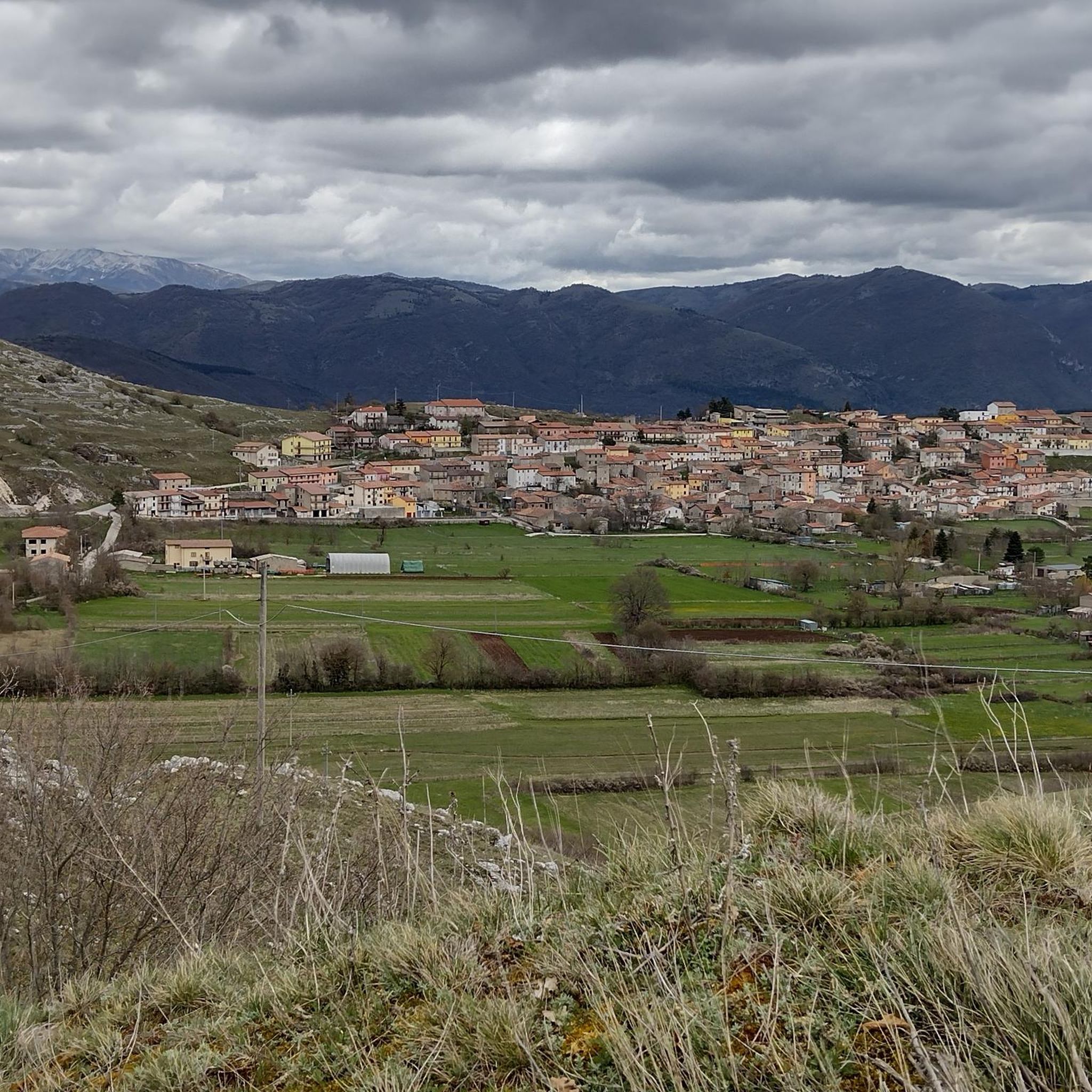
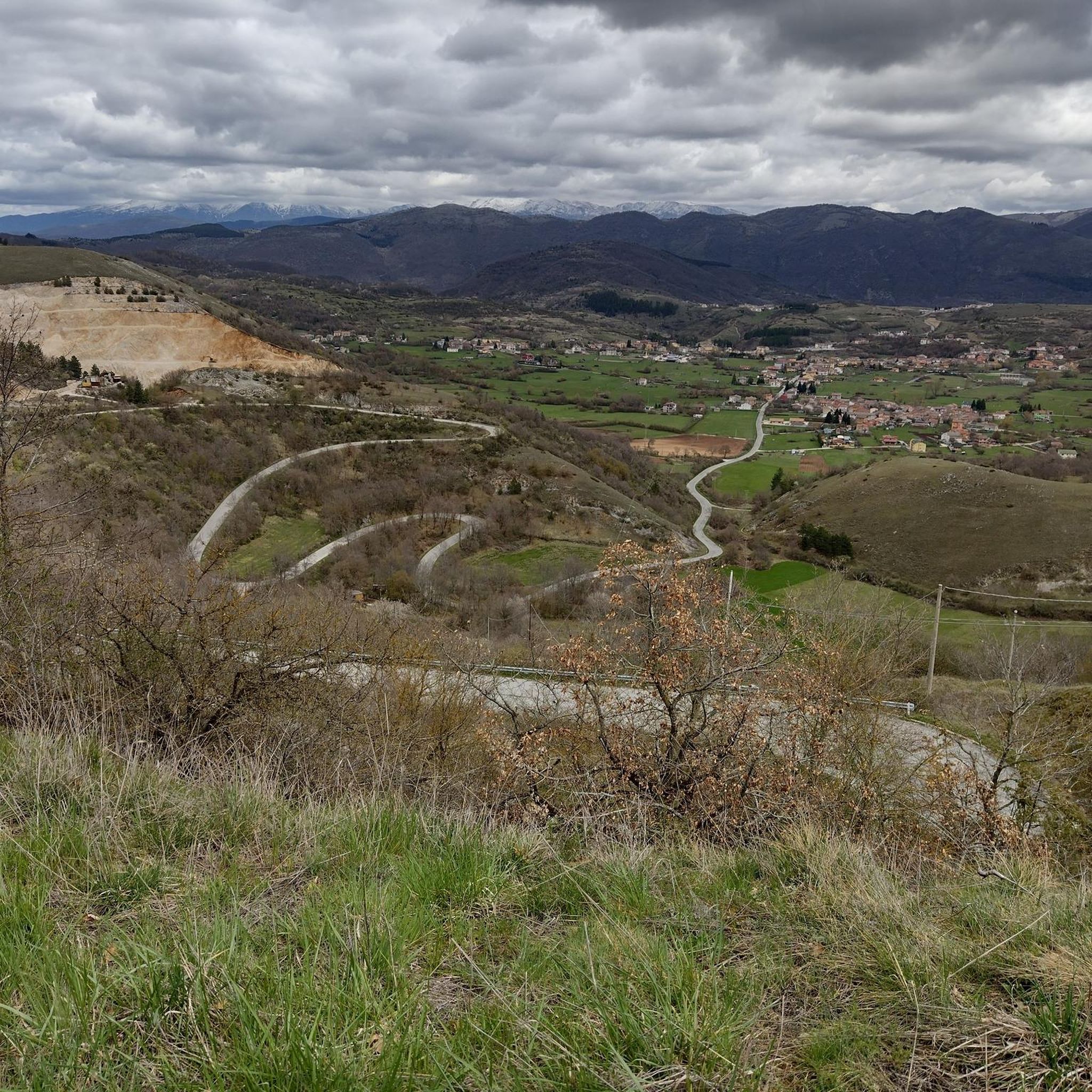
sustained 10% climbing but lovely quite roads with little traffic
0
0

At this site, you can see the ancient ruins of Amiternum, a city founded by the Sabines. Also in the area, in addition to the theater, amphitheater, and remains of a domus, you can see the remains of the ancient Via Cecilia, which connected Rome with the Abruzzo colonies in the present-day province of Teramo.
0
0
Frequently Asked Questions
How many road cycling routes are available around Cagnano Amiterno?
There are over 40 road cycling routes around Cagnano Amiterno, offering a diverse range of experiences from serene valley rides to challenging mountain climbs. These routes are highly rated by the komoot community, with an average score of 4.4 stars.
What kind of terrain and scenery can I expect on road cycling routes in Cagnano Amiterno?
Road cycling routes in Cagnano Amiterno traverse a varied landscape, from the tranquil greenery of the Aterno Valley to challenging mountain passes within the broader Abruzzo region. You'll find quiet backroads connecting charming medieval villages, offering scenic views and a peaceful riding experience. The area is also close to the majestic Gran Sasso and Monti della Laga National Park, providing breathtaking mountain vistas.
Are there easy road cycling routes suitable for beginners or families?
Yes, Cagnano Amiterno offers several easy road cycling routes. For instance, the Abruzzo Airport loop from Marana is an easy 32.8 km (20.4 miles) route with minimal elevation gain, perfect for a relaxed ride. The region's quiet backroads and less demanding sections of the Aterno Valley are ideal for those seeking a gentler cycling experience.
Where can I find challenging road cycling routes with significant climbs?
For experienced cyclists seeking a challenge, Cagnano Amiterno and its surroundings offer routes with substantial elevation gain. The Amiternum Roman Amphitheater – Madonna d'Appari Church loop from Cesaproba is a difficult 97.3 km (60.4 miles) route featuring over 1,300 meters of ascent. The broader Abruzzo region is renowned for iconic climbs like Blockhaus and Campo Imperatore, indicating the potential for demanding mountain passes.
Are there historical sites or points of interest along the road cycling routes?
Absolutely. Many routes pass by significant historical sites. For example, the popular Amiternum Roman Amphitheater – Amiternum Amphitheatre loop from Cesaproba explores the historic Amiternum Archaeological Site, featuring well-preserved Roman ruins. You might also encounter charming medieval villages and religious sites like the chapel of San Vincenzo Ferrer.
What natural attractions can I explore near the cycling routes?
Beyond the cycling routes, the region boasts stunning natural beauty. You can visit the tranquil Lake Campotosto, perfect for scenic views. The nearby Gran Sasso and Monti della Laga National Park offers breathtaking landscapes, mountain peaks, and ancient woods. The fascinating Stiffe Caves, a karst complex with spectacular stalactites and stalagmites, are also just a few kilometers away.
What is the best time of year for road cycling in Cagnano Amiterno?
The best time for road cycling in Cagnano Amiterno is generally from spring through early autumn. During these months, the weather is typically mild and pleasant, making for ideal riding conditions. The region's diverse elevations mean that even in warmer months, higher passes can offer cooler temperatures, while valleys remain comfortable.
Are there circular road cycling routes available?
Yes, many of the road cycling routes around Cagnano Amiterno are designed as loops, allowing you to start and finish at the same point. Examples include the View of Montereale – View of the Monti della Laga loop from Cimitero di Paganica, a 63.8 km (39.7 miles) route, and the St. John's Square, Leonessa – Spoletina Gate (Leonessa) loop from Marana, which is a longer 78.6 km (48.8 miles) option.
What do other road cyclists say about the routes in Cagnano Amiterno?
The road cycling routes in Cagnano Amiterno are highly regarded by the komoot community, with an impressive average rating of 4.4 stars from over 40 reviews. Cyclists often praise the region's quiet backroads, the stunning natural scenery, and the variety of routes that cater to different skill levels, from serene valley rides to challenging mountain ascents.
Is public transport available to reach Cagnano Amiterno for cycling trips?
While Cagnano Amiterno is best explored by car for flexibility with cycling gear, public transport options exist to the broader L'Aquila area. From there, local bus services might connect to smaller towns. However, for direct access to specific route starting points, driving is generally recommended. Always check local bus schedules for the most up-to-date information.
Are there options for long-distance road cycling in the area?
Cagnano Amiterno serves as an excellent base for long-distance road cycling. The region's network of quiet roads and connections to larger areas like Gran Sasso and Monti della Laga National Park allow for extended rides. Routes such as the Amiternum Roman Amphitheater – Madonna d'Appari Church loop from Cesaproba, at nearly 100 km, demonstrate the potential for significant distances and elevation.
Are there places to eat or drink along the road cycling routes?
The routes around Cagnano Amiterno often pass through or near charming medieval villages. These villages typically offer local cafes, bars, and restaurants where cyclists can refuel and enjoy traditional Abruzzese cuisine. Planning your route to include stops in these villages is a great way to experience the local culture and hospitality.
Most popular attractions around Cagnano Amiterno

Get inspired with the komoot mobile app


Explore more
Browse the best Road cycling routes in other regions.
