Attractions and Places To See around Vallerano - Top 20
Best attractions and places to see around Vallerano include a rich blend of historical landmarks, cultural sites, and natural beauty. This charming historic village is nestled in the Tuscia area of Lazio, Italy, on the slopes of the Cimini Mountains. Vallerano is known for its medieval center, traditional stone houses, and extensive chestnut groves. The area offers a variety of experiences, from exploring ancient sites to enjoying the verdant landscape.
Best attractions and places to see around Vallerano
- The most…
Last updated: August 16, 2026
Devil’s Well Cave (Monte Venere)
Highlight • Cave
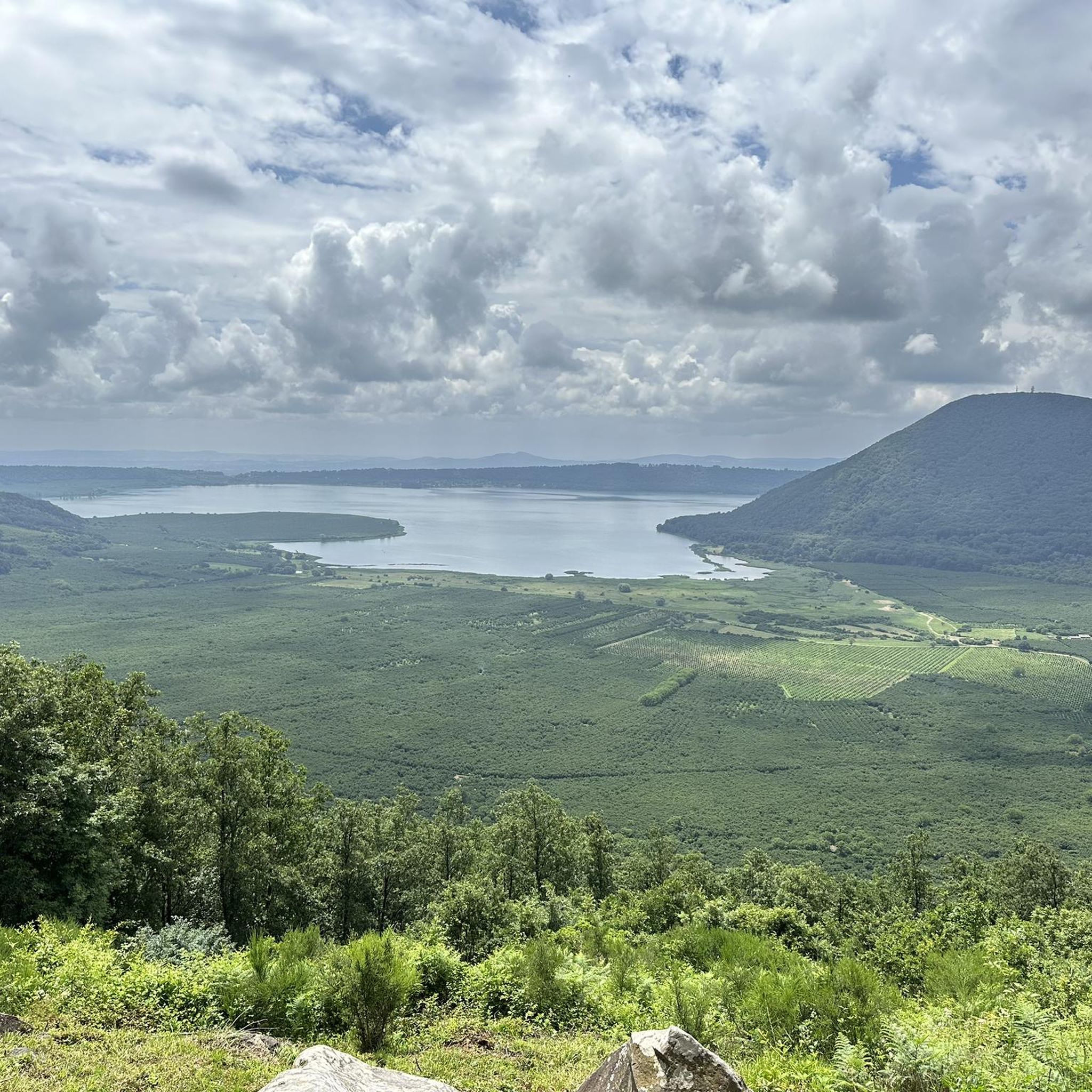
It is a mountain of volcanic origin that reaches a height of 835 m asl.
Translated by Google •
Tip by

Etruscan Pyramid of Bomarzo
Highlight • Historical Site
Translated by Google •
Tip by

Sign up now to discover places like this
Get recommendations on the best single tracks, peaks, & plenty of other exciting outdoor places.
Sign up for free
Corchiano Historic Village and Gorges
Highlight • Settlement
Translated by Google •
Tip by

Passionist Monastery of Sant’Angelo
Highlight • Religious Site
Tip by

Corchiano Waterfall
Highlight • Waterfall
Translated by Google •
Tip by

Sign up for free to discover even more attractions around Vallerano.
Sign up for free
Already have an account?
Start today with a free account
Your next adventure awaits.
Login or Signup

Tips from the Community

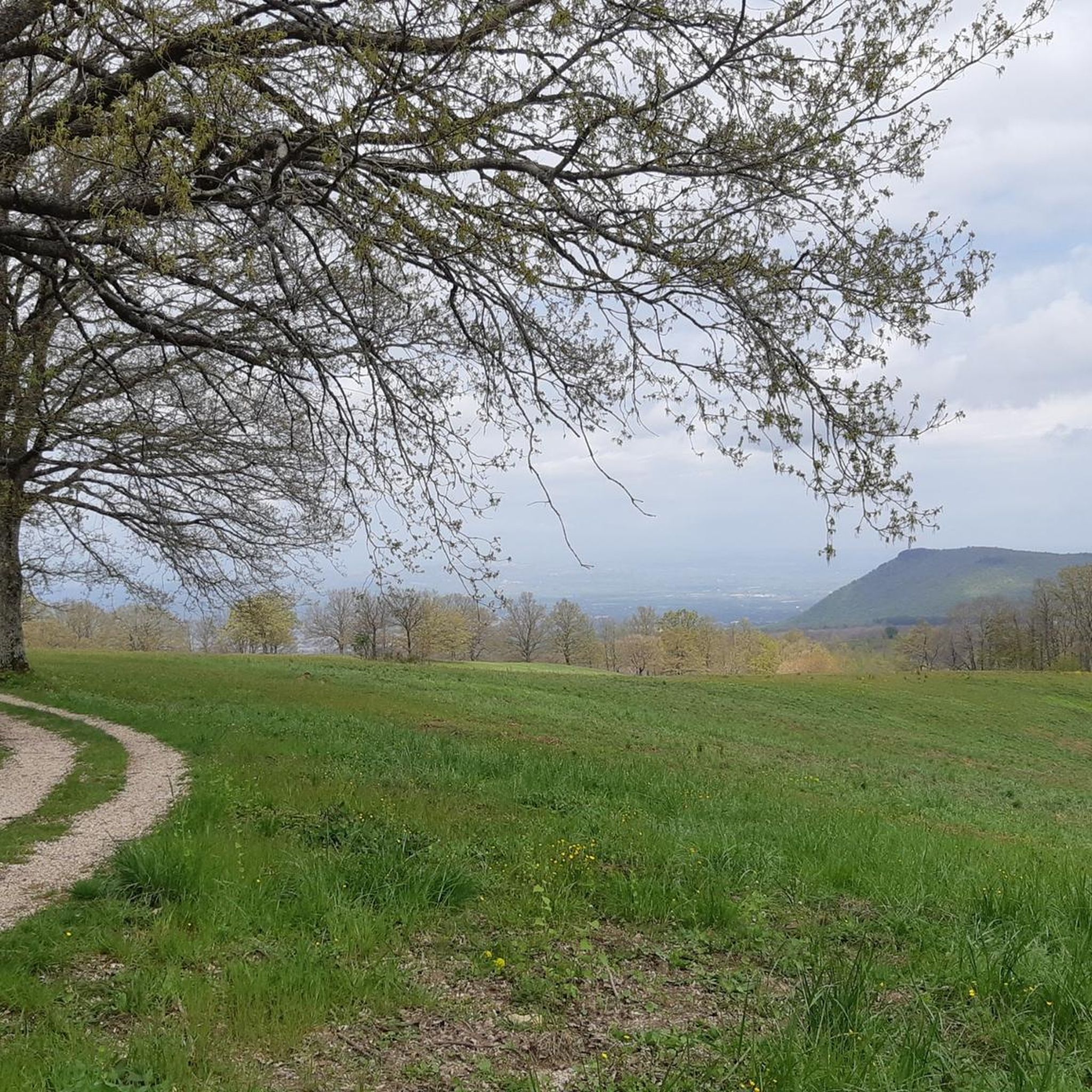
Following this path, just before reaching the devil's well, it is not clear where to go, the path disappears and also the white and red signs. We had to go a bit by intuition and take a very steep climb in the woods to get there. Once we reach the well, the path continues easily until the end.
0
1

The Passionist Monastery of Sant’Angelo is located on the slopes of Monte Fogliano, forming part of the Cimini Mountain range, in the vicinity of a volcanic crater that gave rise to Lake Vico and the nature reserve of the same name. The monastery, at an altitude of 300 meters (approx. 900 feet) above sea level, is situated within the town of Vetralla and forms part of the Province of Viterbo, one of northern most provinces of the Italian region of Lazio. It is bordered on the south by the metropolitan capital city of Rome and on the southeast by the Province of Rieti. On the north it is bordered by the region of Tuscany (the Province of Grosseto, the location of Monte Argentario) and by the region of Umbria (the Province of Terni) to the east. The Tyrrhenian Sea is located to the west. The town of Vetralla and the monastery is a pilgrim station on the ancient “Via Francigena”, which was once traveled by wayfarers and pilgrims on their way to Rome. This small town in the Viterbo area attracts Italian and foreign tourists who appreciate its charming historic center and the naturalistic, archaeological, and religious itineraries, including our Sant’Angelo Monastery, scattered throughout the surrounding area. (c) https://www.passiochristi.org/wp-content/uploads/2024/06/Guida-VETRALLA-2024-Inglese.pdf
0
0

Be careful not to lean out!
0
0

The waterfall was built to feed a canal, probably built by the populations that lived in this area even before the arrival of the Romans (at least the 5th century BC) and later, in the 1940s, the same canal fed a hydroelectric plant, now decommissioned. Currently, the canal is passable on foot (or by mountain bike) and connects the waterfall to the gorge below the town of Corchiano. The entire route, without difficulties, lasts about thirty minutes.
0
0
Corchiano is a small town in the province of Viterbo, apparently similar to many others, a little modest... and yet, it has become famous for some events, such as the infiorata, which is held at the end of May and sees the entire town involved in decorating a good part of the streets of the town with flower petals, colored sawdust, coffee grounds and in general any material that can be colored and applied in designs of great beauty. Then, in December, the living nativity scene takes place in a natural setting of great suggestion, finally, the exploration on foot of the ravines should not be overlooked, a true natural monument and archaeological site of great interest... in short, a place that is worth visiting. The difficulty in walking the paths, all equipped, is generally T (tourist) and suitable for all age levels.
1
0

The waterfall is located in an area known as “Orto del Sambuco”, along the course of the Rio Fratta. This place is characterized by a small grassy plain where the Rio Fratta creates a suggestive waterfall. In the immediate vicinity there is also an ancient Roman humpback bridge, adding a historical element to the natural landscape
0
0
It is a large boulder of shaped and carved peperino stone, located in a forest between Bomarzo and Chia; It was rediscovered in 2001 by the Archeotuscia association and the archaeological company Pro-Ferento. The structure has 26 steps carved into the volcanic rock, with a height of 8 meters in the upstream part and 16 meters in the downstream part. It is believed to have been an Etruscan rock altar, probably dating back to the 6th-7th century BC, although some hypotheses suggest even older origins.
0
0

Please don't enter into the cavity "Pozzo del Diavolo". It's a shelter for bats and people inside could create noise that disturbes colonies. It is also dangerous to enter: we must report several accidents occourred in this point. Download the official guide to the Vico Lake Nature Reserve at http://www.parchilazio.it/vico-pubblicazioni-413-guida_ufficiale_della_riserva_naturale_lago_di_vico
2
0
Frequently Asked Questions
What historical and cultural sites can I explore in Vallerano?
Vallerano is rich in history. You can wander through the Centro Storico with its narrow stone streets and medieval houses. Significant religious sites include the Church of Sant'Andrea Apostolo, the Sanctuary of the Madonna del Ruscello, and the ancient Church of San Vittore Martire. Don't miss the Orsini Castle, a reminder of the village's fortified past, and the nearby Chiesa della Pieve with traces of ancient wall paintings. The Passionist Monastery of Sant’Angelo is also a notable historical and religious site.
Are there any natural attractions or outdoor activities near Vallerano?
Absolutely. Vallerano is nestled among the Cimini Mountains and surrounded by extensive chestnut groves, vineyards, and hazelnut groves, perfect for scenic walks. A prominent natural feature is the Devil’s Well Cave (Monte Venere), a volcanic cave near Lake Vico. You can also explore the ancient Rock Settlements carved into caverns. For more structured outdoor activities, consider hiking the trails around Vallerano, such as the Monte Venere Loop. You can find more details on routes in the Hiking around Vallerano guide.
What unique historical monuments are there to see?
Beyond the village's medieval architecture, you can visit the enigmatic Etruscan Pyramid of Bomarzo, an ancient carved rock formation believed to have served as a sacrificial altar. Another fascinating site is the Corchiano Historic Village and Gorges, an ancient Faliscan city with a medieval layout and impressive ravines.
Are there family-friendly attractions in the Vallerano area?
Yes, the area offers several family-friendly options. The Corchiano Historic Village and Gorges features easy paths suitable for all ages, and during December, it hosts a captivating living nativity scene. The Corchiano Waterfall is another accessible natural spot with a historical Roman humpback bridge nearby, offering a pleasant walk along the Rio Fratta.
What kind of outdoor activities can I do near Vallerano?
The Vallerano region is excellent for various outdoor pursuits. You can enjoy hiking, running, and gravel biking. Popular hiking routes include the Monte Venere Loop and the Devil’s Well Cave loop. For more options, check out the Hiking around Vallerano, Running Trails around Vallerano, and Gravel biking around Vallerano guides.
What is Vallerano known for culturally?
Vallerano is particularly known for its annual Sagra della Castagna (Chestnut Festival), one of Lazio's most established chestnut festivals, celebrating the region's key crop each autumn. The town also participates in the 'Distretto/Creativo' cultural workshop, featuring entertainment, music, theatre, and exhibitions, adding to its vibrant cultural scene.
What local specialties and cuisine can I find in Vallerano?
Vallerano is famous for its chestnuts, which have obtained a DOP brand, and are featured in local dishes like ricotta and chestnut little boats. You can also find high-quality hazelnuts and delicious porchetta, which even has its own festival in July.
What is the significance of the Passionist Monastery of Sant’Angelo?
The Passionist Monastery of Sant’Angelo is a significant religious building located on the slopes of Monte Fogliano. It serves as a pilgrim station on the ancient Via Francigena, a historic route traveled by pilgrims to Rome, making it a site of both historical and spiritual importance.
Can I explore ancient Faliscan or Etruscan history in the area?
Yes, the Vallerano area has deep roots in ancient civilizations. The Corchiano Historic Village is an ancient Faliscan city, preserving its medieval layout over an even older foundation. The Etruscan Pyramid of Bomarzo offers a direct link to the mysterious Etruscan culture, showcasing their unique rock-carving traditions.
What do visitors enjoy most about the attractions around Vallerano?
Visitors particularly appreciate the blend of natural beauty and historical depth. The scenic chestnut woods and the volcanic landscape around Monte Venere, home to the Devil’s Well Cave, are highly rated. The ancient and mysterious sites like the Etruscan Pyramid of Bomarzo also captivate many, offering a glimpse into the region's rich past. The overall charm of Vallerano's medieval center and its cultural vibrancy are also frequently highlighted.
Are there any waterfalls or gorges to visit?
Yes, you can visit the Corchiano Waterfall, which is part of a scenic area along the Rio Fratta and features an ancient Roman humpback bridge. Additionally, the Corchiano Historic Village is set amidst impressive natural gorges, offering unique landscapes to explore.
What is Piazza della Repubblica in Vallerano?
Piazza della Repubblica is the social heart of Vallerano. It's a charming square lined with stone buildings, local cafés, and benches, providing a perfect spot for locals and visitors to gather and enjoy views of the medieval facades and surrounding green hills.
Most popular attractions around Vallerano

Get inspired with the komoot mobile app


Explore more
Still not found the Highlight you’re looking for? See guides of the top attractions in other regions:
