The best MTB trails around Fossa
4.4
(509)
3,475
riders
187
rides
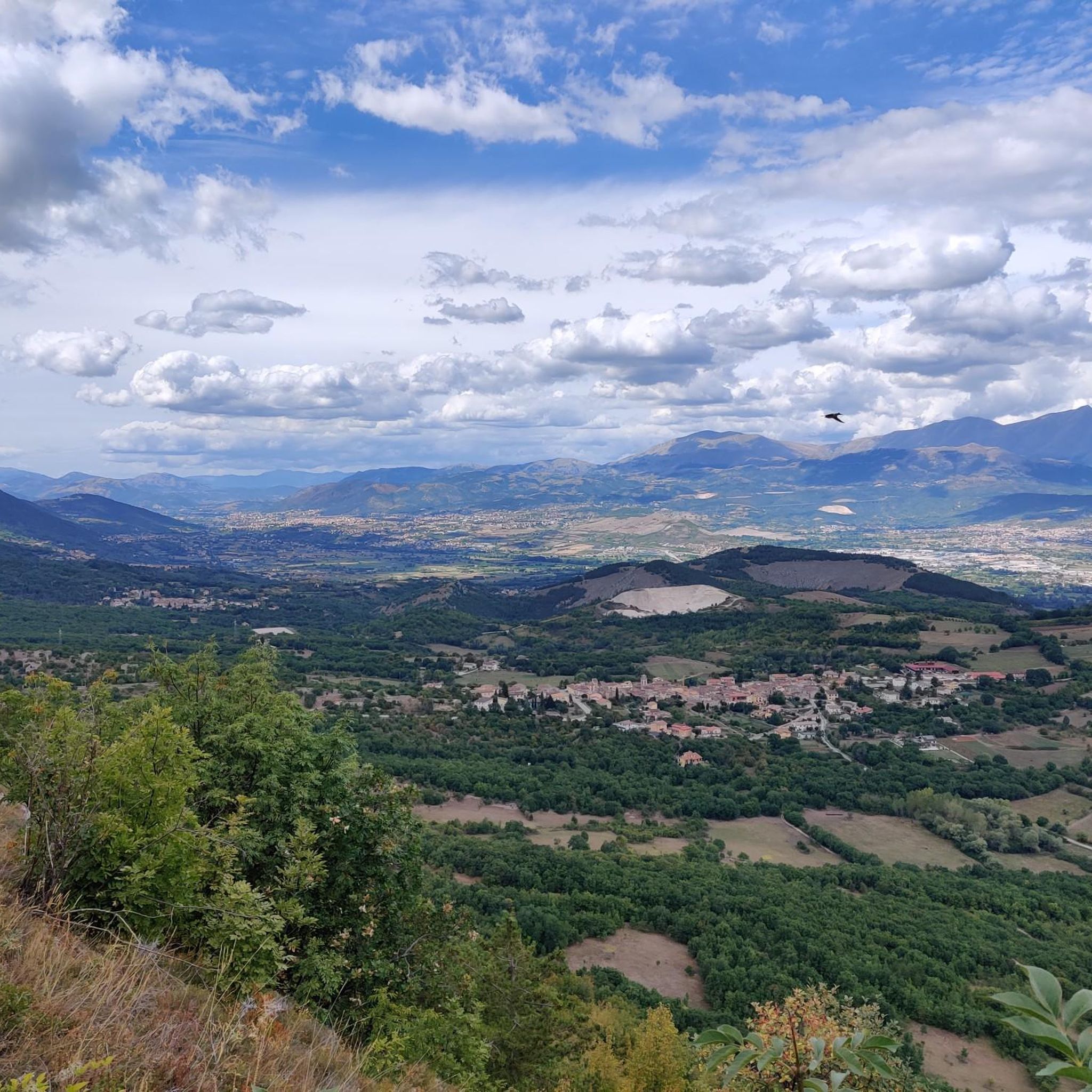
Mountain biking around Fossa offers a diverse landscape characterized by rolling hills, historical sites, and natural features like waterfalls. The region's terrain includes varied elevations, with routes featuring significant climbs and descents. Mountain bike trails in Fossa traverse both open countryside and areas with historical landmarks, providing a mix of challenging and scenic rides. The area's geology contributes to a dynamic riding experience across different surfaces.
Best mountain bike trails around Fossa
- The most popular mountain bike trail is Our…
Last updated: June 22, 2026
4.9
(23)
60
riders
57.3km
05:33
1,400m
1,400m
Hard mountain bike ride. Very good fitness required. Suitable for all skill levels.
4.0
(3)
26
riders
46.8km
04:14
1,050m
1,050m
Hard mountain bike ride. Very good fitness required. Suitable for all skill levels.

Sign up for free
5.0
(9)
30
riders
37.7km
02:09
260m
260m
Moderate mountain bike ride. Good fitness required. Suitable for all skill levels.
5.0
(3)
65
riders
104km
07:47
2,270m
2,270m
Hard mountain bike ride. Very good fitness required. Advanced riding skills necessary.
14
riders
96.3km
08:18
2,040m
2,040m
Hard mountain bike ride. Very good fitness required. Advanced riding skills necessary.
Get access to more routes and recommendations from other explorers.
Sign up for free
Already have an account?
Our route recommendations are based on thousands of hikes, rides, and runs completed by other people on komoot.
Start today with a free account
Your next adventure awaits.
Login or Signup
Tips from the Community

The story of Pupo Nunzio di Roio from October 1919 is one of the most poignant historical tragedies of the Abruzzo region. It symbolises the harsh and dangerous reality of the transumanza (the seasonal migration of livestock), which for centuries determined the economic and social life of this Italian mountain region. This place commemorates one of the most tragic events in the history of the transumanza, the age-old migration where shepherds drove their sheep every summer to the green pastures of Campo Imperatore and returned in the autumn to the warmer plains of Puglia. In the autumn of 1919, the 41-year-old shepherd Nunzio Pupi, better known as Pupo Nunzio, postponed the descent for a few days. The autumn was exceptionally mild, and he wanted to let his flock of no less than 5,000 sheep graze for as long as possible. But the weather unexpectedly turned. A fierce snowstorm caught him by surprise in the middle of the high plain. Together with his two young sons, Idolo (12) and Alfredo (11), and their loyal sheepdog, he became disoriented in the snow. None of them survived the icy storm. The entire flock also perished. According to local legend, his wife Ersilia Caruso could not cope with the loss of her husband, her children, and their sole source of livelihood. She died a short time later, consumed by grief. This moving story recalls the hard life of the shepherds, who were completely dependent on nature and often paid a high price for their existence. About the monument: Monument of Fonte Vetica In Fonte Vetica, on the southeastern plateau of Campo Imperatore, stands an impressive monument commemorating the tragedy of 1919. The Abruzzese sculptor Vicentino Michetti immortalised the shepherd, his two sons, and their dog as they desperately fought against the icy snowstorm. A little further away stands the statue of the mother, with outstretched arms directed towards the mountains, hoping to see her family return alive. Although the monument tells one poignant story, it has become a tribute to all the shepherds of Abruzzo who, over the centuries, risked their lives during the arduous transumanza. Anyone who stops at Fonte Vetica today immediately feels the impressive combination of overwhelming beauty and the unforgiving power of this mountain landscape.
2
0
The Funivia del Gran Sasso d'Italia (the cable car to Campo Imperatore) was originally opened in 1934 and was recently reopened on June 15, 2026, after a period of significant maintenance. The cable car connects the valley station in Fonte Cerreto (Assergi, at 1,117 meters) with the Campo Imperatore plateau (at 2,130 meters). The cable car to Campo Imperatore has a rich history. The first installation was built in 1934 during the reign of Benito Mussolini and was considered a technical masterpiece and one of the longest cable cars in the world at the time. It also played a role in the spectacular liberation of Mussolini during World War II. The original cabins remained in use until 1985. After a complete modernization, the current cable car was put into operation in 1988. With two cabins for 100 passengers each, it covers a distance of over 3 kilometers and an altitude difference of 1,013 meters in just seven minutes. Following extensive safety works, including the replacement of the support cables, the cable car has been fully operational again since June 2026. Opening hours: During the summer season (until the end of August 2026), the cable car to Campo Imperatore is open daily from 07:30 to 19:30. The cabins depart every 30 minutes. Please note that in case of strong winds or other extreme weather conditions, the cable car may be temporarily taken out of service to ensure the safety of travelers.
3
0
Campo Imperatore is one of Italy's most impressive natural areas. This vast, treeless high plain at an altitude of approximately 2,000 meters is not called 'Little Tibet' for nothing. Surrounded by the rugged peaks of the Gran Sasso massif, it offers a spectacular setting for hikers of all levels. From relaxed walks across the rolling plateau between grazing sheep and horses to challenging climbs of Monte Aquila, the Rifugio Duca degli Abruzzi, or even Corno Grande (2,912 m), the highest peak in the Apennines. Thanks to accessibility by car or cable car, you can start your hike right in the middle of the high mountains, with breathtaking panoramas along the way and a landscape that has served as a backdrop for countless films.
4
0
Historical tidbit: the pope who said 'no' The pontificate of Pope Celestine V lasted only five months. The simple hermit did not feel at all at home amidst the political intrigues and corruption of Rome. That is why he made a decision that was unprecedented at the time: he voluntarily resigned from his office to return to his humble life in the mountains. He thus became the first pope in history to abdicate of his own accord. After his death, his body was interred in the Basilica of Collemaggio. His impressive crystal mausoleum can still be admired there today. A special link with Pope Benedict XVI After the severe earthquake that struck L'Aquila in 2009, Pope Benedict XVI visited the heavily damaged basilica. At the tomb of Celestine V, he silently laid down his own pallium, the woolen shoulder band he had received at his papal inauguration. At that moment, it seemed like a subdued tribute to his predecessor. Only four years later did this gesture take on a deeper meaning. In 2013, Benedict XVI himself voluntarily resigned as pope, the first since the late Middle Ages. His symbolic tribute to Celestine V proved, in retrospect, to be a remarkable harbinger of his own historic decision. Thus, centuries after Celestine V's abdication, the Basilica of Collemaggio once again closed a special chapter in papal history.
2
0
The Basilica of Santa Maria di Collemaggio is undoubtedly the architectural and spiritual jewel of L'Aquila. Located at the end of an impressive green lawn just outside the city walls, this 13th-century church combines a unique Abruzzian Romanesque-Gothic style with a history that forever changed the Catholic Church. The history of the basilica is closely linked to Pietro da Morrone, a devout hermit who had retreated to the remote mountains of Abruzzo. According to tradition, the Virgin Mary appeared to him with the instruction to build a church on the hill of Collemaggio. Construction began in 1287. A few years later, in 1294, the Church found itself in a deep crisis. After the death of the pope, the cardinals had failed to elect a successor for more than two years. Finally, they appointed the simple hermit Pietro as a compromise. To everyone's surprise, he accepted the choice and was crowned Pope Celestine V in this basilica – and not in Rome. Shortly after his coronation, Celestine V issued the "Bulla del Perdono", a papal bull that granted believers full forgiveness of their sins if, with sincere repentance, they passed through the Holy Door (Porta Santa) of the basilica on August 28 or 29. This created the very first Holy Year or Jubilee in the history of the Catholic Church, six years before Rome introduced its own official jubilee. This special tradition, known as "La Perdonanza Celestiniana", is still celebrated every year and has been recognized as intangible cultural heritage by UNESCO.
2
0
In L'Aquila, a rich medieval past effortlessly merges with admirable modern resilience. The proud capital of Abruzzo rises in full glory and is best discovered on foot. Wandering through the atmospheric streets, you'll encounter one architectural treasure after another. For example, start at the iconic Fontana delle 99 Cannelle, where 99 mystical stone masks continuously spout water. Climbing further up, you'll reach the massive 16th-century Forte Spagnolo. From this impressive fortress, you can enjoy a sweeping view of the rugged, often snow-capped peaks of the Gran Sasso massif. The city's rich history is also palpable in the many beautifully restored palazzi and churches. For instance, the Basilica di San Bernardino overwhelms every visitor with a breathtaking baroque ceiling adorned with gold leaf. After all the cultural immersion, lively squares like Piazza del Duomo invite you for a well-deserved break. It's the perfect place to enjoy the local cuisine and a good glass of Abruzzese wine at an outdoor cafe. As a grand finale, the Basilica di Santa Maria di Collemaggio should not be missed. This striking, pink-and-white checkered church houses a true world first: the very first Holy Door in the world. Thanks to the central, free parking facilities just outside the city walls, this compact art city is the ideal destination for a carefree and inspiring cultural walking holiday.
1
0
The Forte Spagnolo (also known as Castello Cinquecentesco) is one of the most impressive 16th-century military strongholds of Central and Southern Italy. Although it is a defensive work, its true historical significance lies in the fact that it was never built to protect the city, but rather to suppress it. After the Spanish threat diminished over time, the complex successively served as the residence of the Spanish governor, barracks for French troops in the 19th century, and headquarters for the German occupier during World War II. In 1902, it was officially declared a national monument. Shortly after World War II, it became the home of the National Museum of Abruzzo (MuNDA). Since the devastating earthquake of 2009, the fort has been undergoing a lengthy and complex restoration, but it remains one of the most impressive symbols of the city when viewed from the outside.
1
0
Place where young and old can experience adventures together.
1
0
Frequently Asked Questions
How many mountain bike trails are there in Fossa?
There are over 170 mountain bike trails around Fossa, offering a wide range of options for different skill levels and preferences.
Are there mountain bike trails suitable for beginners in Fossa?
Yes, Fossa offers several easy mountain bike trails. You can find 9 routes specifically graded as easy, perfect for those new to mountain biking or looking for a relaxed ride.
What about more challenging mountain bike routes in Fossa?
For experienced riders seeking a challenge, Fossa has 53 difficult mountain bike routes. These trails often feature significant climbs and descents, traversing varied terrain. An example is the Our Lady of Pity – Rocca Calascio Castle loop from L’Aquila San Gregorio, which is 35.6 miles long with over 1400m of elevation gain.
Are there any circular mountain bike routes around Fossa?
Many of the mountain bike trails in Fossa are designed as loops, allowing you to start and end at the same point. For instance, the Memorial Chapel – Stiffe Waterfall loop from San Demetrio de' Vestini is a popular circular route that covers 29.7 miles.
What natural landmarks can I see along mountain bike trails in Fossa?
The region's trails often pass by impressive natural features. You can encounter the Stiffe Waterfall, a notable natural monument, or explore areas like Pozzo Caldaio. The varied terrain also includes rolling hills and scenic passes like Maccione Pass.
Are there historical sites to explore while mountain biking in Fossa?
Yes, Fossa is rich in historical sites. Many routes lead through historical landscapes, such as the Santa Lucia Abbey – Memorial Chapel loop from Monticchio. You might also pass by the Fountain of the 99 Spouts or the Chapel of Remembrance of Terranera.
What is the typical length of mountain bike trails near Fossa?
Mountain bike trails near Fossa vary significantly in length. While some easy routes are shorter, many popular trails range from 25 to 35 miles. For example, the L'Aquila – Monticchio Fountain loop from San Demetrio de' Vestini is around 23 miles long.
What do other mountain bikers enjoy most about Fossa?
The mountain bike trails in Fossa are highly rated by the komoot community, with an average score of 4.4 stars from over 400 reviews. Riders frequently praise the diverse landscape, the mix of challenging and scenic rides, and the opportunity to explore both natural and historical landmarks.
Are permits required for mountain biking in Fossa?
Generally, permits are not required for mountain biking on the established trails around Fossa. However, it's always advisable to check local regulations or specific park rules if you plan to ride in protected areas.
What is the best time of year for mountain biking in Fossa?
The best time for mountain biking in Fossa is typically during spring and autumn when the weather is milder and the natural scenery is at its most vibrant. Summer can also be suitable, especially in the mornings or late afternoons, though some trails might be exposed to direct sun. Winter riding can be possible on lower elevation trails, but higher routes may be affected by snow or ice.
Are there any hidden gem mountain bike trails in Fossa?
While many trails are well-known, the extensive network around Fossa means there are always less-trafficked paths to discover. Exploring the less difficult routes or those slightly off the main hubs can often lead to quieter, equally rewarding experiences, offering unique views of the region's rolling hills and historical sites.
Can I find mountain bike trails in Fossa that pass by a pub or restaurant?
While specific routes are not explicitly designed to pass by pubs, many trails in Fossa lead through or near small towns and villages where you can find local eateries and refreshment stops. Planning your route to include a stop in a village like Monticchio or San Demetrio de' Vestini can offer a pleasant break.
Most popular attractions around Fossa

Get inspired with the komoot mobile app


Explore more
Browse the best MTB trails in other regions.
