The best walks and hikes around Palombaro
4.6
(729)
4,034
hikers
87
hikes
Hiking around Palombaro offers diverse landscapes within the wooded foothills of the Majella National Park in Abruzzo, Italy. The region is characterized by mountainous terrain, featuring formations of mountain pine, black pine, and extensive beech forests. Hikers can explore significant natural features such as the Grotta di Sant'Angelo, the Gorges of Fara San Martino, and numerous mountain peaks and caves. This area provides a blend of natural beauty and historical sites for outdoor enthusiasts.
Best hiking trails around Palombaro
- The…
Last updated: May 8, 2026
4.8
(54)
240
hikers
Moderate hike. Good fitness required. Mostly accessible paths. Sure-footedness required.
4.4
(39)
178
hikers
17.5km
07:02
1,160m
1,160m
Hard hike. Very good fitness required. Mostly accessible paths. Sure-footedness required.

Sign up for free
4.5
(8)
42
hikers
Moderate hike. Good fitness required. Mostly accessible paths. Sure-footedness required.
4.5
(8)
60
hikers
14.6km
06:20
1,280m
1,280m
Hard hike. Very good fitness required. Easily-accessible paths. Suitable for all skill levels.
4.5
(6)
35
hikers
12.5km
06:46
1,170m
1,170m
Hard hike. Very good fitness required. Mostly accessible paths. Sure-footedness required.
Get access to more routes and recommendations from other explorers.
Sign up for free
Already have an account?
Our route recommendations are based on thousands of hikes, rides, and runs completed by other people on komoot.
Start today with a free account
Your next adventure awaits.
Login or Signup
Tips from the Community

Here the path leads along the entrance of the grotto and goes steeply uphill opposite.
0
0

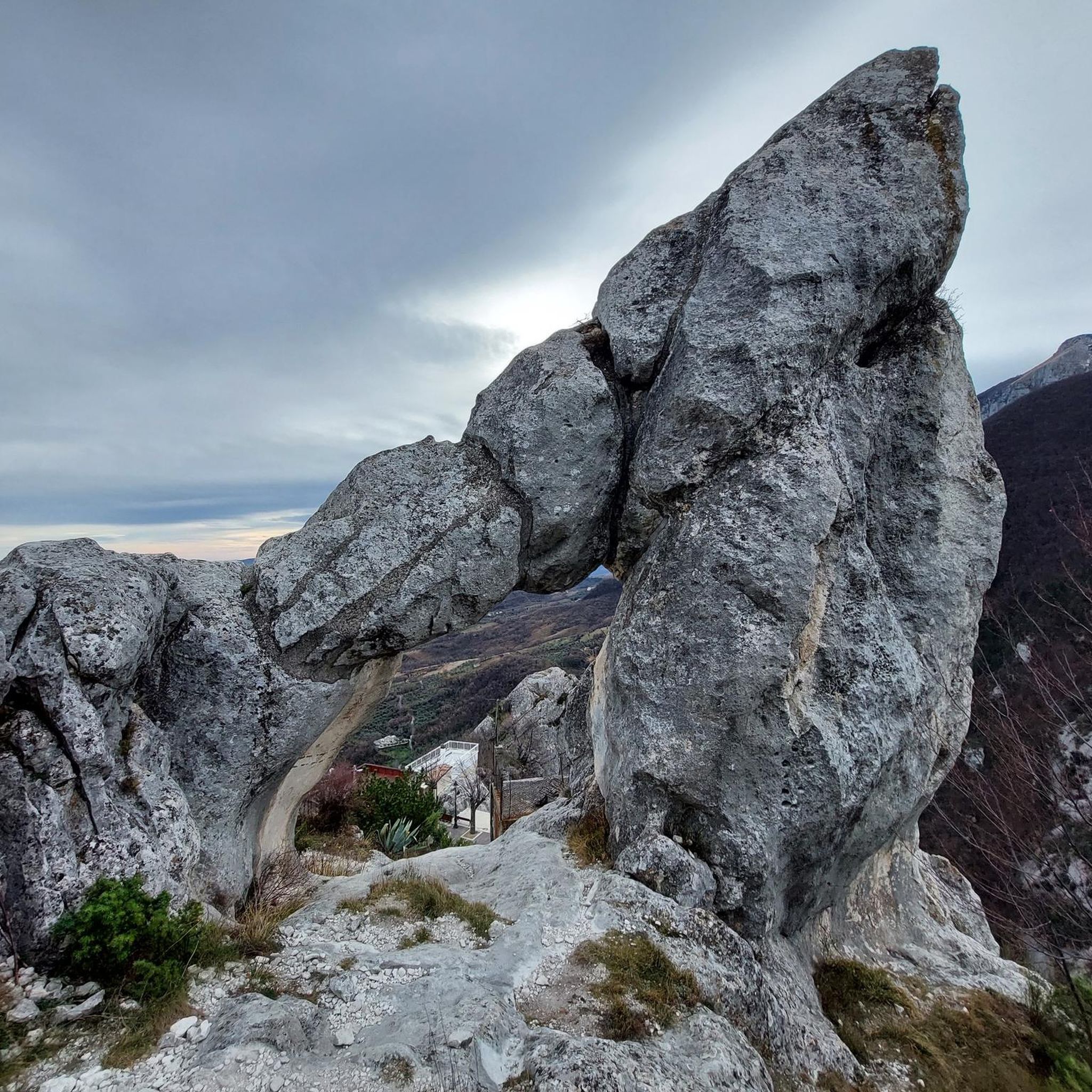
The Pischioli is a refuge located under a rock spur with a fountain and a rest area equipped with tables adjacent to the refuge. It is located in a suggestive panoramic point with the Avello and Tre Grotte valleys and the Majella with a view of Cima Murelle looking up. Starting from Balzolo you pass the famous Pinna, which symbolizes the goddess Maja, also called Cimirocco. Skirting the aqueduct fence you climb steeply along a stony path, a couple of sections are slightly exposed but nothing transcendental. After the initial section the climb becomes a little less steep and passes through vegetation composed of juniper bushes, it is a slightly slippery climb especially in the case of rain. After a good hour of walking a clearing suddenly appears with the rock spur that guards the Pischioli refuge. A short distance from the refuge there are several pastoral caves of great beauty and the Madonna delle Sorgenti. To continue towards Pomilio, take the path uphill that will first lead to Rapina and then arrive among meadows and mountain pines at Pomilio. To descend from Pischioli it is possible, recommended in case of unstable or wet weather, to take the path that from the Pischioli equipped area enters the woods and descends towards Bocca di Valle, not taking the fork for Bocca di Valle the path will take us under Balzolo in the area reserved for parking cars. It is a longer but simple path that passes through a beautiful wood where there are several remains of walls of pastoral huts. There are several routes, more or less difficult, to reach it.
1
0

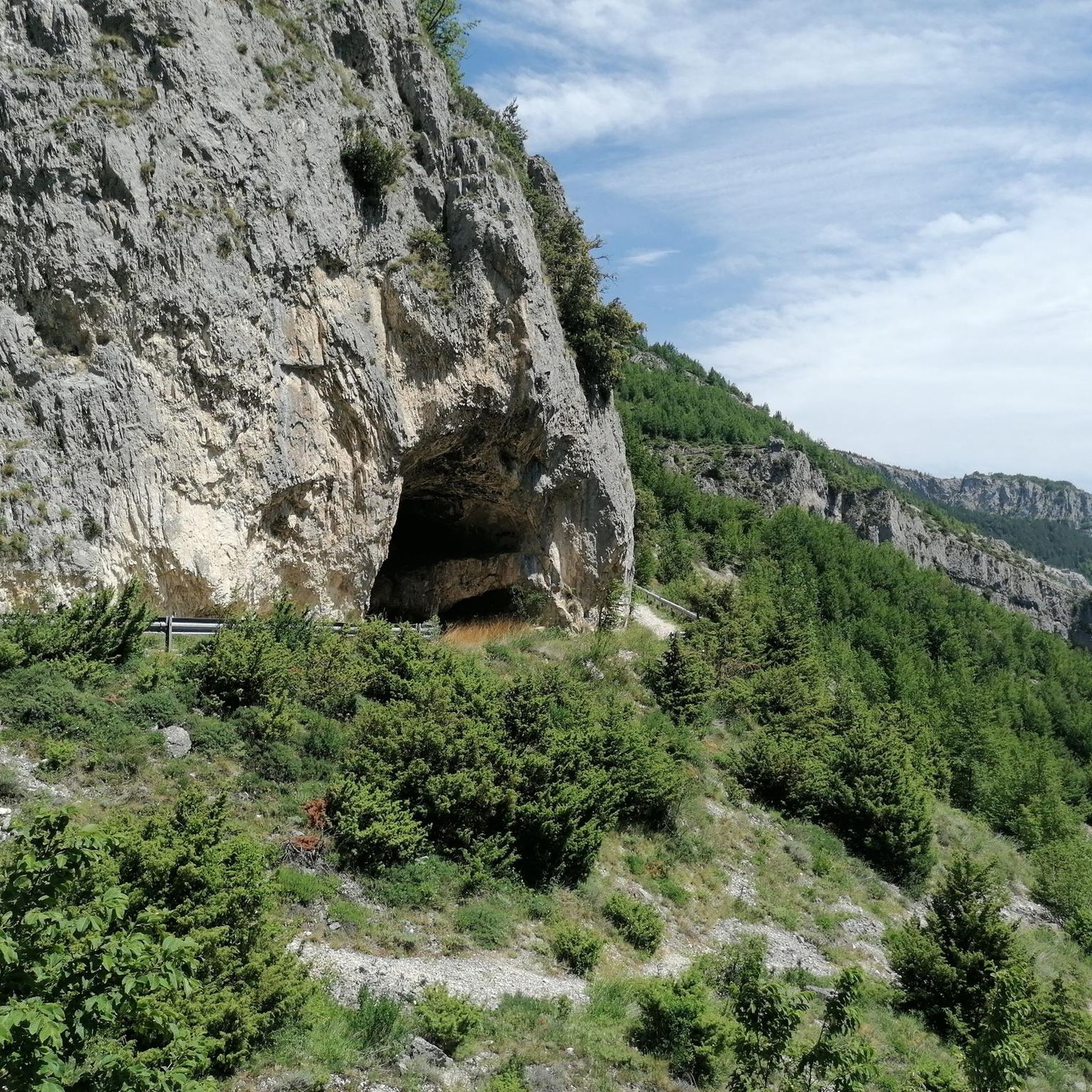
Cave not easy to reach, it is surprising that anyone at the time exploited these caves. Passing through it was a nice surprise.
1
0
A beautiful stretch of panoramic path (not suitable for those who are afraid of heights) which leads back to the dirt road that crosses the Avello valley
0
0

A Perfect place where to start or end hiking.
0
0

The Macarone waterfall can be reached after going through two tunnels and passing a pointed rock on the bend. On the left you will find a path marked by a pile of stones and a wooden pole. On one of the small stones you will find the inscription: "waterfall". Continue along the path up to a fork. Turning left you can see the waterfall. To get down there is a rope just ahead. It is recommended not to do it while sitting as it is quite slippery. Paying attention and holding on to the trunks of the tree, from the left it is possible to hold the rope by walking backwards along the sloping section. Pay attention to the slippery sections to get in front of the waterfall.
2
1

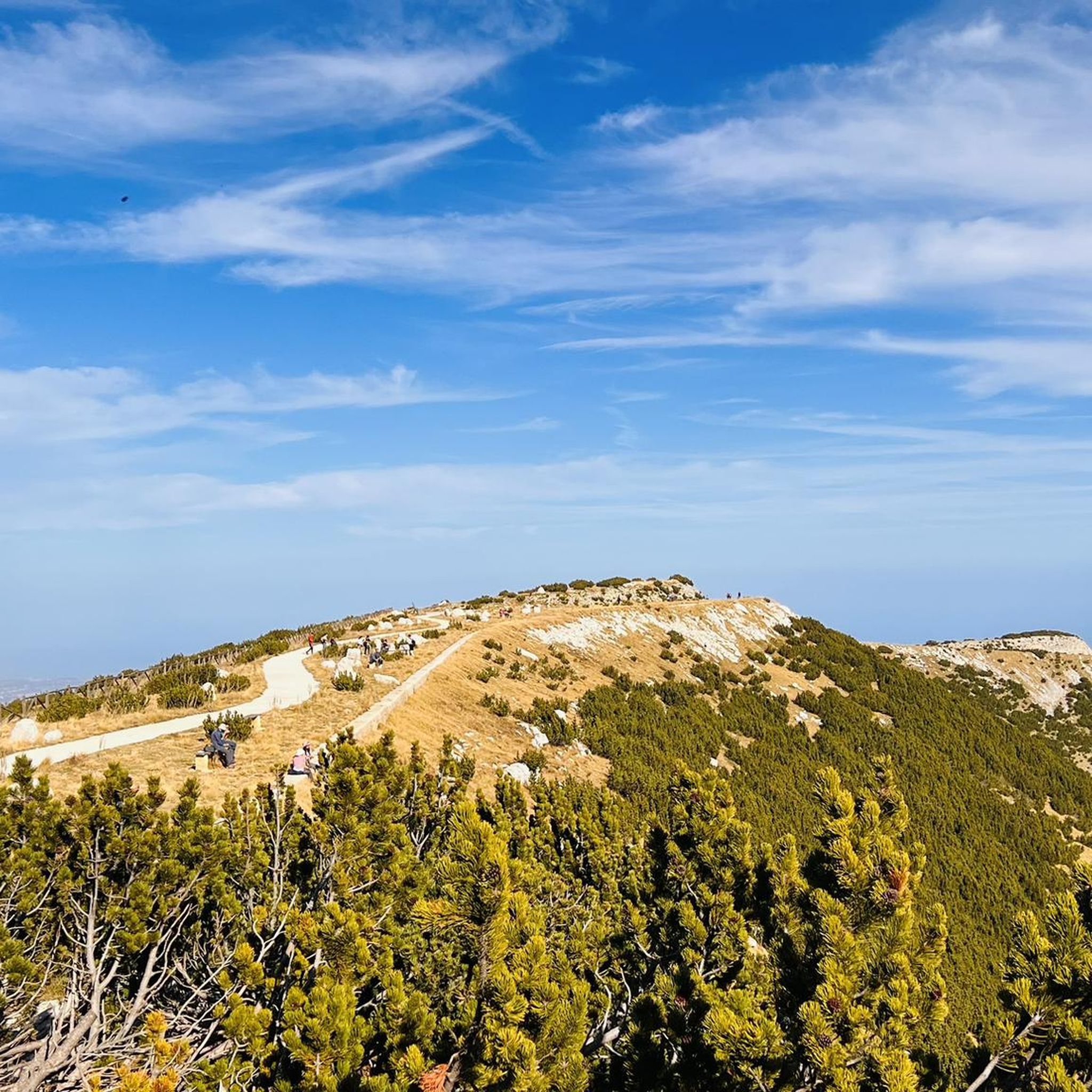
Arrived at the Martellese refuge, enjoy the splendid panorama of the Majella mountains.
0
0
A few meters before reaching an altitude of 2049m on the right is the small Martellese Hut, an altitude of 2035m, also called Rifugio d'Ugni.
0
0
Frequently Asked Questions
How many hiking trails are available around Palombaro?
Palombaro offers a wide array of hiking opportunities with over 85 trails. These range from easy walks to challenging ascents, catering to various fitness levels within the Majella National Park.
What are the general difficulty levels of hiking trails in Palombaro?
The trails around Palombaro offer a good mix of difficulties. You'll find about 12 easy routes, 39 moderate excursions, and 34 challenging ascents, ensuring options for every experience level.
What do other hikers say about the trails in Palombaro?
The hiking trails in Palombaro are highly rated by the komoot community, with an average score of 4.6 stars from over 680 reviews. Hikers often praise the diverse landscapes, from wooded foothills to mountainous terrain, and the blend of natural beauty with historical sites.
Are there any circular hiking routes in Palombaro?
Yes, many trails in Palombaro are designed as loops, allowing you to start and end at the same point. For example, the Dea Maja Rock Arch (Cimirocco) – Majelletta Picnic Area loop is a popular moderate option, and the Pischioli Refuge loop offers a shorter, varied terrain experience.
What natural landmarks can I explore while hiking near Palombaro?
The region is rich in natural landmarks. You can visit the historic Sant'Angelo Cave, which houses a rock church, or experience the dramatic Gorges of Fara San Martino. The Oasi di Serranella is also a protected area known for its diverse vegetation. For panoramic views, experienced hikers can aim for Mount Amaro Summit, the highest peak in Majella National Park.
Are there any historical or cultural sites to visit near Palombaro?
Beyond the trails, Palombaro offers several historical and cultural points of interest. You can explore the ancient Juvanum Archaeological Park, which dates back to Roman times, or visit the Museo Geopaleontologico Alto Aventino within the Ducal Castle. The Church of Santa Maria della Serra also provides a glimpse into the region's rich heritage.
Are there family-friendly hiking options in Palombaro?
While many trails require good fitness, Palombaro does offer easier routes suitable for families. These trails often feature less elevation gain and shorter distances, allowing for a pleasant outdoor experience with children. It's always recommended to check the specific trail details for suitability.
Can I bring my dog on the hiking trails in Palombaro?
Many trails within the Majella National Park, including those around Palombaro, are dog-friendly. However, it's crucial to keep dogs on a leash to protect local wildlife and ensure the safety of other hikers. Always check specific park regulations or trail signs for any restrictions.
What is the best time of year to hike in Palombaro?
The best time to hike in Palombaro is generally from spring through autumn (April to October). During these months, the weather is milder, and the trails are more accessible. Summer offers warm conditions, while spring and autumn provide pleasant temperatures and vibrant natural scenery. Winter hiking is possible but requires appropriate gear and experience due to snow and colder temperatures.
Are there any challenging multi-day hikes or ascents to high peaks from Palombaro?
Yes, Palombaro serves as a gateway to more challenging expeditions within the Majella National Park. Experienced mountaineers can undertake the ascent to Mount Amaro, the second highest peak in Abruzzo, offering extensive panoramic views. Routes like the View of Majella Mountain loop are difficult and demand very good fitness.
Are there any specific trails that lead to impressive viewpoints?
Absolutely. The View of Majella Mountain – Majelletta Picnic Area loop is specifically known for offering expansive views of Majella Mountain. Additionally, trails leading towards higher elevations, such as those near Mount D'Ugno, provide stunning vistas of the Adriatic Sea and the surrounding national park.
Most popular attractions around Palombaro

Get inspired with the komoot mobile app


Explore more
Browse the best Hikes in other regions.
