The best cycling routes around Vivaro Romano
4.7
(28)
894
riders
50
rides
Touring cycling routes around Vivaro Romano are situated in the Metropolitan City of Rome, Lazio, within the Aniene Valley and the Monti Lucretili. The region features a landscape of rolling hills and mountainous terrain, offering varied routes for cyclists. Ancient forests and clear streams characterize the natural environment, providing a serene setting for exploration. This area presents diverse physical features for touring cyclists.
Best touring cycling routes around Vivaro Romano
- The most popular touring cycling route is Castel di Tora…
Last updated: May 24, 2026
5.0
(1)
49
riders
70.7km
04:38
1,010m
1,010m
Hard bike ride. Very good fitness required. Mostly paved surfaces. Suitable for all skill levels.
5.0
(3)
43
riders
64.2km
04:17
980m
980m
Hard bike ride. Very good fitness required. Mostly paved surfaces. Suitable for all skill levels.

Sign up for free
11
riders
41.3km
02:47
670m
670m
Hard bike ride. Very good fitness required. Mostly paved surfaces. Suitable for all skill levels.
5.0
(1)
12
riders
42.3km
03:00
840m
830m
Hard bike ride. Very good fitness required. Mostly paved surfaces. Suitable for all skill levels.
5.0
(1)
12
riders
46.9km
03:12
790m
790m
Hard bike ride. Very good fitness required. Mostly paved surfaces. Suitable for all skill levels.
Get access to more routes and recommendations from other explorers.
Sign up for free
Already have an account?
Our route recommendations are based on thousands of hikes, rides, and runs completed by other people on komoot.
Start today with a free account
Your next adventure awaits.
Login or Signup

Tips from the Community

The statue is located in front of the house of the Sisters of Charity in Pozzaglia Sabina and represents Saint Agostina Pietrantoni (born Livia Pietrantoni), born in Pozzaglia Sabina in 1864. Saint Agostina was a nun of the Sisters of Charity of Saint Giovanna Antida Thouret and worked as a nurse at the Santo Spirito hospital in Rome, where she was killed in 1894 at just 30 years old while assisting the sick. She was proclaimed a saint by John Paul II in 1999 and is the patron saint of nurses in Italy. The statue is a bronze monument dedicated to her, placed in front of the house of the nuns in the center of the town, as a sign of devotion and memory of her work of charity and sacrifice. It is a spiritual point of reference for the community and for the pilgrims who visit Pozzaglia Sabina, and symbolizes the dedication, faith and service to the suffering that characterized the life of Saint Agostina.
0
0

Montorio in Valle is a hamlet of Pozzaglia Sabino, built in a dominant position over the Turano valley. Its parish church of S. Stefano Promartire, from the 14th century, has a beautiful travertine entrance portal with a lunette from the 15th century. It is located along the path of San Benedetto by bike.
4
0
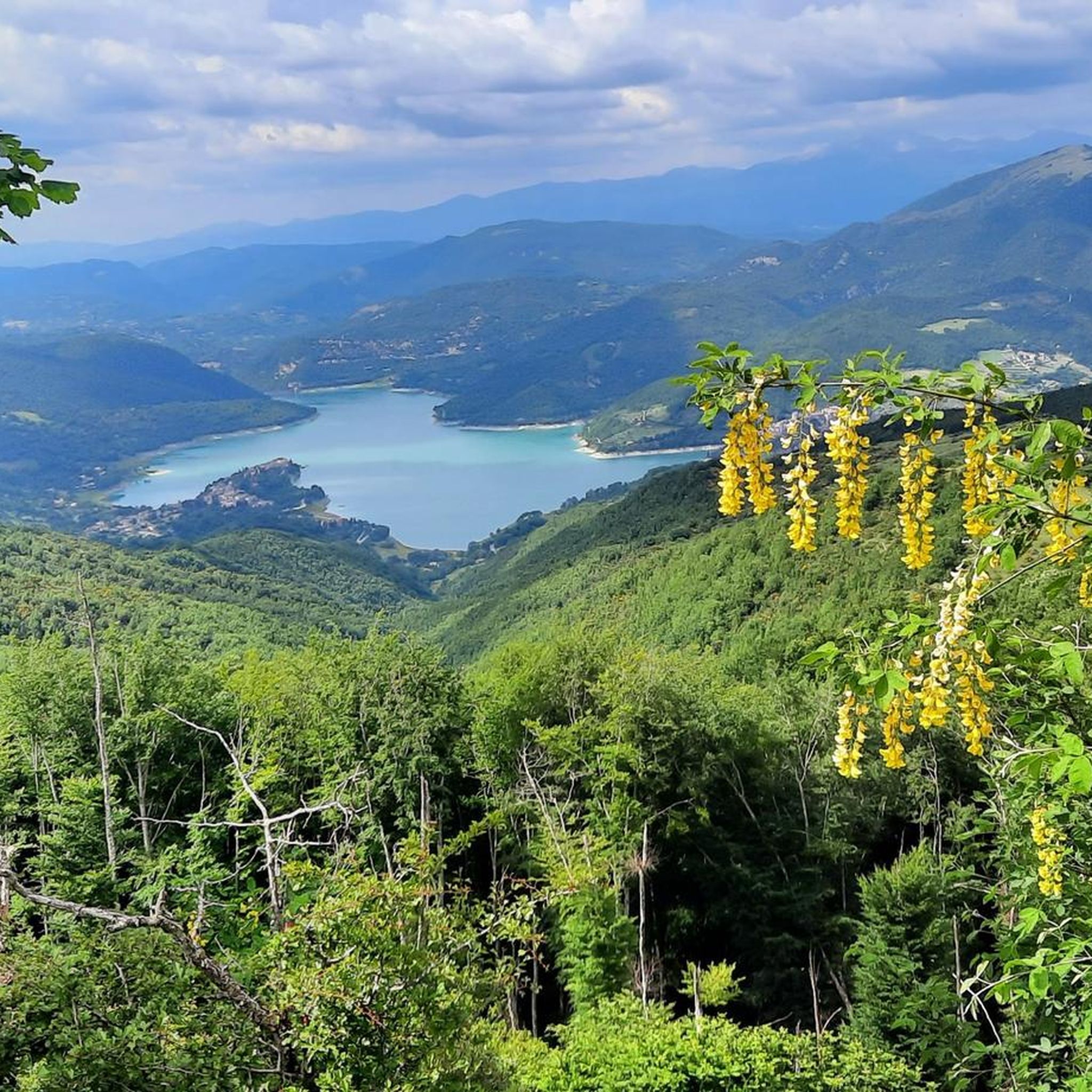
It is located just before the bridge that crosses the lake and leads to Castel di Tora
4
0
Road of the cycling route of the Way of St. Benedict
3
0

Village in the circuit of "The most beautiful villages in Italy". The roads to go up are also very beautiful, both from Licenza and from Poggio Moiano
0
0

San ROCCO was chosen as the patron saint for this church and the corresponding parish. Saint Roch was born in the middle of the 14th century in Montpellier, France. He is popularly regarded as the "plague saint" - alongside Saint Sebastian. A characteristic feature of Roch's depiction in paintings and as a statue is that he is usually pointing to a plague boil on his leg; a dog can also often be seen at his feet, because according to legend, when he was caring for plague victims, he himself became ill and withdrew into solitude, and the dog provided him with bread every day. The memorial day of San Rocco in the calendar of saints is August 16th.
0
0

From Tagliacozzo you go up for about ten kilometers to reach the pass that leads to Carsoli.
0
0
After trying to descend via the town of Pietrasecca, I had to fall back along this stretch of the Tiburtina Valeria towards Carsoli.
0
0
Frequently Asked Questions
How many touring cycling routes are available around Vivaro Romano?
There are nearly 40 touring cycling routes around Vivaro Romano, offering a wide range of options for exploring the region. These routes are highly rated by the komoot community, with an average score of 4.9 stars from over 20 reviews.
What kind of terrain can I expect on touring cycling routes in Vivaro Romano?
The region around Vivaro Romano is characterized by a blend of rolling hills and mountainous terrain, offering varied routes. You'll find ancient forests and clear streams, particularly within the Monti Lucretili Regional Nature Park, providing a serene environment for exploration. Routes range from moderate to difficult, often featuring significant elevation gain.
Are there any easy touring cycling routes suitable for beginners in Vivaro Romano?
While many routes in Vivaro Romano are rated as difficult, there are some moderate options available. For example, the Castel di Tora Bridge – View of Castel di Tora loop from Carsoli is a moderate 33.8-mile (54.5 km) trail that takes approximately 3 hours 12 minutes to complete, offering scenic views without extreme difficulty.
Can I find challenging routes for experienced touring cyclists?
Yes, Vivaro Romano is well-suited for experienced touring cyclists seeking a challenge. The majority of routes (35 out of 39) are rated as difficult. Routes like the Colli di Monte Bove – Colle Civitella Pass loop from Oricola - Pereto, a 43.9-mile (70.7 km) path, feature over 1000 meters of elevation gain through hilly and mountainous terrain, requiring good to very good fitness.
What historical and natural landmarks can I see while cycling in Vivaro Romano?
While cycling, you can explore several historical and natural points of interest. The ruins of Castello Borghese, dating back to around 1012, offer a significant historical landmark. You might also encounter ancient mills like La Mola and La Moletta. For natural sights, the region is home to several permanent springs such as La Nocchia and Saint Benedict's spring. For more natural monuments, you can explore the Natural Monuments around Vivaro Romano guide.
Are there any viewpoints along the cycling routes in Vivaro Romano?
Yes, the region offers several opportunities for panoramic views. From areas like Monte Cavo, you can enjoy spectacular vistas of the surrounding countryside. The broader Lazio region also provides extraordinary distant views from the open heights of the Monti Lepini, Monti Ausoni, and Monti Aurunci mountain ranges. You can find specific viewpoints like Ascrea Viewpoint listed as highlights.
Are there circular touring cycling routes available?
Many of the touring cycling routes around Vivaro Romano are designed as loops, allowing you to start and end in the same location. Examples include the Licenza – Orvinio loop from Pozzaglia Sabina and the Ascrea Viewpoint – Obito Gorge loop from Carsoli, making planning your ride convenient.
Are there any natural attractions like lakes or waterfalls near the cycling routes?
Yes, the area features several beautiful natural attractions. You can find lakes such as Lagustelli di Percile, Fraturno Lake, and the larger Lake Turano. Additionally, you might discover waterfalls like the Rioscuro Stream Waterfalls. For more details, refer to the Lakes around Vivaro Romano guide.
What is the best time of year to go touring cycling in Vivaro Romano?
The region's climate, typical of central Italy, generally offers pleasant conditions for cycling during spring and autumn. These seasons provide milder temperatures and beautiful scenery, making them ideal for exploring the rolling hills and mountainous terrain. Summer can be warm, while winter might bring cooler temperatures, especially at higher elevations.
What do other cyclists say about touring cycling in Vivaro Romano?
The touring cycling routes in Vivaro Romano are highly regarded by the komoot community, with an impressive average rating of 4.9 out of 5 stars from over 20 reviews. Cyclists often praise the diverse landscapes, from ancient forests to picturesque hills, and the challenging yet rewarding nature of the routes. Over 800 touring cyclists have used komoot to explore this varied terrain.
Is public transport available to reach the cycling routes in Vivaro Romano?
Vivaro Romano is approximately 50 kilometers northeast of Rome. While specific public transport options for cyclists directly to trailheads might be limited, you can research regional bus or train services that connect to towns near Vivaro Romano. It's advisable to check local transport schedules and bicycle carriage policies in advance.
Are there places to stop for refreshments or accommodation along the routes?
As Vivaro Romano is a charming comune, you can expect to find local cafes and eateries within the village itself. For accommodation, there are options in and around Vivaro Romano, ranging from guesthouses to agriturismos, which can cater to cyclists. It's recommended to plan your stops, especially on longer routes, as services might be sparse in more remote, mountainous areas.
Most popular attractions around Vivaro Romano

Get inspired with the komoot mobile app


Explore more
Browse the best Cycling routes in other regions.
