The best cycling routes around Casalanguida
4.5
(26)
383
riders
42
rides
Touring cycling routes around Casalanguida are situated in Italy's Abruzzo region, an area characterized by its elevated position at 450 meters, offering panoramic views of the surrounding countryside. The region features mountainous terrain to the west, including the Apennines with peaks like Gran Sasso and Maiella, alongside diverse ecosystems of forests, alpine meadows, lakes, and rivers. To the east, the landscape transitions to coastal reserves such as Punta Aderci and the "Costa dei Trabocchi," providing varied cycling environments from challenging…
Last updated: October 21, 2026
5.0
(1)
13
riders
62.1km
04:10
940m
940m
Hard bike ride. Very good fitness required. Mostly paved surfaces.
14
riders
57.8km
04:27
1,310m
1,310m
Hard bike ride. Very good fitness required. You may need to push your bike for some segments of this route.

5.0
(1)
12
riders
81.7km
05:59
1,770m
1,770m
Hard bike ride. Very good fitness required. Mostly paved surfaces.
3.0
(1)
9
riders
40.0km
02:53
820m
820m
Hard bike ride. Very good fitness required. Mostly paved surfaces.
13
riders
66.1km
04:36
1,200m
1,210m
Hard bike ride. Very good fitness required. Mostly paved surfaces.
Get access to more routes and recommendations from other explorers.
Already have an account?
Our route recommendations are based on thousands of hikes, rides, and runs completed by other people on komoot.
Start today with a free account
Your next adventure awaits.
Popular around Casalanguida

Tips from the Community

Historic Franciscan monastery in an oasis of peace. The Convento di San Pasquale (officially the monastery of Santa Maria degli Angeli) is hidden in the greenery on the hill of Vallaspra, just outside the medieval town of Atessa. This impressive complex was founded as early as 1408 by the blessed Tommaso da Firenze. It is built entirely of natural stone and exudes a serene, historic atmosphere. Although the interior and the beautiful monastery garden with the central well (from 1709) are unfortunately often closed to the public due to varying opening hours, the complex is an absolute sight to behold from the outside. Under the large portico at the front, you can still admire a centuries-old fresco of the Pietà. Moreover, the quiet, shady surroundings are perfect for a well-deserved break during your sporting tour. Fun fact: the monastery used to lend its name to the well-known local herbal liqueur "Amaro San Pasquale", which was originally prepared by the monks with herbs from this valley.
2
0
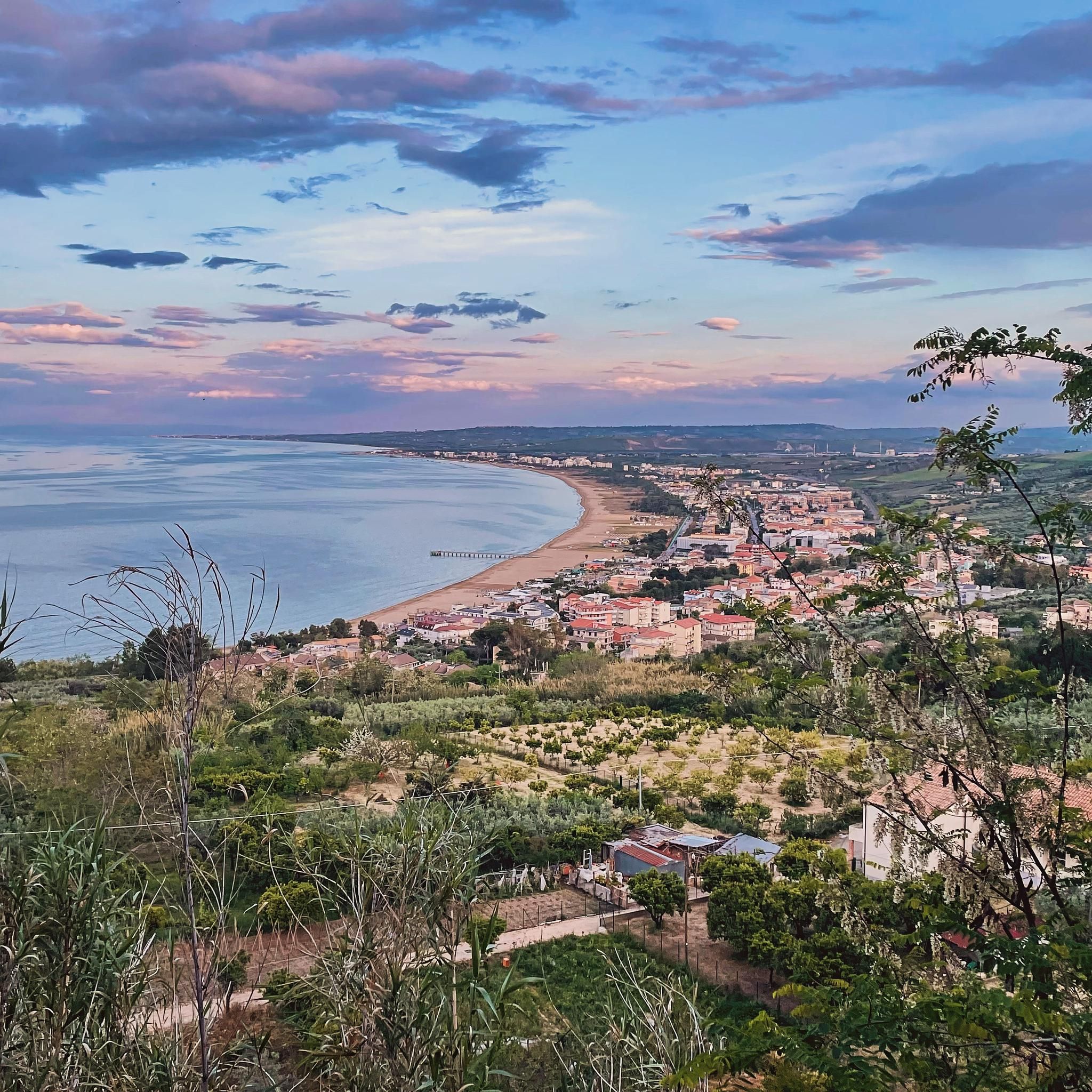
Sangro River – The liquid border of the Costa dei Trabocchi. Crossing the Sangro River via the imposing iron bridge is an iconic moment on the Via Verde dei Trabocchi! At 122 kilometers long, the Sangro is one of Abruzzo's mightiest rivers. It begins its journey high in the Apennines and carves its way down to flow into the Adriatic Sea right here, between Fossacesia and Torino di Sangro. From the old railway bridge, you can enjoy a vast panorama of the wide river mouth. This nature reserve forms an important ecological crossroads where river dunes, rare water birds, and the salty sea breeze converge. Why is this river a top highlight? The Gustav Line: The Sangro has a troubled history. During World War II, this river formed the natural barrier for the infamous German Gustav Line. Fierce fighting took place here at the time as the Allies attempted to cross the river. Access to the Lecceta: Immediately after crossing the river heading south, you'll roll straight into the magnificent Riserva Naturale Lecceta di Torino di Sangro, a rare Mediterranean holm oak forest.
0
0

Main entrance to the Lecceta. There are several easy trails within the forest.
0
0

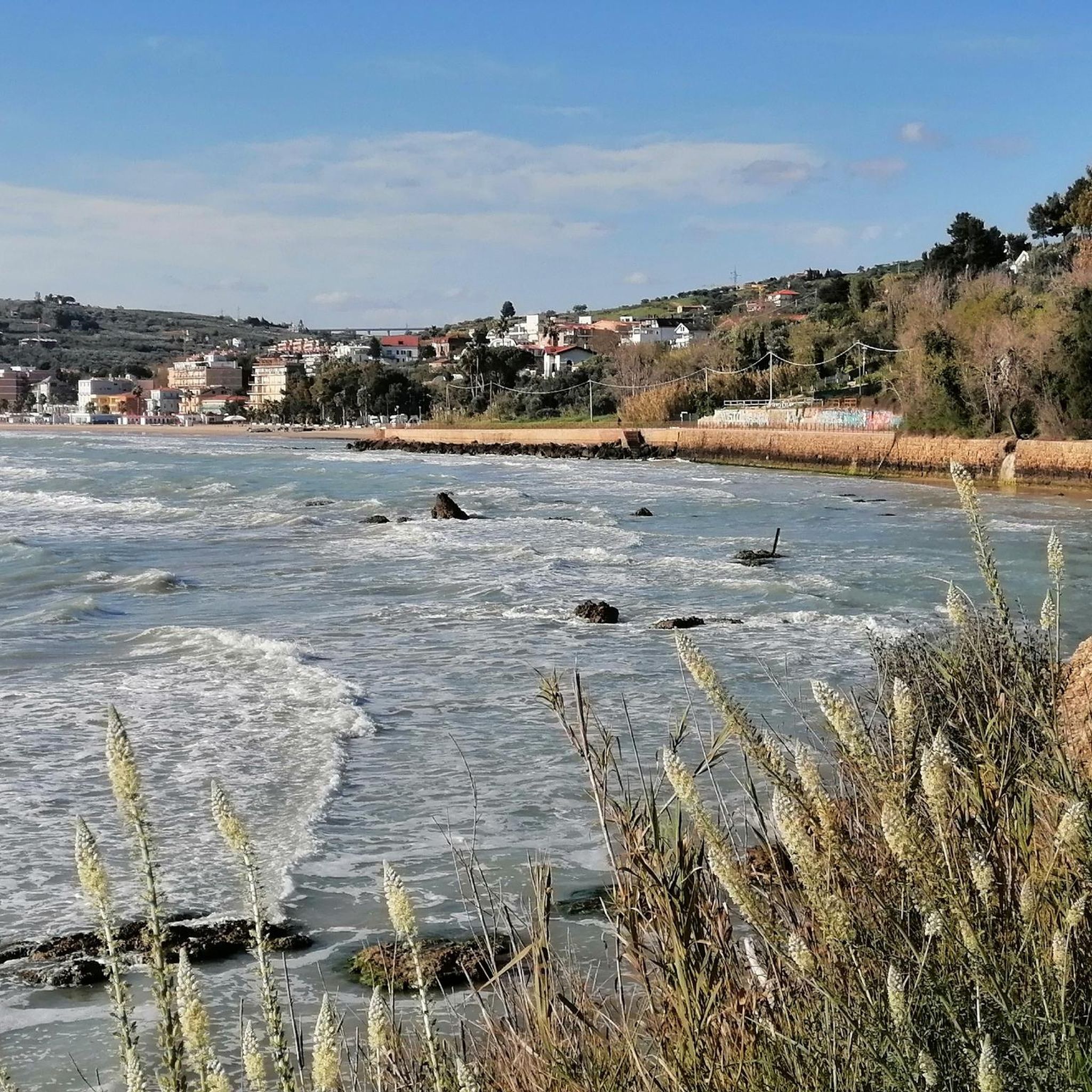
Pietraferrazzana is the smallest town in Abruzzo with its 130 inhabitants in a handkerchief of rock
0
0
Villa Santa Maria is famous throughout the world for its Hotel Institute, now known as the School of Chefs.
0
0

The excursion was done on June 16, 2024 and there was a total lack of water!
1
0

Convent of S.Maria degli Angeli (S.Pasquale) in Vallaspra di Atessa (CH) In the name Vallaspra, Valle-aspra, one can sense the peculiarity of a wild and fruitless nature, but also the sedimentation of a troubled historical and religious with long periods of splendor and apostolate. The history of the Vallaspra convent is linked to the Franciscan spirit and the incessant work of evangelization of the observant Friars Minor. Way back in 1408, Tommaso da Firenze, lay friar and secretary of Father Nicola da Osimo, commissioner of the province of Sant'Angelo in Puglia, stopped his wanderings in the Frenta area, in front of an ancient Cona depicting the Madonna of Sorrows with the Dead Christ and on the sides Saint John and Saint Francis on the right, Mary Magdalene and Saint Anthony of Padua on the left, venerated in a barren and wild place, precisely Vallassero di Atessa. Conquered by the evocative sacredness of the place and the profound meaning of this Pietà, Frà Tommaso began the construction of the first nucleus of the convent, which was completed and inaugurated just ten years later, in 1430. The convent of Vallaspra dedicated by Frà Tommaso to Santa Maria degli Angeli , not only in the dedication, but above all in the architectural structures, preserves the cleanliness of the Franciscan forms. The church, with a central nave and a side one, was enriched, in the early 1700s, with a chapel dedicated to San Pasquale Baylon (Spanish), a lay Franciscan, canonized in 1860, in honor of the Contestabile Colonna; the latter changed the title of the convent and San Pasquale simply, rather than Vallaspra, indicates the locality and the monastic complex. Over the centuries the structure was a woolen mill (the Franciscan habit was produced there); operating for more than a century and closed in 1675, it was linked to the intense period of traffic along the herd arteries. Over the years, the Convent of S.Pasquale became an important center of theological studies. Today, the Convent transmits a strong sense of belonging, of religious, spiritual and cultural identity; characteristics, the latter, which make it a solid, safe reference center, as well as a pole of aggregation, prayer and apostolate.
1
0
In Casalbordino they await the completion of the Via Verde of the Costa dei Trabocchi. The cycle/pedestrian path, opened in parts last year, will finally arrive in Casalbordino Lido.
1
0
Frequently Asked Questions
How many touring cycling routes are available around Casalanguida?
There are nearly 40 touring cycling routes around Casalanguida. The area offers a diverse range of options, from challenging mountain rides to scenic coastal paths, catering to various fitness levels.
What kind of terrain can I expect on touring cycling routes near Casalanguida?
The terrain around Casalanguida is quite varied. To the west, you'll find mountainous landscapes with significant elevation changes, typical of the Apennines. To the east, routes transition towards coastal areas, including the 'Costa dei Trabocchi,' offering flatter, scenic seaside rides. Many routes feature a mix of paved and unpaved surfaces, including gravel roads, providing diverse cycling experiences.
Are there any family-friendly touring cycling routes in the Casalanguida area?
While many routes around Casalanguida are rated as difficult due to elevation, the broader Abruzzo region, including areas accessible from Casalanguida, is known for its bike-friendly infrastructure. The 'Bike to Coast' cycle path and 'Via Verde' offer extensive, generally flatter options along the Adriatic coast, which can be more suitable for families. These paths often feature well-surfaced tarmac, though some segments might include gravel.
What are some notable landmarks or natural features I can see along the touring cycling routes?
Cycling around Casalanguida offers access to a wealth of natural and historical sights. You can explore historical sites like the Historic Center of Casalbordino or the Baronial Palace. Natural features include the stunning views from Casalanguida's elevated position, the diverse ecosystems of the Abruzzo region, and coastal reserves like Punta Aderci. The routes often provide panoramic views of the countryside and glimpses of ancient churches.
What is the best time of year for touring cycling in Casalanguida?
The Abruzzo region, including Casalanguida, is generally pleasant for cycling from spring through autumn. Spring offers lush landscapes and milder temperatures, while autumn provides comfortable riding conditions and beautiful fall foliage. Summer can be warm, especially in inland areas, but coastal routes benefit from sea breezes. Winter cycling is possible but may require more preparation due to colder temperatures and potential snow in higher elevations.
Are there any circular touring cycling routes around Casalanguida?
Yes, many of the touring cycling routes around Casalanguida are designed as loops. For instance, the Fonte Gelata – Scenic Gravel Road loop from Atessa is a popular difficult route featuring scenic gravel roads. Another option is the View of Borrello – Church of Villa Santa Maria loop from Atessa, which offers views of Borrello and historical churches.
What do other touring cyclists enjoy most about cycling in Casalanguida?
The touring cycling routes around Casalanguida are highly rated by the komoot community, with an average score of 4.1 stars. Cyclists often praise the challenging climbs, the diverse landscapes ranging from mountains to coast, and the opportunity to explore both natural beauty and historical sites. The variety of terrain, including scenic gravel roads, is also a frequently mentioned highlight.
Are there any routes that offer a mix of river and coastal views?
Yes, the Sangro River – Trabocco Punta Le Morge loop from Atessa is a difficult route that provides views of the Sangro River and transitions towards coastal features, including the traditional fishing structures known as 'trabocchi.' This route offers a great combination of inland and seaside scenery.
Where can I find parking or public transport options for accessing bike trails near Casalanguida?
Casalanguida itself is a tranquil village, and parking is generally available within the village. For specific starting points of routes, it's advisable to check the individual route details on komoot. The broader Abruzzo region is bike-friendly, and while public transport options directly to trailheads might be limited, major towns like Atessa (a common starting point for many routes) are more accessible and offer parking facilities.
Are there any cafes or places to stop for refreshments along the touring cycling routes?
While specific cafes directly on every trail might vary, many routes pass through or near small villages and towns where you can find local cafes, bars, and restaurants. Casalanguida and nearby towns like Atessa offer options for refreshments. It's always a good idea to carry sufficient water and snacks, especially on longer or more remote sections of the routes.
What is the typical difficulty level of touring cycling routes around Casalanguida?
The majority of touring cycling routes around Casalanguida are classified as difficult. This is primarily due to the significant elevation gains and mountainous terrain characteristic of the Abruzzo region. For example, the Fountain of Piazza Archi loop from Atessa involves over 770 meters of ascent over 36 kilometers, requiring good fitness.
Can I find routes that explore historical or religious sites?
Yes, some routes incorporate historical and religious landmarks. For instance, the Church to the Fallen of the Julia – Monte Pallano loop from Atessa takes you past the Church to the Fallen of the Julia. Additionally, the Convent of San Pasquale (Atessa) is a notable religious building in the vicinity.
Most popular attractions around Casalanguida

Get inspired with the komoot mobile app


Explore more
Browse the best Cycling routes in other regions.
