Attractions and Places To See around Dogliola - Top 10
Best attractions and places to see around Dogliola include a blend of historical charm and natural landscapes. This medieval village in Abruzzo, Italy, is situated at 445 meters above sea level, offering views of the Trigno River valley. The area is recognized for its natural and landscape value, providing opportunities for outdoor activities. Dogliola features a fortified village, historical churches, and nearby geological formations.
Best attractions and places to see around Dogliola
- The most popular attractions is View of the…
Last updated: May 20, 2026
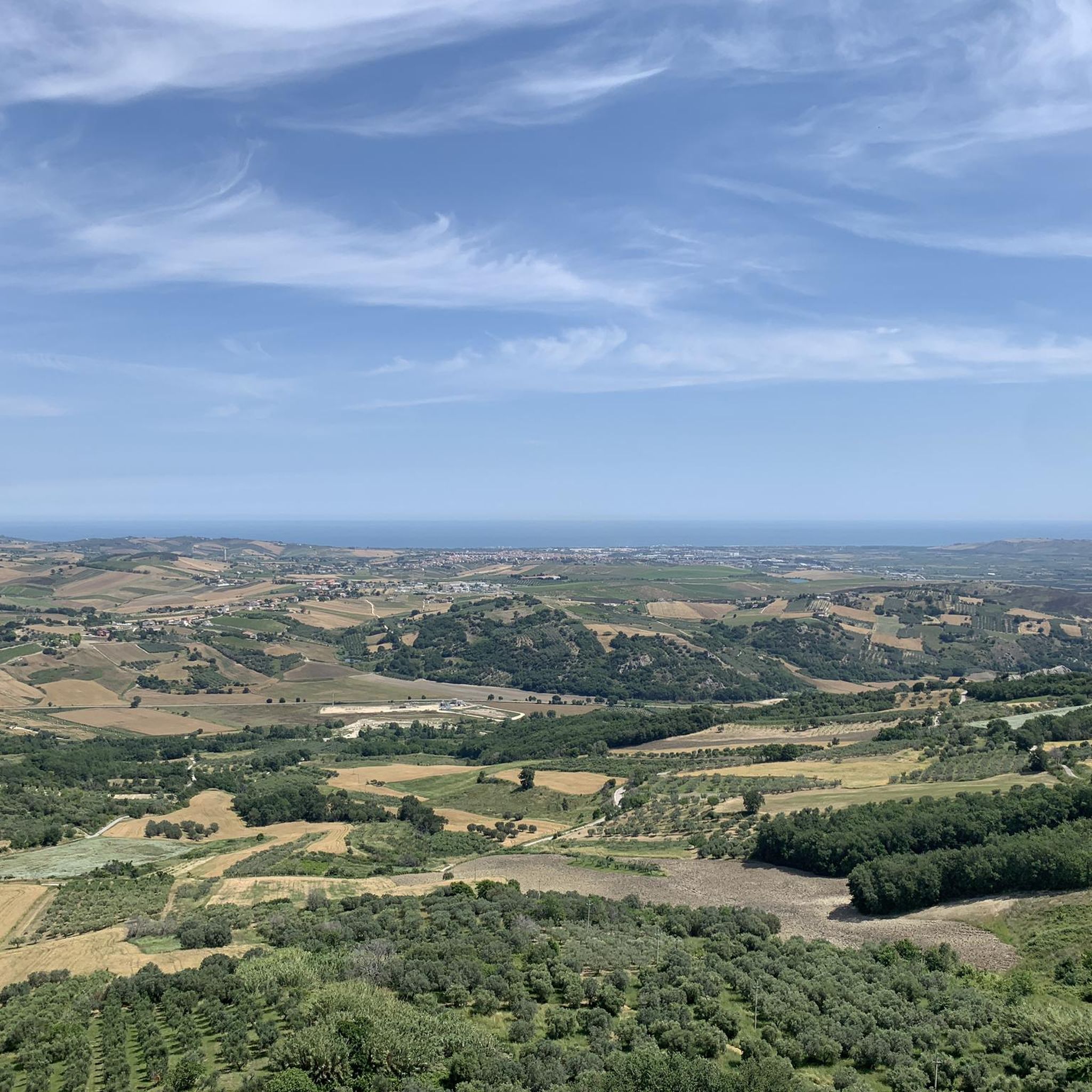
View of the badlands
Highlight • Viewpoint
Translated by Google •
Tip by

Montenero di Bisaccia
Highlight • Settlement
Translated by Google •
Tip by
Sign up now to discover places like this
Get recommendations on the best single tracks, peaks, & plenty of other exciting outdoor places.
Sign up for free
Dirt Road Through Calanchi di Montenero
Highlight • Trail
Translated by Google •
Tip by

Torre della Fara
Highlight • Historical Site
Translated by Google •
Tip by

San Michele Arcangelo Cave in Liscia
Highlight • Cave
Translated by Google •
Tip by

Sign up for free to discover even more attractions around Dogliola.
Sign up for free
Already have an account?
Start today with a free account
Your next adventure awaits.
Login or Signup
Popular around Dogliola


Tips from the Community

The Montenero di Bisaccia gullies, known locally as lame, are located behind the Sanctuary of the Madonna di Bisaccia. The area is characterized by erosive landforms that extend over approximately 120.8 hectares, creating a surreal landscape of deep valleys dominated by thin, jagged ridges.
0
0

Drinking water
0
0

Through the Calanchi of Montenero di Bisaccia
0
0

The Torre della Fara is located in Torre della Fara in the municipality of Celenza sul Trigno in the province of Chieti. The tower is located near the Trigno river and the Ateleta-Biferno sheep track and was in visual connection with neighboring towns and with the monastery of Santa Maria del Canneto of Roccavivara (Molise). (Source Wikipedia.)
1
0

From this stretch of the provincial road you can enjoy the view towards the village of Montenero di Bisaccia and the Calanchi di Montenero, an area of about 120 hectares, where there are erosive forms created by the action of rainwater on the clayey soil. The area is a site of community interest (SIC), identified by the Ministry of the Environment for its naturalistic and landscape importance.
3
1
Montenero di Bisaccia is a town in Molise located on a hill 10 km from the sea and the Trigno river. It is possible to visit the Mother Church, the Municipal Palace and just outside the historic centre, the Sanctuary of Maria Santissima di Bisaccia.
2
0

The Torre della Fara is located in Torre della Fara in the municipality of Celenza sul Trigno in the province of Chieti. The tower is located near the Trigno river and the Ateleta-Biferno tratturo and was in visual connection with neighboring towns and with the monastery of Santa Maria del Canneto in Roccavivara (Molise). The tower dates back to the 12th century.[1] Even if the toponym recalls the Longobard fara, it is, however, difficult to identify the period of construction of the site.[ The tower has a cylindrical structure and is made of stone[1], but stone fragments are also used to frame the openings and loopholes[2]. The tower is 15 meters high and 6 meters in diameter. The tower has no scarp walls and, at a third of the height there is an opening which, probably, is a raised entrance. Furthermore, inside there are the holes where the beams used to support the various levels. The roof inside is vaulted with a lowered cap. The use of mortar in the Torre della Fara decreases with height[1] just as the thickness of the walls decreases with increasing height
0
0
According to oral tradition, it seems that San Michele, who left from the East to defeat paganism, stopped in a wood near Liscia before arriving on the Gargano; this wood is located around Monte Sorbo, an area that in ancient times had a high anthropic density, as can be seen from the remarkable archaeological material found here and coming from Italic tombs. Still on the subject of legend, it is said that a man from Palmoli, a village in the upper Vasto bordering Liscia, intent on grazing cows near the Treste river, noticed that a young bull got lost every day and then returned in the evening. One day, however, the farmer, intrigued by this mysterious behavior, decided to follow his animal and saw that the vegetation opened up, as if by magic, as it passed, as if to indicate a direction to follow; this strange path led him to a cave where he saw the bull kneeling in front of a wooden image of St. Michael the Archangel, which miraculously made water gush out so that man could quench his thirst and recover from the discovery to witness this event supernatural. In memory of these events that occurred in Liscia, the Marquesses of Avalos, in the eighteenth century incorporated the cave inside a small church, perhaps, to regulate the large influx of pilgrims who are here recalled by popular devotion to the Archangel Michael, a cult that is lost in the mists of time.
1
0
Frequently Asked Questions
What historical sites can I explore in and around Dogliola?
Dogliola's historical core features a Fortified Village (Borgo Fortificato) with ancient defensive walls and a 16th-century fortified palace. You can also visit the Church of San Rocco, built in 1805, known for its neoclassical stucco work and wooden sculptures. Nearby, explore the 12th-century Torre della Fara in Celenza sul Trigno, or the San Michele Arcangelo Cave in Liscia, a site steeped in local legend and religious history.
Are there any natural attractions or viewpoints near Dogliola?
Yes, Dogliola offers expansive views of the Trigno River valley. A notable natural attraction is the View of the badlands, which provides panoramic vistas towards Montenero di Bisaccia and the unique erosive formations of the Calanchi di Montenero. This area is recognized for its significant natural and landscape value. You can also experience these formations up close on the Dirt Road Through Calanchi di Montenero.
What outdoor activities are available around Dogliola?
The region around Dogliola, recognized as a site of community interest, provides excellent opportunities for outdoor activities. You can find various cycling routes, including road cycling, mountain biking, and touring bicycle options. For example, explore the 'Monument to the Bather – View of Montenero di Bisaccia loop from Mafalda' for road cycling, or the 'Montefalcone nel Sannio, Lago Grande e Monte Mauro – giro ad anello' for mountain biking. Discover more routes on the Road Cycling Routes around Dogliola, MTB Trails around Dogliola, and Cycling around Dogliola guide pages.
Are there family-friendly attractions or activities near Dogliola?
Yes, the nearby settlement of Montenero di Bisaccia is considered family-friendly. Here, you can explore the Mother Church, the Municipal Palace, and the Sanctuary of Maria Santissima di Bisaccia. The natural landscapes, such as the Calanchi di Montenero, also offer unique sights that can be enjoyed by families.
What is the best time of year to visit Dogliola?
The best time to visit Dogliola depends on your interests. The village is vibrant with folklore and traditional events, such as the Sagra de "L' Turc'nill" (local sweets festival) and the Festa del Grano (harvest festival), which typically occur in warmer months. For outdoor activities like hiking and cycling, spring and autumn offer pleasant temperatures. The region's natural beauty, including the Trigno River valley, can be appreciated throughout much of the year.
What cultural events or traditions are unique to Dogliola?
Dogliola is rich in cultural traditions and folklore. Notable festivals include the Sagra de "L' Turc'nill", celebrating local sweets, and the Festa del Grano ("d'lu Ganopp'l'"), a harvest festival featuring parades, period costumes, and a blessing of carriages filled with local produce. Additionally, traditional l'pan'ttoll (loaves of bread) are distributed for San Giuseppe.
What local cuisine should I try in Dogliola?
Dogliola is known for its authentic local cuisine. Be sure to try cured meats like "ventricina" and "soppressata." Other traditional dishes include "Pallotte cace e ove," which are meatballs made with bread, cheese, and eggs.
What do visitors enjoy most about the attractions around Dogliola?
Visitors particularly enjoy the blend of historical charm and natural beauty. The expansive views from spots like the View of the badlands are highly appreciated, as are the unique geological formations of the Calanchi di Montenero. The historical sites, such as the ancient towers and churches, also draw significant interest from those exploring the region.
Are there any hidden gems or lesser-known spots to discover near Dogliola?
Beyond the main highlights, the historical core of Dogliola itself, with its closely built houses and arcaded passages, offers a distinctly medieval ambiance worth exploring. The Old Fountain, an ancient structure, also provides a glimpse into the village's past. For those interested in deeper history, archaeological findings in the Monte Moro area, including evidence of Roman Empire villas, hint at Dogliola's profound historical roots.
How can I experience the Trigno River valley near Dogliola?
Dogliola is perched at an elevation of 445 meters, offering expansive views of the Trigno River valley, which forms the border between Abruzzo and Molise. You can experience the valley's natural beauty through various cycling routes that traverse the area, such as the 'SS16 Palm-Lined Road loop from Mafalda' or the 'View of the badlands – View of Montenero di Bisaccia loop from Montenero di Bisaccia' found in the Cycling around Dogliola guide.
Most popular routes around Dogliola

Get inspired with the komoot mobile app


Explore more
Still not found the Highlight you’re looking for? See guides of the top attractions in other regions:
