The best MTB trails around Civitanova Del Sannio
4.6
(12)
77
riders
38
rides
Mountain biking around Civitanova Del Sannio offers diverse terrain in the heart of Molise. The region is characterized by mountainous landscapes and extensive beech forests, providing varied elevations and shaded routes. The presence of the Trigno River adds riverside trails, while the Montagnola Molisana karst range features unique geological formations. This environment creates a dynamic setting for mountain bikers.
Best mountain bike trails around Civitanova Del Sannio
- The most popular mountain bike trail is Morgia di Pietravalle Loop, a…
Last updated: May 24, 2026
22.6km
02:00
580m
580m
Embark on the Morgia di Pietravalle Loop for a moderate mountain biking adventure through varied Italian terrain. This route spans 14.1 miles (22.6 km) and features a significant elevation gain…
4.0
(1)
14
riders
53.3km
03:41
880m
880m
Moderate mountain bike ride. Good fitness required. Suitable for all skill levels.

Sign up for free
6
riders
50.4km
03:53
1,160m
1,160m
Hard mountain bike ride. Very good fitness required. Suitable for all skill levels.
5.0
(2)
4
riders
29.2km
02:36
790m
790m
Moderate mountain bike ride. Good fitness required. Suitable for all skill levels.
5.0
(1)
4
riders
Moderate mountain bike ride. Good fitness required. Suitable for all skill levels.
Get access to more routes and recommendations from other explorers.
Sign up for free
Already have an account?
Our route recommendations are based on thousands of hikes, rides, and runs completed by other people on komoot.
Start today with a free account
Your next adventure awaits.
Login or Signup
Other adventures around Civitanova Del Sannio

Tips from the Community

Madonna at Lake Carpinone, devotion from the people of Carpinone for having been saved from German barbarity in 1944.
1
0

Macchiagodena is an Italian municipality of 1,648 inhabitants in the province of Isernia in Molise. History Although the town is a medieval Lombard castrum, news of a Samnite village comes from archaeological finds found in the surrounding hills. Among the finds is an oinochoe from the 6th century BC. C. near Piana di Achille and Fosso Pampalone. The Italic village stood near the sheep track that developed from the major one that from Aufidena (Pescasseroli) went to Puglia, this village stood in the Valle Fredda area, whose finds are preserved in the Sannitico Museum of Campobasso. Although the village was not a real vital center with notable walls and temples, it was certainly conquered in the 1st century BC. C. from Rome and suffered the destruction of the Vandals after the end of the empire. The new castrum was founded in 964, known as Maccla de Godino, by the counts Pandolfo and Landolfo of nearby Isernia. In 1000, the fiefdom was owned by the powerful Abbey of San Vincenzo al Volturno, to which it was sold by Maria di Roffredo to Abbot Maraldo. The original church of Sant'Apollinare, which has now disappeared, was also included. In the 13th century it was the Cantelmo family who dominated the fiefdom, and in the following century the Pandone family took over, who had their headquarters in the castle of Venafro. However, Macchiagodena never had stable owners, since over the course of half a century it was always handed over to new families. In the fifteenth century it belonged to the Caetani of Baranello and then to the Mormile of Castelpagano. Between the sixteenth and seventeenth centuries it belonged to the Piscicelli (1615) and then to the Caracciolo family. In 1781 the fiefdom was purchased by the Centomani family in the person of Nicola Centomani (1720-1818) who obtained the related marquisal title. In 1799 with the French conquest of Molise, Macchiagodena entered the Sangro department, then the district of Isernia. In 1815 it took over the district of Cantalupo nel Sannio. The serious Molise earthquake of 1805 destroyed the main churches in Macchiagodena, which were rebuilt in neoclassical style. Macchiagodena, with its Piazzetta della Letteratura, where you can read books made available for free to everyone, has given life to the project "Genius Loci. Bring me a book that I'll give you my soul" which allows you to receive free holidays in exchange for a book donated to the town library. It has been the national headquarters of the Reading Villages since 2016, and is also part of the National Truffle Cities Association and the Authentic Villages of Italy Association. Source: Wikipedia
0
0
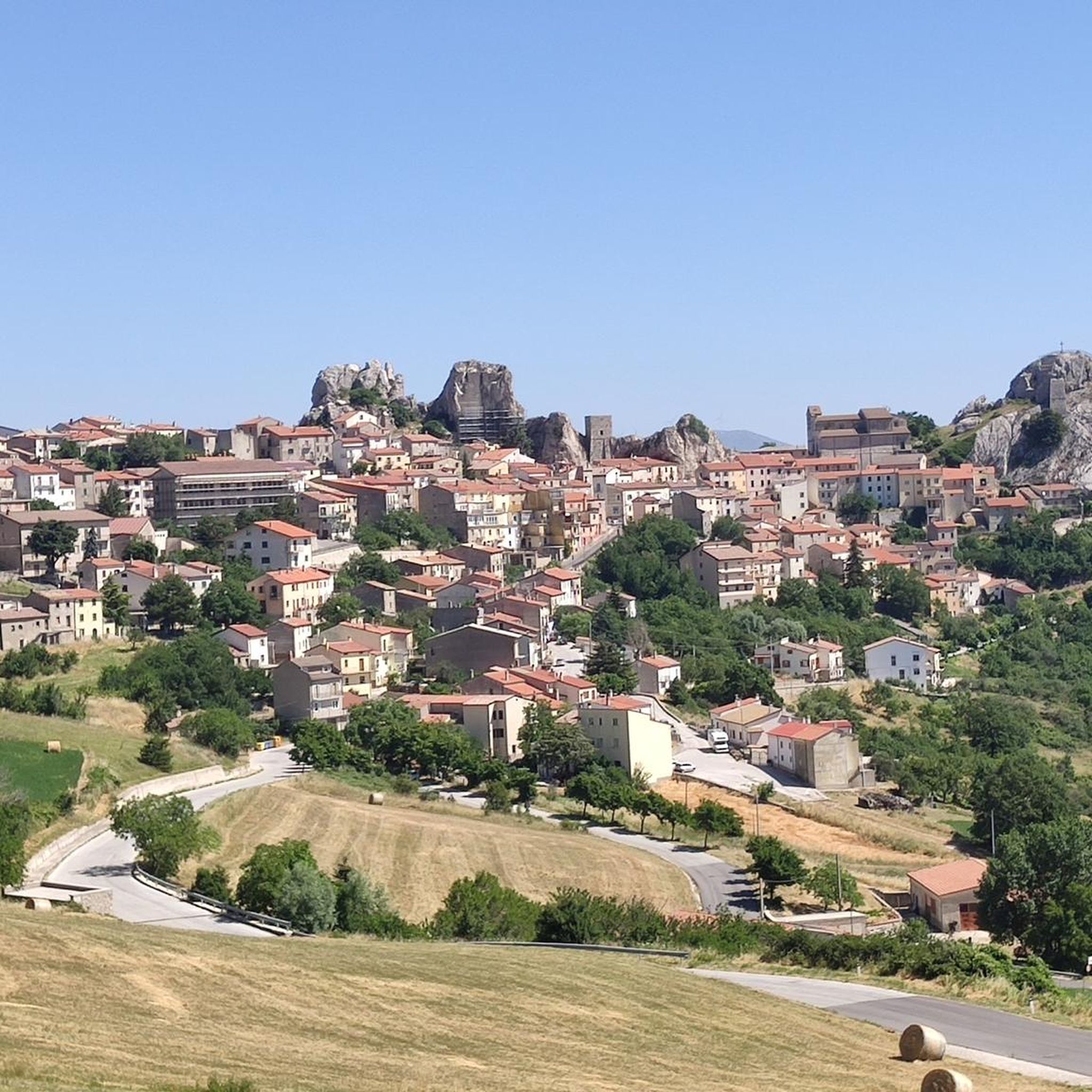
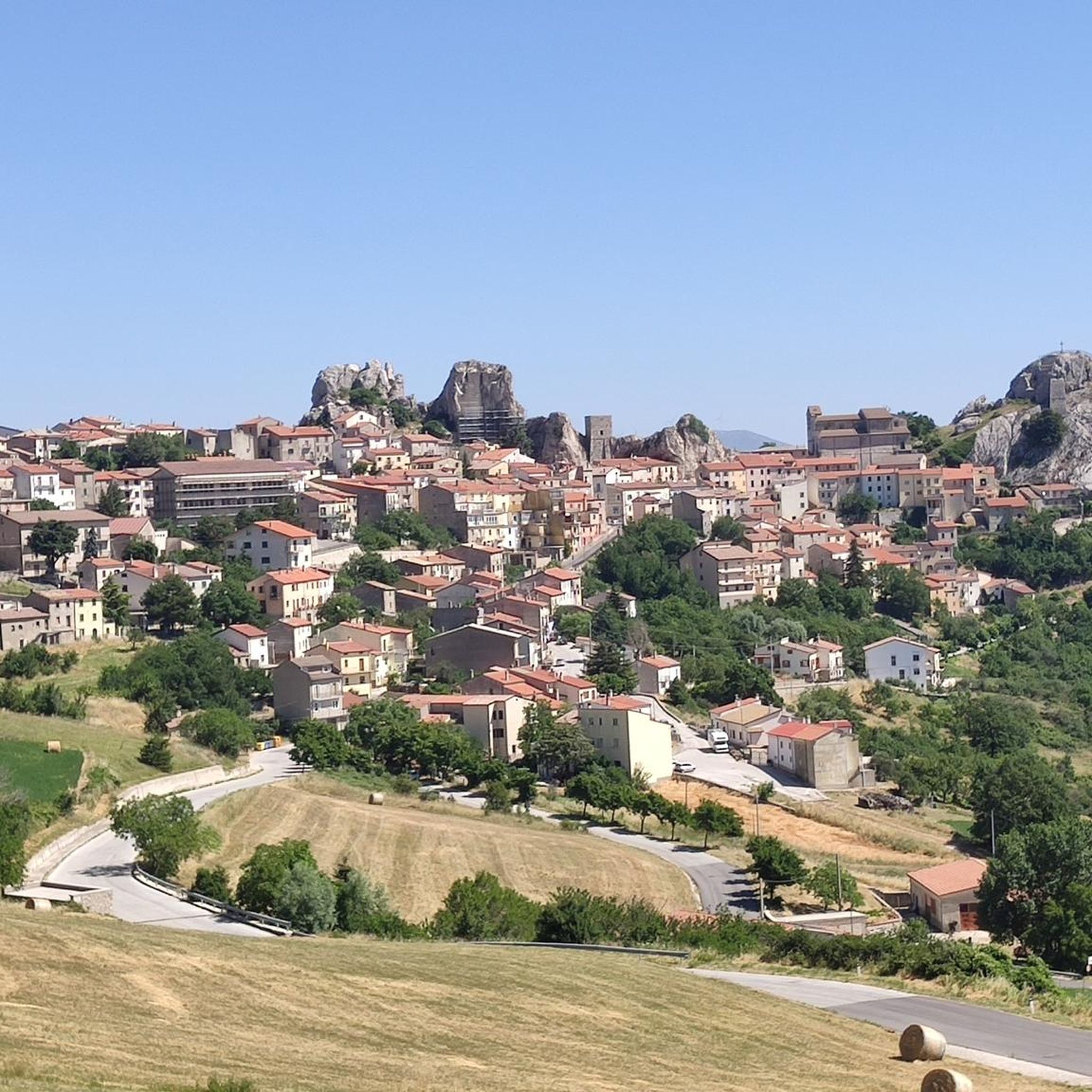
Frosolone (Frescëlonë in Molise, Frusëlónë in Frosolonese dialect) is an Italian municipality of 2,797 inhabitants in the province of Isernia in Molise. The hypotheses which derive the name Frosolone from the Frosone, which some identify as the bird present in the municipal banner, must be considered Paretymologies, as well as that which associates it with an unidentified Samnite settlement cited by Livy, Fresilia and that according to which Frosolone it would have been founded by Benedictine monks coming from Frosinone, who would therefore have called the new settlement with the name of their place of origin. Before the Roman age the area was inhabited by Samnite populations, as evidenced by the presence of polygonal megalithic wall enclosures, visible on the mountain above the town, in the Civitelle area. These remains belong to what is defined as a high-altitude settlement: a fortified settlement of not very large dimensions, probably intended to be inhabited only in certain periods of the year, with generically defensive functions. As with many other centers in Molise, the medieval phase of the town ended drastically with the earthquake of 1456: according to what Antonino Pierozzi reports in his Chronicon, Frosolone was totally razed to the ground and there were 317 victims[16]; this information was then taken up by various authors, including Giovanni Antonio Summonte, who recalls how the town "largely fell, with the death of 318 people". There are regular testimonies of Frosolone starting from the Spanish period; in this era it went through an intense phase of development: together with Agnone and Trivento it hosted one of the three bishop's residences of the diocese. There is also a war fortification, which concerns very few centers in Molise, with the construction of an armed ravel in the area where today stands the so-called loggia dei pezzenti, the space known as Largo XX Settembre. In the early years of the 19th century, Frosolone was one of the most populous inhabited centers in the Molise countryside: in the same period in which it was close to 4,000 inhabitants, Agnone had around 7,500, Boiano around 3,500, Campobasso around 5,500, Isernia around 6,900. The 1805 earthquake imposed a major setback in the country's development; this second catastrophe seems to have had an equally disastrous outcome as that of 1456: sources of the time define it as "almost entirely adequate for the ground", and report a figure (how reliable it is not known) of a thousand deaths and 46 injuries out of a population of 4,000 souls. Source: Wikipedia
0
0
The Hermitage, at the foot of the Morgia Quadra of Frosolone (IS), is a true pearl. To welcome visitors, the ancient church of Sant'Egidio which, in the Middle Ages, was a chapel, dependent on the nearby convent of Sant'Onofrio. Protected by the Antonians, according to tradition, it has become famous for the numerous miraculous healings of which the monks were protagonists. At the beginning of 1300, after the Church of Rome excommunicated the congregation, the chapel was destroyed together with the convent of Sant'Onofrio. In the following years, it was rebuilt, probably by hermits and livestock sellers, who went to Sant'Egidio for the end-of-summer fair. In 1704, thanks to Michele Vago and Antonio Zaccagnino, a real church was built in place of the chapel. Falling to pieces with the earthquake of 1805, the small complex was rebuilt and subsequently restored several times. The last renovation took place in the 1980s. The church of Sant'Egidio represents a place of worship very dear to the people of Frosolone, above all because it houses the statue of the Crowned Virgin which, according to tradition, has appeared near the church several times. Furthermore, inside the sacred walls, an ancient and precious manuscript is preserved which lists some miracles performed by Sant'Egidio. Going beyond the church, what is most striking is, certainly, the surrounding landscape. In these sections, it is possible to see some horses in the wild or, more simply, calm herds of cows and flocks of sheep that, at sunset, go to water, after an abundant meal of fodder. The same one that makes Frosolone milk and cheeses so good as to satisfy the palates of the most severe gourmets. Source: www.moliseeccellenze.it There is also a fountain for hikers!
1
0
Lake San Lorenzo, in the territory of Civitanova del Sannio, is a small karst lake located at approximately 1,100 meters above sea level.
0
0
Mountain refuge immersed in the woods equipped with tables and fire points
0
0

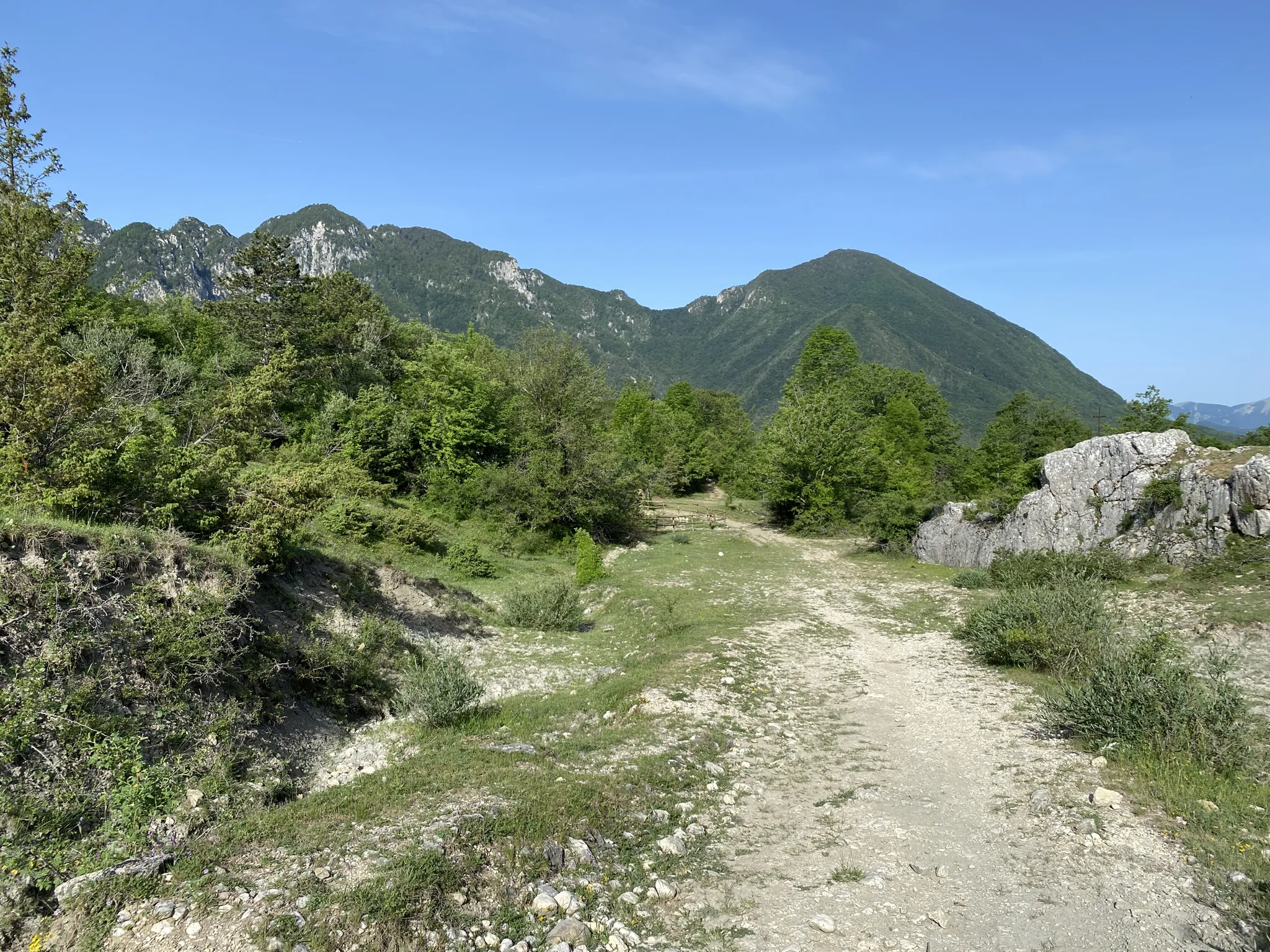
Morgia di Pietravalle or Morgia dei Briganti in Salcito Millions of years ago, while the most important mountain ranges in Europe were forming, the movements of the earth's crust brought to the surface large rocky spurs born in a marine environment: these are the famous Morge, monumental rocks rich in fossils.
0
0
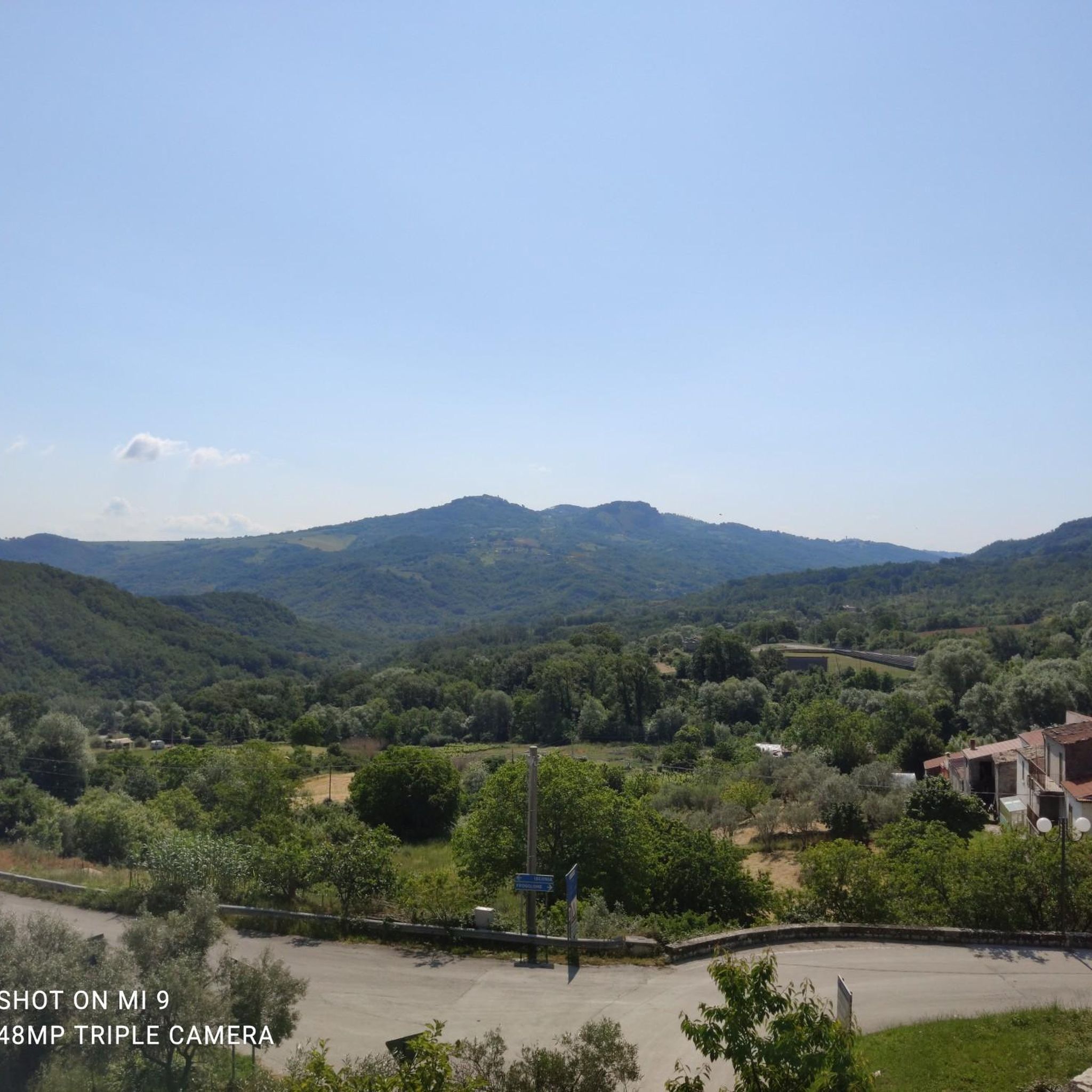
Panoramic route with a view of Valle Fredda, the Matese and the Isernina valley
0
0
Frequently Asked Questions
How many mountain bike trails are available around Civitanova Del Sannio?
There are over 30 mountain bike trails around Civitanova Del Sannio, offering a variety of experiences. These include 18 moderate routes and 15 more challenging options, catering to different skill levels.
What kind of terrain can I expect on mountain bike trails in Civitanova Del Sannio?
Mountain biking in Civitanova Del Sannio features diverse terrain, including mountainous landscapes, dense beech forests, and unique karst features from the Montagnola Molisana range. You'll find varied elevations, shaded routes, and potentially riverside trails along the Trigno River.
Are there any circular mountain bike routes in the area?
Yes, many routes in Civitanova Del Sannio are circular. For example, the Morgia di Pietravalle Loop is a popular moderate option, and the more challenging Rifugio Valle Canla – Hermitage of Sant'Egidio loop from Pescolanciano-Chiauci also forms a loop.
What are some scenic viewpoints or natural features to look out for on the trails?
The region offers several scenic spots. You can find routes that pass by the fascinating 'Ghost' Lake of San Lorenzo, visible until summer, or offer expansive views like those on the View of Venafro – Strada Salita di Melfi loop from Pescolanciano-Chiauci. The Santa Lucia Cross and Viewpoint (Miranda) is another notable highlight.
Are there any waterfalls accessible from the mountain bike trails?
Yes, near the historic center of Civitanova Del Sannio, you can find both artificial and natural waterfalls. The Cascata di Mille is a natural waterfall that could be a refreshing stop during your ride.
What do other mountain bikers say about the trails in Civitanova Del Sannio?
The mountain bike trails in Civitanova Del Sannio are highly rated by the komoot community, with an average score of 4.6 stars from over 10 reviews. Users often praise the varied terrain, the challenging climbs, and the beautiful natural surroundings, particularly the dense beech forests.
Are there any historical sites or villages I can explore near the mountain bike routes?
Yes, the region has a rich history. You can find routes that pass near charming historic villages such as Carpinone Historic Village, Pesche, and Pescolanciano, allowing you to combine natural beauty with historical discovery.
What is a good moderate mountain bike trail for a solid ride?
A great moderate option is the Morgia di Pietravalle Loop. It's about 22.6 km long and typically takes under 2 hours to complete, exploring the local landscape with varied terrain.
Are there any longer, more challenging mountain bike routes for experienced riders?
For experienced riders seeking a longer challenge, the Rifugio Valle Canla – Hermitage of Sant'Egidio loop from Pescolanciano-Chiauci is a difficult route spanning over 50 km with significant elevation changes. Another option is the View of Venafro – Strada Salita di Melfi loop from Pescolanciano-Chiauci, a moderate 53.3 km path with expansive views.
Can I find trails that go through dense forests?
Absolutely. Civitanova Del Sannio is surrounded by extensive beech forests, providing many shaded routes. The Hermitage of Sant'Egidio – Valle della Morte Summit Cross loop from Frosolone is a good example, leading through forested areas.
Are there any nature reserves or protected areas nearby that I can visit?
Yes, the region is home to natural reserves. You can explore areas like the Pesche Nature Reserve and the Collemeluccio Nature Reserve, which offer opportunities to experience the local flora and fauna.
What is the best time of year for mountain biking in Civitanova Del Sannio?
The mountainous terrain and beech forests suggest that spring and autumn would be ideal for mountain biking, offering pleasant temperatures and vibrant scenery. Summer can also be good, especially on shaded forest trails, but be mindful of higher temperatures.
Most popular attractions around Civitanova Del Sannio

Get inspired with the komoot mobile app


Explore more
Browse the best MTB trails in other regions.
