The best walks and hikes around Casola Di Napoli
4.5
(6298)
38,125
hikers
420
hikes
Hiking around Casola Di Napoli offers access to diverse landscapes at the foot of the Monti Lattari, part of the Sorrentine Peninsula. The region features verdant hills, fertile lands with olive groves and vineyards, and offers views of the Bay of Naples and the Salerno Gulf. Trails wind through centuries-old forests and alpine meadows within the Monti Lattari Regional Park. This area provides a varied terrain for outdoor activities.
Best hiking trails around Casola Di Napoli
- The most popular hiking…
Last updated: June 24, 2026
4.6
(9)
44
hikers
Hard hike. Very good fitness required. Sure-footedness, sturdy shoes and alpine experience required.
7
hikers
12.1km
03:19
190m
190m
Moderate hike. Good fitness required. Easily-accessible paths. Suitable for all skill levels.

Sign up for free
4.2
(6)
28
hikers
11.2km
03:59
450m
450m
Moderate hike. Good fitness required. Mostly accessible paths. Sure-footedness required.
4.4
(8)
20
hikers
9.56km
03:59
530m
530m
Moderate hike. Good fitness required. Mostly accessible paths. Sure-footedness required.
4.0
(4)
17
hikers
12.6km
03:31
240m
240m
Moderate hike. Good fitness required. Easily-accessible paths. Suitable for all skill levels.
Get access to more routes and recommendations from other explorers.
Sign up for free
Already have an account?
Our route recommendations are based on thousands of hikes, rides, and runs completed by other people on komoot.
Start today with a free account
Your next adventure awaits.
Login or Signup
Tips from the Community

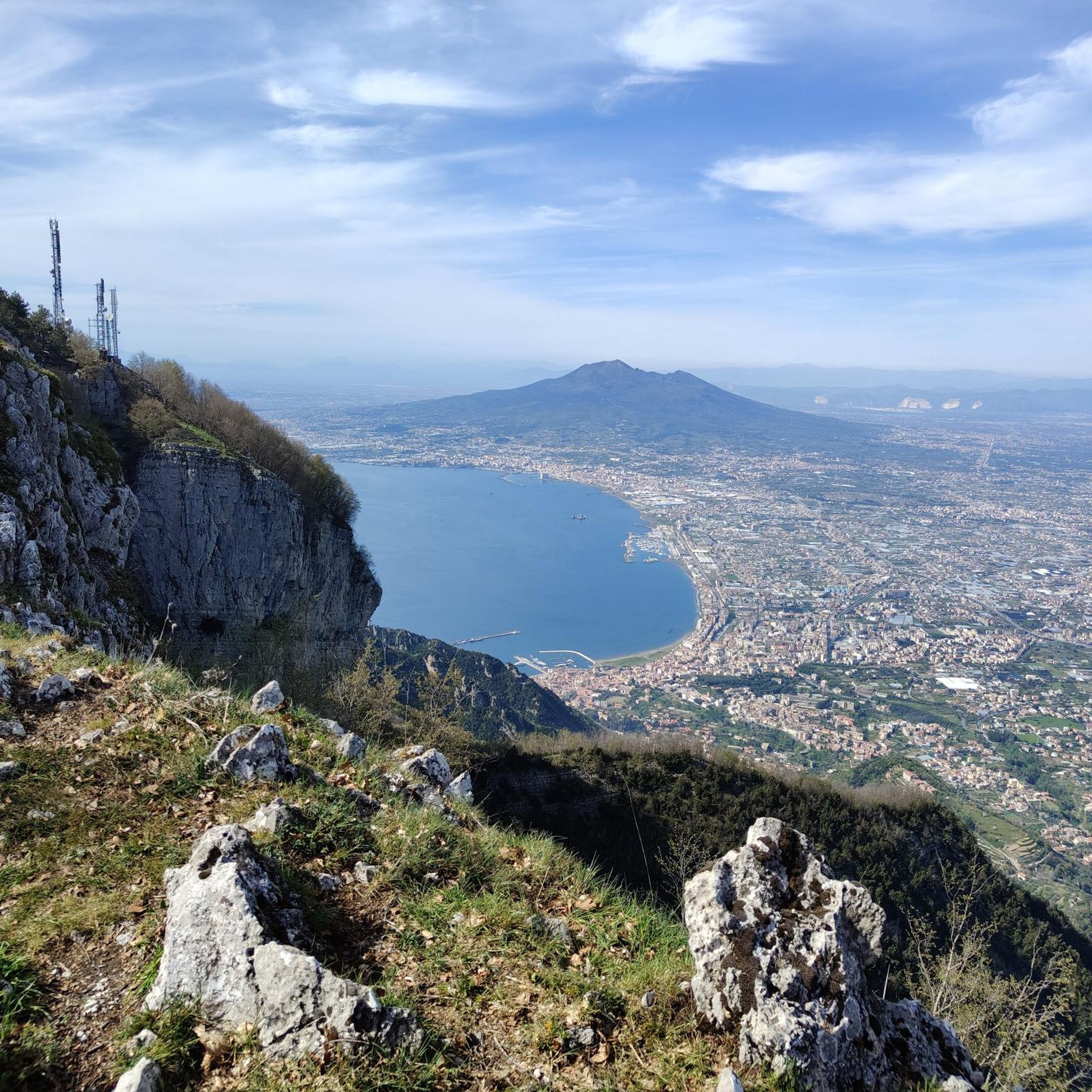
The Belvedere di Pozzano is a historic and evocative panoramic viewpoint located in Castellammare di Stabia, in the coastal hamlet of Pozzano. It offers a famous breathtaking view that encompasses the entire Gulf of Naples, Vesuvius, and the beginning of the Sorrento coast.
0
0
The Lungomare of Castellammare di Stabia (also known as the Villa Comunale stretch) is one of the most striking seaside promenades in Campania. It extends for about two kilometers along Corso Giuseppe Garibaldi, offering a spectacular panoramic view of the Gulf of Naples, Vesuvius, and Mount Faito.
0
0

The Church of Corpus Domini is the main place of worship in Gragnano, built in 1555 and completed in 1571. Its importance lies not only in its religious value, but also in its artistic and historical significance. Over the centuries, the church has undergone numerous transformations that have enriched its decorative apparatus. The imposing lava stone staircase leads to the churchyard in Vesuvian stone, introducing the magnificence of the place. The sixteenth-century wooden portal, divided into panels carved with sacred images and the city's coat of arms, is an introduction to the artistic richness of the church. The interior of the church is a true treasure chest of works of art ranging from the sixteenth to the twentieth century. The grandiose canvas on the ceiling, created by Francesco Russo between 1720 and 1750, is considered one of the largest in Europe. The organ lofts and the wooden portal are significant examples of 16th-century art. Among the most important paintings, you can admire the "Transfiguration" by Marco Pino da Siena, the canvases in the apse by Giacinto Diano and the "Supper at Emmaus" by Domenico Morelli. The niche-chapels house 18th-century polychrome marble altars and valuable 17th- and 18th-century paintings, including a 17th-century panel depicting "The Virgin and Child with the Souls in Purgatory" and the canvas "The Madonna in Glory" by Luca Giordano. The presbytery, with its sumptuous polychrome marble altar and the rich architecture that frames the 18th-century masterpiece by Giacinto Diano depicting the "Last Supper", is a further example of the artistic majesty of the church. The Church of Corpus Domini represents an important historical, cultural and artistic point of reference for the city of Gragnano, a place where art, history and faith intertwine in a unique experience.
0
0

Even from the beach of Castellammare di Stabia, a town with over 60,000 inhabitants in the province of Naples, you can easily observe the top of Vesuvius. The volcano is imposing and often characterizes the skyline of these areas.
0
0

The trail has been cleared and is now easily accessible.
0
0

The associated buildings around the restored convent are still clearly visible
1
0
Mount Vesuvius is in the upper left corner of the picture.
0
0
The ruins are still clearly visible along the way.
0
0
Frequently Asked Questions
How many hiking trails are available around Casola Di Napoli?
There are over 420 hiking routes around Casola Di Napoli. This includes a wide range of options: 118 easy trails, 202 moderate routes, and 104 difficult paths, ensuring there's something for every skill level.
Are there any easy hiking trails suitable for beginners or families?
Yes, Casola Di Napoli offers over 110 easy trails. A good option is the Stabia Port – Ancient Baths of Stabia loop from Castellammare di Stabia, which is 4.4 miles (7.1 km) long and typically takes about 1 hour 53 minutes to complete, offering a pleasant coastal walk.
What kind of scenic viewpoints can I expect on hikes in this region?
The region is renowned for its spectacular vistas. Many trails offer panoramic views of the Bay of Naples and the Salerno Gulf. You'll also find verdant hills, fertile lands with olive groves and vineyards, and the dramatic coastal landscapes of the nearby Amalfi Coast and Sorrentine Peninsula.
Are there any trails that feature waterfalls or ancient sites?
Absolutely. The nearby Valle delle Ferriere is famous for its ancient abandoned mills and hidden waterfalls along the Canneto River. You can explore highlights such as the Waterfalls in the Valle delle Ferriere Nature Reserve, the Valle dei Mulini and Ruins of the Watermills, and the Waterfall and Stone Arches of the Rio Canneto.
What do other hikers enjoy most about the trails around Casola Di Napoli?
The trails around Casola Di Napoli are highly rated by the komoot community, with an average score of 4.5 stars from over 5,500 reviews. Hikers often praise the diverse landscapes, from centuries-old forests and alpine meadows to coastal paths, and the stunning panoramic views of the Bay of Naples and the Salerno Gulf.
Are there any circular hiking routes available?
Yes, many routes in the area are circular. For example, the challenging Ammarrata Imbarrata (1039 m) – San Giuliano Spring loop from Parco regionale dei Monti Lattari is a 8.6-mile (13.9 km) loop exploring higher elevations. Another moderate option is the Church of Borgo Castello – Valle del Lavatoio loop from Gragnano, which is 7.0 miles (11.2 km).
What are some notable landmarks or attractions near the hiking trails?
Beyond the trails, you can explore significant historical and natural sites. Highlights include the Start of the Path of the Gods, the majestic Amalfi Cathedral, and the ancient Pompeii Forum. Many trails also offer incredible views of the Amalfi Coast and Positano.
What is the best season for hiking in Casola Di Napoli?
The region is beautiful year-round, but spring is particularly vibrant with wildflowers in the alpine meadows. Autumn offers pleasant temperatures and stunning foliage. Summer can be warm, making coastal or higher-elevation trails more comfortable. Winter hiking is possible, especially on lower-altitude paths, but always check local conditions.
Are there any less crowded hiking routes for a more tranquil experience?
While popular routes like the Sentiero degli Dei can be busy, the vast Monti Lattari Regional Park offers numerous trails where you can find tranquility. Exploring some of the lesser-known paths within the park, or opting for hikes during off-peak hours, can provide a more serene experience amidst nature.
Can I find trails that offer a mix of mountain and coastal scenery?
Yes, Casola Di Napoli's unique location at the foot of the Monti Lattari and near the Sorrentine Peninsula allows for trails that combine mountainous terrain with coastal views. You can experience both the verdant hills and the proximity to the stunning Amalfi Coast, often within the same general area.
Are there any trails that lead to a refuge or place to eat?
Yes, for those seeking a blend of hiking and local gastronomy, an excursion to Rifugio Del Freddo is a popular option. This refuge not only offers typical Campanian dishes but also the possibility of overnight stays, providing a rewarding stop after a day on the trails.
What is the typical duration for a hike in this area?
Hike durations vary significantly based on difficulty and distance. Easy coastal walks, like the Stabia Port – Ancient Baths of Stabia loop, can be completed in under 2 hours. Moderate trails, such as the Scenic road to Sorrento – Ancient Baths of Stabia loop (8.6 km), might take around 2.5 hours, while more difficult mountain ascents can extend to 5 hours or more.
Most popular attractions around Casola Di Napoli

Get inspired with the komoot mobile app


Explore more
Browse the best Hikes in other regions.
