The best walks and hikes around Avetrana
4.3
(80)
517
hikers
59
hikes
Hiking around Avetrana offers a unique experience through its coastal landscapes and natural reserves. The region is characterized by flat terrain, featuring extensive salt pans, wetlands, and stretches of coastline. These easy hikes near Avetrana provide opportunities to explore diverse ecosystems with minimal elevation changes. Many circular hikes Avetrana offers are well-suited for a relaxed outdoor adventure.
Best hiking trails around Avetrana
- The most popular hiking route is Le Riserve del Litorale Tarantino Orientale – Salina dei Monaci e Palude del Conte – loop tour, a 6.4 miles (10.3 km) trail that takes 2 hours 35 minutes to complete. This moderate route explores coastal reserves, salt pans, and marshlands.
- Another top favourite among local hikers is Salina dei Monaci – Monaci Salt Pan loop from Torre Colimena, an easy 3.2 miles (5.1 km) path. This trail offers views of the salt pan and coastal scenery.
- Local hikers also love the Monaci Salt Pan – Salina Monaci Nature Reserve loop from San Pietro in Bevagna, a 8.3 miles (13.3 km) trail leading through salt pans and a nature reserve, often completed in about 3 hours 20 minutes.
- Hiking around Avetrana is defined by coastal paths, salt pans, and wetlands. The network offers options for both easy and moderate ability levels.
- The routes in Avetrana are highly rated by the komoot community with an average score of 4.3 stars from over 70 reviews. More than 500 hikers have used komoot to explore Avetrana's varied terrain.
Last updated: June 25, 2026
3.0
(4)
23
hikers
Moderate hike. Good fitness required. Easily-accessible paths. Suitable for all skill levels.
4.4
(13)
48
hikers
7.92km
02:00
10m
10m
Easy hike. Great for any fitness level. Easily-accessible paths. Suitable for all skill levels.

Sign up for free
4.4
(9)
43
hikers
Moderate hike. Good fitness required. Easily-accessible paths. Suitable for all skill levels.
5.0
(3)
36
hikers
5.19km
01:19
10m
10m
Easy hike. Great for any fitness level. Easily-accessible paths. Suitable for all skill levels.
4.0
(2)
17
hikers
Moderate hike. Good fitness required. Easily-accessible paths. Suitable for all skill levels.
Get access to more routes and recommendations from other explorers.
Sign up for free
Already have an account?
Our route recommendations are based on thousands of hikes, rides, and runs completed by other people on komoot.
Start today with a free account
Your next adventure awaits.
Login or Signup

Tips from the Community

One of the numerous 16th-century coastal watchtowers standing here along the coast every 4 km (within sight of each other).
0
0

In some parts the sand on the trail is quite thick: if you are travelling with a very heavy bike it might be better to push it.
0
0

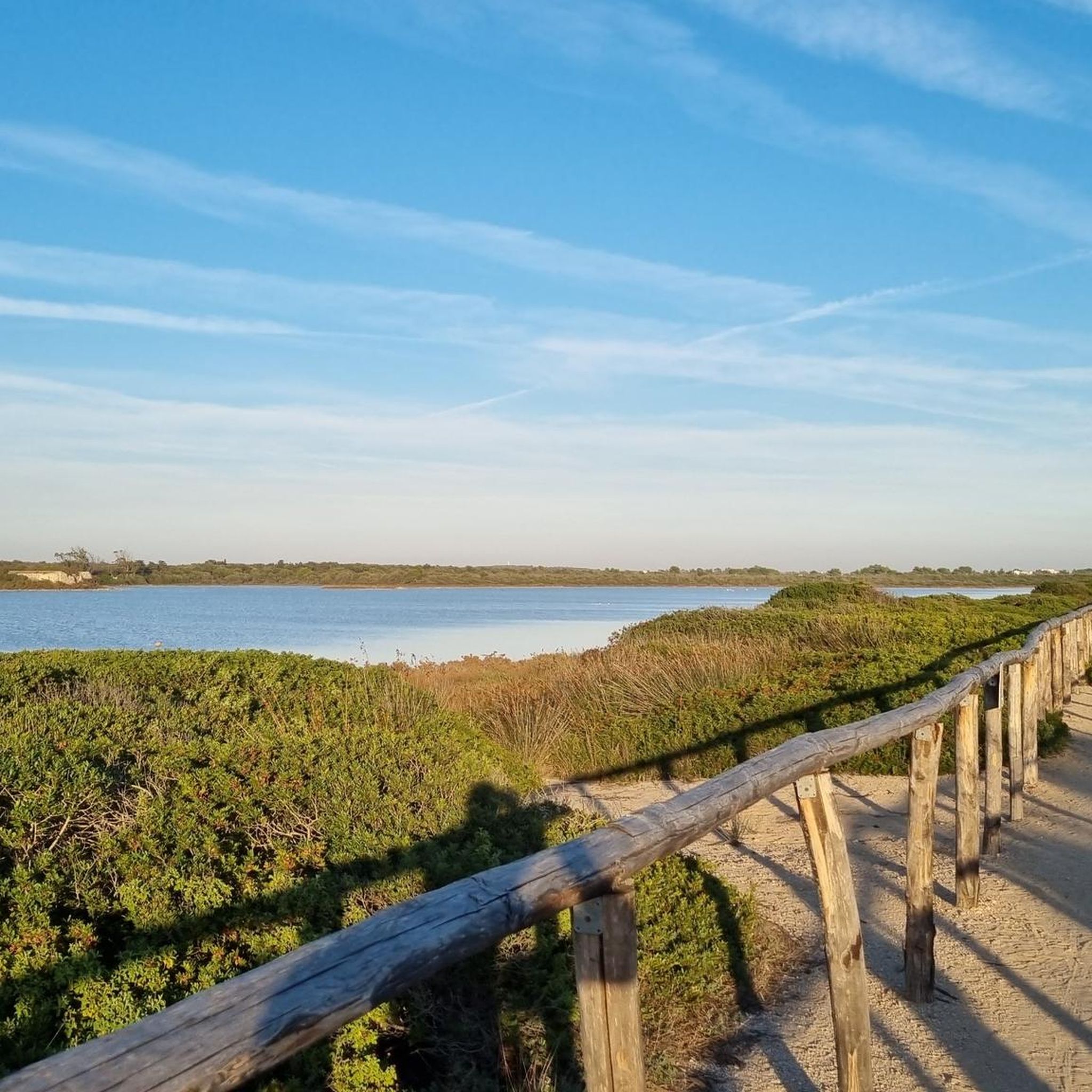
The Salina dei monaci of Torre Colimena is a small earthly paradise located on the Ionian coast of Salento a few kilometers from Porto Cesareo
0
0

One of the many coastal towers in the area. Among the most beautiful and imposing.
1
0

SALINA MONACI Salina Monaci, part of the Regional Natural Reserves of the Eastern Taranto Coast, was established in 2002 as a protected area, characterized by a salt pan no longer in use, subject to a variation in the water level and formation of extensive salt crusts in the summer season. In 1600, the area was owned by the Benedictine monks of Aversa and later passed to the Imperiali family. In the 19th century and, in particular, after the expulsion of the Bourbons, the Salina came under the control of the State Property Agency. The Salina has survived two reclamation interventions: in 1882, when Avetrana was not included in the drainage program and in the mid-twentieth century, when the intervention was limited due to the scarce economic resources allocated. In 1960 it was separated from the sea with the construction of the Salento coast road, later removed in that stretch with the establishment of the Reserves. The illustrated book "The never-ending story" by Fulvio Filo Schiavoni, a Rotarian friend, tells the story of the place, long disputed, between Manduria and Avetrana.
2
0
COLIMENA TOWER The Colimena cove was chosen as the highest lookout point by the engineer Giovanni Maria Tommaso Scala, responsible for designing new watchtowers. A small tower already existed, but for economic reasons, it was decided to preserve it and incorporate it into the base of the new one, completed in 1570. From that moment on, Torre Colimena represented a fully-fledged defense structure, with its harquebusiers, machicolations and falconate and access regulated by retractable ladders. Its garrison was entrusted to a tower keeper with the rank of corporal, accompanied by companeros with whom he monitored the horizon to promptly warn of the arrival of the enemy with alarm signals (smoke during the day, fires at night, shots from stone cannons and the sounds of the trumpet). Once the Turkish danger had subsided, in 1730, the tower passed into the custody of Giulio Briganti; in 1777 to that of the soldiers of the Invalid Regiment; in 1820 to the Customs Guards and then went through a period of abandonment, until it was entrusted in 1877 to a Brigade
2
0
A beautiful example of a medieval defensive tower on the coast of southern Italy with a museum of selected ceramics As part of the activities for the knowledge and enhancement of ancient, modern and contemporary ceramics, the National Association of Friends of Ceramics carried out research on ceramic containers for wine, in particular the Grottagliese jar. In Grottaglie the origins of the figurative art are lost in time, but it is the wine jar, called srulu in the local dialect, that characterizes the production of the last two centuries, when the wine for daily consumption was extracted from the capason in the srulu. The word srulu derives from the Latin urceolus, a diminutive of urceus, orcio, first adulterated in ursulu, then by apheresis in rsulu and finally by metathesis in srulu. probably it is an onomatopoeic voice that indicates the sound yes before when the wine is sucked out of the ceramic container SOTS I give with enthusiasm. Its shape is characterized by the ovoid body on a disc base and the wide neck esti or. the ribbon handle and the inverted nose pourer. Over time it suffers lie actions: in the nineteenth-century examples it is pot-bellied, while in those SH vi tends to lengthen gradually from 20 to 40 cm. with the ability to make it from poorly cleaned local clay and cover it with different enamels from ivory white to matte yellow. therefore from a simple, meager artifact that the figures of Grottaglie represent from embellished by short brushstrokes and with chromatic vivacity: ochre to iron yellow, from light blue to intense blue, from fat green to manganese brown; More or less bright colors, tastefully combined in a balanced and bright relationship with the base glaze. Meape covered Elumi, ilos values of ceramic production. The decorative motifs constitute the iconographic repertoire of the Grotagliese craftsmanship of the 19th and 20th centuries: from the anthropomorphic elements to the twisted, phytomorphic, landscape and geometric elements, up to the double continuous thread with daisies that always defines the limit of the artistic. It is therefore authentic folk art, expressing general feelings and views of authentic folk art, inspired by sophisticated or traditional models of thought. The more convincing the Arinium, the more authentic Tsula his language niae, the cultivated convinced". An art that every Rono or Rework Vescio Quil Sa Fire "Core in Heni's reality Well, dear friends, you know how to make exaggerations, but also joys, hopes and faith. Elio Scarciglia
2
0
A Wonderful Example of a Battle Tower from the Middle Ages on the Southern Coast As part of the activities aimed at understanding and enhancing ancient, modern and contemporary ceramics, the National Association of Friends of Ceramics has conducted research on ceramic containers for wine, in particular on the Grottaglie jug. In Grottaglie, the origin of the art of pottery is lost in time, but it is the jug, called srulu in the local dialect, that characterizes the production of the last two centuries, when, for daily consumption, wine was poured from the capasone into the srulu. The word srulu derives from the Latin urceolus, diminutive of urceus, jug, corrupt or first in ursulu then, by apheresis, in rsulu and finally, by metathesis, in srulu. it is probably an onomatopoeic word, which indicates the sound that is made when the wine is sucked from the ceramic container SOTS done with gusto. Car zano its shape the ovoid body on a disk base, the wide neck esti o. the ribbon handle and the upturned nose pourer. Over time it has undergone changes: in the nineteenth-century examples it is pot-bellied, while, in the SH vi ones, it gradually tends to lengthen, from 20 to 40 cm. with a capacity of 20 to 40 cm. made with poorly purified local clay and covered with a variable glaze, from ivory white to dull yellow. a therefore of a simple, poor artefact, which the potters of Grottaglie da embellished with short brush strokes and with chromatic vivacity: ochre to iron yellow, from light blue to intense turquoise, from greasy green to manganese brown; more or less bright colors, tastefully combined in a balanced and luminous relationship on the background glaze. Meape ocqui brato elumi so ilos values of ceramic production. the decorative motifs constitute the iconographic repertoire of the Grotagliese manufacture of the 19th and 20th centuries: from anthropomorphic elements to twisted, phytomorphic, landscape and geometric ones, ending with the continuous double thread with daisies, which always defines the edge of the artistic, it is therefore authentic popular art, which expresses common feelings and siliations of authentic nal art, ana from sophisticated or rastal models of thought; a more persuasive arinio even more, though tsula his language niae an that persuaded cultured". An art that every rono or rework vescio quil sa fire "core in the reality of heni Bon, to pivar nichi mie of sa far i isiperssioni, but also of joys, of hopes and of faith. Elio Scarciglia
1
0
Frequently Asked Questions
What kind of terrain can I expect on hikes around Avetrana?
The hiking trails around Avetrana are primarily characterized by flat terrain, coastal paths, extensive salt pans, and wetlands. You'll find minimal elevation changes, making most routes accessible and enjoyable for various fitness levels.
Are there many easy hikes suitable for beginners in Avetrana?
Yes, Avetrana offers a good selection of easy hikes. Out of 48 available routes, 28 are classified as easy. An excellent option for beginners is the Salina dei Monaci – Monaci Salt Pan loop from Torre Colimena, an easy 5.1 km path offering scenic coastal views.
Are there any family-friendly hiking trails in Avetrana?
Many of the trails in Avetrana are suitable for families due to their flat terrain and easy difficulty. The coastal and salt pan routes offer interesting natural sights. Consider the Palude del Conte Beach – Torre Colimena Beach loop from Punta Prosciutto, an easy 7.5 km route that takes you along the coastline.
Can I bring my dog on the hiking trails in Avetrana?
Generally, dogs are welcome on many of the outdoor trails in Avetrana, especially those in open natural areas like the salt pans and coastal paths. However, it's always advisable to keep them on a leash and check for specific regulations if entering protected nature reserves. The Monaci Salt Pan – Salina dei Monaci loop from Torre Colimena is an easy 4.2 km route that could be suitable for a walk with your dog.
What is the typical length and duration of hikes in Avetrana?
Hikes in Avetrana vary in length, but many are designed for a relaxed pace. You'll find routes ranging from short, easy walks like the 4.2 km Monaci Salt Pan – Salina dei Monaci loop (approx. 1 hour) to longer moderate trails such as the 13.3 km Monaci Salt Pan – Salina Monaci Nature Reserve loop (approx. 3 hours 20 minutes).
Are there many circular hiking routes available in Avetrana?
Yes, Avetrana is well-suited for circular hikes, with many routes designed as loops. This allows you to start and end at the same point without retracing your steps. Examples include the popular Le Riserve del Litorale Tarantino Orientale – Salina dei Monaci e Palude del Conte – loop tour, a 10.3 km moderate route.
What kind of wildlife can I spot while hiking in Avetrana?
Given the region's salt pans and wetlands, Avetrana is a great spot for birdwatching. You might encounter various migratory birds, including flamingos, especially around areas like the Salina dei Monaci. The coastal environment also supports diverse marine and terrestrial species.
What are some interesting landmarks or natural sights to see along the trails?
The area around Avetrana is rich in natural and historical sights. You can explore the Torre Colimena and Salina dei Monaci Nature Reserve, visit the historic Torre Colimena Coastal Watchtower, or discover the unique ecosystem around the Chidro River Mouth. The Palude del Conte Beach also offers beautiful coastal scenery.
What is the best time of year to go hiking in Avetrana?
The best time for hiking in Avetrana is typically during the spring (April-May) and autumn (September-October) months. During these periods, the weather is pleasantly mild, and the landscapes are vibrant. Summer can be very hot, especially on exposed coastal paths, while winter offers cooler temperatures but can be damp.
How many hiking trails are there in Avetrana?
There are 48 hiking routes available in Avetrana, offering a variety of experiences from easy coastal strolls to moderate explorations of nature reserves. This provides ample choice for hikers of all levels.
What do other hikers enjoy most about the trails in Avetrana?
The hiking experience in Avetrana is highly rated by the komoot community, with an average score of 4.3 stars from over 70 reviews. Hikers often praise the unique coastal landscapes, the tranquility of the salt pans, and the opportunity to observe local wildlife, particularly birds.
Most popular attractions around Avetrana

Get inspired with the komoot mobile app


Explore more
Browse the best Hikes in other regions.
