Attractions and Places To See around Caraffa Del Bianco - Top 16
Best attractions and places to see around Caraffa Del Bianco include a blend of historical architecture, cultural sites, and natural landscapes. This charming hillside town in the Province of Reggio Calabria, Italy, is nestled among picturesque hills, olive groves, and vineyards. It provides access to rugged mountains and diverse landscapes, offering opportunities for hiking and nature exploration. The region features both historical landmarks and significant natural formations.
Best attractions and places to see around Caraffa Del Bianco
- The most popular…
Last updated: May 26, 2026
St. Peter's Rocks
Highlight • Natural Monument
Translated by Google •
Tip by

Pietra Cappa
Highlight • Natural Monument
Translated by Google •
Tip by

Sign up now to discover places like this
Get recommendations on the best single tracks, peaks, & plenty of other exciting outdoor places.
Sign up for free
Africo Cliffs
Highlight • Gorge
Translated by Google •
Tip by

Church of San Leo of Africo
Highlight • Religious Site
Translated by Google •
Tip by

Staiti Village
Highlight • Settlement
Translated by Google •
Tip by

Sign up for free to discover even more attractions around Caraffa Del Bianco.
Sign up for free
Already have an account?
Start today with a free account
Your next adventure awaits.
Login or Signup
Tips from the Community

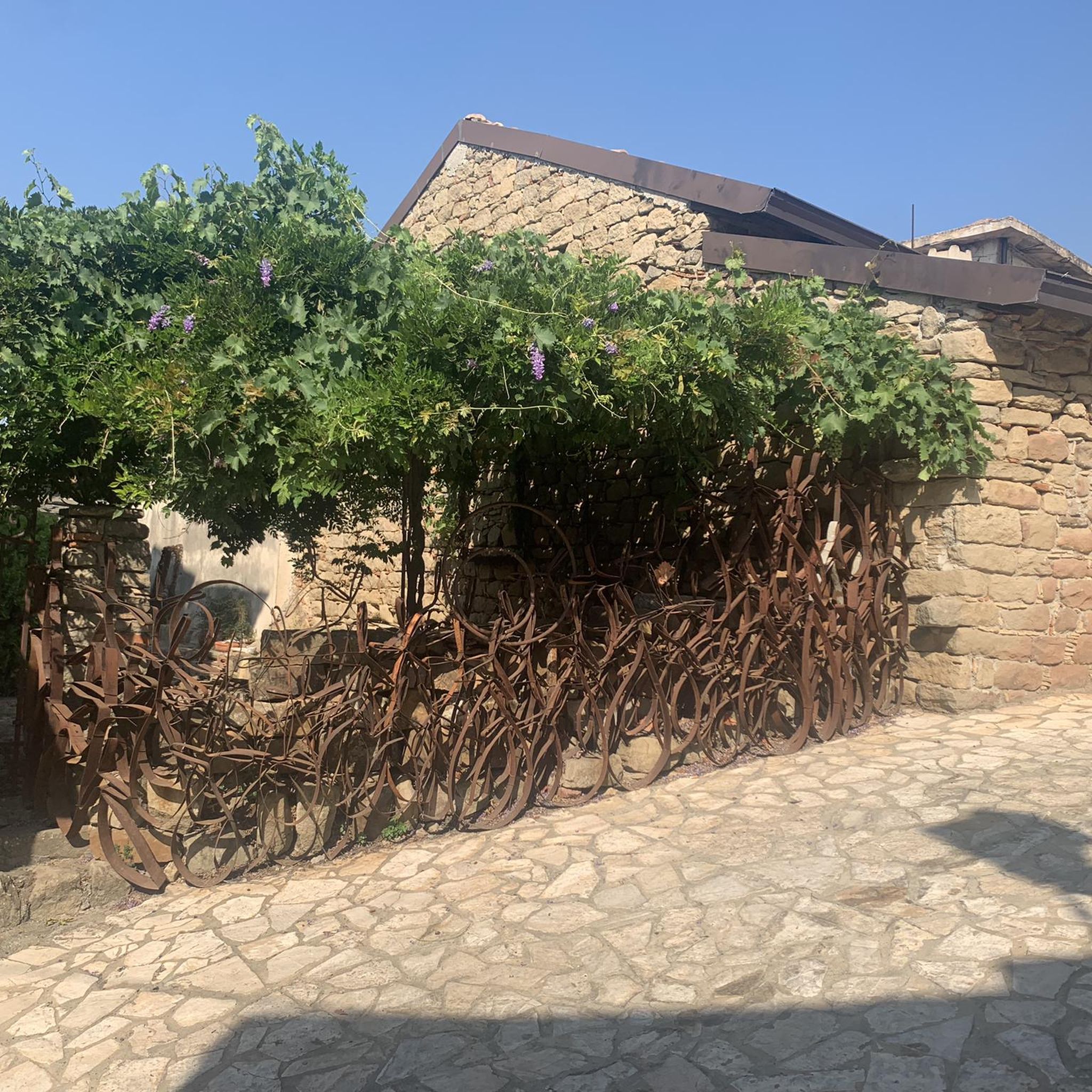
Staiti is located in the southernmost point of the Aspromonte National Park in the Brazzano river valley. The name Staiti derives from the “Stayti” family who ruled the territory in the 16th century.
4
0

The Church of San Leo, in Africo Vecchio, is a jewel of Byzantine origin. Distinguished by its simple architecture and a marble statue from 1635, it was restored after the flood of '51 and has become a pilgrimage destination since 1972.
3
0

Magnificent cliffs overlooking the Ionian. Not to be confused with Africo Vecchio which is located quite a distance away on the slopes of the Aspromonte!
1
0

Of the architectural heritage that still exists in the area of the old town, the Church of San Leo is worth mentioning, with its simple architectural forms, with a single nave with a semicircular apse and a bell tower on the main front. The two bronze bells are preserved in the bell tower, probably from the time when the church was built. It has a dome with the marble statue of the saint from 1635 of local craftsmanship. Located in the Africo Vecchio region, it is certainly of Byzantine origin. Destroyed after the 1951 flood, it has been restored, but while the exterior still retains its original form, the interior is being completely redone. In 1972 the church became a pilgrimage destination. https://www.loquis.com/en/loquis/1081117/Afric
0
0

This is an interesting rock firmarion.
1
0
An impressive rock that looms mightily out of the wooded landscape below.
3
0
Magnificent views of the nearby Pietra Cappa as well as the sea and the mountain range over Plati. Impressive monoliths with caves ...
1
0
Frequently Asked Questions
What natural landmarks can I explore near Caraffa Del Bianco?
The region boasts several impressive natural landmarks. You can visit St. Peter's Rocks, a natural monument with caves that was once a site of rock settlements and worship, offering magnificent views. Another must-see is Pietra Cappa, an impressive rock formation that looms out of the wooded landscape. Additionally, the Africo Cliffs provide stunning views overlooking the Ionian Sea.
What historical buildings and cultural sites can I visit in Caraffa Del Bianco itself?
Within Caraffa Del Bianco, you can explore several historical structures. The 17th-century Castello Feudale served both residential and defensive purposes. The Palazzo Barletta, dating back to 1559, showcases local architectural style with exposed stone and Baroque balconies. The 17th-century Palazzo Verduci, ancestral home of Rocco Verduci, is well-preserved and features a significant garden. The Church of Santa Maria degli Angeli is a rare example of 17th-century architecture, and the Sanctuary of the Madonna delle Grazie holds local legend.
Are there any ancient churches or religious sites in the surrounding area?
Yes, the area is rich in religious history. The Church of San Leo of Africo, located in Africo Vecchio, is of Byzantine origin and has been a pilgrimage destination since 1972. You can also find the 11th-century Chiesa di Santa Maria de' Tridetti, declared a National Monument, with its apses visible amidst olive groves near Staiti.
What hiking opportunities are available around Caraffa Del Bianco?
Caraffa Del Bianco is a great base for hiking. You can find moderate trails like the 'Pietra Cappa Loop Trail' (approx. 7 km) or the 'Africo Vecchio Trail' (approx. 11.6 km). For longer excursions, consider 'From San Luca to Lago Costantino – Aspromonte National Park' (approx. 14.2 km). More hiking routes can be found in the Hiking around Caraffa Del Bianco guide.
Are there cycling routes suitable for exploring the region?
Absolutely. The region offers various cycling routes. For road cycling, options include the 'Beaches and Cliffs of Africo – Brancaleone Marina loop' (approx. 58 km) or the 'Africo Cliffs – Staiti Village loop' (approx. 59 km). Touring cyclists can tackle more challenging routes like 'Ferruzzano and the cliff of Africo – loop from Bianco' (approx. 34 km). Explore more options in the Road Cycling Routes around Caraffa Del Bianco and Cycling around Caraffa Del Bianco guides.
What national parks are accessible from Caraffa Del Bianco for nature exploration?
Caraffa Del Bianco provides close proximity to two significant natural parks. The Aspromonte National Park is known for its rugged mountains, forests, and diverse landscapes, offering extensive opportunities for hiking and nature exploration. The Serre Regional Nature Park also offers beautiful natural scenery, including cycling routes like the one from Caraffa to Monterosso.
Can I visit any historical villages nearby?
Yes, the Staiti Village is located in the southernmost part of the Aspromonte National Park and has historical ties dating back to the 16th century. It's a charming village worth exploring for its history and setting.
When is the best time of year to visit Caraffa Del Bianco for outdoor activities?
The region generally enjoys a Mediterranean climate. Spring (April-May) and autumn (September-October) are often ideal for outdoor activities like hiking and cycling, as temperatures are milder and the landscapes are vibrant. Summers can be hot, especially for strenuous activities, but are perfect for enjoying the Ionian coast views.
What do visitors particularly enjoy about the attractions near Caraffa Del Bianco?
Visitors frequently highlight the impressive natural formations and the stunning views. For instance, St. Peter's Rocks are praised for their 'magnificent views' of Pietra Cappa, the sea, and the mountain range. The Africo Cliffs are also noted for their 'magnificent views overlooking the Ionian'.
Are there any unique or lesser-known historical features in Caraffa Del Bianco?
Beyond the main palaces and churches, the Boccalupi Fountain, also known as 'Seven Fountains' due to its seven spouts, is a historic and charming feature within the town. It was acquired for the town's inhabitants by Prince Fabrizio Caraffa and offers a glimpse into local history and public works.
Are there family-friendly attractions or activities in the area?
While specific 'family-friendly' categories aren't listed for all attractions, the natural landscapes and historical sites can be enjoyed by families. Exploring the less strenuous parts of Aspromonte National Park, visiting the historic Boccalupi Fountain, or taking easy walks around the picturesque hills and olive groves can be pleasant family activities. The historical villages like Staiti Village also offer an educational and engaging experience for all ages.
Most popular routes around Caraffa Del Bianco
Most popular attractions around Caraffa Del Bianco

Get inspired with the komoot mobile app


Explore more
Still not found the Highlight you’re looking for? See guides of the top attractions in other regions:
