The best cycling routes in S Albufera Des Grau
4.5
(146)
1,651
riders
133
rides
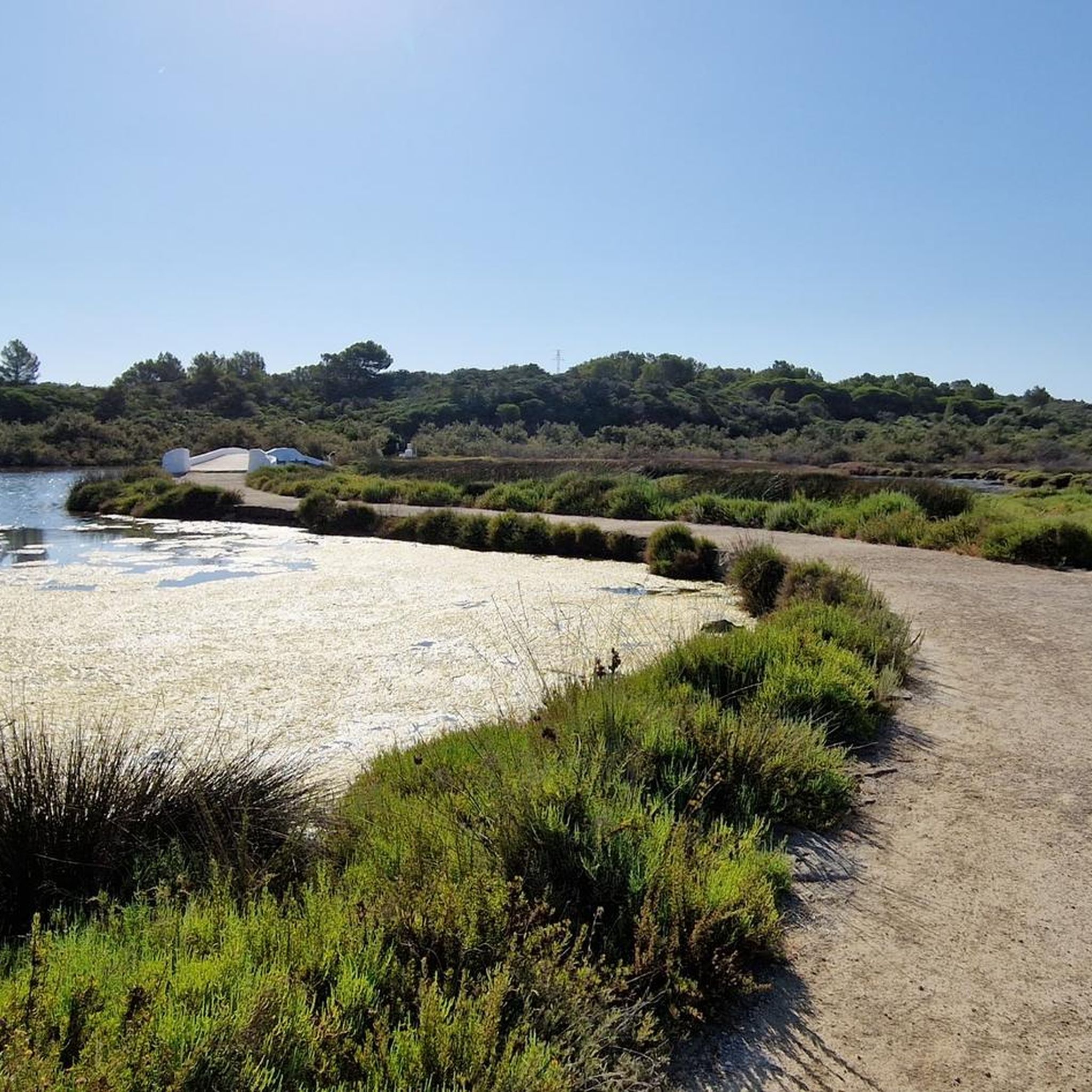
Touring cycling in S Albufera Des Grau offers diverse landscapes within Menorca's UNESCO Biosphere Reserve. The region features a 1.2-mile (2 km) freshwater lagoon, extensive dune systems, and pristine coastal areas with sandy beaches and wild coves. Inland, the terrain includes woodlands, particularly wild olive groves, and traditional agricultural lands, shaped by erosion into a varied topography. The historic Camí de Cavalls also traverses the natural park, providing accessible cycling options.
Best touring cycling routes in S Albufera Des Grau
…Last updated: June 28, 2026
1.0
(1)
26
riders
Moderate bike ride. Good fitness required. Mostly paved surfaces. Suitable for all skill levels.
7
riders
25.0km
01:58
230m
230m
Moderate bike ride. Good fitness required. Mostly paved surfaces. Suitable for all skill levels.

Sign up for free
6
riders
38.8km
03:04
420m
420m
Moderate bike ride. Good fitness required. Mostly paved surfaces. Suitable for all skill levels.
8
riders
Moderate bike ride. Good fitness required. Mostly paved surfaces. Suitable for all skill levels.
4.0
(2)
7
riders
Moderate bike ride. Good fitness required. Mostly paved surfaces. Suitable for all skill levels.
Get access to more routes and recommendations from other explorers.
Sign up for free
Already have an account?
Our route recommendations are based on thousands of hikes, rides, and runs completed by other people on komoot.
Start today with a free account
Your next adventure awaits.
Login or Signup
Other adventures in S Albufera Des Grau

Tips from the Community

Steep descent to the beach, no matter from which side.
0
0
About 1km from the " Cami de Cavalls ", unique landscape all around.
0
0
Easily accessible by bike, an asphalt path leads to the tower.
0
0

One of the most iconic and wild corners of the island, surrounded by lunar landscapes, black rocks and turquoise sea. The black and white lighthouse contrasts with the harsh terrain and the constant wind gives it an air of adventure. By mountain bike, the access road is short but with stony sections and exposed to the sun; it is best to bring water and avoid the central hours of the day. Tip: get there early or at dusk - the light and silence of the place make it seem like another planet.
0
0

I recommend trekking equipment, boots in this period sunscreen and sun protection .... also important the swimsuit. on arrival when you arrive at the lighthouse the passage seems to be lunar and then it changes and becomes different but always fascinating and unique. I recommend it as an excursion.
0
0

Located at the tip of the cape of the same name, the Favàritx lighthouse is one of the most visited on the island, both for its distinctive white tower, whose silhouette draws a black spiral stripe, and for its rugged natural environment. Surrounded by imposing slate cliffs, in a privileged location, it is really worth getting close to this end of Menorca to see how this lighthouse is different from the others. Built in 1922 with rock from the quarry located nearby, the orography that surrounds Favàritx provides incredible views on both sunny and rainy days, which is why it is not necessary to check the weather forecast to visit it. On the road to Favàritx you can also visit the Cós des Síndic Lake, whose perimeter has been fenced off to best preserve its conservation. This is a beautiful natural pool of great ecological importance, which is only created in the event of strong storms or with rainwater, which is why the panorama offered is not always the same. Thanks to its proximity to the sea, the landscape provides this overall contrast, totally different from that of the other lighthouses on the island. The Favàritx lighthouse can be reached by car, by bike or on foot with a beautiful and long walk. It can also be reached by making a slight detour from the Camí de Cavalls, which runs parallel to this stretch of coast. Near the lighthouse and along the Camí Vell de Favàritx, you can reach the beautiful coves of Presili and Tortuga, two beaches in Menorca that are absolutely not to be missed.
0
0
Carmelite cloister transformed into a multifunctional space that includes a market, restaurant, concert space and a music school. It is located in the heart of the capital, a few steps from the Mercado del Pescado. It is a convent with a long history of transformations. Born to house the Carmelite order, it was confiscated, desacralized and, depending on the period, transformed into a court, prison, school. In the last quarter of the twentieth century, the ancient monastic cells on the ground floor began to accommodate various commercial proposals: shoe and clothing stores next to meat, fruit and vegetable shops, artisan products, local gastronomic specialties. And so it is until today. https://mercatdesclaustre.com But not only commerce. In fact, the courtyard, the central space framed by sandstone vaults, is home to cultural events and jazz, pop, folk, classical concerts. Nicknamed “Terraza“, in the summer it offers live music. https://esclaustre.com
3
0
The construction of the church began in 1719. The covering is Gothic in style with a cross vault and pointed arches. The single nave culminates in a rectangular chapel under a lower pointed arch that contains the altar. Particularly interesting are the neoclassical portals that connect to the sacristy. From 1736 the side chapels were opened between the buttresses with barrel vaults and arches with columns decorated with spirals and zigzags. The Capella de la Concepció deserves special mention. This octagonal chapel was built between 1745 and 1752. The floral decoration pervades the columns that separate the eight small chapels with superimposed galleries. The hemispherical dome contrasts, due to its simplicity, with the very rich decoration of the lower part. Although the author is unknown, the influence of the works of the masters of the Amorós family (the transept and the chapel of Gràcia, the chapel of the Ànimes of the Cathedral, Roser, el Socors, the Saura palace) seems evident. The façade and the bell tower were built in 1775. The portal with flared arches seems to be inspired by the Romanesque, but the door jamb is Renaissance. Other decorative motifs present in the temple date back to the beginning of the century, such as the murals (in grisaille) that adorn the presbytery and depict scenes from the life of Saint Francis.
2
0
Frequently Asked Questions
How many touring cycling routes are available in S'Albufera des Grau?
S'Albufera des Grau offers a wide selection of touring cycling routes, with over 140 options available. These routes cater to various skill levels, including 36 easy, 62 moderate, and 43 difficult trails.
What do other touring cyclists say about the routes in S'Albufera des Grau?
The touring cycling routes in S'Albufera des Grau are highly regarded by the komoot community, holding an average rating of 4.5 stars from over 130 reviews. Cyclists frequently praise the diverse landscapes, from wetlands to coastal paths, and the opportunity to explore Menorca's UNESCO Biosphere Reserve.
Are there family-friendly touring cycling routes in S'Albufera des Grau?
Yes, S'Albufera des Grau has several easy touring cycling routes suitable for families. The Claustre Market – Maó (Mahón) Old Town and Harbor loop from Illa d'en Colom is a moderate 11.2-mile (18.0 km) path that explores urban areas and coastal views, offering a pleasant experience for various ages. The Sa Gola itinerary, mentioned in the region research, is also a flat route suitable for cycling.
What natural features or wildlife can I expect to see while cycling in S'Albufera des Grau?
While cycling, you can experience diverse habitats, including the 2 km freshwater lagoon, extensive dune systems, and pristine coastal areas. The park is a haven for birdwatching, with over 100 species like coots, fish eagles, and grey herons. You might also spot unique species such as Lilford's wall lizards and Hermann's tortoises. Bird observation huts are strategically placed for enhanced viewing.
Are there any significant landmarks or attractions to visit along the cycling routes?
Absolutely. Along the routes, you can explore several notable attractions. The iconic Favàritx Lighthouse, situated on dramatic black slate cliffs, offers a striking landscape. You can also visit the Talayotic village of Sa Torreta, an archaeological site showcasing impressive Cyclopean architecture. The Des Grau Beach and the S'Albufera des Grau Natural Park itself are also key highlights.
Can I cycle along the Camí de Cavalls in S'Albufera des Grau?
Yes, the historic Camí de Cavalls (GR-223) traverses the natural park and offers accessible cycling options. While some parts may be rocky, other segments are well-suited for touring bikes. For example, the Camí de Cavalls – Military Restricted Area loop from Maó is a moderate 25.9 km route that incorporates sections of this historic path.
Are there any circular touring cycling routes in S'Albufera des Grau?
Yes, many touring cycling routes in S'Albufera des Grau are designed as loops, allowing you to start and end at the same point. An example is the Salines d'Addaia – Favàritx Lighthouse loop from Port d'Addaia, a 25.0 km trail leading through coastal salt flats and to the lighthouse.
Where can I park my car when cycling in S'Albufera des Grau?
Parking is generally available near popular starting points for routes, such as Es Grau village or Port d'Addaia. Specific parking information can often be found in the route descriptions on komoot or local signage near the park entrances.
What is the best time of year for touring cycling in S'Albufera des Grau?
The spring (April-May) and autumn (September-October) months are generally ideal for touring cycling in S'Albufera des Grau. The weather is milder, and the natural landscape is vibrant. Summer can be pleasant, especially on routes with shade or sea breezes like the Sa Gola itinerary, but temperatures can be high.
Are there places to eat or stay near the cycling routes?
The village of Es Grau, located within the natural park, offers cafes and restaurants. Nearby towns like Maó (Mahón) also provide a wider range of accommodation and dining options. Many routes, such as the Claustre Market – Maó (Mahón) Old Town and Harbor loop, pass through or near urban areas with amenities.
Are there any specific permits required for cycling in S'Albufera des Grau?
Generally, no specific permits are required for cycling on designated routes within S'Albufera des Grau Natural Park. However, it's always advisable to check local regulations, especially if planning to cycle off marked paths or in sensitive ecological areas. Respecting park rules and signage is essential.
Are dogs allowed on the touring cycling routes?
While S'Albufera des Grau is a natural park, regulations regarding dogs can vary. It's best to keep dogs on a leash in protected areas to avoid disturbing wildlife. Always check specific route guidelines or local park authority information for the most current rules on bringing dogs.
Most popular routes in S Albufera Des Grau
Most popular attractions in S Albufera Des Grau

Get inspired with the komoot mobile app


Explore more
Browse the best Cycling routes in other regions.
