Attractions and Places To See in Baixo Miño - Top 18
Best attractions and places to see in Baixo Miño are found in the southwestern part of Pontevedra, Galicia, Spain. This region is defined by the Miño River, which forms a natural border with Portugal. It features diverse landscapes, including coastal areas, mountains, and riverine environments. Baixo Miño also offers a rich cultural and historical heritage for visitors to explore.
Best attractions and places to see in Baixo Miño
- The most popular attractions is Tui-Valencia International Bridge, a bridge that…
Last updated: July 6, 2026
Tui-Valencia International Bridge
Highlight • Bridge
Translated by Google •
Tip by

Spain–Portugal border 🇵🇹/🇪🇸 Tui–Valença Bridge
Highlight • Bridge
Tip by

Sign up now to discover places like this
Get recommendations on the best single tracks, peaks, & plenty of other exciting outdoor places.
Sign up for free
Tui–Valença International Bridge
Highlight • Bridge
Tip by

Ecopista of the Minho River: Monção to Valença
Highlight (Segment) • Cycleway
Translated by Google •
Tip by

Tamuxe Bridge
Highlight • Bridge
Translated by Google •
Tip by

Sign up for free to discover even more attractions in Baixo Miño.
Sign up for free
Already have an account?
Start today with a free account
Your next adventure awaits.
Login or Signup
Tips from the Community

For those of us who are older, it reminds us of what it was like to cross from one country to another, when you might randomly have to open the trunk of your car so that both police forces could check what you were carrying, so that younger people could get their documents, and above all so that everyone can see how beautiful and enriching it is to be able to live in peace between neighboring countries.
0
0


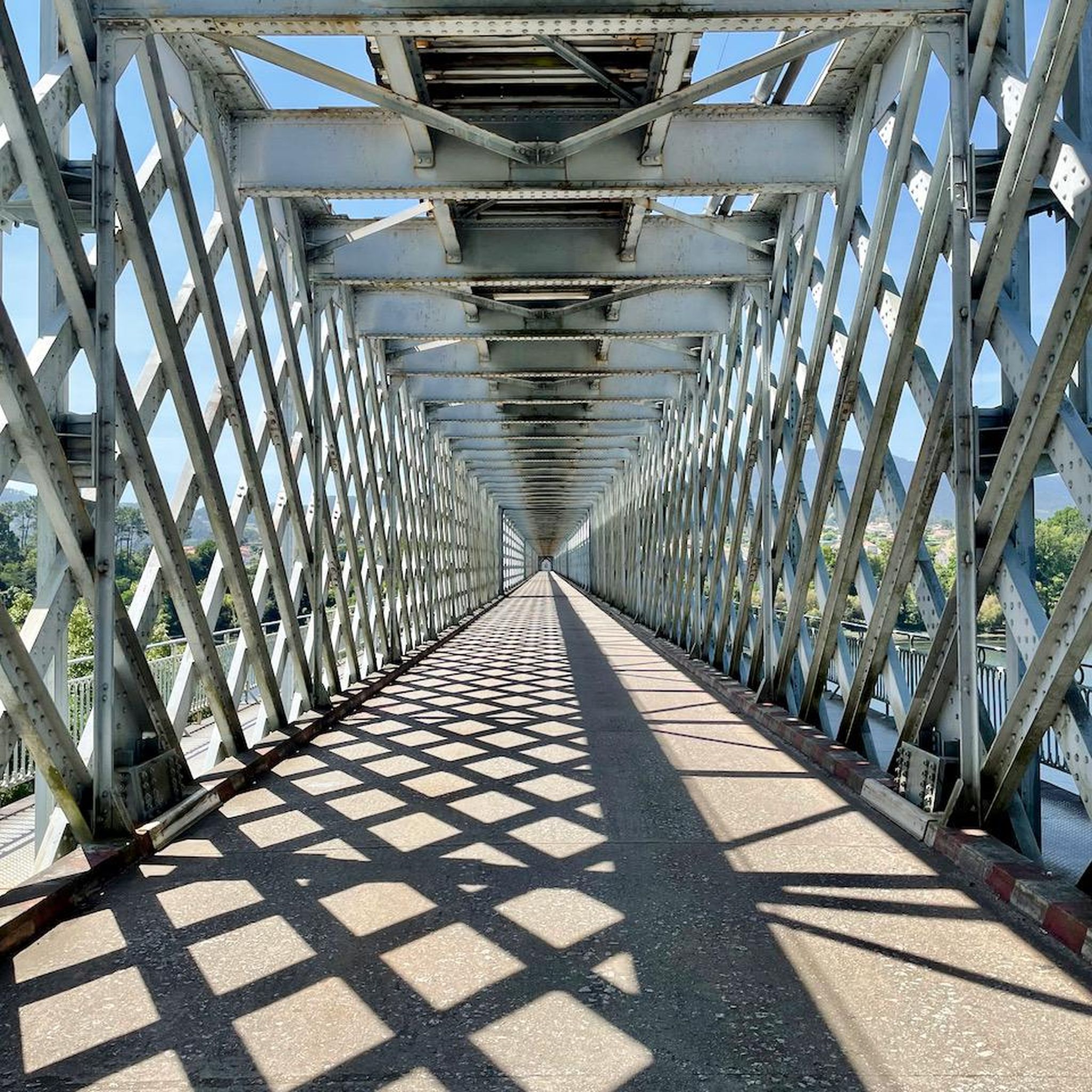
The Tui International Bridge is a landmark on the border between Portugal and Spain, connecting the Galician city of Tui to Valença, Portugal, across the Minho River. This historic metal truss bridge serves as a crossing for cars, trains, and pedestrians. It is also part of the Camino de Santiago route, offering views of the river and both cities.
1
0
The Tui International Bridge is a landmark on the border between Portugal and Spain, connecting the Galician city of Tui to Valença, Portugal, across the Minho River. This historic metal truss bridge serves as a crossing for cars, trains, and pedestrians. It is also part of the Camino de Santiago route, offering views of the river and both cities.
1
0

Paradise for hiking and mountain biking
0
0

Bridge that connects Spain with Portugal, from the town of Tuy to Valença. As a tip, be careful, as it is narrow and the traffic passes quite close.
0
0

Section of eco-road very close to the Miño River, in a fairly good state of conservation and which allows you to avoid traffic.
0
0

The railway section that connected Monção to Valença was deactivated several years ago, suffering progressive degradation due to the lack of use. The Municipalities of Monção and Valença signed protocols with REFER so that, in that section, an Ecopista could be built, intended for cycling and walking. Opened on November 14, 2004, the Ecopista do Rio Minho is a route of more than 20 km, next to the river, which deserves great praise and applause from most people. Along the route, between the historic centers of Monção and Valença, there are plenty of points of interest, making this ecological route the first in Portugal to take advantage of deactivated railway lines.
4
0
Frequently Asked Questions
What historical landmarks can I visit in Baixo Miño?
Baixo Miño is rich in history. You can explore the impressive Tui-Valença International Bridge, a historic metal truss bridge connecting Spain and Portugal. Don't miss the fortress-like Tui Cathedral in Tui's medieval quarter, or the ancient Castro de Santa Trega in A Guarda, an archaeological site with significant remains and petroglyphs. The Monastery of Santa María de Oia, a 12th-century Cistercian monastery, also offers a glimpse into the region's past.
Are there natural parks or significant natural features to explore?
Absolutely. Baixo Miño boasts diverse natural beauty. Visit Monte Aloia Natural Park in Tui, Galicia's oldest natural park, offering panoramic views and rich biodiversity. The Miño River Estuary in A Guarda is a protected area ideal for birdwatching, with its wetlands and sandbanks. You can also discover the Gándaras de Budiño wetlands, formed by the Louro River, or the idyllic Pozas de Mougás natural pools in Oia.
What cultural sites are unique to Baixo Miño?
Beyond its historical landmarks, Baixo Miño offers unique cultural experiences. The Muíños do Folón e O Picón in O Rosal feature a fascinating set of 60 cascading mills connected by a 3.5 km trail, declared a Cultural Interest Site. Explore the primitive art of European relevance at the Petroglyphs of Monte Tetón in Tomiño, showcasing prehistoric rock engravings. The Roman Salt Mines of O Seixal also hint at an important ancient industry along the coast.
Are there family-friendly activities or attractions in the region?
Yes, Baixo Miño offers several options for families. The Ecopista of the Minho River: Monção to Valença is a converted railway line perfect for cycling and walking with children. The Miño River Path in Tomiño also provides a pleasant natural environment for outdoor activities. Many of the natural parks and coastal areas are suitable for family outings, offering gentle trails and scenic views.
What outdoor activities can I do near these attractions?
The region is excellent for outdoor enthusiasts. You can enjoy hiking on trails like the Tui - Rio Louro trail or the Castrexo Pine Forest loops. Cycling is popular along the Minho River Ecopista, and there are various routes for touring bicycles and mountain biking, such as the Baixo Miño Loop. For more detailed routes, check out the Hiking in Baixo Miño, Cycling in Baixo Miño, and MTB Trails in Baixo Miño guides.
Where can I find the best viewpoints in Baixo Miño?
For breathtaking views, head to Monte de Santa Trega in A Guarda. From its summit, you can enjoy impressive panoramas of the coastline, the Ría de Vigo, the Illas Cíes, and the Miño estuary extending into Portugal. Monte Aloia Natural Park also offers expansive views of the surrounding region.
Are there any unique bridges or river-related attractions?
Yes, Baixo Miño is known for its bridges and river features. The Tui-Valença International Bridge is a prominent landmark. You can also visit the Tamuxe Bridge, a stone bridge with three arches over the Tamuxe river, rebuilt in the 19th century. The Miño River itself offers attractions like the Miño River Estuary and the Miño River Path in Tomiño, ideal for riverside strolls and activities.
What is the best time of year to visit Baixo Miño?
The best time to visit Baixo Miño is generally during the spring (April to June) and early autumn (September to October) when the weather is pleasant for outdoor activities and exploring. Summers can be warm, making coastal areas and river activities particularly appealing, while winters are milder but can be rainy.
What do visitors enjoy most about the attractions in Baixo Miño?
Visitors frequently praise the stunning feeling of crossing the Tui-Valença International Bridge, connecting two countries. The Ecopista of the Minho River is highly regarded for its pleasant and easy routes, offering beautiful scenery along the river. The region's blend of natural beauty, ancient history, and cultural richness provides a compelling experience for various interests.
Can I find ancient archaeological sites in Baixo Miño?
Indeed. The region is home to significant archaeological sites. The Castro de Santa Trega in A Guarda is a must-see, an ancient Celtic hillfort with archaeological remains and petroglyphs offering insights into over 2,000 years of history. Additionally, the Petroglyphs of Monte Tetón in Tomiño showcase primitive rock engravings, some with up to 18 concentric rings, making them among the largest in Europe.
Are there any charming towns or coastal areas worth visiting?
Baixo Miño features several charming towns and coastal areas. A Guarda is known for its historic center and port, while O Rosal offers vineyard valleys. Tomiño boasts the recently remodeled Seixo Square and Tomiño Market, central to local life. Oia, with its coastal monastery, provides a dramatic setting where mountains meet the Atlantic. These towns offer unique attractions and a glimpse into local Galician life.
What kind of trails are available for walking or cycling?
You'll find a variety of trails suitable for walking and cycling. The Ecopista of the Minho River is a paved route built on a deactivated railway line, perfect for both activities. The Miño River Path in Tomiño also runs parallel to the river, offering a natural environment for trekking and cycling. For more challenging options, there are numerous hiking and MTB trails throughout the region, ranging from easy to difficult.
Most popular routes in Baixo Miño

Get inspired with the komoot mobile app


Explore more
Still not found the Highlight you’re looking for? See guides of the top attractions in other regions:
