The best walks and hikes around Parco regionale urbano Monte Orlando
4.3
(310)
1,909
hikers
54
hikes
Hiking around Parco regionale urbano Monte Orlando offers diverse trails within an urban natural reserve in Gaeta, Italy. The region features Mediterranean vegetation, panoramic sea views, and significant geological formations. It combines natural beauty with historical attractions, providing varied terrain for outdoor activities.
Best hiking trails in Parco regionale urbano Monte Orlando
- The most popular hiking route is Monte Orlando Loop, a 4.5 miles (7.2 km) trail that takes 2 hours 11 minutes to complete. This moderate route explores historical sites, unique geological formations, and panoramic vistas of Gaeta.
- Another top favourite among local hikers is Montagna Spaccata of Gaeta – Turk's Cave loop from Gaeta, an easy 3.7 miles (6.0 km) path. This route features the remarkable Montagna Spaccata natural canyon and the historic Turk's Cave.
- Local hikers also love the Gallo Trail – Church of St. Francis, Gaeta loop from Gaeta, a 4.1 miles (6.7 km) trail leading through Mediterranean vegetation and offering panoramic views, often completed in about 2 hours 9 minutes.
- Hiking around Parco regionale urbano Monte Orlando is defined by Mediterranean vegetation, panoramic sea views, and historical sites. The network offers options for various ability levels, from easy strolls to more challenging treks.
- The routes in Parco regionale urbano Monte Orlando are highly rated by the komoot community with an average score of 4.3 stars from over 250 reviews. More than 1,400 hikers have used komoot to explore Parco regionale urbano Monte Orlando's varied terrain.
Last updated: July 9, 2026
4.5
(71)
263
hikers
7.21km
02:11
230m
230m
Moderate hike. Good fitness required. Easily-accessible paths. Suitable for all skill levels.
4.3
(16)
98
hikers
6.79km
02:00
180m
180m
Easy hike. Great for any fitness level. Easily-accessible paths. Suitable for all skill levels.

Sign up for free
4.8
(6)
91
hikers
5.71km
01:34
90m
90m
Easy hike. Great for any fitness level. Easily-accessible paths. Suitable for all skill levels.
5.0
(3)
91
hikers
5.60km
01:29
60m
60m
Easy hike. Great for any fitness level. Easily-accessible paths. Suitable for all skill levels.
4.8
(9)
46
hikers
6.70km
02:09
280m
280m
Moderate hike. Good fitness required. Easily-accessible paths. Suitable for all skill levels.
Get access to more routes and recommendations from other explorers.
Sign up for free
Already have an account?
Our route recommendations are based on thousands of hikes, rides, and runs completed by other people on komoot.
Start today with a free account
Your next adventure awaits.
Login or Signup
Tips from the Community

This famous archaeological site is the tomb of Lucius Munatius Planco, a Roman consul and founder of Lyon and Basel. The mausoleum is located on the summit of Monte Orlando, from where you can also admire the entire Gulf of Gaeta, the Aurunci mountain range, Monte Circeo, the Pontine Islands, and Vesuvius. Lucius Munatius Planco, a lover and admirer of these places, fascinated by their beauty but also attracted by the strategic position and natural fortifications of Gaeta, chose Monte Orlando, wanting once again to excel and ensure his protection. Unlike the mausoleum, which is in good condition today, so much so that it is considered one of the most important existing Roman funerary art artifacts, his sumptuous villa has almost completely disappeared. Few remains of it are left in the area of the Sanctuary of the SS Trinità. The construction dates back to 22 BC and is perfectly circular in shape with a tumulus covering. Inside, this monumental tomb consists of four cells accessible from a circular corridor (ambulatory) and arranged according to the 4 cardinal points. The cells house an antiquarium of artifacts from different historical eras found in the area of Gaeta, and in the main one at the entrance, a copy of the original statue of the consul can be admired, which is currently in Rome. The diameter of the structure is 29.54 meters, while the external circumference measures 93.10.
0
0
Stunning place with cliffs overlooking the sea....This structure represents an important testimony to the complex military fortification system of Gaeta dating back to the Aragonese and Bourbon periods. It was part of the stronghold's powder magazine triptych along with "Carolina" and "Ferdinando", and was originally used for storing gunpowder.
0
0
The powder magazines are an important historical testament to human presence and activity on Monte Orlando in past eras, and they are part of the complex of fortifications and military construction artifacts dating back to the Aragonese and Bourbon dominations (14th-18th centuries). Even in more recent times, as indeed already in Roman times, the extraordinary strategic position of Monte Orlando was appreciated. The powder magazines enclose, within mighty walls, installations where war material (mainly gunpowder) was stored. Today, the Carolina, the Ferdinando, and the Trabacco are preserved in good condition and clearly visible.
0
0
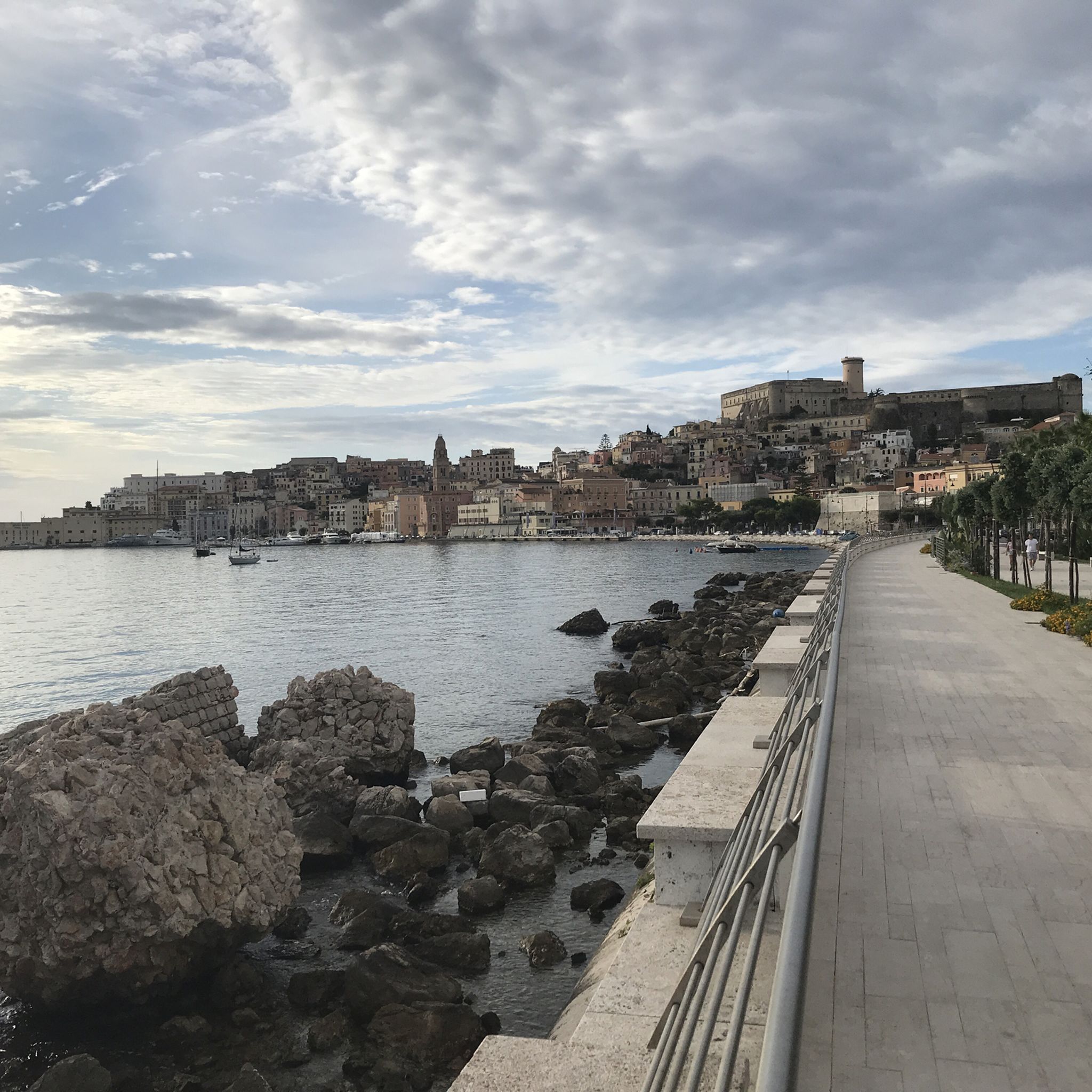
It was probably erected in the 6th century during the Gothic War or in the 7th century when the maritime areas of Lazio and Campania were the object of the expansionist ambitions of the Lombards. In the Gaetan documents of that period, Gaeta began to be referred to by the epithet "Kastrum". Certain news of the existence of the Castle of Gaeta dates back to the time of Frederick II of Swabia, who, during the period of struggles with the papacy, stayed in Gaeta on several occasions, and, sensing its strategic position, had the castle fortified there in 1223. The structure we admire today, approximately 14,100 square meters in size, is called the Angevin-Aragonese Castle because it consists of two communicating buildings built at two different historical moments, one lower down called "Angevin", built during the French domination of the Angevins, and one higher up called "Aragonese", commissioned by Emperor Charles V along with all the other military defense works that strengthened the Fortress of Gaeta. Until a few years ago, the Angevin wing was the seat of the Gaeta Military Prison; it is currently owned by the Municipality of Gaeta, closed pending restoration, and there is a memorandum of understanding signed between the City of Gaeta and the University of Cassino (FR) which intends to designate this wing of the castle in the future as the seat of university faculties for maritime disciplines. Until the end of World War II, the Aragonese wing was the seat of a Carabinieri Cadets Battalion; today, however, it houses the Guardia di Finanza's Nautical School. In the dome of the highest tower of the castle is the Royal Chapel, commissioned by King Ferdinand of Bourbon in 1849.
0
0
This famous archaeological site is the tomb of Lucius Munatius Planco, a Roman consul and founder of Lyon and Basel. The mausoleum is located on the summit of Monte Orlando, from where you can also admire the entire Gulf of Gaeta, the Aurunci mountain range, Monte Circeo, the Pontine Islands, and Vesuvius. An admirer and connoisseur of these places, fascinated by their beauty but also enticed by the strategic position and natural fortifications of Gaeta, Lucius Munatius Planco, by choosing Monte Orlando, wanted, once again, to excel and ensure his protection. Unlike the mausoleum, which is in good condition today, so much so that it is considered one of the most important existing Roman funerary art artifacts, his sumptuous villa has almost entirely disappeared. Few remains of it are left in the area of the Sanctuary of the SS. Trinità. The construction dates back to 22 BC and is perfectly circular in shape with a tumulus covering. Inside, this monumental tomb consists of four cells accessible from a circular corridor (ambulatory) and arranged according to the 4 cardinal points. The cells house an antiquarium of artifacts from different historical eras found in the area of Gaeta, and in the main one at the entrance, a copy of the original statue of the consul, currently in Rome, can be admired. The diameter of the structure is 29.54 meters, while the external circumference measures 93.10.
0
0
The city of Gaeta owes its name to Caieta, Aeneas's nurse, who, according to tradition, is buried right here. According to another interpretation, it derives from the Greek term indicating the “cavity” of the famous gulf. Whatever the truth, what is certain is that the city has a very ancient history, a past that can still be felt in some areas such as the medieval quarter of Sant’Erasmo, attested as early as the era of the Duchy of Gaeta and the maritime republics. A decadent nostalgia can be felt in the streets of the quarter, visibly marked by the bombings of World War II. However, houses dating back to the 12th century are still visible along narrow alleys made of stairs, underpasses, and arches. The medieval quarter has two hearts. The first is the Church of San Giovanni a Mare, a 10th-century Romanesque building with evident Byzantine influence. The second is the Cathedral, consecrated in the 12th century. Inside, a splendid marble Easter candelabrum is kept, while outside stands the imposing Arab-Sicilian bell tower, with interwoven arches, inlays, and majolica tiles. Above all dominates the Aragonese-Angevin castle, which dates back to the 8th century and was later enlarged in the 13th and then in the 16th centuries. Finally, visit the Church of the Annunciation with the Golden Grotto, the Sanctuary of the Split Mountain with the mausoleum of Lucius Munatius Plancus, and the characteristic Via dell'Indipendenza.
0
0
Wonderful and Fascinating Place The Sanctuary of the Most Holy Trinity at Montagna Spaccata is a place of deep spirituality, immersed in the extraordinary natural setting of Monte Orlando, in Gaeta. It stands on the remains of the Roman villa of Lucius Munatius Plancus, and owes its name to three imposing fissures in the rock, two of which are visitable. Founded around 930 AD by Benedictine monks, the sanctuary has always been a center of prayer and meditation. It is a place of attraction for pilgrims and visitors from all over the world, fascinated by the sacredness and history of the place. In addition to the suggestive Chapel of the Crucifix, the Church of the Sanctuary, and the Grotta del Turco, the complex offers visitors a spiritual journey between faith and nature, with breathtaking views of the sea. A point of reference for those seeking a moment of recollection and inner peace, immersed in an environment that combines religion, history, and the wonders of creation.
0
0

A quaint, typically local restaurant with fair prices. There are also very good fish dishes at "Fleischer". The landlord sometimes sings along with the local bard.
0
0
Frequently Asked Questions
How many hiking trails are available in Parco regionale urbano Monte Orlando?
There are over 50 hiking routes in Parco regionale urbano Monte Orlando, offering a diverse range of experiences. These include 30 easy trails, 18 moderate routes, and 3 more challenging treks, catering to various fitness levels.
What kind of views can I expect while hiking in Monte Orlando?
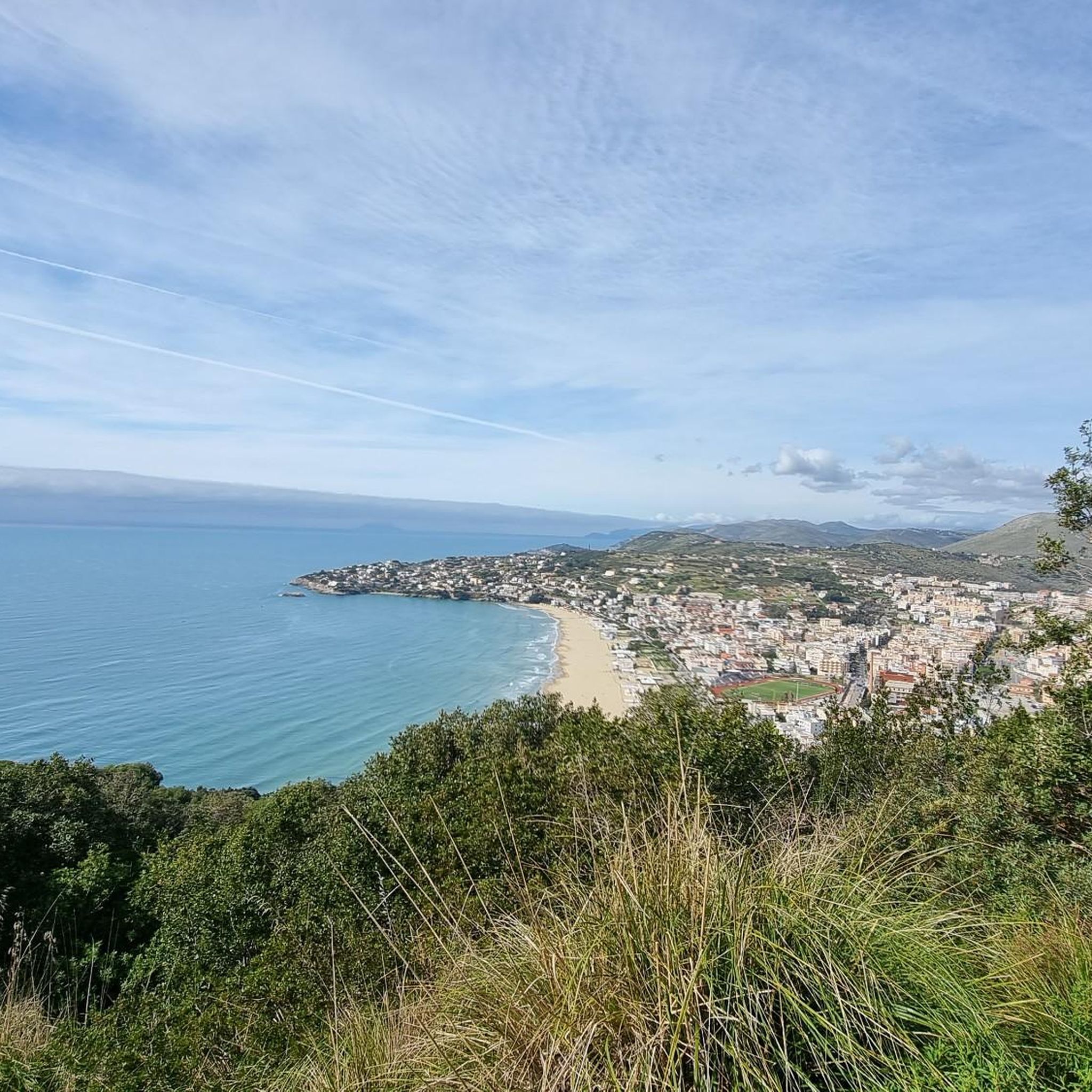
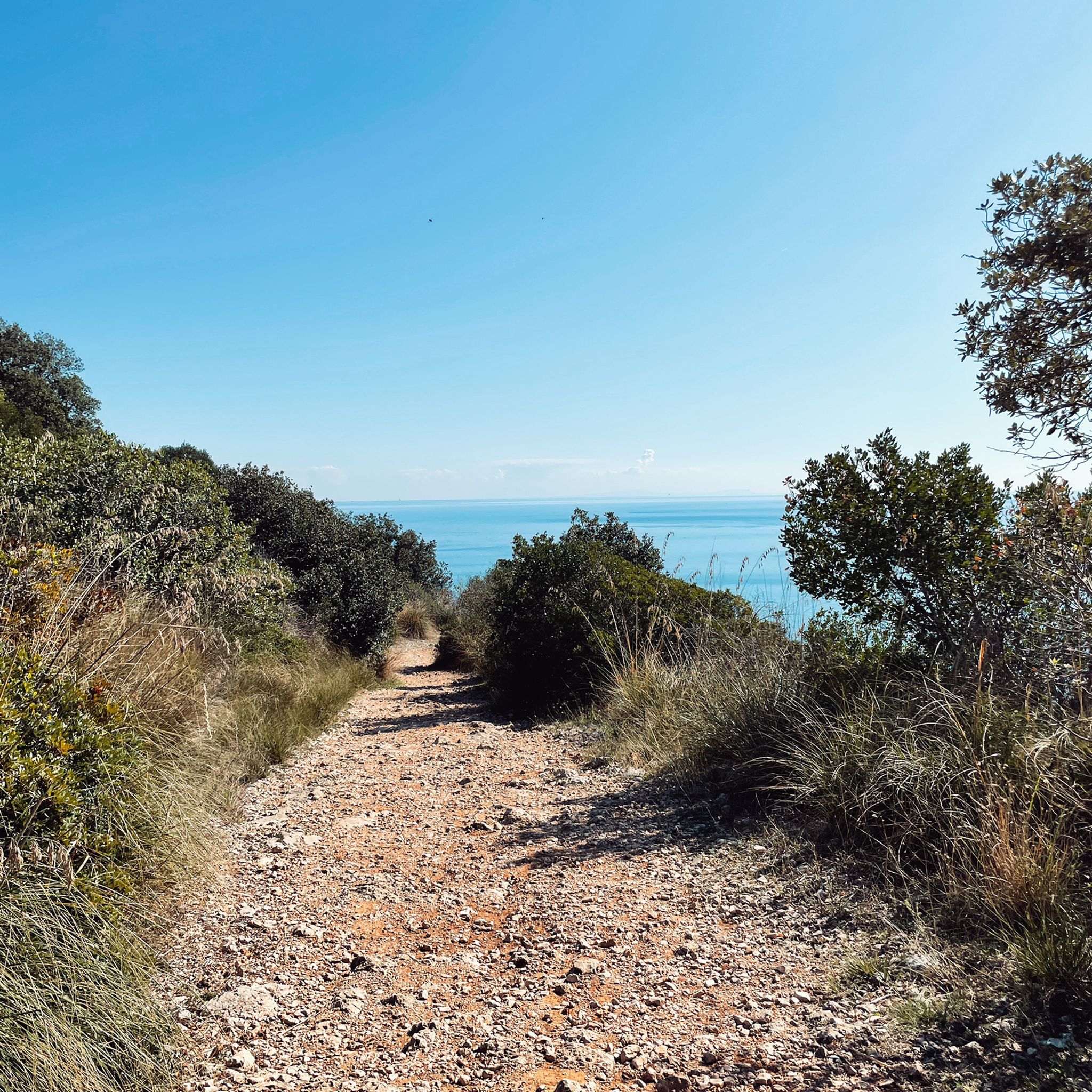
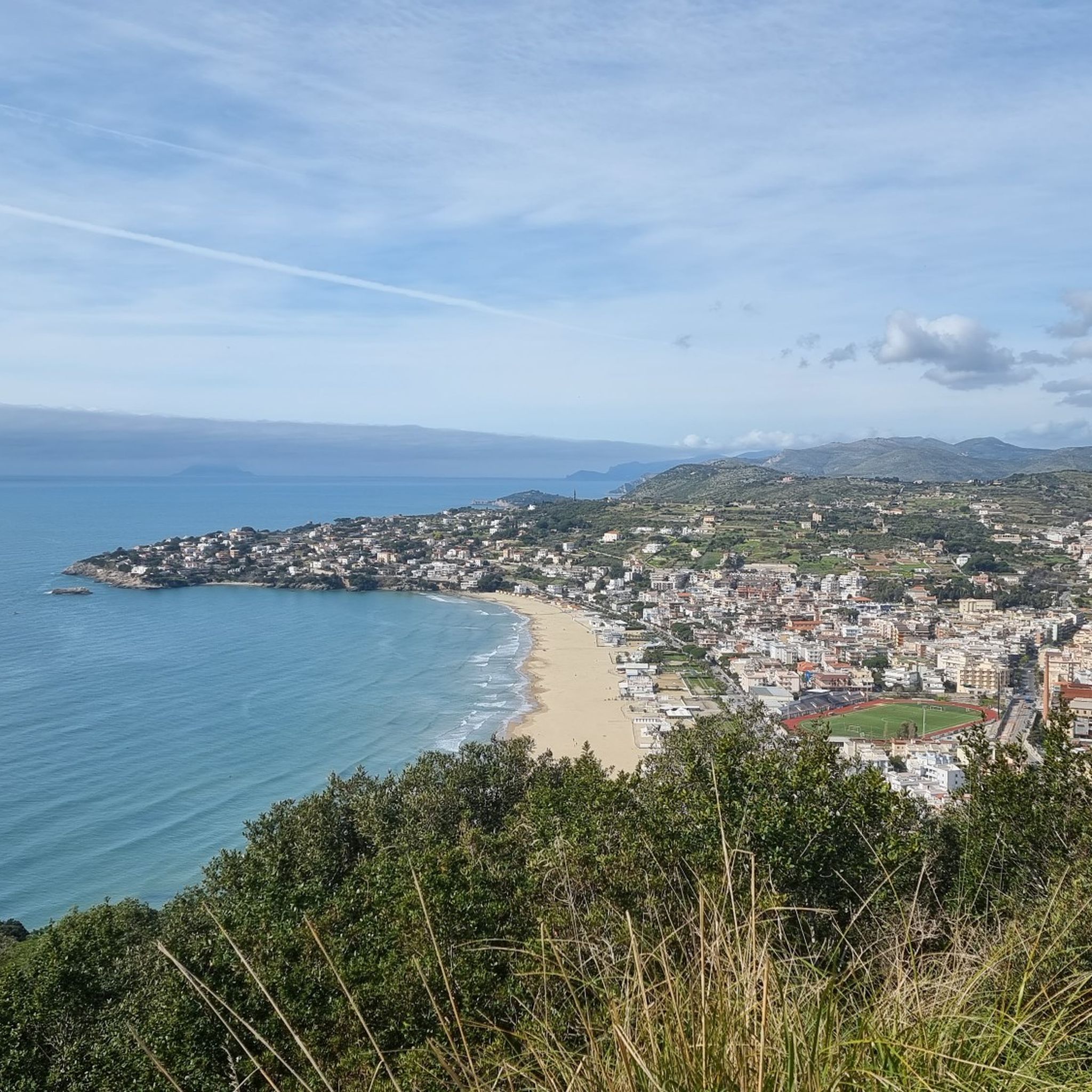
Hikers in Monte Orlando are treated to breathtaking panoramic sea views and stunning vistas of Gaeta town from various vantage points. The trails wind through beautiful Mediterranean vegetation, adding to the scenic appeal.
Are there any easy or family-friendly hiking options in the park?
Yes, Parco regionale urbano Monte Orlando offers many easy and family-friendly options. For instance, the Montagna Spaccata of Gaeta – Turk's Cave loop from Gaeta is an easy 3.7-mile path that takes you through remarkable natural features. Another accessible option is the Church of St. Francis, Gaeta – Monte Orlando loop from Gaeta, which is 3.7 miles long and also considered easy.
What historical or natural attractions can I see along the trails?
The park is rich in both historical and natural points of interest. You can explore the ancient Mausoleum of Lucius Munatius Plancus, a significant Roman site. Natural wonders include the remarkable Montagna Spaccata of Gaeta, a 92-meter natural canyon, and the mysterious Turk's Cave, a deep crevice accessible via a staircase.
Is Parco regionale urbano Monte Orlando suitable for circular walks?
Many routes in Parco regionale urbano Monte Orlando are designed as loops, making them ideal for circular walks. A popular choice is the Monte Orlando Loop, a moderate 4.5-mile trail that explores historical sites and offers panoramic views. Another option is the Gallo Trail – Church of St. Francis, Gaeta loop from Gaeta, which is 4.1 miles long.
What do other hikers say about their experience in Parco regionale urbano Monte Orlando?
The area is highly rated by the komoot community, with an average score of 4.3 stars from over 250 reviews. Hikers often praise the diverse trails, stunning panoramic views, and the unique combination of historical sites and natural beauty.
Are dogs allowed on the hiking trails in Monte Orlando?
While the guide data does not specify restrictions, generally, dogs are welcome on trails in Italian regional parks, often on a leash. It's always advisable to check local signage upon arrival for any specific rules regarding pets in certain areas or during specific seasons.
What is the best time of year to go hiking in Parco regionale urbano Monte Orlando?
The best time to hike in Parco regionale urbano Monte Orlando is typically during the spring (April-May) and autumn (September-October) when the weather is mild and pleasant. Summers can be hot, but early mornings or late afternoons are still enjoyable. Winters are generally mild, making hiking possible year-round, though some paths might be slippery after rain.
Is there parking available for hikers at Parco regionale urbano Monte Orlando?
Yes, as an urban natural reserve, there are typically parking facilities available near the main entrances and trailheads in Gaeta, which serves as the gateway to Monte Orlando. Specific parking areas may vary, so it's recommended to check local maps or signage upon arrival.
Can I reach Parco regionale urbano Monte Orlando using public transport?
Parco regionale urbano Monte Orlando is situated in Gaeta, Italy, which is well-connected by public transport. You can typically reach Gaeta by bus from nearby towns and cities. Once in Gaeta, the park is often accessible on foot or via local bus services, given its urban location.
Are there any trails that offer a good workout with significant elevation gain?
Yes, while many trails are easy or moderate, some routes in Monte Orlando can involve elevation gains of up to 1,000 feet for shorter hikes, or even over 3,000 feet for longer, more demanding treks, providing a good challenge for those seeking a more strenuous workout.
What kind of vegetation and wildlife can I expect to see?
The park is characterized by beautiful Mediterranean vegetation, including various shrubs, trees, and wildflowers. While not explicitly detailed, Mediterranean ecosystems often host diverse birdlife, small mammals, and reptiles. Keep an eye out for local flora and fauna as you explore the trails.
Most popular routes around Parco regionale urbano Monte Orlando
Most popular attractions around Parco regionale urbano Monte Orlando

Get inspired with the komoot mobile app


Explore more
Browse the best Hikes in other regions.
