The best road cycling routes around Owschlag
4.8
(7)
195
riders
46
rides
Road cycling around Owschlag, located in the Rendsburg-Eckernförde region of Germany, features a diverse landscape for cyclists. The area is characterized by rolling hills, tranquil forests such as the Brekendorfer Forst, and picturesque lakes including the Bistensee and Owschlager See. An extensive network of cycling paths traverses the Hüttener Berge Nature Park and offers views of the Eider River, providing varied terrain for different fitness levels. Many routes consist of well-paved surfaces, ensuring a smooth ride for road cyclists.
Best road cycling routes around Owschlag
- The most popular road cycling route is Anna Mill in Norby – Old Avenue loop from Owschlag, a 59.2 miles (95.2 km) trail that takes 3 hours 47 minutes to complete. This moderate route features varied terrain with an elevation gain of 1,315 feet (401 meters).
- Another top favourite among local road cyclists is Bäckerstrand Fahrdorf – Hüttener Berge Nature Park loop from Owschlag, an easy 24.9 miles (40.1 km) path. This route leads through the Hüttener Berge Nature Park, offering scenic views and a gentle elevation profile.
- Local road cyclists also love the Hüttener Berge Nature Park – Forest path near Kropp loop from Owschlag, a 22.5 miles (36.2 km) trail leading through forests and rolling hills, often completed in about 1 hour 35 minutes.
- Road cycling around Owschlag is defined by rolling hills, picturesque lakes, and tranquil forests. The network offers options for different ability levels, from easy rides to challenging, longer routes.
- The routes in Owschlag are highly rated by the komoot community with an average score of 4.8 stars from 7 reviews. More than 200 road cyclists have used komoot to explore Owschlag's varied terrain.
Last updated: May 24, 2026
14
riders
95.2km
03:51
400m
400m
Moderate road ride. Good fitness required. Some segments of this route may be unpaved and difficult to ride.
11
riders
40.1km
01:45
210m
210m
Easy road ride. Great for any fitness level. Mostly well-paved surfaces and easy to ride.

Sign up for free
11
riders
36.2km
01:35
140m
140m
Easy road ride. Great for any fitness level. Mostly well-paved surfaces and easy to ride.
11
riders
59.6km
02:24
160m
160m
Moderate road ride. Good fitness required. Mostly well-paved surfaces and easy to ride.
9
riders
32.3km
01:20
70m
70m
Moderate road ride. Great for any fitness level. Some segments of this route may be unpaved and difficult to ride.
Get access to more routes and recommendations from other explorers.
Sign up for free
Already have an account?
Our route recommendations are based on thousands of hikes, rides, and runs completed by other people on komoot.
Start today with a free account
Your next adventure awaits.
Login or Signup
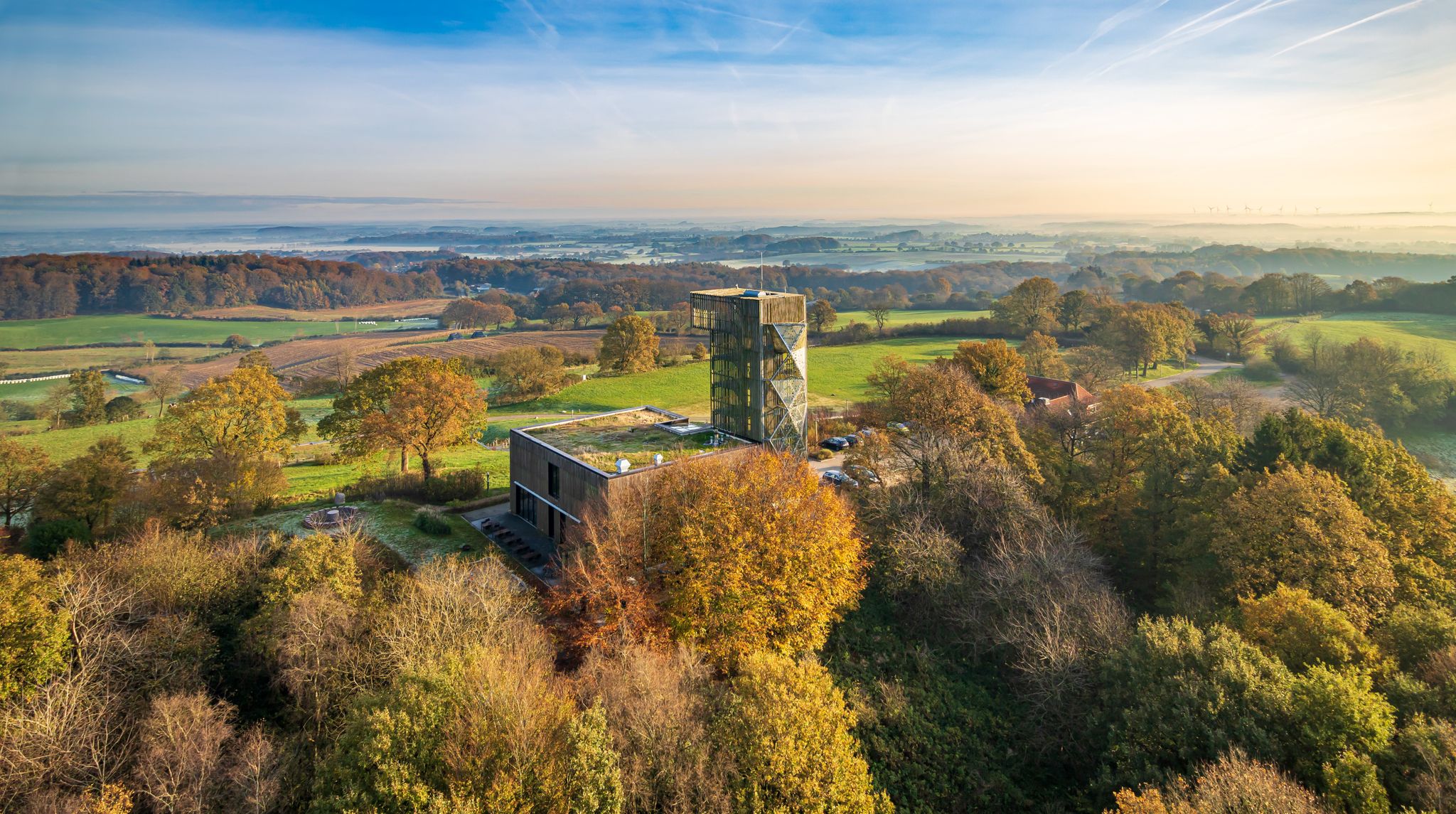
Other adventures around Owschlag

Tips from the Community


All sorts of interesting facts about the history of the city of Schleswig
1
0

The castle houses Schleswig-Holstein's most important museums and is involved in a wide range of cultural events. In addition to changing exhibitions (including those by contemporary artists), theater performances in the courtyard and concerts are held at irregular intervals. The entire grounds and many of the interior rooms are open to visitors. Some of the castle's original furnishings have been preserved and can be viewed as part of the museum tours. Of particular note are the festive Hirschsaal (Stag Hall) from 1591 and the two-story Renaissance chapel. The castle is considered the most important secular building in the state of Schleswig-Holstein.
15
1
At the beginning of 1945, more and more refugees from the eastern territories of the German Reich arrived in Schleswig, their number rising to almost 18,000 by the summer. Gottorf, like many of the country's residences, was used as a temporary reception camp, and several hundred refugees were housed in the castle.[31] In the post-war period, the entire complex was made available to the Schleswig-Holstein State Museums from 1948 onwards.
15
1
After the war of 1848, the Danes first set up a hospital and then a barracks in the castle,[22] in order to be able to operate more effectively against the insurgents in Schleswig-Holstein. The building was adapted to the new needs, and the interior lost much of its once significant furnishings. The former state rooms and ducal apartments were converted into dormitories and dining rooms. The outbuildings were demolished and replaced by extensive stables, and the defensive structures were demolished. Gottorf remained a barracks[22] when it fell to Prussia in 1867 as a result of the Second Schleswig War, and it retained this function until 1945.
15
1
Subsequently, Gottorf became the center of power of the Dukes of Schleswig and was repeatedly at the center of political conflicts. In 1283, the young Duke Waldemar IV of Schleswig was imprisoned in the castle for a time by the Danish King Eric V. In 1329, Gottorf was besieged for the first time (unsuccessfully) by a coalition of Jutland nobles in their fight against Count Gerhard III of Holstein, who had served as Duke for several years.[6] In June 1340, the castle was transferred as a pledge into the permanent possession of the Counts of Holstein from the House of Schauenburg,[7] who resided in Gottorf until their extinction in 1459. Initially as counts, after Count Gerhard VI was invested with the duchy by the Danish regent Margaret I in 1386[8], then formally again as dukes.[9]
15
1
After the Schleswig bishop Niels II was captured during the Battle of Lohheide in 1261, Gottorf became the property of Duke Eric I of Schleswig. In return, the bishops received lands on the lower reaches of the Treene, where the episcopal castle of Schwabstedt was built a short time later.[4] It was only the duke, as the contemporary annals of the Rude monastery report, who had a new castle built "at great expense", which replaced the older ducal castle on the Möweninsel in the Schlei.
16
1
The present-day castle, on an island in the Schlei west of the town, had several predecessor buildings, but little is known about their function and appearance. The oldest structures date to the 13th century and possibly originate from a residence of the bishops of Schleswig called Klein-Gottorf. The name goes back to an older, still visible complex called Alt- or Groß-Gottorf in the Ruhekrug near the Falkenberg estate, which, according to the Danish chronicler Saxo Grammaticus, was destroyed around 1161.[2] As a result, the residence was probably relocated to the more centrally located Klein-Gottorf, where a possibly barely fortified half-timbered building with warm-air heating was built around the middle of the 13th century.
16
1
Frequently Asked Questions
How many road cycling routes are available around Owschlag?
There are over 45 road cycling routes around Owschlag, offering a wide range of options for different fitness levels and preferences. You'll find everything from easy, leisurely rides to more challenging, longer tours.
What are the general characteristics of road cycling routes in Owschlag?
The road cycling routes around Owschlag are characterized by diverse landscapes, including rolling hills, picturesque lakes like Bistensee, and tranquil forests. Many routes are well-paved, though some longer paths may include minor unpaved segments. The region offers options for various ability levels, from easy rides to challenging, longer routes.
Are there easy road cycling routes suitable for beginners or families in Owschlag?
Yes, Owschlag offers several easy road cycling routes perfect for beginners or families. For instance, the Hüttener Berge Nature Park loop from Owschlag is an easy 36 km trail through rolling hills and forests. Another easy option is the Roadbike loop from Owschlag, which is about 31 km long with minimal elevation gain. Leisurely routes also pass by the picturesque Bistensee lake and along the Owschlager Moor.
Are there challenging road cycling routes for experienced cyclists in Owschlag?
Absolutely. For experienced cyclists seeking a challenge, the Excellent Bike Path – Cycle Path Towards Flensburg loop from Owschlag is a difficult 158 km route, mostly on well-paved surfaces, demanding very good fitness. Another option is the moderate Anna Mill in Norby – Eckernförde South Beach loop from Owschlag, spanning about 106 km, which requires good fitness and includes segments near the picturesque Bistensee.
What scenic viewpoints or natural features can I expect along the road cycling routes?
Owschlag's routes offer numerous scenic highlights. You can cycle through the charming landscape of the Hüttener Berge Nature Park, enjoy views of the picturesque Eider River, or pass by tranquil lakes like Bistensee and Owschlag Lake. The Owschlager Moor also provides idyllic scenery. For a specific viewpoint, consider routes that offer a 'View over the Schlei' near Schleswig Harbour, or explore the Heideteich, a natural biotope with a newly created path for nature exploration.
Are there historical or cultural attractions accessible by road bike around Owschlag?
Yes, several historical and cultural attractions are within cycling distance or easily accessible from Owschlag. You could explore the historic Holm Fishermen's Quarter, Schleswig, or visit the Old Charcoal Burner's Site on the Ochsenweg. Further afield, but still reachable, are the Viking Museum Haithabu, Gottorf Castle, Schleswig Cathedral, and the Danevirke Museum. The Kiel Canal, the world's busiest artificial waterway, also offers unique sights.
What do other road cyclists enjoy most about road cycling in Owschlag?
The road cycling experience in Owschlag is highly rated by the komoot community, with an average score of 5.0 stars from 6 reviews. Over 190 road cyclists have explored the area using komoot. Reviewers often praise the diverse terrain, from rolling hills to tranquil forests and picturesque lakes, as well as the extensive network of well-maintained cycling paths suitable for various fitness levels.
Where can I find parking for road cycling trails in Owschlag?
While specific parking areas for each route are not detailed, Owschlag is a small town, and you can typically find public parking options within the town center or near popular starting points for routes. Many routes are loops starting and ending in Owschlag, making it convenient to park your vehicle there. It's always a good idea to check local signage for parking regulations.
Is public transport with bikes an option in the Owschlag region?
Public transport options in the Owschlag region, particularly for carrying bikes, can be limited. While local buses and regional trains might operate, their capacity for bicycles can vary. It's advisable to check the specific transport provider's website for their bike carriage policies and schedules before planning your trip, especially during peak seasons.
What is the best time of year for road cycling in Owschlag?
The best time for road cycling in Owschlag is generally from spring to early autumn (April to October). During these months, the weather is typically mild and pleasant, with less rain and longer daylight hours, making for ideal cycling conditions. The natural landscapes, including the Hüttener Berge Nature Park and the lakes, are particularly beautiful during this period.
Are there any specific permits required for cycling in Schleswig-Holstein?
Generally, no specific permits are required for road cycling on public roads and designated cycling paths in Schleswig-Holstein, including the Owschlag region. However, always respect local regulations, especially when cycling through nature reserves or private land, and ensure you adhere to traffic laws.
Can I find cafes or pubs along the road cycling routes in Owschlag?
While the routes themselves might not have cafes directly on the path, many routes pass through or near villages and towns where you can find cafes, pubs, or restaurants. Owschlag itself offers options for refreshments. Planning your route with komoot allows you to discover points of interest, including places to eat and drink, along your chosen path.
Most popular attractions around Owschlag

Get inspired with the komoot mobile app


Explore more
Browse the best Road cycling routes in other regions.
