Attractions and Places To See around Национални парк Фрушка гора - Top 20
Best attractions and places to see around Национални парк Фрушка гора include a diverse range of natural and cultural sites within Serbia's first national park. This island mountain in Vojvodina features over 1500 plant species, including Europe's largest concentration of lime forests, alongside oak, hornbeam, and beech woodlands. The park is also home to 17 active Orthodox monasteries dating from the 15th to 18th centuries, as well as numerous archaeological sites. Visitors can explore various peaks, lakes, and geological formations that attest to its past as an island in the Pannonian Sea.
Best attractions and places to see around Национални парк Фрушка гора
- The most popular attractions is Monument to Freedom (Spomenik Slobode), a man-made monument located at Iriški Venac. This 36-meter-high monument, unveiled in 1951, features a 7-meter figure symbolizing freedom and a bronze relief depicting the People's Liberation Struggle in Srem.
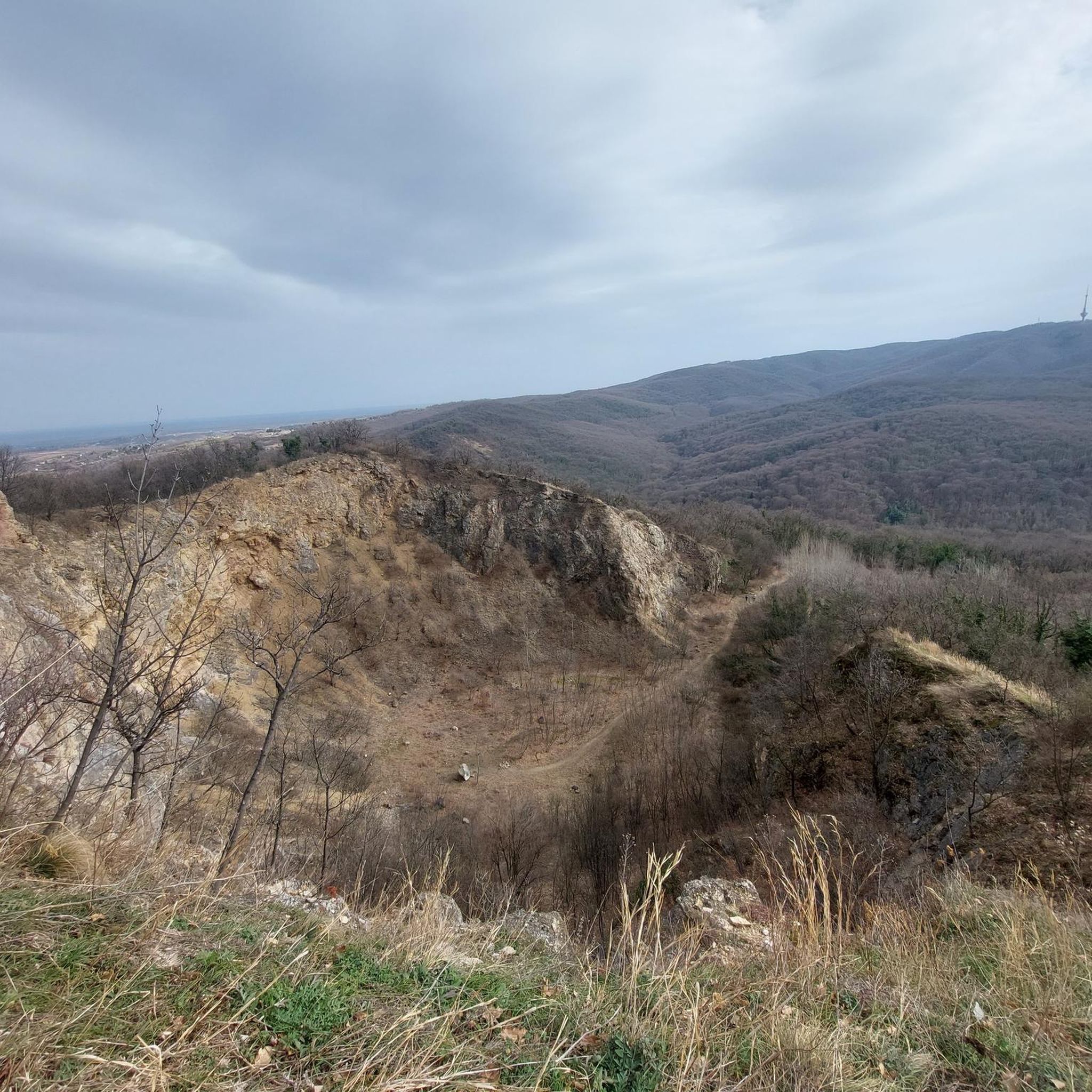
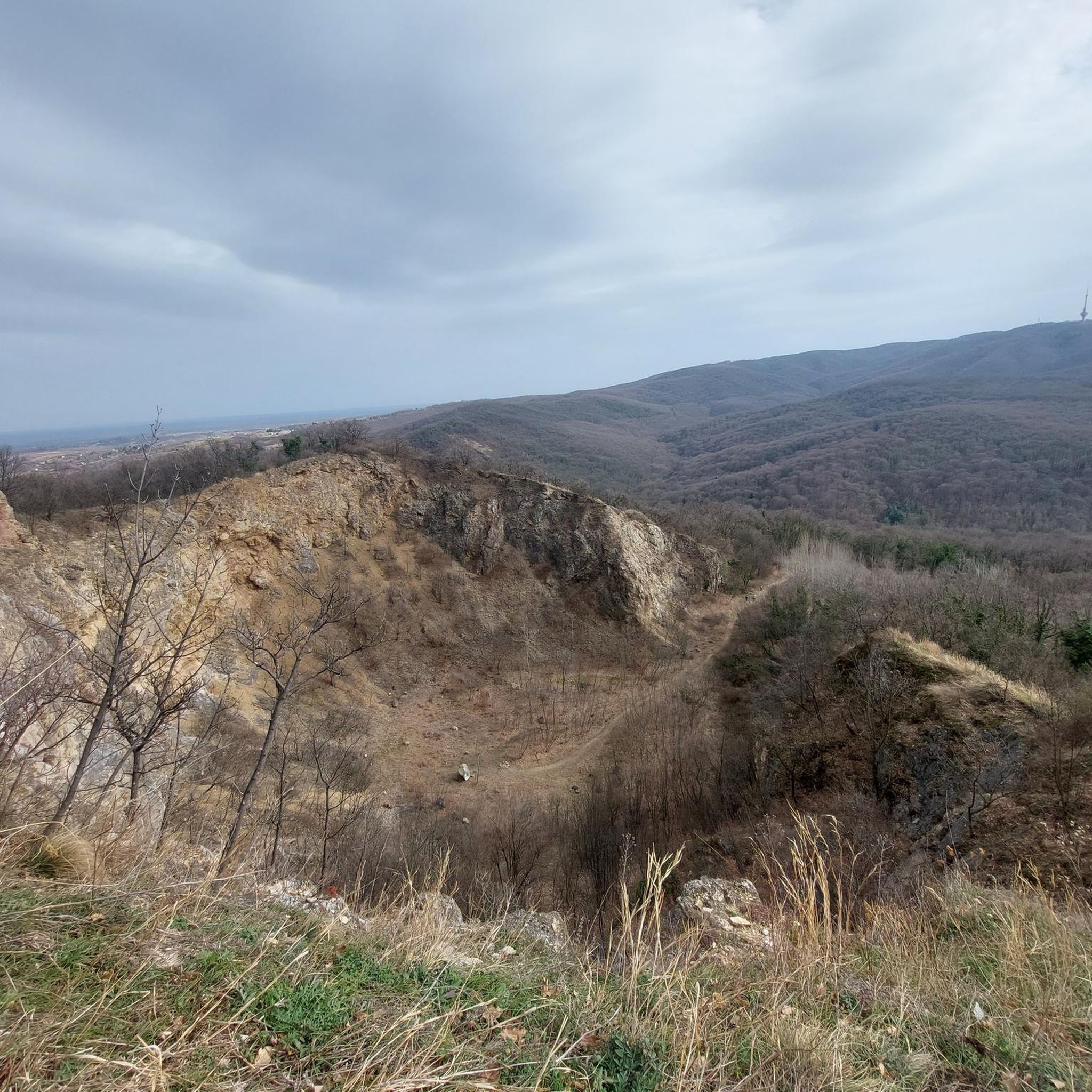
- Another must-see spot is Beli Majdan (White Quarry) — Rakovac Cave, a cave complex formed from a granite quarry. This site features 4-meter-high galleries supported by stone pillars and served as a hideout during World War II.
- Visitors also love Dumbovački Waterfall, a natural monument with a waterfall and surrounding forest. The area is characterized by steep terrain and requires appropriate footwear for exploration.
- Национални парк Фрушка гора is known for its historical monuments, natural caves, and waterfalls. The region offers a variety of attractions to see and explore, from cultural landmarks to diverse natural landscapes.
- The attractions around Национални парк Фрушка гора are appreciated by the komoot community. With 61 upvotes and 16 photos, these spots offer diverse experiences for visitors.
Last updated: July 6, 2026
Monument to Freedom (Spomenik Slobode)
Highlight • Monument
As an important communication center, Iriški Venac was under the armed control of the occupiers throughout the war and was only liberated in October 1944 by the units of the 7th Vojvodina Brigade.
The monument known as "Freedom", dedicated to the fallen fighters and the National Liberation Movement (NOP) of Vojvodina, is one of the first more representative monuments erected in the territory of Vojvodina, and it is also among the most impressive monuments erected in the first decade after liberation across the entire territory of Yugoslavia.
Even though Iriški Venac was not of major importance for the Fruška Gora partisans, it was chosen for the location of this monument, being the tourist and traffic center of the mountain. It was unveiled on July 7th, 1951, on the 10th anniversary of the Uprising in Serbia, in the presence of around 100,000 citizens.
The author of the monument is the renowned sculptor Sreten Stojanović. "Freedom" belongs to the group of figurative-architectural monuments. The monument is built of Belovac stone and paved with Motajnica granite. The total height of the monument is 36 meters, and the figure of a woman - the personification of the ideal of freedom - at the top of the obelisk is 7 meters high.
By some accounts, the figure of the woman is oriented towards Bosnia, because that is where most of the partisans from Srem and the entire Vojvodina province went to combat. In front of the obelisk, on a high pedestal, there is a composition made up of six figures, symbolizing the people of Srem and Vojvodina who rose up in revolt. The base of the monument is framed by a bronze relief 50 meters long, which, through several chronological and thematic units, presents the development and course of the People's Liberation Struggle (NOB) in the area of Srem. Among other things, the relief depicts the entry and terror of the occupiers, the beginning of the uprising, the cooperation between the common people and the partisans, armed conflicts with the occupiers, and the final victory.
[This site is part of the Liberation Routes Hiking Tour "The Liberation Walk" (6km)]
komoot.com/tour/1881448190?share_token=aQX2irH9OHv16zbghqkWFCaaumiVA4C634I6ri4nXXDKLs8eSK&ref=wtd
Tip by

Beli Majdan (White Quarry) — Rakovac Cave
Highlight • Cave
During World War II, the "Beli Majdan" cave was used as a common hideout for the local population of the village of Rakovac and workers of the Rakovac quarry during raids organized by the occupiers.
This was also the case during the Great Enemy Offensive on Fruška Gora on August 28, 1942. Those who hid in the „Beli Majdan“ remained safe, whereas 58 workers from the Rakovac quarry were arrested.
The director of the Rakovac quarry, Ing. Josip Suić, intervened and managed to liberate 32 workers, but the rest were sent to the internment camp in Sremska Mitrovica, where most of them were killed.
[This site is part of the Liberation Routes Hiking Tour "The Liberation Walk" (6km)]
Tour: komoot.com/tour/1881448190?share_token=aQX2irH9OHv16zbghqkWFCaaumiVA4C634I6ri4nXXDKLs8eSK&ref=wtd
Tip by
Sign up now to discover places like this
Get recommendations on the best single tracks, peaks, & plenty of other exciting outdoor places.
Sign up for free
Observation Tower Fruška Gora
Highlight • Viewpoint
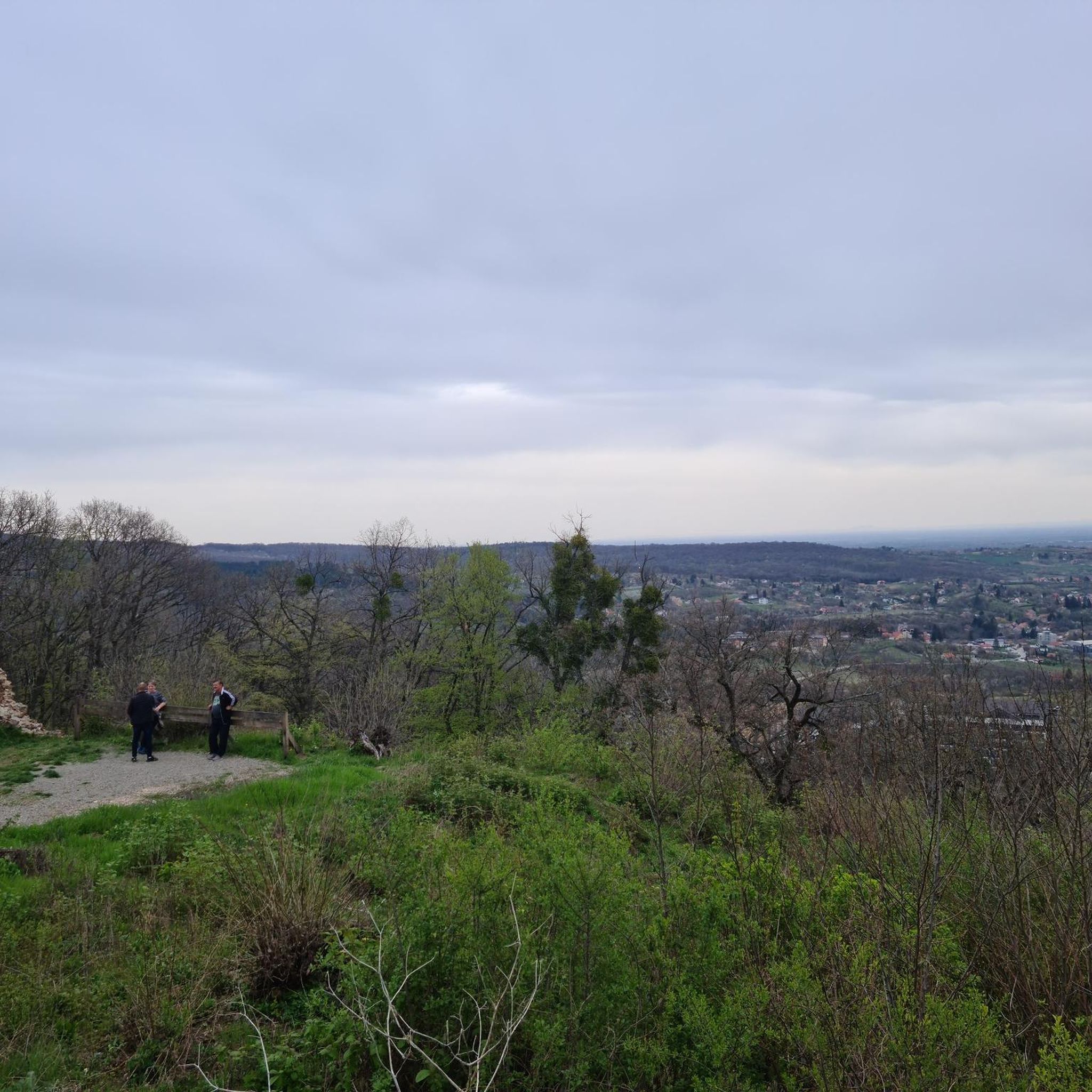
The Danube River became the natural border between the two allies of Nazi Germany. Across from Novi Sad, on the Srem side of the Danube, lies the Petrovaradin Fortress, an important stronghold built in the 18th century. During World War II, it held a strong garrison of a few thousand soldiers.
During the first year of the war, there were many anti-fascist activists in the Bačka region and Novi Sad, but a lot of them were killed or imprisoned. Unlike the hills and woods of Fruška Gora, the flat terrain of the Pannonian plain in Bačka was not suitable for partisan warfare. As a result, many anti-fascists hoped to reach Fruška Gora and Srem to join the partisans, but crossing the Danube was very risky, as its coastline was heavily guarded on both sides.
The first illegal connections between Srem and Bačka were established by the end of 1942, and by 1943, permanent lines were organized.
The main crossings cannot be seen from the viewpoint, as they were further to the west, near the Croatian border, particularly between Bačka Palanka and Neštin. An impressive monument in Neštin commemorates one of these crossings.
[This site is part of the Liberation Routes Hiking Tour "The Liberation Walk" (6km)]
komoot.com/tour/1881448190?share_token=aQX2irH9OHv16zbghqkWFCaaumiVA4C634I6ri4nXXDKLs8eSK&ref=wtd
Tip by
Kamenolom Memorial Complex
Highlight • Monument
After the war, this date was designated as the Day of the Uprising in Rakovac. Rakovac also remembers October 18, 1943, when a punitive expedition led by Anton Bauer arrived in the village. After two days of arrests and terror, they set fire to the entire village, including the Rakovac monastery.
Three decades later, a memorial complex was erected, dedicated to the "Partisan Oath" and to the fallen fighters and victims of fascist terror. Near the road is a small plateau with an architectural composition made up of five concrete walls of different sizes and shapes. The walls were decorated with plaques that had been stolen in the past twenty years.
One of them bore the verses written by the poet Mika Antić: "At this place in September 1941, the heart of Srem pounded with the beat of the Revolution."
Behind the entrance plateau is a stone wall with a tunnel-like shelter. Above the shelter is a mosaic created by the eminent artist Boško Petrović. After the death of Josip Broz Tito in 1980, another mosaic featuring Tito's portrait was added above the entrance to the shelter. On the inner wall of the shelter is the inscribed text of the Partisan Oath to remind visitors of this event. Within the complex is also a crypt and memorial tablets inscribed with the names of the fallen fighters and victims of fascist terror in Rakovac.
[This site is part of the Liberation Routes cycling tour "The Danube to Victory Route" (58km)]
komoot.com/tour/1933369594?share_token=aRc7kQYJ01cywoOlRPXzWvplRxrDI3K22D17Rs90xCFiVo5TvF&ref=wtd
Tip by
Rakovac Quarry Partisan School Memorial
Highlight • Historical Site
After the occupation in 1941, the quarry was placed under military control and came under the command of the local Ustasha organization. The director of the quarry, engineer Josip Suić, had a pro-Yugoslavian and anti-fascist orientation, as was the case with most of the workers in the quarry. Suić opposed the violent methods of the Ustasha in Rakovac village and the miner's colony. He had constantly been writing letters to higher authorities and to the Ministry of Public Works in order to prevent the oppression conducted by the Ustasha and German troops in Rakovac quarry. In this way, he managed to save the lives of many locals, including those of numerous partisan activists and supporters. He also succeeded in removing the military commander of the Rakovac quarry, Josip Milanković (who subsequently committed suicide), and installing a new commander, Dr. Melvinger, a staunch supporter of the partisans.
Although the quarry was owned and run by the Independent State of Croatia, the place became a significant stronghold for the partisans. The workshop of the quarry was used for the repair of partisan weapons, served as a hideout for the ill and wounded, and, after the villages of Ledinci and Rakovac were burned in 1943, many homeless villagers were assisted by the quarry administration. They were given jobs (real or fictitious), as well as a place to live and eat. By the end of 1943, the quarry had established a partisan school for children from Ledinci and Rakovac, as well as the first pioneer organization.
Workers from Rakovac quarry did not just help the partisans. From the beginning of the war, more than 50 workers joined the partisan units, and 25 of them died in combat. Additionally, 17 workers fell victim to fascist terror in Rakovac.
Memorial plaque in Rakovac Quarry
// „U ovoj zgradi radila je Partizanska škola u NOB-u od septembra 1943. godine.“
„From september 1943 in this building operated the Partisan School during the NOB (People's Liberation Struggle).“//
[This site is part of the Liberation Routes Hiking Tour "The Liberation Walk" (6km)]
Tour: komoot.com/tour/1881448190?share_token=aQX2irH9OHv16zbghqkWFCaaumiVA4C634I6ri4nXXDKLs8eSK&ref=wtd
Tip by
Sign up for free to discover even more attractions around Национални парк Фрушка гора.
Sign up for free
Already have an account?
Start today with a free account
Your next adventure awaits.
Login or Signup
Popular around Национални парк Фрушка гора

Tips from the Community

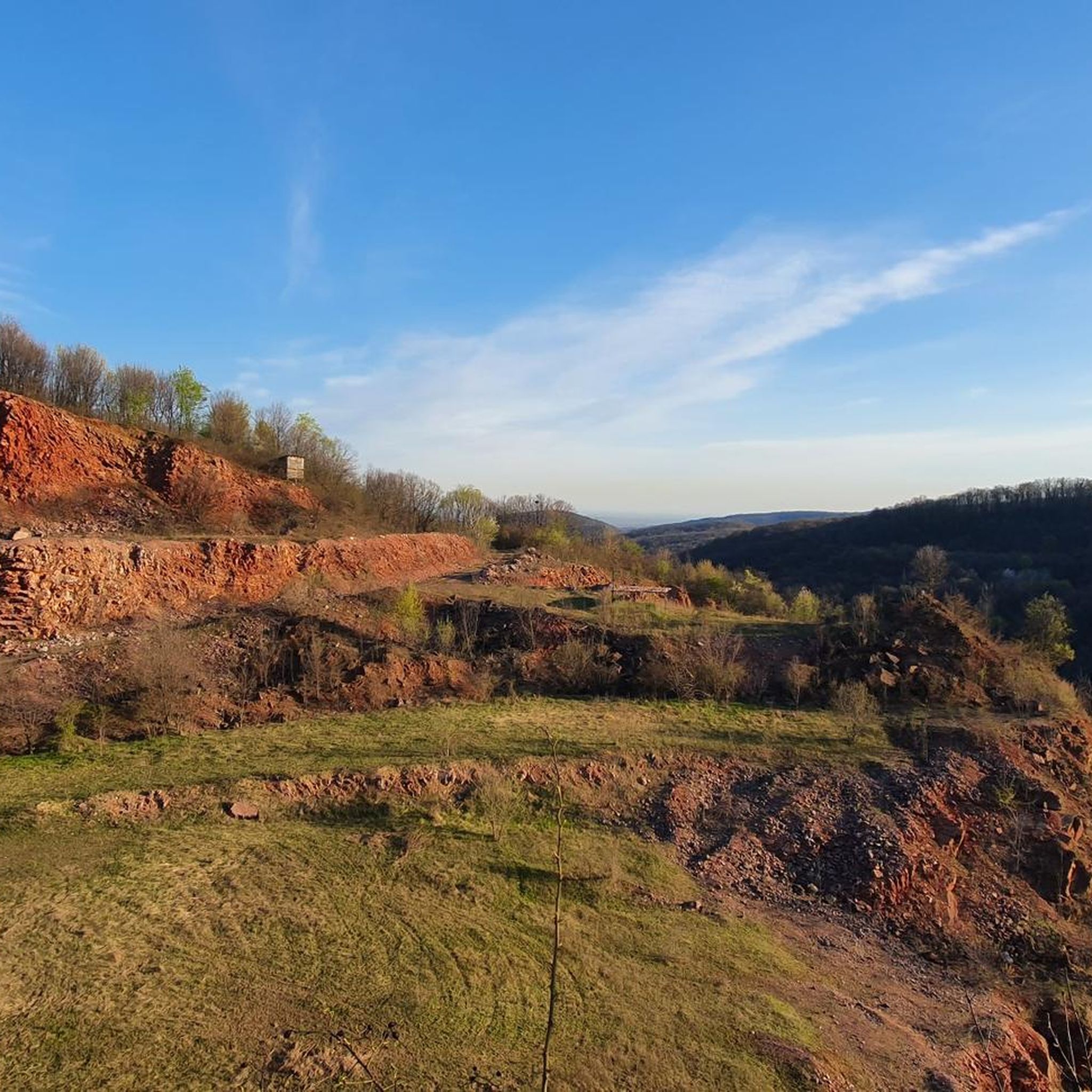
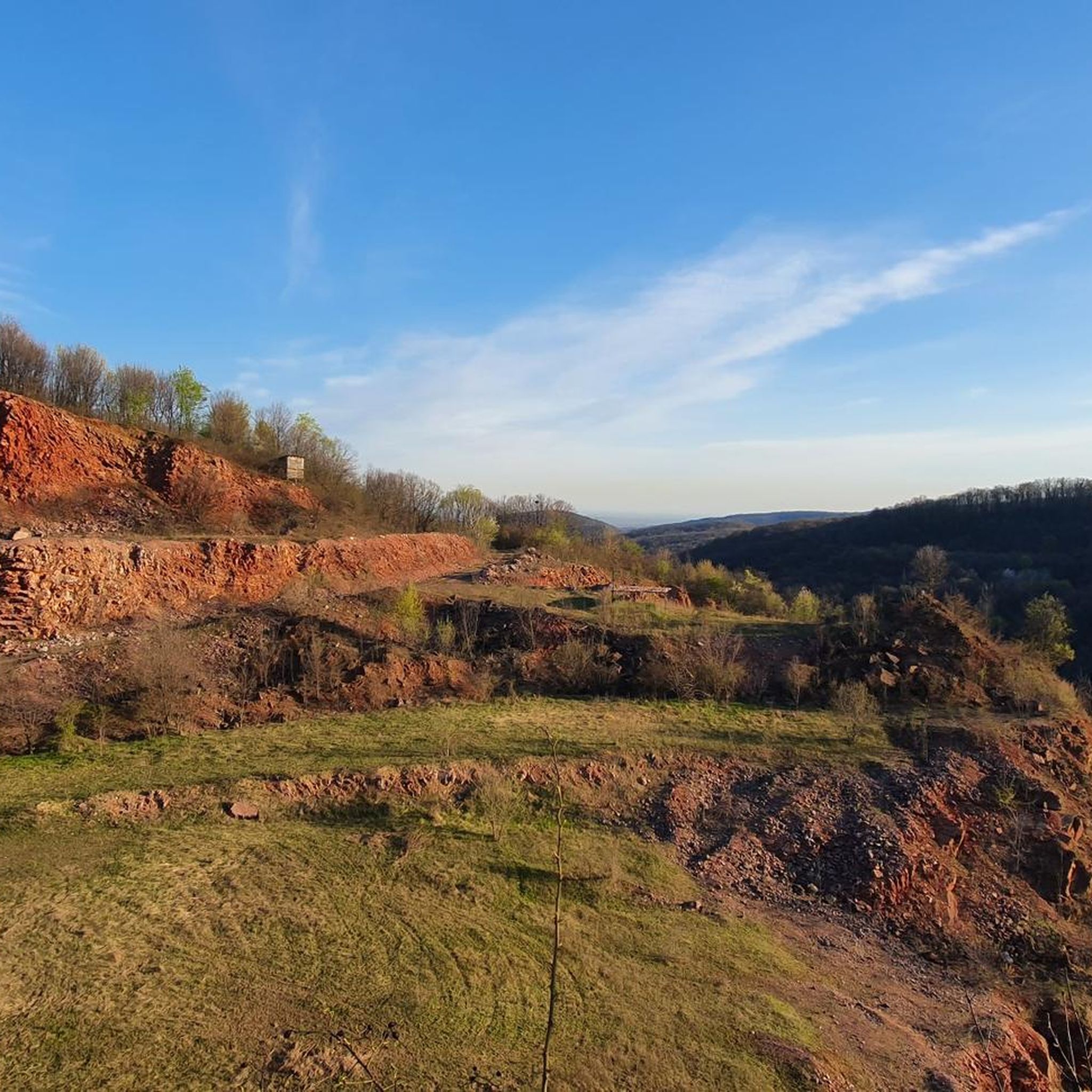
A rustic wooden observation tower in a sunlit clearing, perfect for panoramic views or a short break in the shade.
0
0

At this site, in September 1941, the first two partisan units were formed in the village of Rakovac. The first unit was established on September 19, 1941, in the shelter of the communist Nikola Mojić and in the presence of the first commander of the Fruška Gora partisan detachment, Sima Relić. The second unit, composed of workers from the Rakovac quarry, was formed on September 24. On that occasion, both of these units took the ceremonial "partisan oath". After the war, this date was designated as the Day of the Uprising in Rakovac. Rakovac also remembers October 18, 1943, when a punitive expedition led by Anton Bauer arrived in the village. After two days of arrests and terror, they set fire to the entire village, including the Rakovac monastery. Three decades later, a memorial complex was erected, dedicated to the "Partisan Oath" and to the fallen fighters and victims of fascist terror. Near the road is a small plateau with an architectural composition made up of five concrete walls of different sizes and shapes. The walls were decorated with plaques that had been stolen in the past twenty years. One of them bore the verses written by the poet Mika Antić: "At this place in September 1941, the heart of Srem pounded with the beat of the Revolution." Behind the entrance plateau is a stone wall with a tunnel-like shelter. Above the shelter is a mosaic created by the eminent artist Boško Petrović. After the death of Josip Broz Tito in 1980, another mosaic featuring Tito's portrait was added above the entrance to the shelter. On the inner wall of the shelter is the inscribed text of the Partisan Oath to remind visitors of this event. Within the complex is also a crypt and memorial tablets inscribed with the names of the fallen fighters and victims of fascist terror in Rakovac. [This site is part of the Liberation Routes cycling tour "The Danube to Victory Route" (58km)] https://www.komoot.com/tour/1933369594?share_token=aRc7kQYJ01cywoOlRPXzWvplRxrDI3K22D17Rs90xCFiVo5TvF&ref=wtd
1
0
At this site, in September 1941, the first two partisan units were formed in the village of Rakovac. The first unit was established on September 19, 1941, in the shelter of the communist Nikola Mojić and in the presence of the first commander of the Fruška Gora partisan detachment, Sima Relić. The second unit, composed of workers from the Rakovac quarry, was formed on September 24. On that occasion, both of these units took the ceremonial "partisan oath". After the war, this date was designated as the Day of the Uprising in Rakovac. Rakovac also remembers October 18, 1943, when a punitive expedition led by Anton Bauer arrived in the village. After two days of arrests and terror, they set fire to the entire village, including the Rakovac monastery. Three decades later, a memorial complex was erected, dedicated to the "Partisan Oath" and to the fallen fighters and victims of fascist terror. Near the road is a small plateau with an architectural composition made up of five concrete walls of different sizes and shapes. The walls were decorated with plaques that had been stolen in the past twenty years. One of them bore the verses written by the poet Mika Antić: "At this place in September 1941, the heart of Srem pounded with the beat of the Revolution." Behind the entrance plateau is a stone wall with a tunnel-like shelter. Above the shelter is a mosaic created by the eminent artist Boško Petrović. After the death of Josip Broz Tito in 1980, another mosaic featuring Tito's portrait was added above the entrance to the shelter. On the inner wall of the shelter is the inscribed text of the Partisan Oath to remind visitors of this event. Within the complex is also a crypt and memorial tablets inscribed with the names of the fallen fighters and victims of fascist terror in Rakovac. [This site is part of the Liberation Routes Hiking Tour "The Trails of the Partisans" (24 km)] https://www.komoot.com/tour/1911737951?share_token=aP7evlz2h5M8iHJoYSX8D77qncu9RVYx9UzA9S7GQ4fCLoFlbd&ref=wtd
0
0
The quarry was a state-owned stone mine for the extraction of trachyte stone. Its modern exploitation started in 1937. After the occupation in 1941, the quarry was placed under military control and came under the command of the local Ustasha organization. The director of the quarry, engineer Josip Suić, had a pro-Yugoslavian and anti-fascist orientation, as was the case with most of the workers in the quarry. Suić opposed the violent methods of the Ustasha in Rakovac village and the miner's colony. He had constantly been writing letters to higher authorities and to the Ministry of Public Works in order to prevent the oppression conducted by the Ustasha and German troops in Rakovac quarry. In this way, he managed to save the lives of many locals, including those of numerous partisan activists and supporters. He also succeeded in removing the military commander of the Rakovac quarry, Josip Milanković (who subsequently committed suicide), and installing a new commander, Dr. Melvinger, a staunch supporter of the partisans. Although the quarry was owned and run by the Independent State of Croatia, the place became a significant stronghold for the partisans. The workshop of the quarry was used for the repair of partisan weapons, served as a hideout for the ill and wounded, and, after the villages of Ledinci and Rakovac were burned in 1943, many homeless villagers were assisted by the quarry administration. They were given jobs (real or fictitious), as well as a place to live and eat. By the end of 1943, the quarry had established a partisan school for children from Ledinci and Rakovac, as well as the first pioneer organization. Workers from Rakovac quarry did not just help the partisans. From the beginning of the war, more than 50 workers joined the partisan units, and 25 of them died in combat. Additionally, 17 workers fell victim to fascist terror in Rakovac. Memorial plaque in Rakovac Quarry // „U ovoj zgradi radila je Partizanska škola u NOB-u od septembra 1943. godine.“ „From september 1943 in this building operated the Partisan School during the NOB (People's Liberation Struggle).“// [This site is part of the Liberation Routes Hiking Tour "The Liberation Walk" (6km)] Tour: https://www.komoot.com/tour/1881448190?share_token=aQX2irH9OHv16zbghqkWFCaaumiVA4C634I6ri4nXXDKLs8eSK&ref=wtd
0
0
"Beli Majdan" (which means "White Quarry"), also known as the Rakovac Cave, is a stone quarry where granite stone was likely dug, probably since the Middle Ages, and used as building blocks for the nearby Rakovac Monastery, houses in the Rakovac village, as well as for tombstones at the local graveyard. By digging out granite blocks, a unique cave complex was formed, with 4-meter-high galleries supported by stone pillars. During World War II, the "Beli Majdan" cave was used as a common hideout for the local population of the village of Rakovac and workers of the Rakovac quarry during raids organized by the occupiers. This was also the case during the Great Enemy Offensive on Fruška Gora on August 28, 1942. Those who hid in the „Beli Majdan“ remained safe, whereas 58 workers from the Rakovac quarry were arrested. The director of the Rakovac quarry, Ing. Josip Suić, intervened and managed to liberate 32 workers, but the rest were sent to the internment camp in Sremska Mitrovica, where most of them were killed. [This site is part of the Liberation Routes Hiking Tour "The Liberation Walk" (6km)] Tour: https://www.komoot.com/tour/1881448190?share_token=aQX2irH9OHv16zbghqkWFCaaumiVA4C634I6ri4nXXDKLs8eSK&ref=wtd
1
0
Only a few kilometers from Fruška Gora, across the Danube River, lies Novi Sad, the largest city in the Vojvodina province. After the April War in 1941, Novi Sad and the entire Bačka region were annexed by Hungary, while the Srem region, including the Fruška Gora mountains, became part of the Independent State of Croatia. The Danube River became the natural border between the two allies of Nazi Germany. Across from Novi Sad, on the Srem side of the Danube, lies the Petrovaradin Fortress, an important stronghold built in the 18th century. During World War II, it held a strong garrison of a few thousand soldiers. During the first year of the war, there were many anti-fascist activists in the Bačka region and Novi Sad, but a lot of them were killed or imprisoned. Unlike the hills and woods of Fruška Gora, the flat terrain of the Pannonian plain in Bačka was not suitable for partisan warfare. As a result, many anti-fascists hoped to reach Fruška Gora and Srem to join the partisans, but crossing the Danube was very risky, as its coastline was heavily guarded on both sides. The first illegal connections between Srem and Bačka were established by the end of 1942, and by 1943, permanent lines were organized. The main crossings cannot be seen from the viewpoint, as they were further to the west, near the Croatian border, particularly between Bačka Palanka and Neštin. An impressive monument in Neštin commemorates one of these crossings. [This site is part of the Liberation Routes Hiking Tour "The Liberation Walk" (6km)] https://www.komoot.com/tour/1881448190?share_token=aQX2irH9OHv16zbghqkWFCaaumiVA4C634I6ri4nXXDKLs8eSK&ref=wtd
0
0
Before World War II, Iriški Venac was one of the central points of Fruška Gora, located at the intersection of Grebenski Put (Ridge Road), today called the Partizanski Put, and the road between Irig and Sremska Kamenica. As an important communication center, Iriški Venac was under the armed control of the occupiers throughout the war and was only liberated in October 1944 by the units of the 7th Vojvodina Brigade. The monument known as "Freedom", dedicated to the fallen fighters and the National Liberation Movement (NOP) of Vojvodina, is one of the first more representative monuments erected in the territory of Vojvodina, and it is also among the most impressive monuments erected in the first decade after liberation across the entire territory of Yugoslavia. Even though Iriški Venac was not of major importance for the Fruška Gora partisans, it was chosen for the location of this monument, being the tourist and traffic center of the mountain. It was unveiled on July 7th, 1951, on the 10th anniversary of the Uprising in Serbia, in the presence of around 100,000 citizens. The author of the monument is the renowned sculptor Sreten Stojanović. "Freedom" belongs to the group of figurative-architectural monuments. The monument is built of Belovac stone and paved with Motajnica granite. The total height of the monument is 36 meters, and the figure of a woman - the personification of the ideal of freedom - at the top of the obelisk is 7 meters high. By some accounts, the figure of the woman is oriented towards Bosnia, because that is where most of the partisans from Srem and the entire Vojvodina province went to combat. In front of the obelisk, on a high pedestal, there is a composition made up of six figures, symbolizing the people of Srem and Vojvodina who rose up in revolt. The base of the monument is framed by a bronze relief 50 meters long, which, through several chronological and thematic units, presents the development and course of the People's Liberation Struggle (NOB) in the area of Srem. Among other things, the relief depicts the entry and terror of the occupiers, the beginning of the uprising, the cooperation between the common people and the partisans, armed conflicts with the occupiers, and the final victory. [This site is part of the Liberation Routes Hiking Tour "The Liberation Walk" (6km)] https://www.komoot.com/tour/1881448190?share_token=aQX2irH9OHv16zbghqkWFCaaumiVA4C634I6ri4nXXDKLs8eSK&ref=wtd
1
0
Frequently Asked Questions
What natural attractions can I explore in Fruška Gora National Park?
Fruška Gora National Park offers a variety of natural attractions. You can visit the unique Beli Majdan (White Quarry) — Rakovac Cave, a cave complex formed from a granite quarry, or discover the scenic Dumbovački Waterfall, a natural monument surrounded by forest. The park is also home to numerous lakes like Ledinačko, Bešenovačko, Sot, and Borkovačko, popular for swimming and fishing, and boasts over 1500 plant species, including Europe's largest concentration of lime forests.
Are there historical sites or monuments to visit in Fruška Gora National Park?
Yes, Fruška Gora is rich in history. The prominent Monument to Freedom (Spomenik Slobode) at Iriški Venac is a significant historical landmark. You can also explore the Kamenolom Memorial Complex, which commemorates the formation of partisan units during WWII. Additionally, the park is famous for its 17 active Orthodox monasteries, built between the 15th and 18th centuries, such as Krušedol, Novo Hopovo, Grgeteg, and Jazak, which are vital cultural and spiritual centers.
What kind of hiking trails are available in Fruška Gora National Park?
Fruška Gora offers a wide range of hiking trails suitable for various skill levels. You can find easy hikes like the "Outdoor Café near Novi Sad – Iriški Venac television tower loop from Popovica" or the "Rakovac Monastery loop from Stari Rakovac." For more challenging routes, consider the trails around Dumbovački Waterfall, which can be quite demanding. You can explore more options on the easy hikes guide.
Are there family-friendly activities or attractions in the park?
Absolutely. Many areas in Fruška Gora are great for families. The Monument to Freedom (Spomenik Slobode) and the Observation Tower Fruška Gora are both considered family-friendly. The park also features numerous picnic areas and educational trails, like those near Crveni Čot, which provide information about local flora and fauna. Lakes such as Ledinačko and Borkovačko are popular for family outings.
What are the best viewpoints in Fruška Gora National Park?
For panoramic views, visit the Observation Tower Fruška Gora. Other notable viewpoints include Iriški Venac, Orlovo bojište, and the areas around Popovica, which offer spectacular vistas of the surrounding landscape and the Danube River. Vrdnička Kula, built on the site of a former Roman fortress, also provides a beautiful lookout.
Can I go cycling in Fruška Gora National Park?
Yes, Fruška Gora is excellent for cycling. There are various road cycling routes available, such as the "Vrdnik – Brankovac Viewpoint loop from Vrdnik Monastery" or the "Varadin Bridge – Beogradska Street loop from Sremski Karlovci." These routes offer diverse terrain and scenic views. You can find more details and routes on the road cycling guide.
What is the best time of year to visit Fruška Gora National Park?
Fruška Gora is beautiful year-round, but spring and autumn are particularly popular. In spring, the park bursts with lush greenery and blooming wildflowers. Autumn offers stunning foliage colors, making it ideal for hiking and photography. Summer is great for enjoying the lakes, while winter provides opportunities for peaceful walks, though some trails might be more challenging due to conditions.
Are there places to eat or stay near the attractions?
Yes, the region around Fruška Gora National Park offers various options for dining and accommodation. Many villages and towns on the slopes of Fruška Gora, such as Sremski Karlovci, have restaurants and cafes. The park is also known for its wine routes, where you can find numerous wine cellars offering tastings and gastronomic experiences. For accommodation, you can find options in nearby towns and villages, including Vrdnik Banja, which also features a thermal spa.
Where can I find information or maps for the park?
You can find informative centers at Iriški Venac and Popovica. These centers provide maps of trails and additional information about the park's attractions and activities, helping you plan your visit effectively.
What unique geological features does Fruška Gora possess?
Fruška Gora is a unique geological phenomenon, often referred to as an 'island mountain.' It is formed from rocks from nearly all geological periods, and preserved fossil fauna testifies to its past as an island in the ancient Pannonian Sea. This diverse geological history contributes to its varied landscapes and natural formations.
Can I spot wildlife in Fruška Gora National Park?
Fruška Gora is home to diverse wildlife. Its fauna includes various mammals such as roe deer, red deer, mouflon, wild boar, jackals, and wild cats. The park also hosts 211 bird species, including the endangered Imperial Eagle. Keep an eye out for these animals, especially in quieter areas and during early morning or late afternoon.
Are there any running trails in the park?
Yes, Fruška Gora National Park offers several running trails, including more challenging routes like the "Fruška Gora – Iriški Venac TV tower memorial loop from Popovica" or the "Мали Трешњевац – Теразије loop from Ceptor Andrevlje." These trails provide excellent opportunities for trail running amidst nature. You can explore more options on the running trails guide.
Most popular routes around Национални парк Фрушка гора
Most popular attractions around Национални парк Фрушка гора

Get inspired with the komoot mobile app


Explore more
Still not found the Highlight you’re looking for? See guides of the top attractions in other regions:
