Attractions and Places To See around Ruan - Top 6
Attractions and places to see around Ruan, a commune in the Centre-Val de Loire region of France, offer a blend of historical architecture and unique engineering landmarks. Located in the Beauce countryside, the area features structures that reflect its past, from medieval churches to 19th-century mills. Visitors can explore sites that highlight local heritage and ingenuity. The landscape provides a setting for discovering these points of interest.
Best attractions and places to see around Ruan
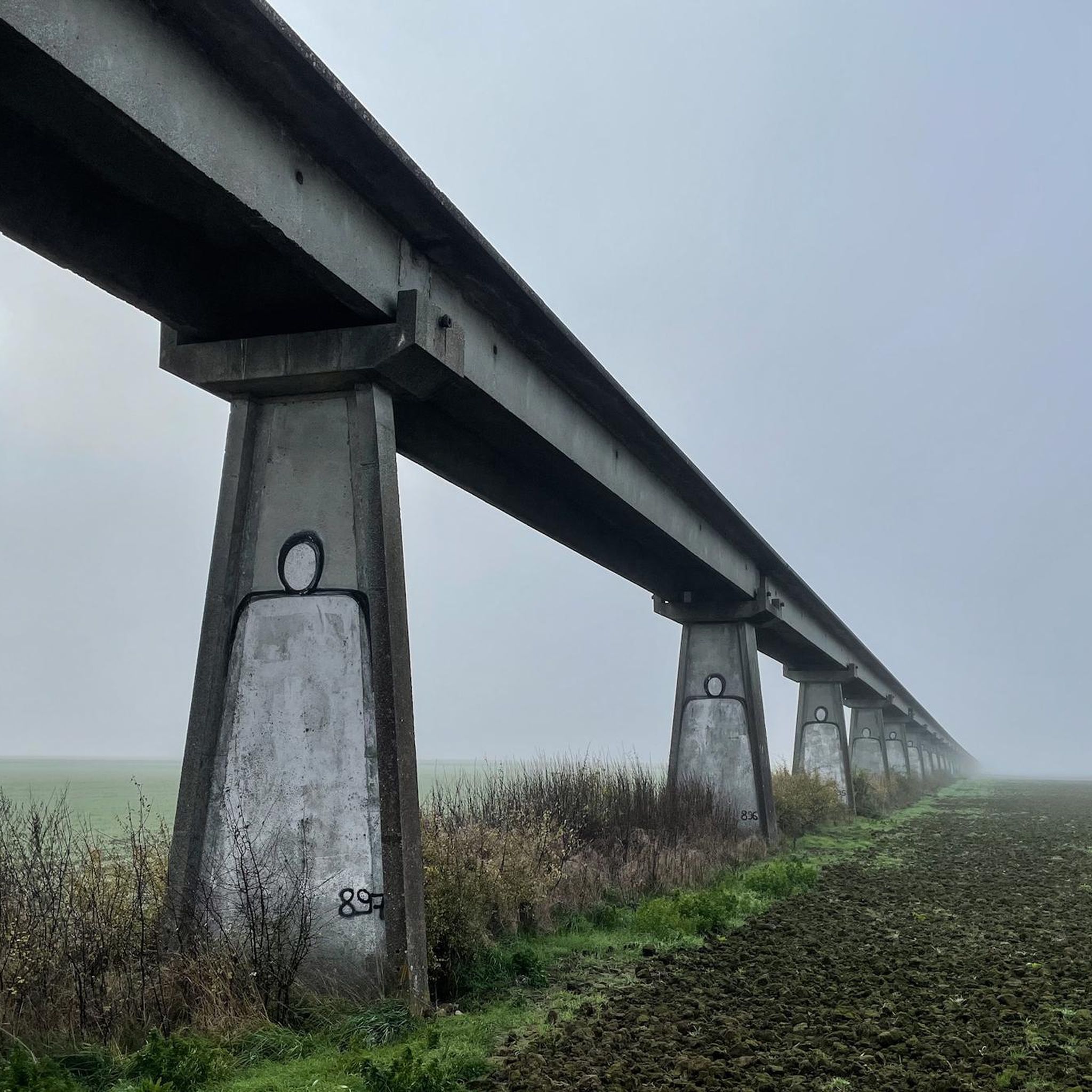
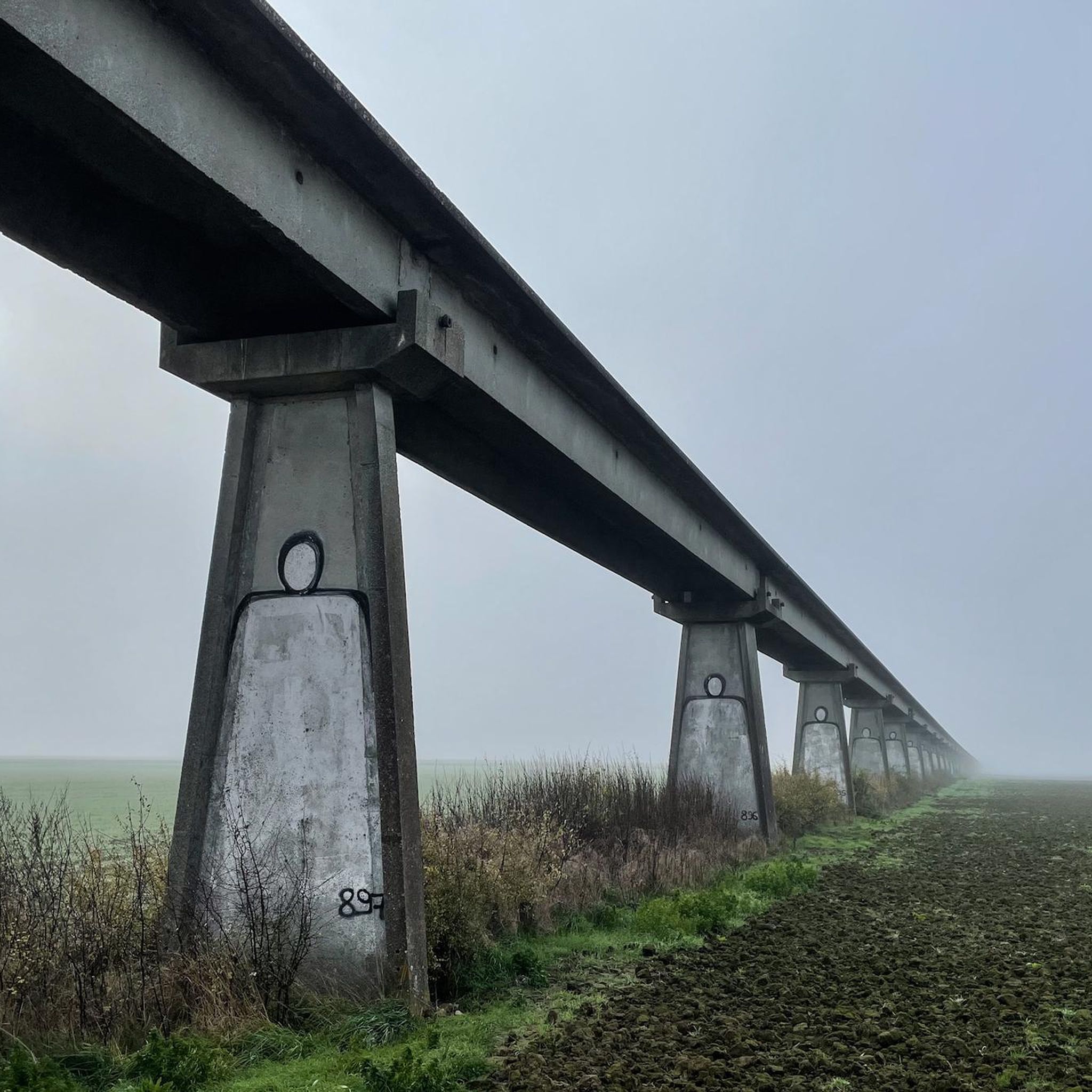
- The most popular attractions is Aerotrain test track, a railroad structure built in 1968 for monorail transport experiments. This 18 km long track saw a prototype set a world speed record of 430.4 km/h in 1974.
- Another must-see spot is Artenay Mill, a man-made monument and historical site. This stone windmill, dating from 1849, stands 16 meters high with 22-meter-long wings, offering insight into local agricultural heritage.
- Visitors also love Eglise Saint Pantaleon, a church with medieval origins. Dedicated to Saint Pantaleon, this building has undergone modifications over centuries and features rural architecture typical of the region.
- Ruan is known for historical buildings, unique engineering feats, and cultural sites. The area provides a variety of attractions to explore, from ancient churches to a significant industrial heritage landmark.
- The attractions around Ruan are appreciated by the komoot community, with 7 upvotes and 3 photos shared across the highlights.
Last updated: October 25, 2026
Aerotrain test track
Highlight • Other
A prototype set a world speed record there in 1974, with 430.4 km/h on the clock.
Due to a lack of investors or customers, the tests were stopped in 1977 and the track was decommissioned. Its dismantling being estimated at 13 million euros, the viaduct remained there, in the middle of the Beauceron countryside.
Translated by Google •
Tip by

Eglise Saint Pantaleon
Highlight • Other
• Dedication: It is consecrated to Saint Pantaleon (or Pantaleimon), a 4th-century Christian martyr from Nicomedia, traditionally honored as the patron saint of doctors, midwives, and nurses. Devotion to this saint is rooted in several localities in this transitional zone of the Beauceronne plain.
• Evolutions and restorations: Like many parish churches in Eure-et-Loir, the building has undergone significant modifications over the centuries (particularly following the ravages of the Wars of Religion and the French Revolution) to adapt to the changing needs of the local community.
🏛️ Architectural description
The church is characterized by a rural architecture typical of the Centre-Val de Loire region, built from local materials.
• The exterior: The building has a simple longitudinal plan. Its western facade is surmounted by a traditional bell tower that dominates the village rooftops. The exterior masonry reveals the different phases of reconstruction and consolidation of its walls over the ages.
• The interior: Designed to encourage contemplation, the interior space has retained its parish furniture, its baptismal font, and preserved statuary. The choir and the nave offer a space of simplicity, typical of small country churches that served as a spiritual and physical refuge for Beauceronne families against bad weather or conflicts.
Showing Translation
Tip by

Sign up now to discover places like this
Get recommendations on the best single tracks, peaks, & plenty of other exciting outdoor places.
Church of Saint Stephen and Saint Madeleine
Highlight • Other
These pillars predate the 13th century, while the choir was rebuilt at that time, replacing the primitive Romanesque choir, which must have included a transept. Significant modifications affected the church in the 17th and 18th centuries: covering of the nave and aisles with timber-framed vaults, and elevation of the choir by a bell tower with a base cut by a wall, to allow the addition of a new sacristy. To the north, the old 15th-century sacristy remains.
The nave of the building is 28 m long (including the 7.30 m of the choir), for a width of 13.70 m. It is supported by 12 pillars 3.60 m high. The aisles are 26.50 m long and 3.10 m wide. Classified since 1961 as a Historic Monument, the church features a stained glass window created in 1920 by Charles Lorin, in homage to the soldiers of Le Puiset who died during the Great War.
Showing Translation
Tip by
Eglise Saint Denis
Highlight • Other
Showing Translation
Tip by
Artenay Mill
Highlight • Monument
Translated by Google •
Tip by

Sign up for free to discover even more attractions around Ruan.
Already have an account?
Start today with a free account
Your next adventure awaits.



Tips from the Community

• Medieval origins: The church finds its foundations in the medieval period, serving then as a center for the social, administrative, and religious life of the community. The ancient paths converging towards the building bear witness to its historical importance in communications between the lordships of Beauce. • Dedication: It is consecrated to Saint Pantaleon (or Pantaleimon), a 4th-century Christian martyr from Nicomedia, traditionally honored as the patron saint of doctors, midwives, and nurses. Devotion to this saint is rooted in several localities in this transitional zone of the Beauceronne plain. • Evolutions and restorations: Like many parish churches in Eure-et-Loir, the building has undergone significant modifications over the centuries (particularly following the ravages of the Wars of Religion and the French Revolution) to adapt to the changing needs of the local community. 🏛️ Architectural description The church is characterized by a rural architecture typical of the Centre-Val de Loire region, built from local materials. • The exterior: The building has a simple longitudinal plan. Its western facade is surmounted by a traditional bell tower that dominates the village rooftops. The exterior masonry reveals the different phases of reconstruction and consolidation of its walls over the ages. • The interior: Designed to encourage contemplation, the interior space has retained its parish furniture, its baptismal font, and preserved statuary. The choir and the nave offer a space of simplicity, typical of small country churches that served as a spiritual and physical refuge for Beauceronne families against bad weather or conflicts.
0
0
The church has partially preserved on its western facade a cloister gallery from the former abbey. It is accessed by two porches opening onto the two portals of the building. In the center of the facade, the main porch opens onto a trefoil pointed arch portal with jambs adorned with capitals decorated with foliage; the north side porch opens onto a simple pointed arch portal with a summarily trefoiled intrados (added later). The gallery is lit by a succession of paired semicircular bays set within a pointed arch. The church consists of a main nave flanked by two side aisles extending on either side of the choir. The nave rests on massive columns, it has retained its semicircular barrel vault and is lit above the arcades of the side aisles by pointed arch half-windows. The choir, formed by two high bays, rests on four columns; a quadripartite vault was intended: the transverse arches and the beginnings of the ribs remain. The side aisles are lit by deep pointed arch windows; the first two bays of the north side aisle are quadripartite vaulted, the first two bays of the south side aisle, barrel vaulted, show the same rib beginnings as in the choir. The east end is flat, onto which opens the sacristy built as a lean-to. The bell tower is built over the second bay of the north side aisle, the same height as the choir bays; the keystone is adorned with a coat of arms with fleurs-de-lis.
0
0
Former collegiate chapel turned parish place of worship, the church features a nave and aisles separated by circular pillars topped with sculpted capitals. These pillars predate the 13th century, while the choir was rebuilt at that time, replacing the primitive Romanesque choir, which must have included a transept. Significant modifications affected the church in the 17th and 18th centuries: covering of the nave and aisles with timber-framed vaults, and elevation of the choir by a bell tower with a base cut by a wall, to allow the addition of a new sacristy. To the north, the old 15th-century sacristy remains. The nave of the building is 28 m long (including the 7.30 m of the choir), for a width of 13.70 m. It is supported by 12 pillars 3.60 m high. The aisles are 26.50 m long and 3.10 m wide. Classified since 1961 as a Historic Monument, the church features a stained glass window created in 1920 by Charles Lorin, in homage to the soldiers of Le Puiset who died during the Great War.
0
0

We might believe it to be a classic viaduct when we pass under this construction but it is ultimately an 18km long track, built in 1968 to carry out experiments on monorail transport, the skytrain of the French engineer Jean Bertin. A prototype set a world speed record there in 1974, with 430.4 km/h on the clock. Due to a lack of investors or customers, the tests were stopped in 1977 and the track was decommissioned. Its dismantling being estimated at 13 million euros, the viaduct remained there, in the middle of the Beauceron countryside.
3
0

If you are looking for a unique and historic hiking destination in the Loiret, you can visit the Moulin d'Artenay, a stone windmill dating from 1849. This impressive monument, which stands 16 meters high high and has wings 22 meters long, is one of the rare examples of this type in the Beauce region. You can visit the interior of the mill and discover its machinery, its production of fine flour and the life of the millers. You can also admire a collection of old agricultural equipment at the neighboring farm. The Moulin d'Artenay is open to the public every third Sunday of the month from April to September, from 2 p.m. to 6 p.m. Don't miss this opportunity to discover an element of local heritage.
2
0
Frequently Asked Questions
What historical sites can I visit near Ruan?
The area around Ruan is rich in history, particularly with its well-preserved religious architecture and unique industrial heritage. You can explore several historic churches such as Eglise Saint Pantaleon, known for its medieval origins and rural architecture, the Church of Saint Stephen and Saint Madeleine, a former collegiate chapel with pillars predating the 13th century, and Eglise Saint Denis, which features a partially preserved cloister gallery from a former abbey. Additionally, the Artenay Mill, a stone windmill from 1849, offers a glimpse into local agricultural history.
Are there family-friendly attractions around Ruan?
Yes, there are a couple of interesting family-friendly spots. The Aerotrain test track is a fascinating 18km long viaduct built in 1968 for monorail experiments, where a prototype once set a world speed record. It's a unique piece of engineering history. The Artenay Mill also offers an engaging visit where you can explore its machinery and learn about flour production, often with collections of old agricultural equipment nearby.
What unique or unusual attractions can I discover around Ruan?
For something truly unique, visit the Aerotrain test track. This impressive 18km long concrete structure, built in the Beauceron countryside, was once a cutting-edge test site for a high-speed monorail. Although decommissioned, it stands as a remarkable relic of French engineering ambition. The Artenay Mill also offers a distinctive experience, being one of the rare surviving stone windmills of its type in the Beauce region.
Are there hiking opportunities near Ruan's attractions?
Yes, the area around Ruan offers several hiking routes. You can find various trails suitable for different skill levels. For example, you might enjoy the easy 'Château de Cossoles loop from Les Chapelles' or the moderate 'Retrêve Pond loop from Chevilly'. More options are available in the Hiking around Ruan guide.
What cycling routes are available around Ruan?
The region around Ruan is well-suited for cycling, with options for both road cycling and more relaxed traffic-free rides. For road cyclists, routes like 'Aux Pays des blés d'or — Boucle beauceronne au départ de Neuville-aux-Bois' offer moderate challenges. If you prefer traffic-free options, consider the 'Marshes loop from Neuville-aux-Bois'. You can explore more routes in the Traffic-free bike rides around Ruan and Road Cycling Routes around Ruan guides.
When is the best time to visit attractions around Ruan?
The best time to visit attractions around Ruan, especially if you plan to enjoy outdoor activities like hiking or cycling, is typically from spring through early autumn (April to October). During these months, the weather is generally mild and pleasant, making it ideal for exploring historical sites and enjoying the Beauceron countryside. Some attractions, like the Artenay Mill, have specific opening hours, often from April to September.
What kind of natural landscapes can I expect to see around Ruan?
The Ruan area is situated in the Beauce region, characterized by its vast agricultural plains, often referred to as the 'granary of France'. While not mountainous, you'll find peaceful rural landscapes, open fields, and some smaller wooded areas and ponds, particularly along the routes mentioned in the nearby cycling and hiking guides, such as the 'Retrêve Pond loop' or routes through the 'Forêt d'Orléans' which is within cycling distance.
Are there any specific architectural styles to look out for in the churches around Ruan?
Yes, the churches around Ruan showcase typical rural architecture of the Centre-Val de Loire region, often built from local materials. You'll find elements from various periods, reflecting centuries of modifications and restorations. For instance, Eglise Saint Pantaleon has medieval foundations, while the Church of Saint Stephen and Saint Madeleine features pillars predating the 13th century and a choir rebuilt in that era. Eglise Saint Denis retains a cloister gallery and a main nave with a semicircular barrel vault.
What should I wear for outdoor activities near Ruan?
For hiking and cycling around Ruan, comfortable layers are recommended, especially during spring and autumn when temperatures can vary. Sturdy walking shoes or cycling shoes are essential. Given the open nature of the Beauce plains, a windbreaker can be useful, and sun protection (hat, sunscreen) is advisable during sunnier days, particularly in summer.
Are there any cafes or places to eat near the attractions in Ruan?
As Ruan is a smaller commune in a rural setting, dining options might be limited directly adjacent to every attraction. It's advisable to check local village centers or nearby towns for cafes and restaurants. For example, Artenay, where the Artenay Mill is located, would likely offer some local establishments.
Can I visit the interior of the Artenay Mill?
Yes, the Artenay Mill is open to the public. You can visit its interior to discover its machinery, learn about its production of fine flour, and understand the life of millers. It typically operates on specific visiting days, often the third Sunday of the month from April to September, between 2 p.m. and 6 p.m. It's always a good idea to confirm current opening times before your visit.
What is the historical significance of the Aerotrain test track?
The Aerotrain test track represents a significant, albeit ultimately unsuccessful, chapter in French transportation innovation. Built in 1968, it was designed for experiments on Jean Bertin's monorail system, a type of hovertrain. A prototype achieved a world speed record of 430.4 km/h there in 1974. Despite its technological achievements, the project was halted in 1977 due to a lack of investors, leaving the impressive structure as a monument to a futuristic vision.

Get inspired with the komoot mobile app


Explore more
Still not found the Highlight you’re looking for? See guides of the top attractions in other regions:
