The best hikes from bus stations around Broad Hinton
4.4
(847)
6,810
hikers
214
hikes
Bus station hiking trails around Broad Hinton, Wiltshire, traverse a landscape characterized by rolling hills, verdant woodlands, and open meadows. The region is part of the North Wessex Downs Area of Outstanding Natural Beauty, featuring chalk downlands and tranquil valleys. Hikers can explore areas with ancient sarsen stones and paths that were once part of the Royal Forest of Braydon. A small river also meanders through the area, adding to its natural features.
Best bus station hiking trails around Broad…
Last updated: October 12, 2026
4.5
(2)
13
hikers
Moderate hike. Good fitness required. Easily-accessible paths. Suitable for all skill levels.
3.0
(2)
9
hikers
Moderate hike. Good fitness required. Easily-accessible paths. Suitable for all skill levels.
2
hikers
11.9km
03:04
70m
70m
Moderate hike. Good fitness required. Easily-accessible paths. Suitable for all skill levels.
Get access to more routes and recommendations from other explorers.
Already have an account?
Our route recommendations are based on thousands of hikes, rides, and runs completed by other people on komoot.
Start today with a free account
Your next adventure awaits.
Popular around Broad Hinton
Other adventures around Broad Hinton

Tips from the Community

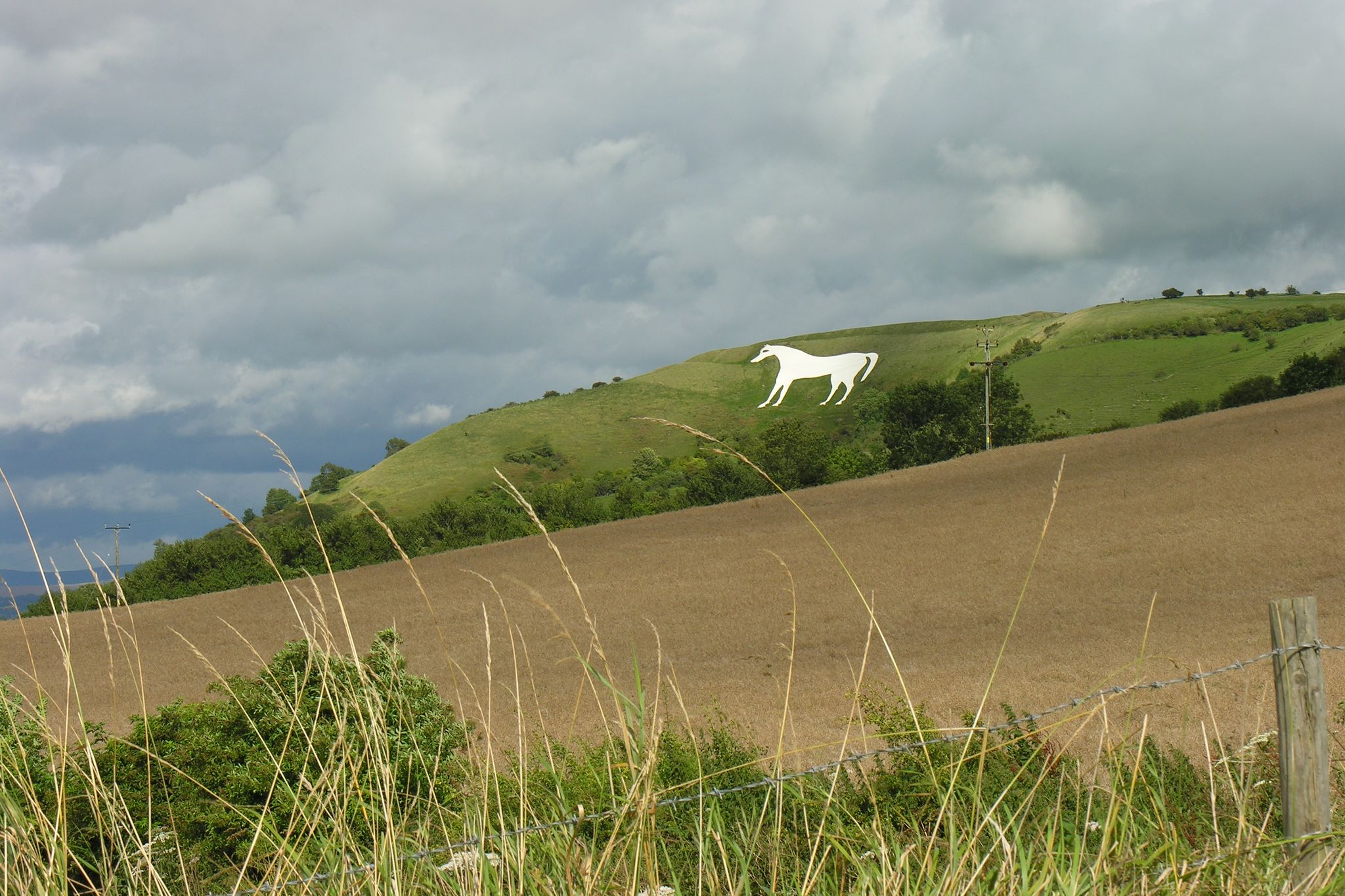
Like other White Horses in Wiltshire, the figure was created by removing the turf and exposing the white chalk underneath. As the slope at Hackpen Hill is less steep than for many other chalk figures, the horse had to be partially built up and designed with particular care to remain clearly visible from a distance. The figure belongs to a long tradition of chalk drawings in Southern England. Many of these White Horses were created in the 18th and 19th centuries as local landmarks, expressions of regional pride, or to commemorate special events. The coronation of Queen Victoria in the same year is often cited as the occasion.
1
0
The Hackpen White Horse is a large white chalk figure on the slopes of Hackpen Hill in Wiltshire. It was probably created in 1838 and is one of the well-known "White Horses" of Southern England. The historic long-distance path The Ridgeway runs directly above. From here, there is a wide view over the rolling chalk hills of the Marlborough Downs. The White Horse, the open landscape, and the ancient Ridgeway make the place a popular destination for hikers and photographers. A car park and short footpaths allow easy access to the viewpoint.
1
0
The view of Hackpen Hill and The Ridgeway shows a typical English chalk hill landscape: gentle, open ridges, wide fields, and historic paths. The Ridgeway is considered one of Great Britain's oldest long-distance paths and runs near Hackpen Hill through the Wiltshire countryside. Especially in clear weather, the heights offer extensive views over the Marlborough Downs.
1
0

On the left hand side of the Altar you will find the tomb of a 13th century Abbess. The slab bears evidence of an attempt to destroy it, probably during the reformation. The tomb was moved from elsewhere in the church during Victorian changes to the chancel area. As the lands at the north of the Benefice were under the control and ownership of Glastonbury Abbey, at which there was a Nunnery, it is entirely possible this Abbess was a significant figure. The tomb slab is remarkable and a very rare example of a slab tomb that is both etched and carved with a face.
0
0
The Sir William Wroughton monument on the right in the chancel describes Elizabeth I as Queen of England and France although Mary, her predecessor, had lost Calais, the last remaining English possession in France in 1558 and Elizabeth renounced her claim to Calais in 1559.
0
0
Lt. Colonel Francis Glanville, killed fighting for Charles I in 1645 at the battle of Bridgewater in the Civil War, has his helmet, gauntlets and a replica of his sword (the original is in the Royal Armoury) displayed above him. The Latin inscription ends “A greater hero England never saw, happily she did oft produce his equal”. The small reclining figure of a woman in her shroud at the bottom of this monument (usually hidden behind a bench seat) appears in Pevsner’s guide to Wiltshire:“her agonised features are not easily forgotten”. A panel from the Duke of Wellington’s funeral carriage (1851) hangs in the chancel in a glass case because the victor of Waterloo owned land locally.
0
0
In the top left corner of the nave is a flight of stone steps which shows there was once a medieval rood screen to screen the chancel off from the laity, probably with a figure of Christ on the cross above. Next to the stone steps are George III’s Royal Arms, painted in 1763 and cleaned in 2008 – note the fleur de lys in the shield. The chancel contains some interesting monuments to the Glanville family. Sir John was Speaker of the House of Commons in 1640. He burned his own Manor House rather than let it be used by Cromwell’s troops. A famous lawyer, he spent three years in the Tower of London after the Civil War for holding illegal Assizes and later served Charles II, as he had Charles I, as Sergeant-at-Law.
0
0
The sixteenth century was a bad time for this church. In 1553 parishioners refused to receive communion for fear of falling masonry. The broken stones allowed so many birds into the then chancel that the minister couldn’t stand by the communion table and there was no seat whilst reading the psalms. John Batewell, a vicar appointed in 1576, was officially censured for his inability to preach, neglect of catechizing and failure to wear the prescribed dress. However, a water colour of the church, painted in 1795 has text underneath which says that the church was “new built in the year 1634; brought to perfection in the year 1635; finished and beautified in the year 1636; a new pulpit erected in the year 1672; the first loft in the tower was boarded in 1676; the belfry and church porch paved in 1677”. The wonderful tie and hammer beam roof of the nave belongs to the 1634 rebuilding.
0
0
Frequently Asked Questions
How many bus station hiking trails are available around Broad Hinton?
There are over 200 hiking routes accessible from bus stations around Broad Hinton. These trails cater to various preferences, with a good mix of easy, moderate, and some more challenging options.
What types of landscapes can I expect on these bus station hikes?
The trails around Broad Hinton bus stations traverse a diverse landscape, including picturesque rolling hills, verdant woodlands, and open meadows. You'll experience the chalk downlands and escarpments of the North Wessex Downs Area of Outstanding Natural Beauty, ancient woodlands, and tranquil valleys. Some routes also feature a small meandering river.
Are there family-friendly hiking options from Broad Hinton bus stations?
Yes, many of the routes are suitable for families. With 100 easy trails available, you can find gentle walks that are perfect for all ages. Look for routes that explore the village or offer shorter distances.
Can I bring my dog on these bus station hiking trails?
Broad Hinton is generally very dog-friendly, with many trails suitable for walks with your canine companion. However, always keep dogs under control, especially when passing through livestock fields, and check local signage for any restrictions, particularly in nature reserves or protected areas.
Are there circular routes available from the bus stations?
Yes, many of the hikes from bus stations around Broad Hinton are circular, allowing you to start and end your journey at the same point. For example, the Bincknoll Castle Earthworks – Broad Town White Horse loop from Broad Hinton is a moderate 9 km circular route.
What interesting landmarks or attractions can I see along these routes?
Several routes incorporate notable landmarks. You might encounter sections of the ancient Ridgeway National Trail, the iconic Cherhill White Horse, or the historic Liddington Castle Hillfort. The Bincknoll Castle Earthworks are also a featured point of interest on a popular hiking route.
What is the best season to hike around Broad Hinton?
Broad Hinton offers enjoyable hiking experiences year-round. Spring brings wildflowers and lush greenery, summer provides warm, long days, while autumn showcases beautiful foliage. Even winter can be pleasant for hiking, with crisp air and unique views, though some paths might be muddy. Always check weather conditions before heading out.
Are there any longer, more challenging routes accessible by bus?
While many routes are easy to moderate, there are longer options for those seeking a challenge. For instance, the The Ridgeway at Barbury Castle – Hackpen White Horse loop from Broad Hinton is a moderate 13 km hike with significant elevation gain, offering expansive views.
What do other hikers say about the trails in Broad Hinton?
The hiking community highly rates the trails around Broad Hinton, with an average score of 4.5 stars. Reviewers often praise the diverse scenery, well-maintained paths, and the sense of tranquility found in the North Wessex Downs.
Are there any routes that pass through the village of Broad Hinton itself?
Yes, you can find routes that lead directly through the charming village. The Broad Hinton Village Centre loop from Broad Hinton is a moderate 11.8 km hike that showcases the rural village, including its thatched cottages and Victorian villas.
Most popular attractions around Broad Hinton

Get inspired with the komoot mobile app


Explore more
Browse the best Hikes in other regions.
