The best traffic-free bike rides around Blyth
4.4
(523)
5,543
riders
51
rides
No traffic touring cycling routes around Blyth are characterized by the North Sea coastline, the meandering River Blyth, and various green spaces. The region features gentle undulations and low-lying hills, with most elevations under 200 meters. This landscape provides a mix of paved paths and green trails, suitable for touring cyclists seeking varied scenic experiences. The area's terrain is generally accessible, making it suitable for different fitness levels.
Best no traffic touring cycling routes around Blyth
- The most popular no…
Last updated: July 4, 2026
10
riders
13.9km
00:48
50m
50m
Easy bike ride. Great for any fitness level. Mostly paved surfaces. Suitable for all skill levels.
8
riders
28.0km
01:38
120m
120m
Easy bike ride. Great for any fitness level. Mostly paved surfaces. Suitable for all skill levels.
5
riders
14.1km
00:49
60m
60m
Easy bike ride. Great for any fitness level. Mostly paved surfaces. Suitable for all skill levels.
Get access to more routes and recommendations from other explorers.
Sign up for free
Already have an account?
Our route recommendations are based on thousands of hikes, rides, and runs completed by other people on komoot.
Start today with a free account
Your next adventure awaits.
Login or Signup


Tips from the Community

follow this path if you want to escape the hustle and bustle
0
0
important bridge not to be missed
0
0


First professor of surgery in south africa and WW1 colleague of Marie Curie, born in this buildingg August 14th, 1886.
0
0
The Bedlington Railway Viaduct, also known as the Black Bridge or Kittybrewster Viaduct, was initially built by the Bedlington Coal Company in 1850 as a timber trestle bridge. Designed by Robert Nicholson, it stood 80 feet high and 770 feet long, connecting Bebside and Bedlington. The bridge was constructed to support coal transportation from the local mines, as part of a line from Newsham to Bedlington. The Blyth and Tyne Railway purchased the line in 1855 and extended it to Morpeth. In 1930, the original wooden structure was replaced with the current iron bridge by the London and North Eastern Railway at a cost of £55,290. Passenger services across the viaduct ended in 1950, while coal transport continued until the closure of the Lynemouth power station in 2015. The viaduct, renovated in recent years, remains in use for freight. The 1930 bridge consists of 10 spans with twin steel girders and reinforced concrete piers on the eastern side, and 5 spans with reinforced concrete abutments on the western side.
0
0
Situated on the site of Bedlington Iron and Engine works. The Bedlington Iron and Engine Works, operating from 1736 to 1867, was a key player in the global manufacture of locomotives and railway lines. Initially producing nails, the works developed "malleable" iron rails in 1819 under John Birkenshaw. Bedlington rails were used for notable railway projects, including the Stockton to Darlington line (1825) and Russia's first railway (1837). The locomotive works, established in 1837, built engines like De Snelheid and Bayard, which hauled the first trains in Holland and Italy. Bedlington-built engines also operated the first train out of King's Cross in London (1852). Workers, including children like 10-year-old William Weight, endured long hours under harsh conditions. The Ironworks closed in 1867, and the site was later converted into Dene Park in 1959. A replica of the Bayard locomotive is displayed in Italy's National Railway Museum. Furnace bridge, originally built of stone in the mid to late 18th century, was near the Bedlington Ironworks. It connected Blyth and Bedlington, with steep, winding approaches on the south side. Reconstructed in 1928 as a concrete beam bridge and again in 1996 as a masonry arch with concrete parapets, it spans 15 meters.
0
0

Nice little sculpture at the start of the trail
0
0
Frequently Asked Questions
How many no-traffic touring cycling routes are available around Blyth?
There are over 50 dedicated no-traffic touring cycling routes around Blyth. More than half of these, 26 routes, are rated as easy, making them suitable for a wide range of cyclists.
What kind of terrain can I expect on no-traffic touring cycling routes in Blyth?
The region's terrain is generally characterized by gentle undulations and low-lying hills, with most routes consisting of mostly paved surfaces and green paths. This makes it suitable for touring cyclists of all abilities, including families and beginners.
Are there any family-friendly no-traffic cycling routes in Blyth?
Yes, many of the no-traffic routes in Blyth are suitable for families due to their gentle terrain and paved surfaces. An excellent option is the Woodland Path – River Blyth loop from Blyth, which offers a pleasant 13.9 km ride through natural scenery.
What interesting landmarks or natural features can I see along the no-traffic touring cycling routes?
Blyth's routes often pass by significant landmarks and natural attractions. You can cycle past the iconic St Mary's Lighthouse, explore the tranquil Holywell Dene and Seaton Burn, or discover the unique land art sculpture Northumberlandia (Lady of the North). The Queen Elizabeth II Country Park Lake also offers scenic views.
What is the best time of year for no-traffic touring cycling in Blyth?
The best time for touring cycling in Blyth is generally from late spring to early autumn (May to September). During these months, the weather is milder, and daylight hours are longer, providing more comfortable and enjoyable riding conditions.
Are there any circular no-traffic cycling routes available?
Yes, many of the no-traffic routes around Blyth are circular, allowing you to start and end at the same point. An example is the River Blyth – Bedlington Railway Viaduct loop from Blyth, an easy 14.1 km ride.
What do other touring cyclists enjoy most about the no-traffic routes in Blyth?
The no-traffic touring cycling routes in Blyth are highly rated by the komoot community, with an average score of 4.4 stars from over 430 ratings. Reviewers often praise the peaceful coastal paths, the scenic riverside trails, and the accessibility of the routes for all skill levels.
Can I find cafes or pubs near the no-traffic cycling routes in Blyth?
Yes, Blyth and its surrounding areas offer various cafes and pubs. The coastal paths and town quayside are good places to find refreshments. Specific establishments like the Kings Head Cafe in Blyth or The Tavern Bed and Breakfast are known to be cyclist-friendly, and the Three Horseshoes pub in High Horton is also a popular stop.
Are there any no-traffic routes that offer coastal views?
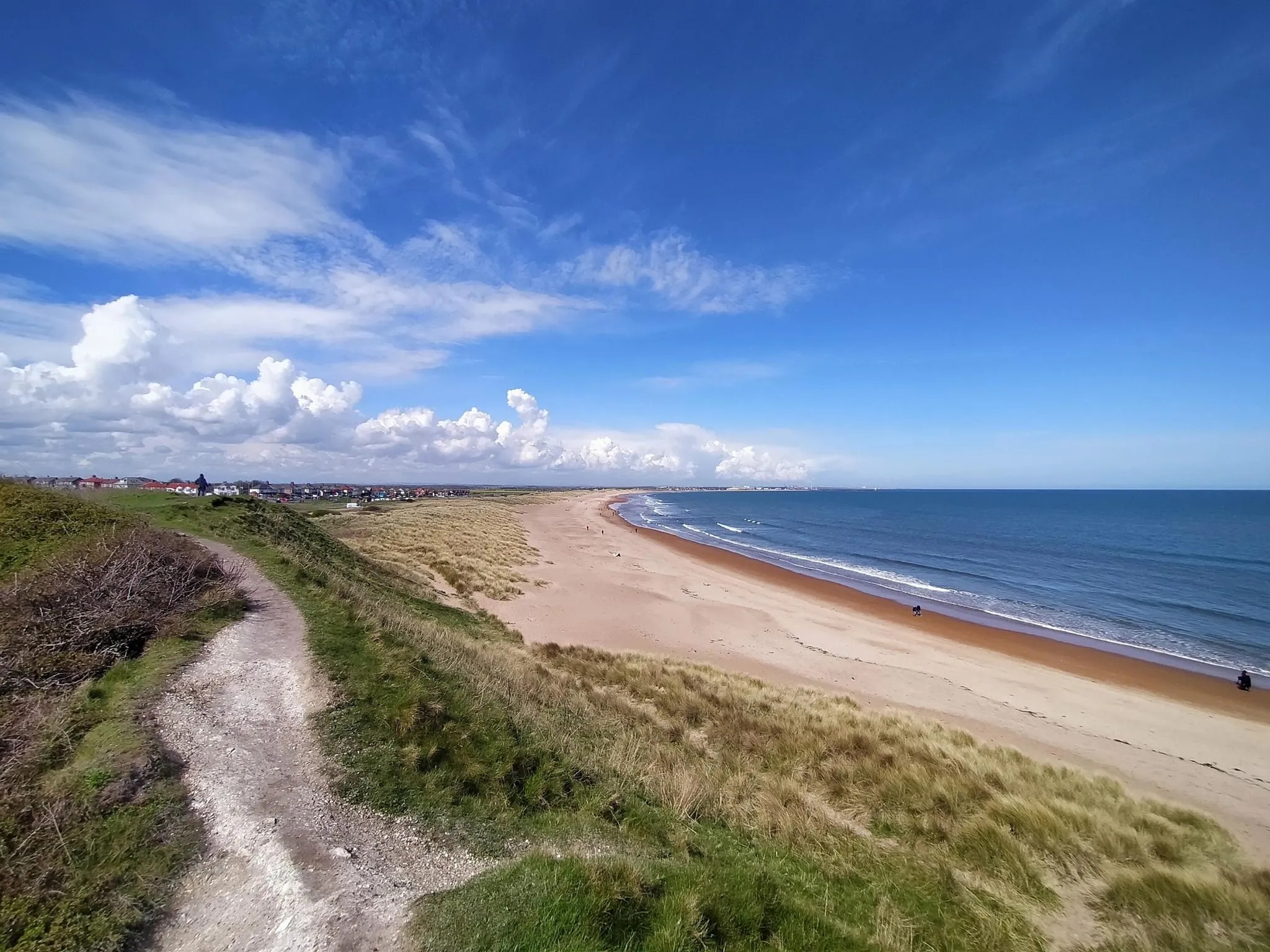
Absolutely. Blyth's stunning North Sea coastline is a major feature of its no-traffic cycling routes. You can enjoy picturesque paved paths along the sea, experiencing fresh air and dramatic scenery. The Woodland Path – Cambois Beach loop from Newsham offers excellent coastal sections.
Is it possible to reach the cycling routes using public transport?
Blyth is generally accessible by public transport, primarily buses, which can connect you to various starting points for cycling routes. For detailed information on bus routes and timetables, it's best to check local transport provider websites.
Are there parking facilities available near the no-traffic cycling routes?
Yes, parking is generally available in and around Blyth, particularly near popular starting points for cycling routes. Areas like Blyth Beach, Seaton Sluice Harbour, and Cambois Beach often have parking facilities suitable for cyclists.
Most popular attractions around Blyth

Get inspired with the komoot mobile app


Explore more
Browse the best Cycling routes in other regions.
