The best gravel rides around Torres De Barbués
5.0
(2)
52
riders
6
rides
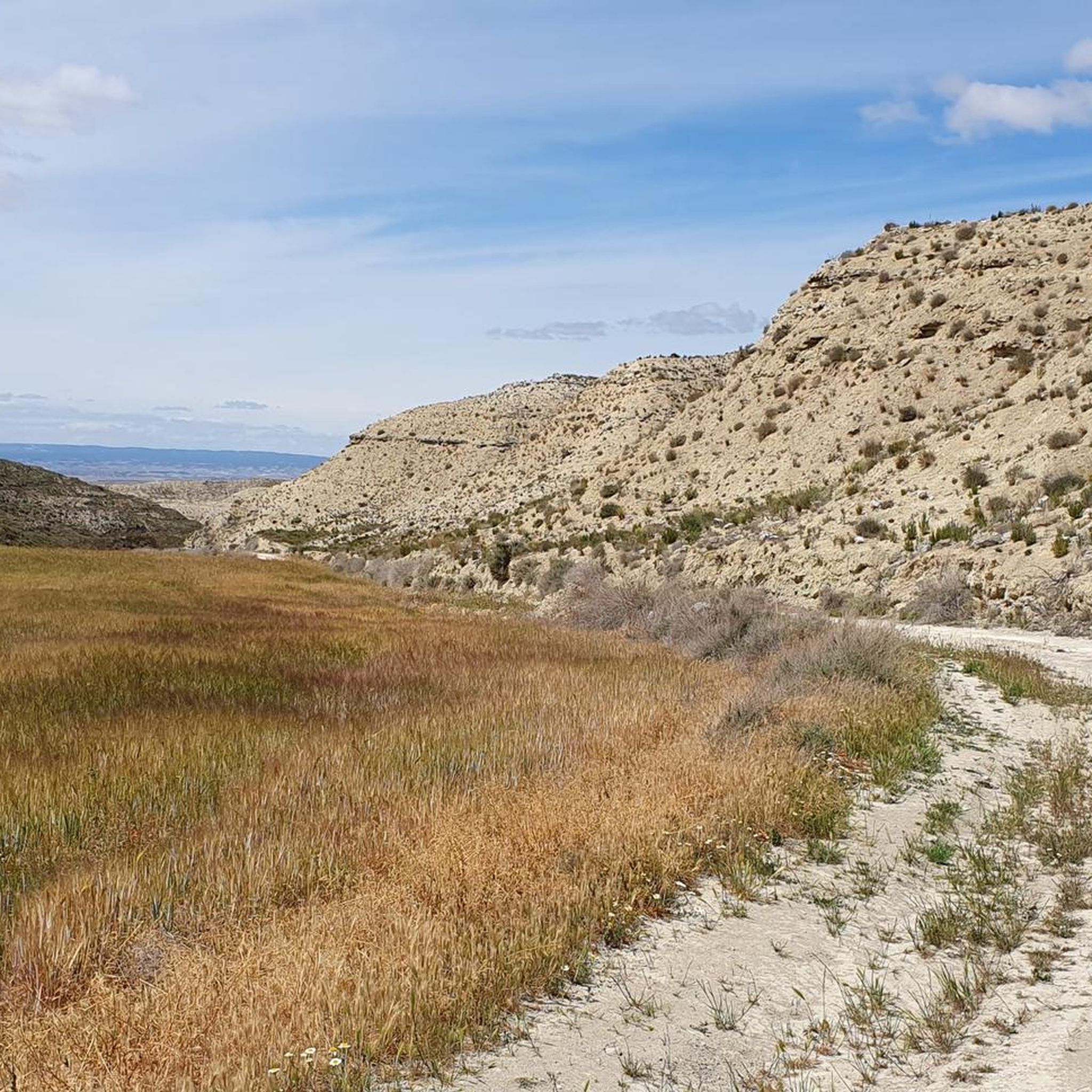
Gravel biking around Torres De Barbués offers access to the varied landscapes of the Huesca province in Aragon, Spain. The region transitions from the agricultural plains of the Ebro Valley to the semi-desert Monegros comarca and the initial slopes of the Hoya de Huesca. This geographical diversity provides a range of surfaces and elevations suitable for gravel cycling, from fast-rolling dirt tracks to more undulating terrain. The area is characterized by wide-open horizons, agricultural lands, and unique geological formations further…
Last updated: June 27, 2026
5.0
(1)
34
riders
85.4km
07:01
790m
790m
Hard gravel ride. Very good fitness required. Mostly paved surfaces. Suitable for all skill levels.
3
riders
109km
08:37
920m
920m
Hard gravel ride. Very good fitness required. Mostly paved surfaces. Suitable for all skill levels.

Sign up for free
5.0
(1)
1
riders
40.6km
03:37
530m
530m
Hard gravel ride. Very good fitness required. Mostly paved surfaces. Suitable for all skill levels.
2
riders
22.0km
01:27
110m
110m
Easy gravel ride. Great for any fitness level. Mostly paved surfaces. Suitable for all skill levels.
2
riders
36.0km
02:21
190m
190m
Moderate gravel ride. Good fitness required. Mostly paved surfaces. Suitable for all skill levels.
Our route recommendations are based on thousands of hikes, rides, and runs completed by other people on komoot.
Start today with a free account
Your next adventure awaits.
Login or Signup
Popular around Torres De Barbués
Tips from the Community

Located in the Aragonese region of Monegros, Lanaja is a town whose origins date back to the Neolithic. In fact, there are various sites in the area, such as Val de Lupo, Valderrey, Peñalveta, La Malena and Aldea del Correo, dating from the Copper Age to Roman times. Among its heritage, the Church of the Assumption stands out, built on an old mosque, which in turn was built on a primitive Visigoth church. For its part, the Granero de la Diezma is a civil building from the 16th century, which until 2011 housed a museum dedicated to the Barbie doll. The ice well is another unique construction, very well preserved, with a height of more than 11 meters. The hermitage of San Sebastián, located on a mound called El Saso that dominates the town, is built on the site where the Montoro castle was formerly located, of which only the remains of a wall remain.
0
0

The church of Santa Ana was built in the 14th century and is known for its Gothic-Renaissance tower and its Mudejar style tower. Unfortunately, during the Civil War, all archives pertinent to the history of the church were lost.
0
0
The church of Santa Ana was built in the 14th century and is known for its Gothic-Renaissance tower and its Mudejar-style tower. Unfortunately, in the Civil War, all the archives relevant to the history of the church were lost.
1
0

In addition to the Church of the Assumption (in the image), here you can visit the Civil War Interpretation Center, which collects and offers a wide variety of materials to study the war. More information: https://www.turismodearagon.com/ficha/ruta-orwell-y-centro-de-la-guerra-civil-en-robres/
0
0
In the middle of the desert, the Canal de Los Monegros serves to irrigate an area of 110,000 hectares. It takes water from the Sotonera reservoir and transfers it to irrigate Los Monegros, La Sobrarbe and Somontano, in the provinces of Huesca and Zaragoza.
0
0
Its old quarter stands on a gentle tozal, where the church and the remains of an old castle predominate over the modern part of the town.
0
0

Monegros Canal near the town of Robres. The Monegros canal is a canal designed in the Alto Aragón Irrigation Plan of 1902. Its construction began in 1915 and it is 130 kilometers long.
0
0
Frequently Asked Questions
What kind of terrain can I expect on gravel bike trails around Torres De Barbués?
The region offers a diverse mix of landscapes. You'll find wide-open horizons and fast-rolling dirt tracks characteristic of the semi-desert Monegros area, which can be loose and dusty. Closer to Torres De Barbués, the terrain is often agricultural plains, while the broader Hoya de Huesca features a mix of red and ochre rocks, forests, and dramatic geological formations like cliffs and canyons.
How many gravel biking routes are available in the Torres De Barbués area?
There are 6 gravel biking routes detailed in this guide for the Torres De Barbués area, catering to various skill levels.
Are there any easy gravel bike routes suitable for beginners or families?
Yes, there is one easy route available. Consider the Canal de los Monegros – Canal de Monegros loop from Montesusín, which covers about 22 km with minimal elevation gain, making it a good option for a more relaxed ride.
What is the best time of year for gravel biking in Torres De Barbués?
Given the semi-desert characteristics of the Monegros region, spring and autumn generally offer the most pleasant conditions for gravel biking. Summers can be very hot, and winters might bring colder temperatures, though the area typically experiences mild winters.
Are there any circular gravel routes available?
Yes, all the routes listed in this guide are circular. For example, you can explore the Corona de la Reina loop from Tardienta, a challenging 40.5 km ride, or the Canal de Monegros loop from Montesusín, a moderate 35.9 km option.
What are the longer, more challenging gravel routes in the area?
For experienced riders seeking a challenge, there are several difficult routes. The longest is a Church of Grañén – Hermitage of Santa Quiteria loop from Grañén, spanning over 108 km with significant elevation gain. Another demanding option is a slightly shorter Church of Grañén – Hermitage of Santa Quiteria loop from Grañén at 85 km.
What do other gravel bikers enjoy most about the Torres De Barbués area?
The area is highly rated by the komoot community, with an average score of 5.0 stars. Riders often praise the sense of freedom and adventure offered by the wide-open spaces of the Monegros, as well as the varied terrain that transitions from agricultural plains to more rugged, geologically interesting landscapes.
Are there any notable landmarks or points of interest along the gravel routes?
While specific highlights are not detailed for these routes, the region itself is rich in cultural and natural heritage. You can expect to pass through agricultural plains, near the Flumen River, and potentially see traditional architecture in local villages. The broader Hoya de Huesca region is known for its unique rock formations and charming historical sites.
What kind of gravel bike is best suited for this region?
Given the mix of fast-rolling dirt, potentially loose and dusty tracks, and some agricultural roads, a versatile gravel bike with good tire clearance for wider, knobby tires (e.g., 40mm+) would be ideal. This setup provides comfort and grip across varied surfaces.
Are there any moderate difficulty gravel routes for intermediate riders?
Yes, there are two moderate routes. The Canal de Monegros loop from Montesusín is a good choice, covering nearly 36 km with a moderate amount of climbing, offering a balanced challenge.
What are the typical elevation changes on gravel rides around Torres De Barbués?
Elevation changes vary significantly depending on the route. Easy routes might have around 100-200 meters of ascent, while difficult routes can feature over 900 meters of climbing, reflecting the transition from flat plains to more undulating terrain as you approach the Hoya de Huesca.
Most popular routes around Torres De Barbués

Get inspired with the komoot mobile app


Explore more
Browse the best Gravel rides in other regions.
